
 Medically Reviewed
When to Visit an Emergency Department vs Wait at Home
Most people have faced this moment at least once: something hurts, something feels wrong, and you are not sure whether to rush to a hospital or sleep it off. That hesitation is completely natural. But making the wrong call can cost you, in either direction. Visiting an emergency department for a minor issue puts pressure on an already busy system. Waiting at home for a serious one can put your life at risk. This guide helps you read the signs clearly, so you can act at the right time.
Key Takeaways
- Chest pain, breathing trouble, stroke symptoms, and severe trauma always need immediate emergency care.
- Conditions such as a mild fever, the common cold, or minor cuts can be safely managed at home or at a clinic.
- The emergency department operates round the clock and is staffed to handle both medical and trauma emergencies in adults and children.
Quick Answer: Go to an emergency department when symptoms are sudden, severe, or involve the chest, brain, or breathing. Do not wait.
What Is an Emergency Department?
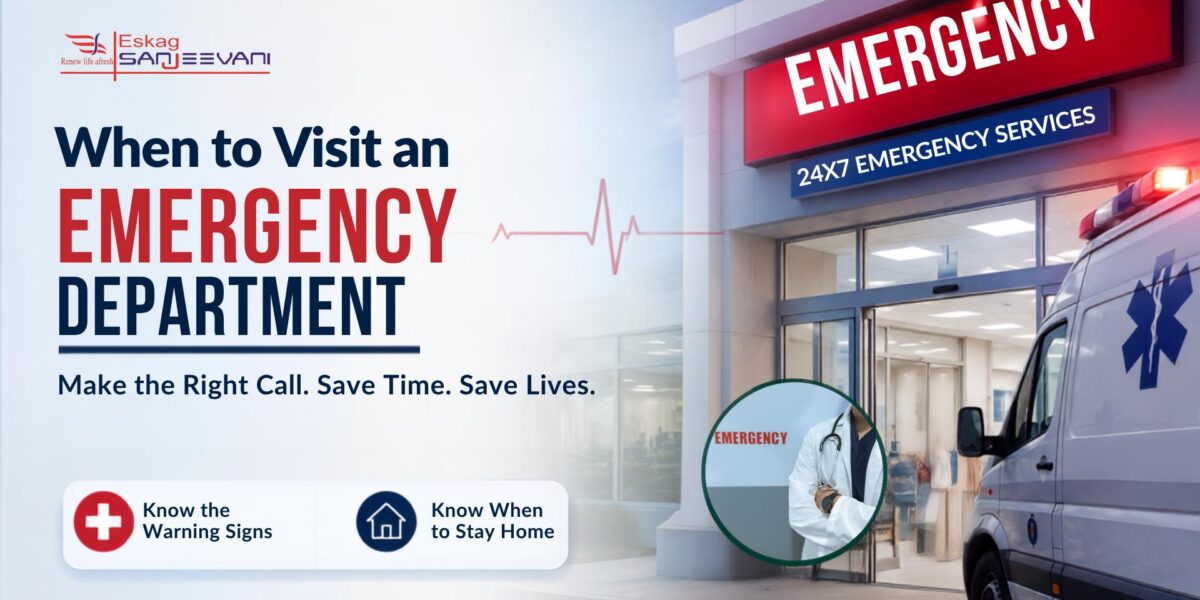
The emergency department (also called an emergency room or ER) is the part of a hospital that handles urgent, life-threatening conditions at all hours of the day. It is staffed by emergency physicians and nurses who are trained to treat various conditions, from severe trauma and cardiac events to seizures, poisoning, and respiratory failure [1].
The emergency department serves as the primary entry point for many patients who need immediate attention. It operates separately from outpatient services and provides initial stabilisation before patients are transferred to the appropriate ward or discharged.
Unlike a general clinic or a pharmacy, a hospital emergency room has the equipment and the team to handle true medical crises, including resuscitation, trauma care, and 24×7 emergency services [2].
Signs You Need the Emergency Department Now
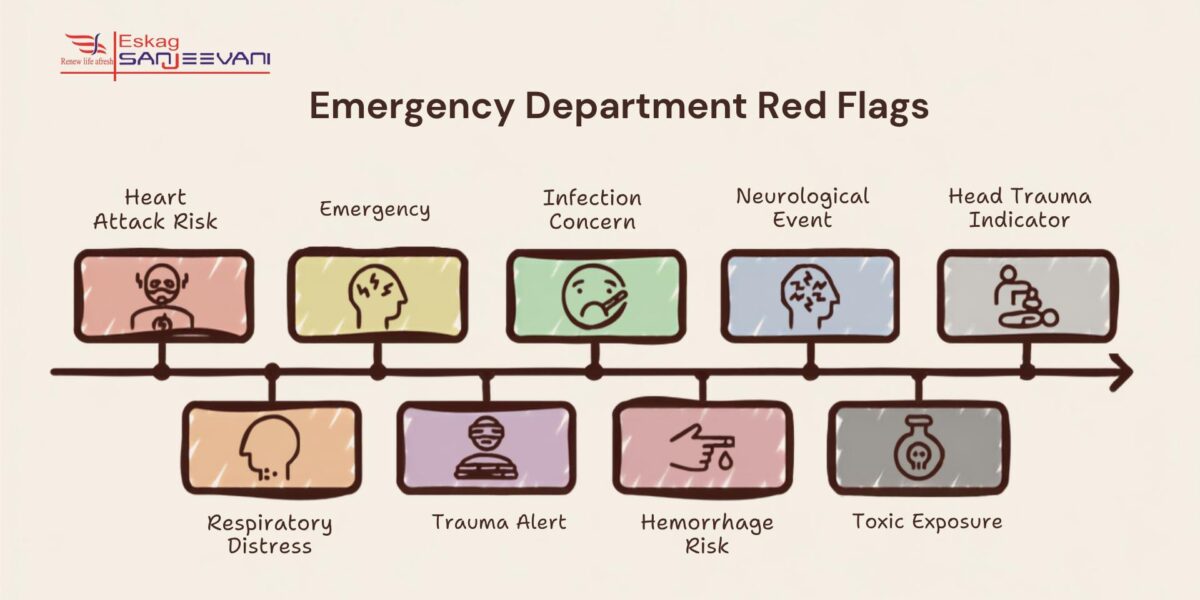
Emergency patient care exists for a reason. Some symptoms cannot wait. Below are the clearest indicators that you need to go to an emergency department immediately
1. Chest Pain or Pressure
Sudden, severe chest pain is one of the most serious warning signs a person can experience. It may feel like a heavy weight or a tight squeezing sensation across the chest. This could point to a heart attack, particularly when it comes with jaw pain, pain in the left arm or shoulder, light-headedness, or a burning sensation behind the breastbone that feels like heartburn [2].
Do not drive yourself. Call for help or an ambulance and head to the nearest emergency care hospital right away.
2. Trouble Breathing
Extreme shortness of breath that comes on suddenly and does not improve with rest needs immediate attention. It can point to conditions like asthma attacks, pulmonary embolism, or cardiac failure [2].
If someone in your household is gasping, struggling to complete a sentence, or turning bluish around the lips or fingertips, this is a medical emergency.
3. Stroke Symptoms
Time is critical with a stroke. Use the FAST test to spot it: Face drooping, Arm weakness, Speech difficulty, Time to call for help. Other stroke signs include sudden blurred vision, disorientation, severe headache with no known cause, and sudden numbness or weakness in the arms or legs.
Every minute without treatment during a stroke leads to further brain damage. Do not wait and watch.
4. Severe Head Injury
Any serious injury from a road accident, a fall from height, or a blunt impact to the head warrants an immediate visit to the emergency department. Internal bleeding, spinal injury, or traumatic brain injury may not be visible from the outside, but these are life-threatening conditions that need imaging and emergency patient management.
5. High Fever in Infants and Young Children
A high fever in a baby younger than three months needs immediate medical attention. In young children, a fever with a stiff neck, a rash that does not fade when pressed, or a seizure can be a sign of a serious illness. Take the child to the emergency department right away.
6. Uncontrolled Bleeding
If bleeding does not stop even after applying firm pressure for 10 minutes, go to the emergency department. This also includes deep cuts, wounds with an object still stuck inside, or bleeding from the mouth, urine, or rectum without a known cause [2].
7. Seizures
A first-time seizure, or one that lasts longer than five minutes, needs immediate evaluation. Seizures can signal neurological emergencies such as epilepsy, meningitis, or dangerously low blood sugar. The emergency department is equipped to stabilise patients and quickly identify the cause.
8. Suspected Poisoning
If someone has swallowed something harmful, inhaled a toxic substance, or taken too much of a medication, call for emergency help right away. Do not try to make the person vomit unless instructed by a medical professional. Bring the substance or its packaging to the hospital.
9. Loss of Consciousness After Injury
Fainting is not always serious, but it can be a medical emergency in some cases. If a person faints after a head injury or a fall, or does not wake up or become fully alert within a few minutes, go to the emergency department immediately. This could be a sign of a brain injury or internal bleeding [1].
These are some major issues that should not be neglected and need immediate attention.
Also read: 24×7 Advanced Emergency Facilities at Eskag Sanjeevani Hospitals, Kolkata
When the Emergency Room Is Not the Right Place
Not every health concern needs a trip to the hospital emergency room. Visiting an emergency department for a non-urgent problem delays care for people who truly need it, exposes you to other illnesses, and puts unnecessary pressure on emergency patient management systems [2].
Here is when you can manage at home, see a clinic, or visit a pharmacist instead:
| Condition | Better Course of Action |
| Common cold or mild flu | Rest, fluids, and over-the-counter medication |
| Low-grade fever in adults | Monitor at home, consult a clinic if it persists |
| Minor cuts and scrapes | Clean the wound, apply pressure, and use a bandage |
| Mild sore throat | Salt water gargles, rest, visit a pharmacist |
| Mild stomach ache | Home care, avoid greasy food, stay hydrated |
Other situations where the emergency department is not appropriate include needing a prescription refill, seeking a second opinion when there is no urgent symptom, or visiting because your regular doctor is not available. These situations are better handled by a general practitioner or a clinic during working hours.
How Emergency Patient Management Works
When you arrive at an emergency department, the first step is triage. A nurse assesses your condition and assigns a priority level based on its severity. The most critical cases, like cardiac arrest or stroke, receive immediate attention, while less urgent cases wait their turn.
The emergency department handles a continuous flow of patients throughout the day and night. Beds are used on a rotation basis for initial stabilisation, after which patients are either admitted to a specialised ward or discharged with follow-up advice [1].
This system works well when it is used correctly. When patients with minor issues arrive at the hospital emergency room, it slows down care for everyone, including those who are critically ill.
Emergency Care in Children vs Adults
Children can deteriorate faster than adults when they are seriously ill. Signs that need immediate emergency patient care in children include:
- Breathing that looks laboured, with the stomach pulling inward with each breath
- A fever above 104°F (40°C) that does not respond to medication
- Severe dehydration, shown by dry mouth, no tears, and no wet nappies for several hours
- Unresponsiveness, limpness, or extreme difficulty in waking the child
- Skin rash with fever that does not fade under a glass pressed against it
Adults, on the other hand, sometimes delay seeking care because their symptoms build slowly. Gradual chest tightness, increasing breathlessness over days, or limb weakness that comes and goes can all be signs of serious illness that deserves prompt evaluation.
What to Do While You Wait for Help
If you have called for emergency help and are waiting for an ambulance, or on the way to the hospital emergency room, here are a few practical steps:
- Keep the person calm and still, especially after a fall or head injury
- Do not give food or water if the person is unconscious or having difficulty swallowing
- Loosen tight clothing around the chest or neck
- If the person has stopped breathing and you know CPR, begin chest compressions
- Gather any medications the person is currently taking, along with their medical history if possible
This information helps the emergency department team begin managing your emergency faster once you arrive.
When to Call an Ambulance Instead of Driving
Some situations are too serious to wait for a car ride. Call an ambulance when:
- The person is unconscious or unresponsive
- Breathing has stopped or is severely laboured
- There is uncontrolled bleeding from a major wound
- A heart attack or stroke is suspected
- The person has been in a serious accident and may have spinal injuries
Moving someone with a suspected spinal injury incorrectly can worsen the damage. Paramedics are trained to handle this and carry the right equipment.
At Eskag Sanjeevani, our emergency ambulance service is equipped to respond quickly during critical situations. Trained paramedics provide immediate medical support en route to the hospital while staying in touch with the emergency team, ensuring treatment can begin without unnecessary delays. If you suspect a life-threatening emergency, calling an ambulance is often the safest way to ensure timely medical care.
Final Thoughts
Knowing when to visit an emergency department can save a life. Do not ignore symptoms such as severe chest pain, difficulty breathing, stroke signs, uncontrolled bleeding, or major injuries. Getting medical help early can prevent serious complications and improve recovery. At Eskag Sanjeevani, our 24×7 Emergency Department provides prompt care with experienced emergency doctors, trained paramedics, advanced diagnostic support, and ambulance services. When every minute counts, Eskag Sanjeevani Hospitals stands ready to deliver the emergency care you need.

Microbiologist with over 2 years of experience in medical writing, specialising in evidence-based healthcare content.

Clinical experience in diagnosis, treatment, and evidence-based patient care across a range of conditions.
References
- Pini, Riccardo, et al. “Emergency Department Clinical Risk.” PubMed, Springer, 2021,
- “The Emergency Room: When to Go, and When Not to – Concordia University.” Concordia.Ca, 2024,
Yes, the emergency department accepts patients directly without any referral. You can walk in or arrive by ambulance at any time, as 24×7 emergency services are available at all major hospitals.
Bring your identity proof, any relevant medical records or prescriptions, a list of current medications, and your health insurance card if applicable. For children, include their vaccination history if possible.
A fever of 101°F in a child over 2 years old is not immediately dangerous on its own. Monitor for other symptoms like difficulty breathing, rash, stiff neck, or seizures. If any of those appear, or if the fever climbs above 104°F and does not come down with medication, visit the emergency department.
A triage nurse will assess you first and assign a priority. You will then be seen by an emergency physician who will order tests, provide initial treatment, and decide whether you need to be admitted or can be safely discharged with instructions for follow-up care.
No. During a suspected heart attack, call an ambulance rather than driving. Paramedics can begin treatment en route and alert the hospital, saving critical time for emergency patient care.