
Recovery After Stroke: What to Expect During the First 90 Days
A stroke can change a person’s life within minutes, leaving patients and families with many questions about movement, speech, memory, and everyday independence. Most patients and families ask: How much recovery can happen after a stroke? When does rehabilitation matter most? And does recovery stop after 90 days?
The first few weeks and months are an important period for medical care and rehabilitation, but there is no universal recovery timeline for every stroke survivor. The type and severity of stroke, area of the brain affected, treatment received, age, overall health, and complications can all influence recovery. Research shows that recovery can continue for months or even years, and rehabilitation may remain useful beyond the first three months [1].
This guide explains what the first 90 days may involve, why early treatment matters, what rehabilitation can include, and why recovery should not be viewed as a 90-day deadline.
Key Takeaways:
- The first weeks and months after a stroke are an important period for medical stabilisation and rehabilitation, but recovery varies considerably between individuals.
- Early assessment and appropriate stroke treatment can reduce brain injury and improve the chances of better functional outcomes.
- Meaningful improvement can continue beyond 90 days, sometimes for months or years.
Quick Links
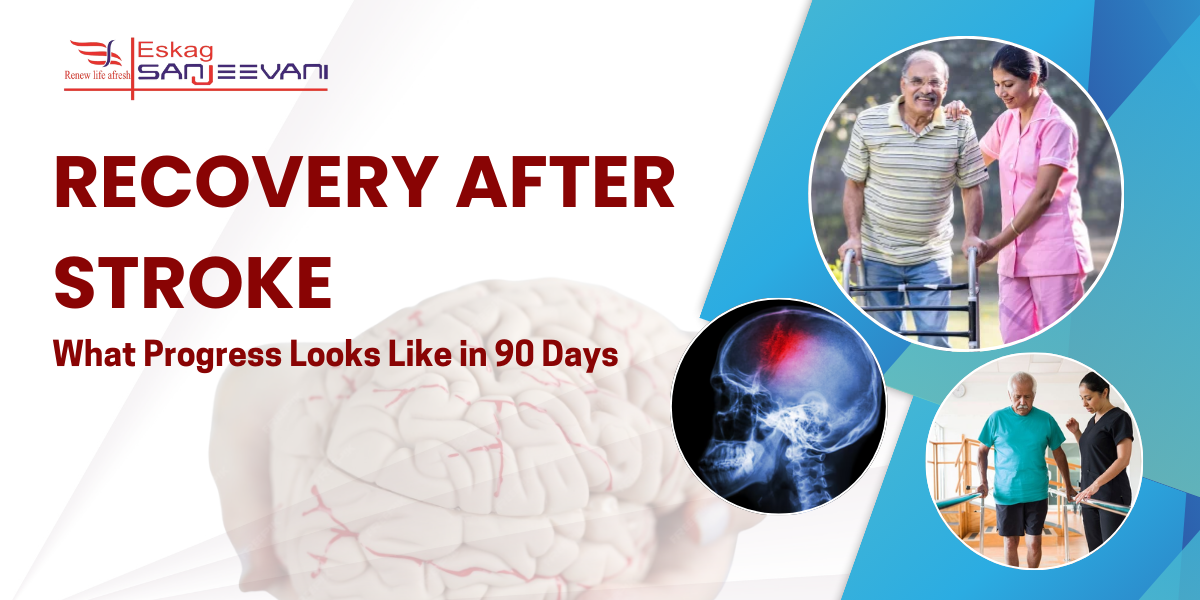
Why the First 90 Days Matter in Recovery After Stroke
The early period after a stroke involves several key processes such as medical stabilisation, preventing complications, assessing functional problems, and starting rehabilitation.
Early Medical Care Matters
The first priority after a suspected stroke is rapid assessment and treatment. Depending on the type of stroke, urgent treatment includes measures to restore blood flow, control bleeding, manage blood pressure, or prevent complications.
Rehabilitation Often Begins Early
Once a patient is medically stable, rehabilitation can begin. Current guidance recommends individualised, multidisciplinary rehabilitation as part of stroke care.
The rehabilitation team may include the following specialists:
- Physiotherapists
- Occupational therapists
- Speech and language therapists
- Rehabilitation physicians
- Neurologists
- Nurses
- Psychologists or mental-health professionals
- Other specialists depending on the patient’s needs
Neuroplasticity and Recovery
Neuroplasticity refers to the nervous system’s ability to adapt and reorganise after injury. It is one mechanism involved in recovery after stroke, but neuroplasticity should not be interpreted as meaning the brain can fully repair itself within a specific period. Recovery depends on several factors, including the location and severity of the stroke, the functions affected, rehabilitation participation, medical complications, and individual health factors.
Recovery Does Not Stop at 90 Days
The first three months can be an important recovery period, but they are not a cut-off point. Some patients continue to make meaningful improvements after three months, when rehabilitation goals are reassessed, and therapy is adapted to their changing needs.
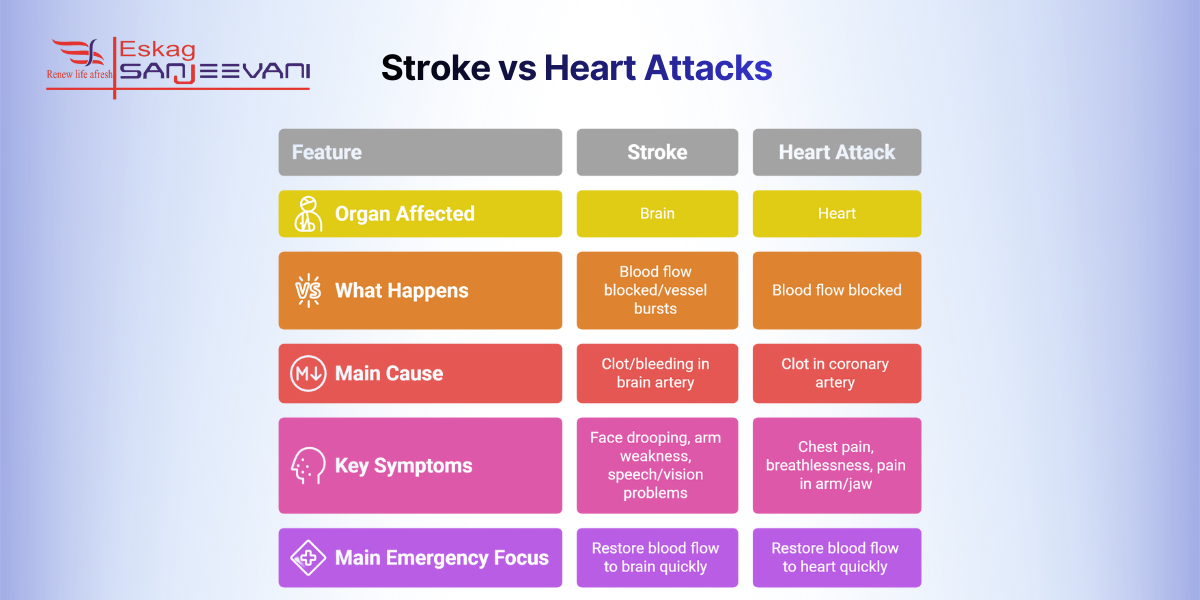
Now, with a clear understanding of the importance of the time of recovery after a stroke, let’s understand the major difference between a stroke and a heart attack.
Reasons for Stroke and Why “Heart Stroke” Is a Medical Myth
Stroke and heart attack are different medical emergencies affecting different organs. A stroke occurs when blood flow to part of the brain is interrupted or when a blood vessel in the brain ruptures. A heart attack, also called myocardial infarction, occurs when blood flow to part of the heart muscle is reduced or blocked. Both conditions share some risk factors, including high blood pressure, diabetes, high cholesterol, and certain cardiovascular conditions.
There are two major types of strokes, as follows:
- Ischemic stroke: Occurs when a blood vessel supplying the brain becomes blocked. Most strokes are ischemic.
- Hemorrhagic stroke: Occurs when a blood vessel in the brain ruptures and causes bleeding.
Common Stroke Risk Factors
- Important risk factors of a stroke include the following:
- High blood pressure
- Diabetes
- High cholesterol
- Smoking
- Certain heart conditions, including atrial fibrillation
- Previous stroke or transient ischemic attack (TIA)
- Older age and other individual risk factors
Note for patients:
What is a TIA?
A transient ischemic attack (TIA) causes temporary neurological symptoms because of a temporary interruption of blood flow to the brain. Although symptoms may resolve, do not ignore a TIA. It can indicate an increased risk of a future stroke and requires immediate medical intervention.
Stroke Treatment Timeline: What Happens First and Why Early Action Matters
Stroke treatment is highly time-sensitive. The appropriate treatment depends on whether the stroke is ischemic or hemorrhagic, the time since symptoms began, imaging findings, and the patient’s overall condition.
Here’s a comprehensive understanding to increase the chances of meaningful recovery for a stroke patient:
1. Recognise the Warning Signs
Sudden facial weakness, arm weakness, speech difficulty, vision problems, loss of balance, or other sudden neurological symptoms require emergency medical attention. Do not wait for symptoms to improve on their own.
2. Rapid Hospital Assessment
Doctors generally perform an urgent neurological assessment and review the patient’s medical history, symptoms, vital signs, and blood glucose.
3. Brain Imaging
Brain imaging, commonly CT or MRI depending on the situation, helps determine the type of stroke and guides treatment decisions.
4. Intravenous Thrombolysis
For selected patients with acute ischemic stroke, intravenous thrombolytic treatment is considered within an established treatment window. For many eligible patients, treatment with an approved thrombolytic therapy is considered within 4.5 hours of symptom occurrence. The sooner eligible patients receive appropriate treatment, the better the chance of limiting brain injury.
5. Mechanical Thrombectomy
Mechanical thrombectomy is a procedure in which doctors use a catheter-based approach to remove a clot from a blocked brain artery in selected patients with large-vessel ischemic stroke. It is not a procedure that simply begins after 24 hours.
Depending on the patient’s clinical and imaging findings, thrombectomy may be performed within the early treatment window and, in selected patients, may be appropriate up to 24 hours after symptom onset or last known well.
6. Stabilisation and Monitoring
After acute treatment, patients require monitoring in a stroke unit or intensive-care setting depending on the severity and type of stroke.
Care may include management of the following conditions:
- Blood pressure
- Blood glucose
- Swallowing difficulties
- Brain swelling
- Bleeding
- Heart rhythm abnormalities
- Infections and other complications
- Risk of another stroke
Also read: Critical Hours in ICU: A Step-by-Step Survival Guide for Families.
What Progress Can Look Like During the First 90 Days
No single milestone schedule applies to every stroke survivor. A person with a small stroke may recover certain functions quickly, while someone with a severe stroke may require longer-term rehabilitation and support.
- First Few Days: The initial focus is usually on medical stabilisation, identifying the type and severity of stroke, preventing complications, and assessing functional abilities.
- Weeks 1-4: Depending on the patient’s condition, rehabilitation may focus on:
- Sitting and standing safely
- Transfers
- Walking or mobility
- Arm and hand function
- Swallowing
- Communication
- Basic daily activities
- Weeks 5-12: Therapy goals shift to improving independence, coordination, strength, communication, cognition, and participation in daily activities.
- After 3 Months: Recovery does not end here. Rehabilitation may continue when appropriate, with goals adjusted according to the person’s progress.
Here’s a tabular representation for an easy understanding of the timeline:
| Time Period | Typical Recovery Focus |
| First 24-72 hours | Emergency treatment, medical stabilisation, brain protection and assessment |
| Weeks 1-4 | Early rehabilitation, mobility, communication, swallowing and daily activities |
| Weeks 5-12 | Building functional skills, independence and participation in daily activities |
| After 3 months | Continued rehabilitation, reassessment and progression toward individual goals |
These time periods are general examples, not fixed milestones. A person’s actual recovery may be faster, slower, or follow a different pattern.
Rehabilitation Plan That Supports Recovery After Stroke
Stroke rehabilitation should be individualised according to the patient’s impairments, goals, medical stability, tolerance, and living environment.
Step 1: Physical Therapy
Physiotherapy may focus on movement, balance, coordination, strength, walking, transfers, and safe mobility.
Step 2: Occupational Therapy
Occupational therapy helps people work toward greater independence with activities such as eating, dressing, bathing, writing, and other everyday tasks.
Step 3: Speech and Language Therapy
Speech and language therapy may help address communication difficulties, language problems, speech changes, and swallowing difficulties when present.
Step 4: Cognitive Rehabilitation
Some stroke survivors experience changes in attention, memory, problem-solving, or executive function. Rehabilitation can include strategies to address these difficulties.
Step 5: Emotional and Psychological Support
Depression, anxiety, emotional changes, and adjustment difficulties can occur after stroke. Assess and address these concerns as part of comprehensive recovery care.
Step 6: Medical Follow-Up
Regular medical follow-up helps monitor recovery, manage stroke risk factors, review medications, and identify complications or new rehabilitation needs.
Final Thoughts
The first 90 days after a stroke are an important period for acute medical care, assessment, and rehabilitation, but they should not be viewed as a deadline for recovery. Some patients improve substantially during the early weeks and months, while others recover more gradually. For many stroke survivors, progress continues beyond three months and may continue for months or years. The most important steps are to receive emergency treatment immediately and begin appropriate rehabilitation when medically stable. Follow the prescribed medical plan, and continue reassessment as recovery progresses.
At Eskag Sanjeevani Hospitals, neurological and rehabilitation care can help patients and families navigate the different stages of stroke recovery with an individualised approach. If you notice sudden facial or arm weakness, speech difficulty, loss of balance, vision changes, or other sudden neurological symptoms, seek emergency medical care immediately.
References
- Li S. Stroke Recovery Is a Journey: Prediction and Potentials of Motor Recovery after a Stroke from a Practical Perspective. Life (Basel). 2023 Oct 15;13(10):2061. doi: 10.3390/life13102061.
High-impact or unsupervised activities should be avoided early, especially without medical clearance. Safe activities like walking or chair-based exercises are usually encouraged under a physiotherapist’s guidance.
Recovery varies by stroke type and severity, but most neurological improvement occurs within the first three to six months. However, long-term gains can continue for years with structured rehabilitation guided by neurologists and physiotherapists.
Worsening weakness, new speech problems, severe headache, or reduced consciousness require immediate medical review as they may signal brain swelling or another stroke. Persistent fever, chest pain, or difficulty breathing also need urgent evaluation to prevent serious complications.
Preventing a second stroke requires strict adherence to prescribed medications such as antiplatelets, blood pressure drugs, and cholesterol control. Lifestyle changes and regular follow-ups with a neurologist significantly reduce recurrence risk.
ICU stay varies based on stroke severity and complications, often lasting 24 hours to several days. Some patients require longer monitoring before shifting to rehabilitation units.