

 Medically Reviewed
CT and MRI Scans: Importance and Diagnostic Accuracy
When pain or other symptoms remain despite an initial scan, it is natural to wonder why the imaging didn’t provide a clear answer. CT and MRI are powerful diagnostic tools, but no imaging test can detect every condition or guarantee a diagnosis from a single examination. A scan’s usefulness depends on the patient’s symptoms, the clinical question, the area being examined, the imaging technique used, and how the findings are interpreted. For this reason, radiologists and referring doctors select imaging based on the clinical situation rather than scanning as much of the body as possible. The American College of Radiology (ACR) Appropriateness Criteria help clinicians select appropriate imaging for specific clinical scenarios. The final decision depends on the individual patient’s circumstances.
This guide explains why CT or MRI may sometimes need additional imaging, what patients should know about scan limitations, and how clear communication can support appropriate diagnosis.
Highlights
- CT and MRI are valuable diagnostic tools, but no scan can guarantee detection of every condition.
- The appropriate imaging examination depends on symptoms, the suspected condition, the body region, previous findings, and the clinical question.
- CT uses ionising radiation, while MRI does not. Both have specific benefits, limitations, and safety considerations.
Quick answer: Rigid imaging limits can lead to missed diagnoses, but sharing complete symptom information with an adaptable imaging team improves accuracy.
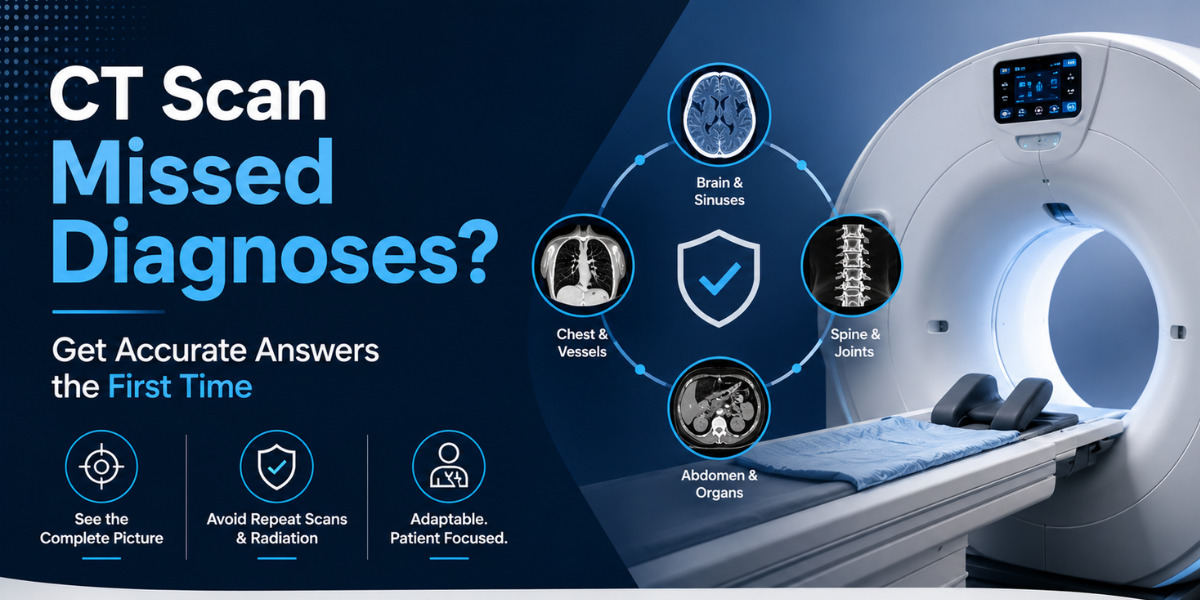
What Does a “Missed Diagnosis” in Imaging Mean?
A missed diagnosis can occur for several reasons. Medical imaging is only one part of the diagnostic process. A radiologist interprets images in the context of the clinical information provided, while the referring clinician combines imaging findings with the patient’s history, laboratory results, and other investigations.
A condition may be difficult to identify when the following situations arise:
- It is outside the area examined
- The imaging technique is not designed to show the suspected condition clearly
- The disease is at an early stage
- Findings are subtle or non-specific
- The clinical information available to the radiologist is incomplete
- Another condition produces similar symptoms
- Additional imaging is needed to characterise an abnormality
Therefore, a missed finding should not automatically be attributed to a “rigid” scan protocol or a failure to examine every structure visible on an image. The ACR notes that imaging selection should be based on the complexity and severity of the patient’s condition, with the referring physician and radiologist making the final decision together.
Why the Right Imaging Test Matters?
Different imaging techniques answer different clinical questions.
Here are a few examples:
- CT can provide detailed images of bones, organs, blood vessels, lungs and other structures.
- MRI provides excellent soft-tissue contrast and is useful for the brain, spine, joints, abdomen and many other areas.
- Ultrasound can be useful for selected abdominal, pelvic, vascular, thyroid and soft-tissue examinations.
- X-ray remains useful for many bone and chest conditions.
- CT angiography or MR angiography may be appropriate when blood vessels need assessment.
Choosing the appropriate examination is therefore more important than simply choosing the most advanced scanner. The ACR Appropriateness Criteria provide evidence-based recommendations for thousands of clinical scenarios and emphasise that the appropriate examination depends on the individual clinical situation.
In many cases, diagnostic imaging works as a step-by-step process: the first examination answers one clinical question, while a subsequent examination addresses a more specific question raised by the initial findings. As a result, patients may need multiple scans, depending on their condition.
Six Situations Where Additional Evaluation May Be Considered
The following examples illustrate why imaging decisions depend on the clinical question. They should not be interpreted as instructions for patients to request a particular scan.
1. Headache With Possible Sinus Disease
A routine CT or MRI of the brain may not be the appropriate examination when the main clinical concern is a disorder of the paranasal sinuses. If symptoms and clinical assessment suggest significant sinus disease, a clinician may request dedicated sinus imaging. However, headache has many possible causes, and sinus abnormalities on imaging do not automatically establish that sinus disease is responsible for the symptoms.
Key point: The suspected diagnosis should guide the imaging examination, rather than assuming every headache requires additional sinus imaging.
2. Abdominal or Back Pain
Pain can sometimes be referred from one anatomical region to another. For example, abdominal and back symptoms may have gastrointestinal, urinary, musculoskeletal, spinal, vascular, or other causes. If the initial imaging does not explain constant symptoms, the clinician may reconsider the differential diagnosis and decide whether another examination is appropriate.
3. A Liver Lesion Requiring Characterisation
A CT examination may identify a liver lesion that cannot be fully characterised from the initial images. Depending on the appearance of the lesion and the clinical situation, further evaluation may involve the following tests:
- Contrast-enhanced CT
- MRI
- Ultrasound
- Other targeted investigations
Contrast-enhanced imaging can show how a lesion behaves after contrast administration, which may help differentiate certain types of liver lesions. However, contrast is not automatically required for every liver examination.
4. Suspected Pulmonary Embolism
Different chest CT examinations serve different purposes. High-resolution CT (HRCT) is particularly useful for evaluating lung parenchyma and certain interstitial lung abnormalities. When pulmonary embolism is suspected, CT pulmonary angiography (CTPA) may be appropriate because it evaluates the pulmonary arteries. The important distinction is that an HRCT performed for lung-parenchymal assessment should not automatically be considered equivalent to a CTPA for suspected pulmonary embolism.
5. Suspected Stroke or Blood-Vessel Occlusion
Patients with suspected acute stroke may undergo CT or MRI depending on the clinical situation. MRI sequences such as diffusion-weighted imaging can be highly sensitive for detecting acute ischaemic injury. However, evaluating the blood vessels themselves may require additional vascular imaging, such as CT angiography or MR angiography, depending on the suspected condition and treatment pathway. For example, identifying a large-vessel occlusion can be important when assessing eligibility for certain acute stroke treatments.
Important point for patients: Symptoms such as sudden weakness, speech difficulty, visual or coordination loss require urgent medical assessment, not a patient decision about which MRI sequence to request.
6. Spine Symptoms and Multiple Possible Levels
Spinal symptoms can arise from different regions of the spine. For example, neck symptoms may relate to the cervical spine, while certain leg symptoms may arise from lumbar nerve compression. If symptoms do not correspond to the findings on the initial examination, the treating clinician may reconsider the diagnosis and decide whether imaging of another spinal region is appropriate. A whole-spine MRI is not automatically required simply because a patient has symptoms in more than one region.
Real‑world scenarios: When Symptoms Hide in Plain Sight
Imaging follows procedural boundaries, but the true source of a patient’s symptoms may lie just beyond those limits. These examples show how missed findings on CT and MRI can occur when protocols are not adjusted in real time.
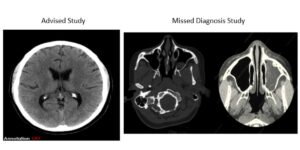
Case 1: Brain pain that starts in the sinuses
A patient presents with severe headache, nausea, and vomiting, and a CT head is ordered. Standard brain CT is centered on the cerebral parenchyma and cranial vault, though the first axial slices often include parts of the facial structures, including the paranasal sinuses. If a left maxillary polyp or significant mucosal thickening is present in those slices, a brain only interpretation may miss the true cause. The patient may receive a normal brain report while sinus disease responsible for the symptoms remains unaddressed.
Better approach: If sinus pathology is suspected, perform a dedicated CT paranasal sinuses (PNS) study.
All images are AI-generated
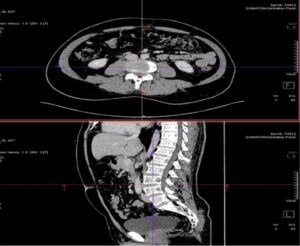
Case 2: Abdominal pain caused by a spinal problem
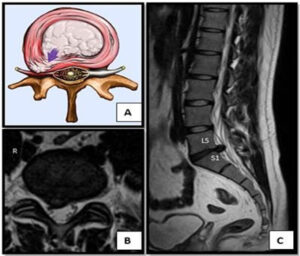
Referred pain can point attention to the wrong region. A patient with abdominal pain, vomiting, and posterior lumbar discomfort may undergo a non‑contrast CT (NCCT) abdomen. Although the scan evaluates abdominal organs well, the field edge may capture the lower spine. If the spine is not reviewed carefully with multiplanar reconstruction (MPR), important findings such as disc bulges at L4–L5 or L5–S1 may be missed. The abdominal report may appear normal while the actual cause remains hidden.
Better approach: Adjacent structures should also be reviewed, and 3D or multiplanar reconstructions should be used when appropriate.
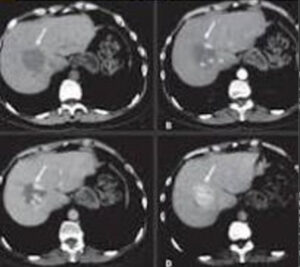
Case 3: A liver lesion that needs contrast
A patient undergoes NCCT abdomen for abdominal discomfort. The unenhanced scan may show a hypodense liver lesion; the question then becomes: can a CT detect cancer? CT can detect suspicious lesions, but without contrast enhancement it may be impossible to distinguish benign from malignant disease with confidence. If the scan stops there, the diagnosis remains incomplete.
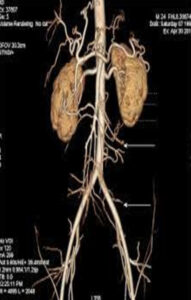
Better approach: Depending on the clinical question, extend the study to a triphasic liver CT, contrast-enhanced CT (CECT) whole abdomen, or CT angiography for proper characterization.
Case 4: A hidden pulmonary embolism
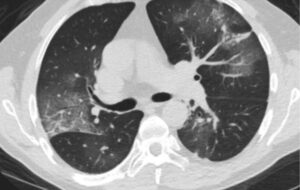
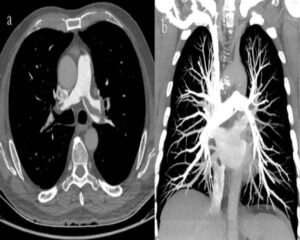
A patient with prior COVID-19 presents with chest pain, haemoptysis, fatigue, and dyspnoea, and HRCT thorax is advised. HRCT is excellent for evaluating lung parenchyma and scarring, but it is non‑contrast and does not adequately assess the pulmonary arteries. If the true problem is a pulmonary embolus, HRCT may miss it entirely. The patient may be sent home with a reassuring report while a dangerous condition persists.
Better approach: If pulmonary embolism is suspected, perform CT pulmonary angiography (CTPA).
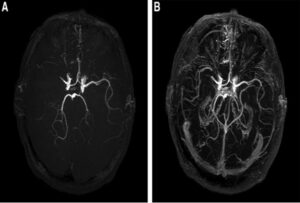
Case 5: The hidden stroke in the brain vessels
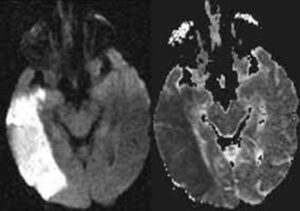
A patient presents with headache, vomiting, and left hemiparesis; MRI brain is performed, and diffusion (DWI/ADC) images may show an acute infarct. However, the vascular cause may remain hidden if arterial imaging is not obtained. If the right middle cerebral artery is occluded, routine MRI sequences alone may not identify the exact vessel occlusion.
Better approach: Add plain 3D TOF Sequence (MRA) or contrast MRA in the same sitting to identify arterial occlusion.
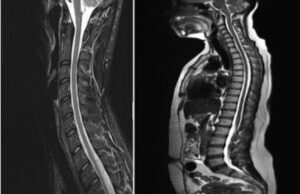
Case 6: The spine problem behind walking difficulty
A patient presents with neck pain, back pain, nausea, gait disturbance, and urinary difficulty and undergoes MRI cervical spine. MRI may show spinal abnormalities, but if the symptomatic level lies in the lumbar region—particularly L5–S1—focusing only on the cervical spine will miss the true cause of gait disturbance and urinary symptoms.
Better approach: Expand the protocol to include MRI lumbar spine when clinically indicated.
Final Thoughts
CT and MRI are important tools in modern diagnosis, but no imaging examination can guarantee that every disease will be detected or that one scan will always provide the final answer. The most appropriate examination depends on the patient’s symptoms, clinical question, suspected condition, previous findings, and individual circumstances. Sometimes additional imaging is appropriate. In other situations, the next step may be a laboratory test, specialist assessment, physical examination, or observation. Our NABH-accredited Eskag Sanjeevani Hospitals provide CT and MRI imaging services for patients referred for diagnostic evaluation. Patients can help by providing complete and accurate medical information, bringing previous imaging when available, and discussing persistent or changing symptoms with their treating clinician.

Microbiologist with over 2 years of experience in medical writing, specialising in evidence-based healthcare content.

Clinical experience in diagnosis, treatment, and evidence-based patient care across a range of conditions.
Missed diagnoses commonly occur when the scan is limited to a narrow field of view or when MRI sequences are incomplete and the true cause of symptoms lies outside the scanned area.
A scan may miss a condition if the boundaries are too narrow, the necessary sequences are omitted, or contrast is needed but not used.
Share your complete symptom history, including any radiating pain, so the technologist can adapt the scan if needed.
A repeat CT increases cumulative radiation exposure, adds cost (for both CT and additional MRI sequences), and delays treatment.
Yes. Asking about your symptoms and the scan scope can help the technologist adjust the protocol in real time.