

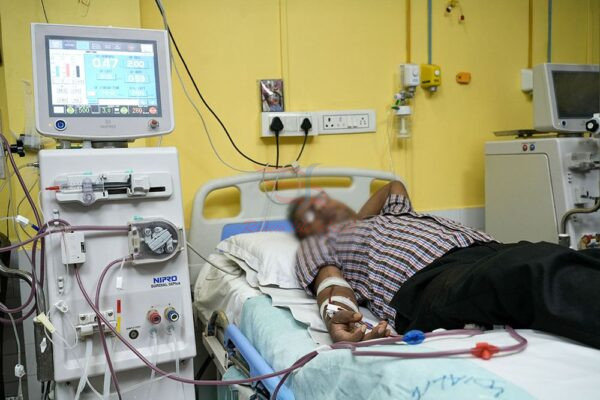
Dialysis Centre in Kolkata With CRRT At Eskag Sanjeevani
When the kidneys cannot remove enough waste products and excess fluid from the blood, dialysis helps perform part of this essential function. At Eskag Sanjeevani Hospitals, patients can enquire about kidney dialysis services, including haemodialysis and Continuous Renal Replacement Therapy (CRRT), depending on their clinical needs and the relevant unit’s service availability.
Our team can help patients understand the next steps, arrange an enquiry, and review available treatment options.
When Is Dialysis Needed?
Dialysis may be recommended when the kidneys can no longer maintain a safe balance of waste products, fluids and electrolytes.
A nephrologist may consider dialysis for patients with:
- Advanced chronic kidney disease (CKD) or kidney failure.
- Acute kidney injury (AKI) with serious complications.
- Excess fluid that cannot be managed adequately with other treatment.
- Dangerous electrolyte imbalances or a significant build-up of waste products.
Not everyone with kidney disease needs dialysis. The decision depends on symptoms, blood test results, kidney function and overall health.
Dialysis Treatment Options
The following dialysis options are available at Eskag Sanjeevani Hospitals:
Haemodialysis
Haemodialysis is a common form of dialysis in which blood passes through a special filter called a dialyser. The machine removes waste products and excess fluid, then returns the filtered blood to the body.
A session typically takes 3-5 hours and is often done three times a week for people receiving maintenance haemodialysis. Your nephrologist will determine the schedule and duration based on your condition and treatment requirements.
Continuous Renal Replacement Therapy (CRRT)
CRRT provides continuous, gradual removal of waste and excess fluid. It is used mainly for selected critically ill patients, particularly when slower fluid removal is needed. Its suitability depends on the patient’s condition and critical-care assessment.
Sustained Low-Efficiency Dialysis (SLED)
SLED is an extended dialysis treatment that removes waste and fluid more than conventional intermittent haemodialysis. It may be considered for selected hospitalised patients.
What Happens During a Dialysis Session?
The dialysis team checks your condition and vital signs before treatment. For haemodialysis, blood is accessed through a prescribed vascular access, such as an arteriovenous fistula or a catheter.
Your blood passes through the dialyser and returns to your body. The team monitors you during treatment and checks your condition afterwards. Some patients experience cramps, dizziness, nausea or tiredness during or after dialysis. Inform the team if you feel unwell during a session.
How to Prepare for Dialysis?
Before your appointment:
- Bring your recent reports, prescriptions and relevant medical records.
- Carry your insurance or government healthcare scheme documents, if applicable.
- Follow your prescribed food, fluid and medication instructions.
- Protect your dialysis access and report redness, swelling, pain or unusual discharge.
- Ask the team about session timings, transport and any specific preparation requirements.
Do not change your medicines, fluid intake or diet without advice from your healthcare team.
Dialysis Cost and Financial Assistance
Dialysis cost depends on the treatment type, session frequency, medicines, tests, and other clinical requirements. Charges and available financial support may vary by hospital unit and patient eligibility. Contact the relevant hospital unit to enquire about the dialysis cost, available appointment slots, insurance or TPA arrangements, and eligible government healthcare schemes. Confirm what the quoted charges include before starting treatment.
Enquire About Dialysis at Eskag Sanjeevani
Eskag Sanjeevani provides dialysis services and CRRT as treatment options. Our team has delivered over 2 million dialysis sessions to more than 500,000 patients across 16 states and 250 government hospitals via its wider public-private partnership dialysis programme. To discuss kidney dialysis in Kolkata, contact Eskag Sanjeevani to confirm the appropriate unit, treatment availability, costs and next steps.
Explore Our Dialysis at Eskag Sanjeevani Hospitals Kolkata
Trusted care and convenient access for all your healthcare needs.
Visit us at: www.eskagsanjeevani.com
Call to learn more about our Dialysis
Frequently Asked Questions on: Dialysis
Many patients receiving maintenance haemodialysis have three sessions a week. Your nephrologist will prescribe the frequency and duration according to your needs.
Dialysis should not usually be painful, although needle insertion or some treatment-related symptoms may cause discomfort. Tell your care team if you experience pain, cramps or dizziness.
Your diet may need to account for fluid, sodium, potassium, phosphorus and protein. Follow an individualised plan from your nephrologist or renal dietitian rather than eliminating foods without guidance.
The cost varies by treatment type, session frequency, tests, medicines and hospital. Contact the relevant unit for current charges and information about eligible financial assistance.
Eligibility for free or subsidised dialysis depends on the applicable programme, hospital unit and patient criteria. Contact the hospital to confirm whether support is available for your circumstances.