

 Medically Reviewed
Tech Neck: How Constant Screen Posture Is Affecting You?
Smartphones, laptops, tablets, and other digital devices have become a part of everyday life. Whether you are working, studying, shopping, or scrolling through social media, chances are you spend several hours looking at a screen each day. While this habit may seem harmless, it can gradually affect your posture and spinal health.
One of the most common problems linked to prolonged screen use is tech neck. This condition develops when the head remains tilted forward for long periods, placing extra stress on the neck, shoulders, and upper spine. Over time, this repeated strain can lead to pain, stiffness, headaches, and reduced mobility.
As screen time continues to rise across India, awareness about tech neck syndrome is becoming increasingly important. Understanding its causes and early warning signs can help prevent long-term discomfort and support better spinal health.
Key Takeaways
- Tech neck develops when prolonged screen use forces the head into a forward-bent position, placing continuous strain on the neck muscles and cervical spine. This repeated stress can eventually lead to pain, stiffness, headaches, and posture-related problems.
- A recent study among medical students in Chennai found that 73% had mild to severe neck disability linked to mobile phone use. The findings highlight how common tech neck syndrome has become among young adults who spend several hours on digital devices daily.
- Simple lifestyle changes can significantly reduce the risk of tech neck. Maintaining proper posture, taking regular screen breaks, and performing targeted tech neck exercises can help protect the spine and improve long-term comfort.
Quick Answer: Tech neck is neck strain caused by using screens for a very long time. Better posture, regular breaks, and simple exercises can help prevent pain.
- All You Need to Know About Tech Neck?
- What Causes Tech Neck?
- Common Symptoms of Tech Neck Syndrome
- What Constant Screen Posture Is Doing to Your Spine
- Tech Neck Lines: Are They Related?
- Effective Tech Neck Exercises
- Tech Neck Pain Relief: Practical Tips for Everyday Life
- When Should You See a Primary Care Physician?

All You Need to Know About Tech Neck?
Tech neck, also called tech neck syndrome or text neck, refers to neck and upper back discomfort caused by repeatedly looking down at digital devices for extended periods.
When the head moves forward and downward, the neck muscles, ligaments, and joints must work harder to support its weight. Unlike occasional bending, prolonged screen posture creates continuous stress on these structures.
Over time, this strain can affect:
- The neck muscles support head movement and posture. Constant overuse may cause tightness, fatigue, and discomfort that worsens throughout the day.
- The cervical spine consists of the bones and discs in the neck. Repeated forward bending can place additional pressure on these structures and affect spinal alignment. Thus, it is important to take care of your spinal health.
- The shoulders and upper back. Poor screen posture often causes surrounding muscles to compensate, leading to stiffness and muscle tension.
- Joint mobility and flexibility. Reduced movement throughout the day can make the neck feel rigid and less comfortable during normal activities.
- Daily comfort and productivity. Persistent pain may interfere with work, studies, sleep quality, and routine tasks.
To understand why this happens, it helps to look at the common habits that contribute to tech neck.
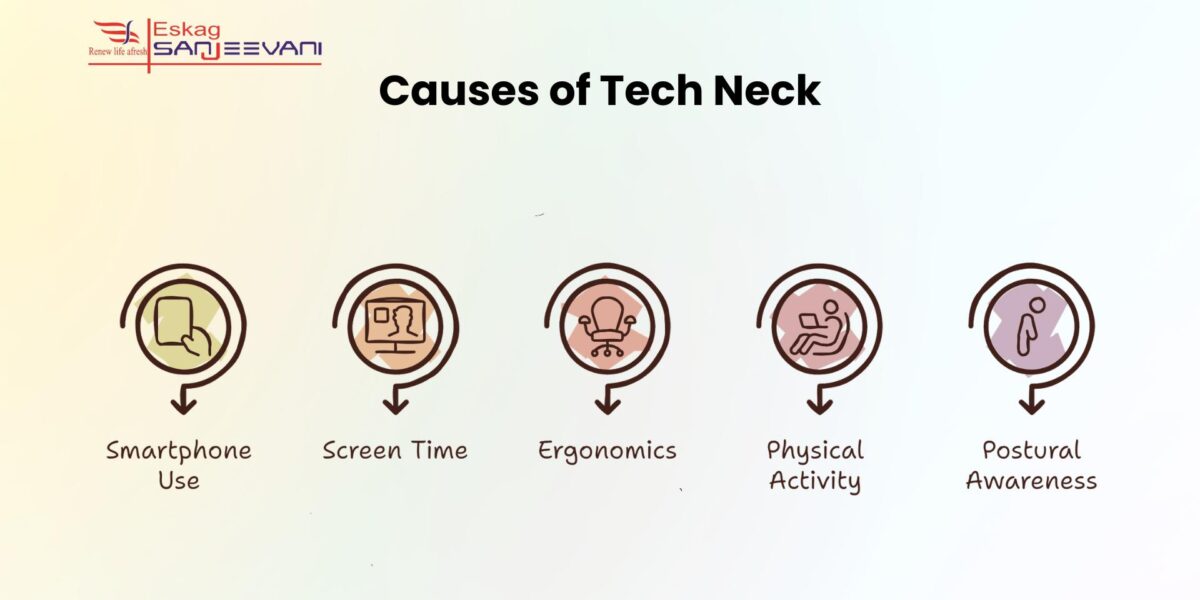
What Causes Tech Neck?
The main cause of tech neck is prolonged forward head posture while using digital devices. However, several everyday habits can increase the risk.
1. Excessive Smartphone Use
Many people hold their phones below eye level, forcing the neck to bend forward. Research has shown that smartphone activities such as texting and typing significantly increase neck flexion angles compared to normal standing posture. A recent study of medical students in Chennai found that 73% had mild-to-severe neck disability associated with mobile phone use [2].
2. Long Hours of Screen Time
Continuous use of phones, tablets, or computers without breaks can place sustained stress on neck muscles. A study among medical students found that longer mobile phone usage was associated with greater neck disability severity [1].
3. Poor Workstation Ergonomics
Working with a laptop set too low or an improperly positioned monitor encourages slouching and forward-head posture. Over time, this can contribute to muscle fatigue and discomfort.
4. Lack of Physical Activity
Spending most of the day sitting reduces movement and muscle conditioning. Weak postural muscles may struggle to support the spine effectively during prolonged screen use.
5. Poor Postural Awareness
Many people are unaware of how often they bend their neck while checking messages, watching videos, or browsing online. Without conscious correction, poor posture can gradually become a habit.
These risk factors often lead to a range of symptoms that may initially appear mild but can become more noticeable over time.
Common Symptoms of Tech Neck Syndrome
Tech neck symptoms can vary from person to person. Some individuals experience occasional discomfort, while others develop persistent pain.
Common signs include:
| Symptom | How It May Feel |
| Neck pain | Aching, soreness, or discomfort around the neck area |
| Neck stiffness | Difficulty turning the head fully or comfortably |
| Shoulder tension | Tightness around the shoulders and upper back |
| Headaches | Discomfort that may begin near the neck and travel upward |
| Reduced mobility | Feeling less flexible during daily movements |
In addition to these symptoms, some people may notice fatigue in the neck muscles after prolonged screen use. Others may experience worsening discomfort towards the end of the day, especially after prolonged phone use.
The effects of tech neck are not limited to temporary discomfort. If poor posture persists for months or years, it can significantly affect spinal health.
What Constant Screen Posture Is Doing to Your Spine
Many people assume tech neck is simply a muscle problem. In reality, prolonged poor posture can affect several parts of the musculoskeletal system.
1. Increased Stress on Neck Muscles
The neck muscles must work continuously to support a forward-tilted head. This increased workload can lead to fatigue, soreness, and muscle tightness over time [3].
2. Changes in Cervical Alignment
Repeated forward head posture may alter the cervical spine’s natural position. This can contribute to ongoing discomfort and reduced postural stability.
3. Greater Risk of Neck Pain
Studies have consistently found that increased smartphone use is associated with higher levels of neck discomfort and musculoskeletal symptoms [4].
4. Strain on the Upper Back and Shoulders
When the neck moves forward, surrounding muscles often compensate. This can create tension across the shoulders and upper back, leading to a wider area of discomfort.
5. Reduced Movement Patterns
People who spend long hours looking down often move their neck less throughout the day. Reduced mobility can contribute to stiffness and make routine movements feel uncomfortable.
Fortunately, early intervention can help minimise these effects and improve overall posture.
Also read: Bone Density by Age: When Should You Start Worrying About It?
Tech Neck Lines: Are They Related?
Many people searching for information about tech neck are also concerned about tech neck lines. Tech neck lines are horizontal creases that may develop across the neck. These lines are often associated with repetitive neck bending while looking down at screens.
While ageing, genetics, and skin health also play important roles, frequent downward neck posture may contribute to the appearance of these visible lines over time. Because tech neck lines often develop gradually, improving posture early may help reduce further stress on the neck area.
Effective Tech Neck Exercises
Simple movement routines can help improve flexibility and reduce muscle tension.
Some commonly recommended tech neck exercises include:
Chin Tucks
- Sit or stand upright with your shoulders relaxed.
- Gently pull your chin backwards without tilting your head.
- Hold for a few seconds before relaxing.
- This exercise helps encourage better head alignment and activates postural muscles.
Neck Side Stretches
- Slowly tilt your head toward one shoulder.
- Hold the stretch gently without forcing movement.
- Repeat on both sides.
- This may help reduce muscle tightness around the neck.
Shoulder Blade Squeezes
- Sit upright and gently squeeze your shoulder blades together.
- Hold briefly before relaxing.
- This exercise supports upper back posture and shoulder stability.
Chest Opening Stretch
- Stand in a doorway and place your arms against the frame.
- Lean forward slightly until you feel a gentle stretch across the chest.
- This movement may help counteract the effects of prolonged forward shoulder posture.
Regular Movement Breaks
- Set reminders to stand up and move every 20 to 30 minutes.
- Frequent movement helps reduce continuous strain on the neck and upper back.
While exercises can be helpful, they work best when combined with healthy daily habits.
Tech Neck Pain Relief: Practical Tips for Everyday Life
Managing tech neck often involves making small but consistent changes.
Here are some practical strategies:
- Raise screens closer to eye level whenever possible. This simple adjustment reduces the need to bend the neck forward repeatedly during the day.
- Take short movement breaks throughout work or study sessions. Even a few minutes of walking or stretching can reduce muscle fatigue and stiffness.
- Maintain an upright sitting posture with proper back support. Good sitting habits help distribute stress more evenly across the spine.
- Reduce unnecessary screen time outside work hours. Limiting recreational scrolling can reduce overall neck strain each day.
- Perform tech neck exercises regularly, not only when pain appears. Consistency often provides better long-term results than occasional stretching.
These preventive measures can significantly improve comfort and reduce the risk of developing chronic symptoms.
When Should You See a Primary Care Physician?
Occasional neck discomfort may improve with posture correction and lifestyle changes. However, some symptoms should not be ignored.
Consider consulting a primary care physician if:
- Neck pain persists for several weeks despite improved posture and reduced screen time. Persistent symptoms may require further evaluation to identify underlying causes.
- The pain interferes with work, sleep, exercise, or other daily activities. Ongoing discomfort can affect quality of life and should be assessed by a healthcare professional.
- You experience headaches, dizziness, numbness, or symptoms that spread to the shoulders and arms. These signs may indicate more significant nerve or musculoskeletal involvement.
- Neck stiffness becomes progressively worse over time. Increasing restriction in movement may require medical attention.
- You are unsure whether your symptoms are related to posture or another health condition. A professional assessment can help determine the appropriate next steps.
If you are looking for the best general physician in Kolkata, seeking medical advice early can help identify the cause of neck pain and prevent symptoms from becoming more difficult to manage.
Wrapping Up
Tech neck is no longer a problem limited to office workers or heavy smartphone users, and Eskag Sanjeevani understands that. With digital devices playing such a large role in modern life, people of all ages are spending more time in positions that place unnecessary strain on the neck and spine.
Research shows that neck-related problems associated with mobile phone use are becoming increasingly common, particularly among young adults. Simple changes such as improving posture, reducing continuous screen time, taking regular movement breaks, and practising tech neck exercises can make a meaningful difference.
If symptoms persist or begin affecting daily life, consulting a healthcare professional is important. Through thorough consultations and scans such as X-rays, experienced physicians at Eskag Sanjeevani can evaluate posture-related concerns and guide patients towards appropriate treatment and preventive care.

Microbiologist with over 2 years of experience in medical writing, specialising in evidence-based healthcare content.

Clinical experience in diagnosis, treatment, and evidence-based patient care across a range of conditions.
References
- J E B, Devi G D, Rajan R, M R RD, P R D. Prevalence of Text Neck Syndrome Among Medical Students in Chennai, India: A Cross-Sectional Study. Cureus. 2026 Jan 3;18(1):e100655. doi: 10.7759/cureus.100655. PMID: 41635340; PMCID: PMC12862414.
- Grasser T, Borges Dario A, Parreira PCS, Correia IMT, Meziat-Filho N. Defining text neck: a scoping review. Eur Spine J. 2023 Oct;32(10):3463-3484. doi: 10.1007/s00586-023-07821-2. Epub 2023 Jul 5. PMID: 37405530.
- Yoon W, Choi S, Han H, Shin G. Neck Muscular Load When Using a Smartphone While Sitting, Standing, and Walking. Hum Factors. 2021 Aug;63(5):868-879. doi: 10.1177/0018720820904237. Epub 2020 Feb 11. PMID: 32045274.
- Mayo Clinic Health System. “Tech Neck: Effect of Technology.” Mayo Clinic Health System, 10 Apr. 2024.
Tech neck syndrome is a posture-related condition caused by repeatedly looking down at phones, tablets, or computers for long periods. It commonly leads to neck pain, stiffness, shoulder tension, and reduced mobility.
In many cases, symptoms improve when people correct their posture, reduce prolonged screen use, and perform regular stretching exercises. Early intervention generally produces better results than waiting until symptoms become severe.
Chin tucks, neck stretches, shoulder blade squeezes, and chest-opening stretches are commonly recommended. These exercises help improve posture, reduce muscle tension, and support spinal alignment when performed consistently.
Tech neck lines may become more noticeable with age and repeated neck bending. While improving posture may help reduce ongoing stress on the skin, the appearance of existing lines can vary depending on individual factors.
You should consult a doctor if neck pain persists for several weeks, worsens over time, or is accompanied by symptoms such as numbness, dizziness, headaches, or pain radiating into the arms. Early assessment can help prevent further complications.