
 Medically Reviewed
Prediabetes in India: What Is It and Who's at Risk
Millions of Indians have prediabetes and do not know it. There are no obvious signs. By the time most people find out, the damage has already begun. Knowing what prediabetes is and catching it early can stop type 2 diabetes before it starts.
Key Takeaways
- Prediabetes means your blood sugar is higher than normal but not yet high enough to be called type 2 diabetes.
- Most people with prediabetes have no symptoms, so a routine blood test is the only way to find it early.
- Prediabetes can often be reversed with diet changes, regular movement, and modest weight loss.
Quick Answer: Prediabetes means your blood sugar is above normal but below the diabetes range. With the right changes, it can often be reversed.
- Why is Prediabetes a Silent Crisis in India?
- What are the Warning Signs of Prediabetes?
- The Real Warning Sign: No Warning At All
- Who is at Risk? Know Your Prediabetes Risk Factors
- How is Prediabetes Diagnosed?
- How to Reverse Prediabetes: Steps That Actually Work
- What Food Items Can You Eat?
- What Happens If Prediabetes Is Left Untreated?
- When to See a Doctor?
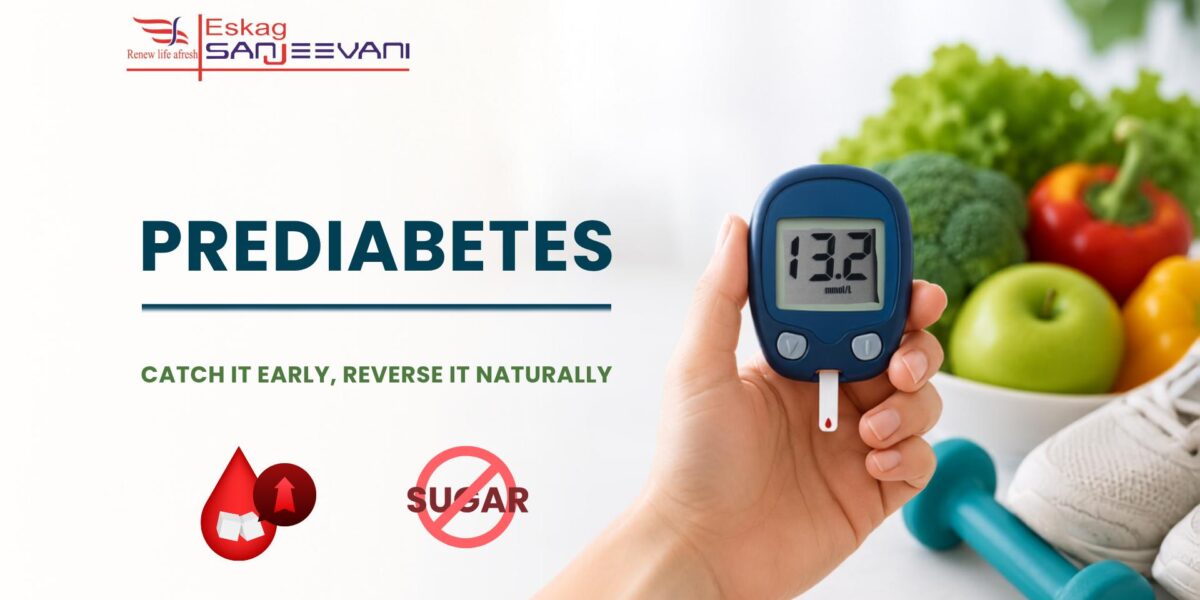
Why is Prediabetes a Silent Crisis in India?
India already has one of the world’s highest diabetes burdens. Prediabetes sits right before that stage, often with no warning at all.
A 2024 HbA1c-based study of nearly 20 lakh adults across Indian states found that 22.25% of those tested had prediabetes, with substantial variation across regions [2]. A separate analysis of older adults (aged 45 and above) found prediabetes in 30.6% of participants, signalling a major public health concern [3].
The ICMR-INDIAB study found prediabetes prevalence as high as 14.6% in some states and noted that age, family history, abdominal obesity, hypertension, and income level were all significant risk factors for prediabetes in India [4].
What makes this worse: most people feel completely fine, even as their blood sugar creeps upward.
What are the Warning Signs of Prediabetes?
This is where most Indians get caught off guard. Prediabetes symptoms are rare. It has been noticed that 8 in 10 people with prediabetes do not know they have it [1].
Still, there are a few signs worth knowing:
Acanthosis Nigricans (Dark Patches on Skin)
One possible physical sign of prediabetes is darkened, velvety skin in areas like the neck, armpits, or groin. It is often described as one of the few outward signs that something may be off [5]. Many Indians dismiss this as a skin issue, not realising it may signal insulin resistance.
Early Signs That Blood Sugar Is Rising
When prediabetes starts to move toward type 2 diabetes, the body begins to show early signals:
- Needing to urinate often, especially at night, as the kidneys work overtime to clear excess sugar
- Feeling very thirsty even after drinking water throughout the day
- Feeling hungry again shortly after a full meal, as cells are not absorbing glucose properly
- Feeling tired or low on energy without a clear reason, even after enough sleep
- Blurred vision during certain parts of the day due to fluid changes in the eyes
These are not definitive prediabetes symptoms on their own. But together, they are a reason to have a blood sugar test.
The Real Warning Sign: No Warning At All
The most important thing to know about the warning signs of prediabetes is that, for most people, there are none. Usually, prediabetes has no symptoms or signs [5]. This is why regular screening matters, especially if you have any of the risk factors below. Blood sugar levels can remain above normal for years without causing noticeable health problems. During this time, however, insulin resistance may continue to worsen, increasing the risk of progressing to type 2 diabetes. Detecting prediabetes early through a simple blood test gives you the best chance to reverse it before long-term complications begin.
Also Read: Type 2 Diabetes in Children: Why More Indian Kids Are Developing It Early
Who is at Risk? Know Your Prediabetes Risk Factors
Prediabetes does not pick randomly. Certain patterns in your health, body, and family history put you at higher risk.
| Risk Factor | Why It Matters |
| Overweight or obese (BMI above 25) | Excess fat, especially around the belly, reduces insulin sensitivity |
| Family history of type 2 diabetes | Genetic factors play a strong role |
| Age 45 or above | Risk goes up significantly with age |
| Physically inactive (less than 3 times a week) | Muscle activity helps absorb blood glucose |
| History of gestational diabetes | Affects insulin regulation long after pregnancy |
| PCOS (polycystic ovarian syndrome) | Hormonal imbalances worsen insulin response |
| Obstructive sleep apnoea | Disrupted sleep harms insulin sensitivity |
| Smoking | Tobacco increases insulin resistance directly |
It is also noted that certain ethnicities, including South Asians, face a higher risk of developing prediabetes, making regular screening especially important in the Indian population [5].
How is Prediabetes Diagnosed?
Diagnosis is simple and requires only a blood test. There is no way to know from symptoms alone.
Fasting Blood Sugar Test
You fast for at least 8 hours (usually overnight) before the test. According to a study, a result between 100 and 125 mg/dL indicates prediabetes. A reading below 100 is normal; 126 or above is diabetes [1].
HbA1c Test
This test shows your average blood sugar over the past 2 to 3 months. Usually, HbA1c between 5.7% and 6.4% means prediabetes. Below 5.7% is normal; 6.5% or higher is diabetes [1].
If you are above 35, overweight, or have any of the risk factors listed above, speak to the right doctor or your nearest specialist about getting screened. A simple fasting blood test can catch prediabetes before any damage begins.
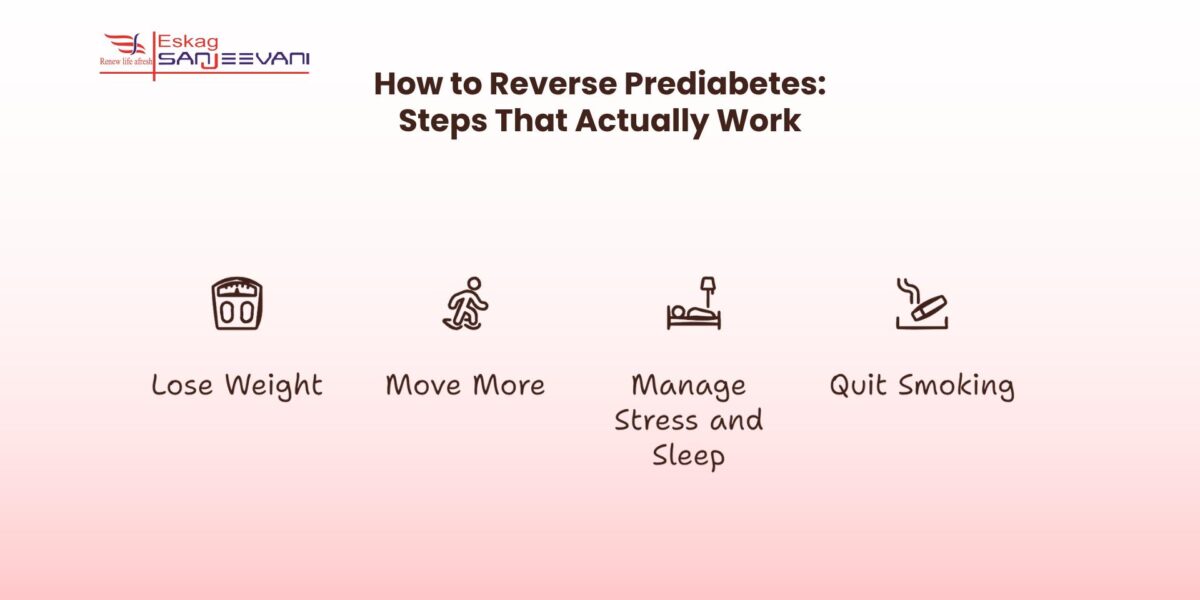
How to Reverse Prediabetes: Steps That Actually Work
What you need to understand is that prediabetes is not permanent. Healthy lifestyle changes, especially eating well and moving more, are the best way to treat prediabetes and prevent or delay type 2 diabetes.
1. Lose a Little Weight
You do not need to reach your ideal weight overnight. Usually, losing just 7% of your body weight can cut the risk of developing type 2 diabetes by more than half [1]. For a person who weighs 80 kg, that is around 5.5 kg.
2. Move More
Exercise makes your muscles more sensitive to insulin. It is usually recommended that 30 minutes of activity almost every day, for at least 150 minutes per week [6]. A brisk walk after meals counts. Even a 10- to 15-minute post-meal walk helps lower blood sugar.
3. Manage Stress and Sleep
At times, even stress and lack of sleep also add to insulin resistance. Aim for 7 to 9 hours of sleep each night. Yoga, pranayama, and spending time outdoors are all practical stress-relief tools.
4. Quit Smoking
Smoking is directly linked to higher insulin resistance and a greater risk of progressing to type 2 diabetes in people with prediabetes [5]. Stopping smoking is one of the most powerful actions you can take.
What Food Items Can You Eat?
There are certain foods you can eat to help prevent diabetes and keep your blood sugar levels low. Foods to eat: Dal, legumes (rajma, chana), jowar, bajra, ragi, brown rice, whole wheat roti, paneer, eggs, fish, leafy greens, nuts, seeds. Foods to limit: White rice, maida, packaged snacks, sugary drinks, mithai, fried foods, flavoured yoghurt
Note: A specialist or registered dietitian can help you personalise this plan based on your blood sugar readings and food habits.
What Happens If Prediabetes Is Left Untreated?
Ignoring prediabetes does not make it go away. Long-term damage, including your heart, blood vessels, and kidneys, may already be beginning even before prediabetes becomes type 2 diabetes [5].
Without action, prediabetes can progress to type 2 diabetes, which in turn raises the risk of:
- Heart attack and stroke
- Kidney disease and failure
- Nerve damage (numbness in hands and feet)
- Eye damage and loss of vision
- Slow-healing wounds and infections
Prediabetes increases the risk of heart attack and stroke even before it becomes full diabetes[1]. Early action is not optional; it is essential.
When to See a Doctor?
You must consult a doctor if you have any of the risk factors listed above, even if you feel perfectly fine. A simple fasting blood test is all it takes. If you are based in Kolkata, consulting the best diabetologist in Kolkata at Eskag Sanjeevani can help you get screened, understand your results, and build a plan to bring your blood sugar back to normal. Early detection makes reversal a lot easier.
Final Thoughts
Prediabetes is your body’s way of saying “act now.” Blood sugar has risen above normal, but there is still time to turn it around. Most people in India do not know they have it, and that is the real danger. Prediabetes symptoms are rare. The warning signs are mostly invisible. But a blood test can catch it, and lifestyle changes can reverse it.
Do not wait for symptoms. Eskag Sanjeevani has the best sugar specialist that you are looking for. If you have risk factors like excess weight, a family history of diabetes, or a sedentary lifestyle, get checked. The sooner you know, the sooner you can act.

Microbiologist with over 2 years of experience in medical writing, specialising in evidence-based healthcare content.

Clinical experience in diagnosis, treatment, and evidence-based patient care across a range of conditions.
References
- Cleveland Clinic. “Prediabetes: What Is It, Who’s at Risk, Symptoms, Can It Be Reversed.” Cleveland Clinic, 8 Nov. 2023, Accessed 8 July 2026.
- “Prediabetes and diabetes in India: An hba1c based epidemiology study – sciencedirect.” Available at:
- Ravi, Rashita, et al. “Prevalence and Factors Associated with Prediabetes Among Older Adults in India: Evidence from a National Survey.” Frontiers in Public Health, vol. 14, 16 Mar. 2026, 10.3389/fpubh.2026.1766812.
- Anjana, R. M., et al. “Prevalence of Diabetes and Prediabetes (Impaired Fasting Glucose And/or Impaired Glucose Tolerance) in Urban and Rural India: Phase I Results of the Indian Council of Medical Research–India DIABetes (ICMR–INDIAB) Study.” Diabetologia, vol. 54, no. 12, 30 Sept. 2011, pp. 3022–3027,
- Mayo Clinic. “Prediabetes – Symptoms and Causes.” Mayo Clinic, 11 Nov. 2023,
- “Good to Know Prediabetes: What Is It and What Can I Do?” Clinical Diabetes, vol. 42, no. 2, 1 Apr. 2024, pp. 351–352. Accessed 8 July 2026.
Prediabetes means your blood sugar is higher than normal but not yet in the diabetic range. A fasting blood sugar between 100 and 125 mg/dL, or an HbA1c between 5.7% and 6.4%, indicates prediabetes. Diabetes is confirmed at 126 mg/dL fasting or an HbA1c of 6.5% and above.
Most people have no warning signs at all. Some may notice dark, velvety patches on the neck or armpits (acanthosis nigricans), frequent urination, fatigue, or increased thirst. A routine blood test is the only reliable way to detect prediabetes.
Yes, in many cases. Studies show that losing 5 to 7% of body weight, exercising 150 minutes a week, and eating a fibre-rich diet can bring blood sugar levels back to the normal range. Early detection makes reversal much more likely.
Yes. You do not have to give up rice completely. Switch to brown basmati rice and reduce your portion size. Pair it with a dal, a vegetable, and a protein source like curd or fish. This slows sugar absorption and lowers the meal’s glycaemic impact.
Absolutely. Prediabetes rarely causes symptoms, and feeling fine does not mean your blood sugar is fine. A sugar specialist or diabetologist can review your results, assess your risk factors, and guide you on whether lifestyle changes alone are enough or whether medication may help.