
 Medically Reviewed
Cholecystectomy: Your Guide to Gallbladder Removal
Every year, millions of people walk into hospitals with one pressing question: why does my chest hurt? Gallstones affect nearly 20 million people, and for many, the first sign is a sudden, gripping pain in the upper right abdomen, often after a meal [2]. The pain passes, life goes on, and the warning goes unheeded. Then it comes back, sharper and harder to ignore.
For many patients in India, the first episode of gallstone pain is dismissed as acidity or indigestion, only to return weeks later as a full-blown emergency. If your doctor has now recommended a cholecystectomy, you are not alone, and you are in the right place. This guide covers everything you need to know before and after gallbladder removal surgery, in plain, honest language.
Key Takeaways
- Cholecystectomy is the surgical removal of the gallbladder, most commonly performed to treat gallstones and related conditions.
- Laparoscopic cholecystectomy uses small incisions, carries fewer risks, and allows most patients to return home the same day.
- A post-cholecystectomy diet and short recovery period are all that most patients need before resuming normal life.
Quick Answer: Cholecystectomy is gallbladder removal surgery, done to treat gallstones or gallbladder disease.
What Is a Cholecystectomy?
A cholecystectomy is a surgical operation to remove the gallbladder, a small, pear-shaped organ that sits just beneath the liver on the upper right side of the abdomen. Its job is simple: store bile, a digestive fluid produced by the liver, and release it into the small intestine when you eat fatty food. Once the gallbladder is removed, the liver continues producing bile as normal. It flows directly into the small intestine rather than being stored first, a shift most people adjust to without lasting difficulty [1].
Cholecystectomy is one of the most frequently performed abdominal surgeries in the world. It is the definitive treatment for gallbladder disease, meaning it not only manages symptoms; it removes the source of the problem entirely. For patients with recurrent gallstone pain, chronic inflammation, or a gallbladder that has stopped functioning properly, surgery is not a last resort. It is the most reliable path to lasting relief.
Also read: 5 Signs Gallstones Are an Emergency
Who Needs Gallbladder Removal?
The most common reason for a cholecystectomy is gallstones. However, surgeons may also recommend it for:
- Chronic or recurring cholecystitis (inflammation of the gallbladder) that keeps disrupting daily life
- Biliary dyskinesia, where the gallbladder does not contract or empty properly during digestion
- Acalculous cholecystitis, a form of inflammation that occurs without stones and can become severe
- Gallstone pancreatitis, where a stone escapes into the pancreatic duct and triggers dangerous inflammation
- Gallbladder polyps or masses that carry a risk of becoming cancerous over time
If gallstone pain has brought you to a hospital once, it is very likely to happen again. Cholecystectomy is the only treatment that can reliably stop this cycle.
2 Types of Cholecystectomy
There are two main approaches to gallbladder removal surgery. Your surgeon will decide which is right for you based on your specific condition, anatomy, and overall health.
1. Laparoscopic Cholecystectomy
Since the early 1990s, laparoscopic cholecystectomy has become the gold standard for gallbladder removal [2]. The surgeon makes three to four small incisions in the abdomen, inserts a tiny camera (laparoscope), and uses thin instruments to detach and remove the gallbladder. The abdomen is briefly inflated with carbon dioxide gas to create space for clear visualisation.
Laparoscopic cholecystectomy offers substantial advantages over open surgery, including smaller incisions, less pain after the operation, shorter hospital stays, and a faster return to normal activity.
If you are looking for the best surgeon for laparoscopic cholecystectomy in Kolkata, Eskag Sanjeevani’s General and Laparoscopic Surgery department offers advanced keyhole techniques and is staffed by experienced surgical teams.
2. Open Cholecystectomy
Open surgery involves a single larger incision under the right rib cage. It takes longer and requires a more extended hospital stay and recovery. Surgeons choose this approach when the anatomy is unclear, when there is significant scarring from prior surgeries, or when cancer is suspected [1].
| Feature | Laparoscopic | Open Surgery |
| Incisions | 3–4 small cuts | One 4–6-inch cut |
| Duration | 60–90 minutes | 1–2 hours |
| Hospital Stay | Same day or overnight | 2–3 days |
| Recovery Time | About 2 weeks | 6–8 weeks |
| Best for | Most gallbladder cases | Complex or high-risk cases |
This table compares the two types of cholecystectomy to help patients understand how the procedures differ in recovery, hospital stay, and surgical approach.
What to Expect During a Cholecystectomy?
Knowing what happens before surgery can ease anxiety and help you feel more prepared. From preoperative tests to the surgical steps inside the operating theatre, understanding the process helps you know what to expect and how your care team works to keep the procedure safe and effective.
Before the Cholecystectomy
Preparation for cholecystectomy is straightforward. Your care team will guide you through each step.
Before the operation, your doctors will:
- Run blood tests and imaging to confirm the diagnosis and check your fitness for anaesthesia
- Review all medications you are taking and advise you to pause or adjust certain ones
- Ask you to fast, no food or water, from midnight before your surgery date
- Explain whether the plan is laparoscopic or open, and what to expect if the approach changes
- Insert an IV line for fluids, antibiotics, and anaesthetic medications on the day of surgery
Preoperative optimisation of any existing health conditions, such as diabetes, high blood pressure, or clotting disorders, is an important part of surgical planning and directly improves outcomes [2].
What Happens During the Procedure?
You will be under general anaesthesia throughout the surgery, so you will not be awake or feel anything.
For a laparoscopic procedure, your surgeon will:
- Make a small cut near the navel and insert the laparoscope to view the operating area on a monitor
- Create two to three more small ports in the upper right abdomen for surgical instruments
- Carefully separate the gallbladder from its connections to the liver, bile duct, and blood supply
- Clip and divide the cystic duct and cystic artery before removing the gallbladder through the navel port
- Close all incisions, release the gas, and confirm there is no bleeding before ending the procedure
A key safety step during the procedure is achieving the critical view of safety, confirming that only the cystic duct and cystic artery enter the gallbladder before cutting anything. This minimises the risk of accidental bile duct injury, which is the most serious complication of the surgery.
Risks and Complications of Cholecystectomy
Cholecystectomy is a well-established, safe procedure, but like any surgery, it carries a small risk of complications.
Common short-term risks include:
- Bleeding from the cystic artery or liver bed, which surgeons monitor carefully during the procedure
- Infection at the incision site, managed with prophylactic antibiotics and proper wound care
- Nausea or vomiting as the anaesthesia wears off, usually controlled with medication
- Bile leakage into the abdomen if a clip slips or the bile duct is inadvertently nicked
- Injury to the common bile duct occurs in about 0.6% of laparoscopic cases and may require further intervention [2].
Conversion from laparoscopic to open surgery is not a complication; it is a careful clinical decision made when safety demands it.
If you experience extreme pain, do not assume they are permanent. A gastroenterologist can investigate and offer targeted treatment. To understand more about when digestive symptoms need a specialist, read when to see a general surgeon.
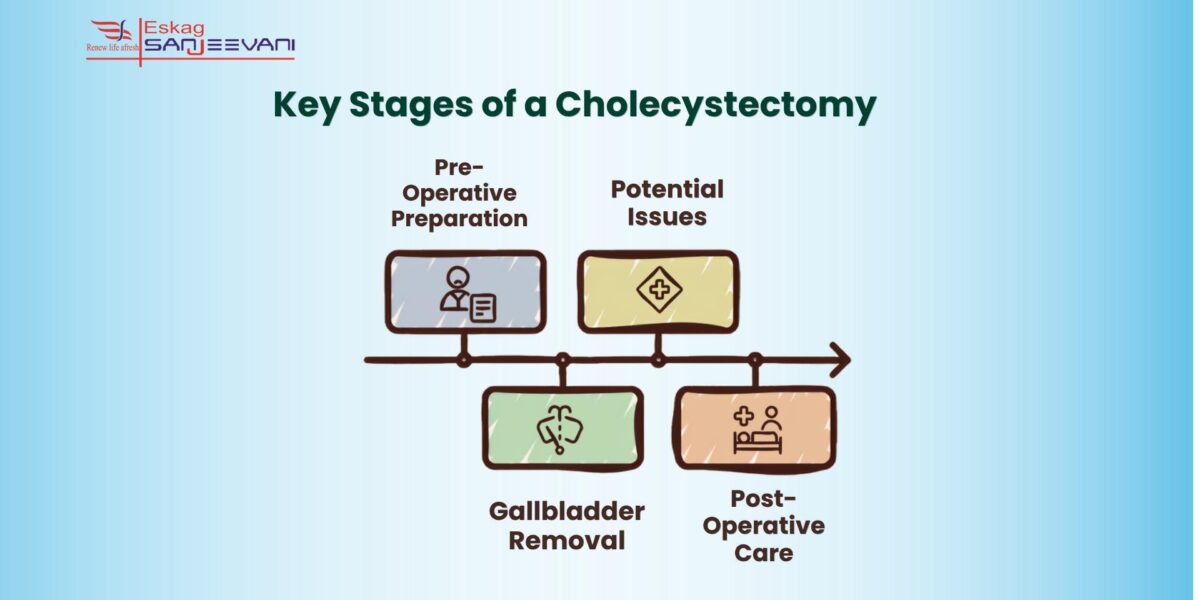
Recovery After Cholecystectomy
Most patients who undergo laparoscopic surgery feel well enough to go home the same day or the morning after. Recovery from open surgery takes considerably longer. The first few weeks follow a fairly predictable pattern: rest, gradual movement, and a careful return to eating normally.
| Week 1 | Week 2 | Weeks 3 to 4 | |
| Activity | Bed rest with short walks only; no lifting or bending | Light activity around the house; short outdoor walks | Return to desk work; avoid strenuous exercise |
| Diet | Khichdi, plain rice, boiled vegetables, clear soups, curd, coconut water | Soft cooked foods, dal, eggs, steamed fish, low-fat roti | Gradual reintroduction of a normal diet; avoid fried and spicy foods |
| Pain Level | Soreness at incision sites; shoulder discomfort from residual gas | Mild residual discomfort; manageable without strong medication | Mostly pain-free; incision sites still healing |
| Medication | Prescribed pain relief as directed; do not self-medicate or stop early | Reduce pain medication as discomfort eases | Paracetamol as needed; no routine medication for most patients |
| Watch Out For | Fever above 38°C, jaundice, dark urine, pale stools, wound discharge | Persistent nausea, bloating, or pain that is not improving | Ongoing diarrhoea or digestive discomfort may signal post-cholecystectomy syndrome |
Those with physically demanding jobs may need four to six weeks before returning to work. After open surgery, full recovery typically takes six to eight weeks.
When to Call Your Doctor
Contact your surgeon or visit a hospital immediately if you develop:
- A fever above 38°C that does not settle with paracetamol or within a day
- Increasing pain around the wound or abdomen rather than gradual improvement
- Yellowing of the skin or eyes (jaundice), which can signal a bile duct problem
- Dark urine or pale stools, which suggest bile is not reaching the intestines normally
- Discharge, redness, or significant swelling around any of the incision sites
For long-term guidance on digestive health after surgery, Eskag Sanjeevani’s Gastroenterology team offers specialised dietary and clinical support.
Cholecystectomy at Eskag Sanjeevani
For patients across Kolkata, Eskag Sanjeevani Hospital offers advanced laparoscopic cholecystectomy with a focus on patient safety, minimal recovery time, and clear communication at every stage. If you are looking for the best general surgeon in Kolkata for gallbladder surgery, our surgical panel includes experienced specialists in both laparoscopic and open approaches.
Consultants such as Dr. Suman Saha and Dr. Indranil Paul bring dedicated expertise in minimally invasive abdominal surgery. Patients benefit from an integrated care model with anaesthesiologists, scrub nurses, dietitians, and gastroenterologists working alongside the surgical team — from the first consultation to full recovery.
Wrapping Up
Cholecystectomy is one of the most commonly performed and well-tolerated surgeries in modern medicine. Whether the approach is laparoscopic or open, the outcome for most patients is lasting relief from gallstone pain and a return to normal daily life within weeks. A sensible post-cholecystectomy diet, short activity restrictions, and a follow-up appointment are typically all it takes to complete the recovery.
If you or a family member has been advised to undergo a cholecystectomy, our team at Eskag Sanjeevani is here to help you prepare, recover, and get back to full health. Book a consultation today with the best general surgeon in Kolkata at Eskag Sanjeevani.

Microbiologist with over 2 years of experience in medical writing, specialising in evidence-based healthcare content.

Clinical experience in diagnosis, treatment, and evidence-based patient care across a range of conditions.
References
- Cleveland Clinic. “What to Know About Cholecystectomy.” Cleveland Clinic, 30 Oct. 2023, Accessed 14 July 2026.
- Hassler, Kenneth R, and Mark W Jones. “Laparoscopic Cholecystectomy.” Nih.Gov, StatPearls Publishing, 2023,
Laparoscopic cholecystectomy is a routine procedure. Most patients go home the same day and return to work within one to two weeks. Open cholecystectomy has a longer recovery but is reserved for complex or high-risk cases.
Yes. The liver continues to produce bile; it simply flows directly to the small intestine rather than being stored first. Most people adapt well and resume a normal diet within a few weeks.
Stick to a low-fat, easily digestible post-cholecystectomy diet — plain rice, khichdi, boiled vegetables, soups, and curd. Avoid oily, spicy, or fried foods until your digestion settles.
If you have had more than one episode of upper right abdominal pain, especially after fatty meals, see a doctor. Imaging will confirm whether gallstones are present and whether cholecystectomy is the right solution.
Ongoing bloating, diarrhoea, or abdominal discomfort after surgery can indicate post-cholecystectomy syndrome or a pre-existing condition. Speak with a gastroenterologist who can investigate and address treatable causes.