

 Medically Reviewed
Unexplained Chest Pain? When a Cardiac MRI Is Recommended
Chest pain is one of the most concerning symptoms a person can experience. While many cases are linked to non-cardiac causes such as acid reflux, muscle strain, or anxiety, persistent or recurring chest discomfort should never be ignored. In some situations, routine tests like an ECG, stress test, or echocardiogram may not reveal a clear cause, leaving patients worried and searching for answers. Approximately 6 to 8 million patients present to emergency departments annually with chest pain [1].
This is where a Cardiac MRI can play a crucial role. By providing highly detailed images of the heart, this advanced imaging test can help identify hidden abnormalities that might not be visible through conventional investigations [2]. If you have been experiencing unexplained chest pain for years or have recently developed acute chest pain with inconclusive test results, your doctor may recommend a cardiac MRI scan to better understand what is happening inside your heart.
Key Takeaways
- A Cardiac MRI can uncover hidden heart conditions when chest pain persists despite normal ECG, stress test, or echocardiogram results.
- The scan provides a detailed assessment of heart muscle damage, inflammation, scarring, blood flow, and structural abnormalities without using radiation.
- Early identification of the underlying cause of unexplained chest pain helps doctors plan appropriate treatment and follow-up care.
Quick Answer: A Cardiac MRI helps identify hidden heart conditions causing unexplained chest pain when routine tests are inconclusive. It supports accurate diagnosis and timely treatment.
- What Is a Cardiac MRI?
- Understanding Unexplained Chest Pain
- Why Does Chest Pain Occur Even When Initial Tests Are Normal?
- When Is a Cardiac MRI Recommended for Chest Pain?
- Conditions a Cardiac MRI Can Help Detect
- Cardiac MRI Procedure: What Happens During the Scan?
- Post-Care and Follow-Up Checkups
- Warning Signs That Need Medical Attention
- 6 Choose Eskag Sanjeevani for a Cardiac MRI?
What Is a Cardiac MRI?
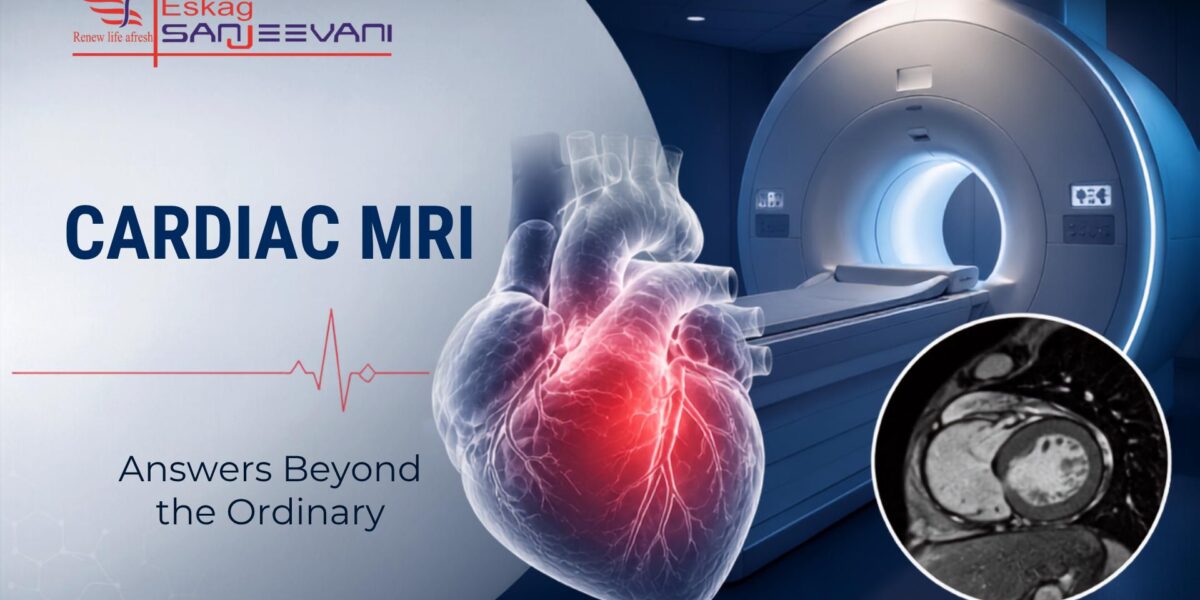
A Cardiac MRI is a specialised imaging test that uses powerful magnetic fields and radio waves to create detailed pictures of the heart. Unlike X-rays or CT scans, it does not use ionising radiation [2].
The scan allows doctors to evaluate heart muscles, chambers, valves, blood vessels, blood flow patterns, and tissue health. Because of its exceptional image quality, a cardiac MRI scan is considered one of the most comprehensive tools for assessing heart conditions.
This table allows you to understand what different cardiac tests reveal:
| Test | What It Evaluates | Limitations | When Cardiac MRI Adds Value |
| ECG | Heart rhythm and electrical activity | May miss structural abnormalities | Provides detailed anatomical information |
| Echocardiogram | Heart structure and function | Image quality may vary | Offers clearer tissue characterisation |
| Stress Test | Heart response to exertion | Does not show tissue damage directly | Identifies underlying muscle abnormalities |
| CT Scan | Coronary artery anatomy | Uses radiation | Provides superior soft tissue assessment |
| Cardiac MRI | Heart structure, function, and tissue health | Longer scan duration | Comprehensive evaluation of cardiac conditions |
Understanding Unexplained Chest Pain
Unexplained chest pain is chest discomfort that persists despite standard diagnostic tests failing to identify a clear cause. This situation can be frustrating for patients, especially when symptoms affect daily activities or create ongoing anxiety.
Some individuals experience unexplained chest pain for years before receiving a definitive diagnosis. Only about 10 to 20% of patients evaluated for chest pain are ultimately diagnosed with acute coronary syndrome [1]. In many cases, the underlying issue may involve subtle changes in heart muscle tissue, inflammation, scarring, or small-vessel disease that are difficult to detect with routine investigations.
Why Does Chest Pain Occur Even When Initial Tests Are Normal?
Several underlying heart conditions may not be immediately visible on standard tests:
- Mild inflammation within the heart muscle can cause persistent chest pain but may remain undetected on routine cardiac tests.
- Abnormalities in small coronary blood vessels may reduce oxygen supply to heart tissue despite normal artery findings [2].
- Scar tissue from a previous silent heart attack can trigger recurring symptoms long after the initial event [2].
- Structural abnormalities involving heart chambers, valves, or surrounding tissues may not be visible during standard evaluations.
- Certain inherited heart muscle disorders develop gradually, causing chest discomfort before noticeable changes appear on routine testing.
This is why doctors sometimes look beyond routine tests to gain a clearer understanding of what may be causing ongoing symptoms and recommend Cardiac MRI.
When Is a Cardiac MRI Recommended for Chest Pain?
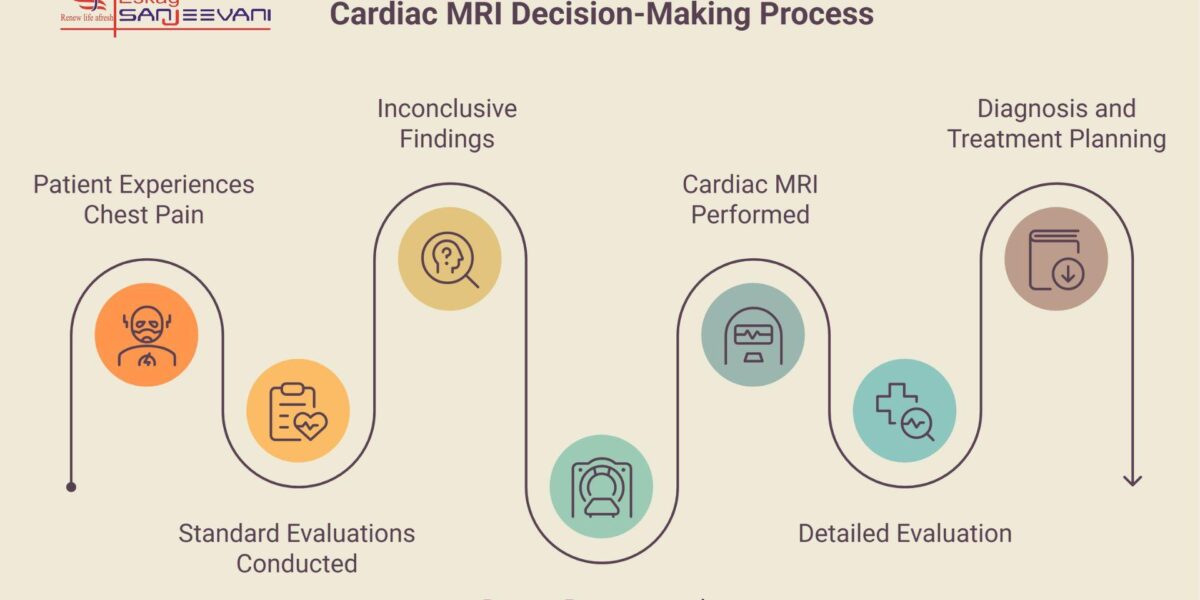
Not every patient with chest pain requires a cardiac MRI. However, doctors may recommend the test when symptoms persist despite inconclusive findings from standard evaluations.
Common Cardiac MRI Indications
A cardiac MRI may be advised in the following situations:
- Acute chest pain with inconclusive routine investigations often warrants Cardiac MRI to identify hidden inflammation or damage.
- Suspected myocarditis, cardiomyopathy, or other heart muscle disorders can be accurately assessed through advanced cardiac imaging.
- Persistent chest pain despite normal ECG, stress test, or echocardiogram results may require a detailed evaluation of cardiac tissue.
- Unexplained breathlessness accompanied by chest discomfort may indicate structural or functional abnormalities requiring further investigation.
- Cardiac MRI helps evaluate congenital heart defects, scar tissue, and complex conditions before treatment planning.
These cardiac MRI indications help physicians gain deeper insight into cardiac conditions and determine the most appropriate treatment strategy.
Conditions a Cardiac MRI Can Help Detect
A cardiac MRI procedure can identify several conditions that may contribute to chest pain.
| Condition | How It Causes Chest Pain | What MRI Reveals |
| Myocarditis | Heart muscle inflammation | Areas of inflammation and tissue damage |
| Cardiomyopathy | Abnormal heart muscle function | Structural and functional changes |
| Pericarditis | Inflammation around the heart | Thickening and inflammation of tissues |
| Previous Silent Heart Attack | Scar formation within the heart | Extent and location of scarring |
| Congenital Heart Disease | Structural abnormalities | Detailed anatomical defects |
| Microvascular Disease | Reduced blood flow in small vessels | Perfusion abnormalities |
Also read: Understanding Heart Health: A Complete Guide to Cardiology for Every Age
Cardiac MRI Procedure: What Happens During the Scan?
Understanding the cardiac MRI procedure can help reduce anxiety and prepare patients for the experience. Thus, it is important to know what happens during the scan and what to expect before and after it.
Before the Scan
- Inform your healthcare provider about implanted devices, previous surgeries, allergies, or medical conditions that may affect imaging.
- Follow any fasting instructions carefully, particularly if contrast dye is being used during the examination.
- Remove jewellery, watches, hearing aids, and other metallic objects to prevent interference with image quality.
- Discuss claustrophobia, anxiety, or discomfort concerns beforehand so appropriate support measures can be arranged.
- Carry previous medical reports and imaging records to help doctors interpret your Cardiac MRI findings accurately.
With a clearer understanding of what happens before the scan, the next step is knowing what happens during the scan.
What Happens During a Cardiac MRI Scan?
- You will lie comfortably on a motorised table while monitoring sensors are placed to track heart activity.
- The table gradually moves into the MRI scanner, where detailed images of the heart are captured.
- You may hear loud tapping or humming sounds during scanning, which are completely normal and harmless.
- At certain points, you may be asked to briefly hold your breath for clearer image quality.
- A contrast dye may be administered through an IV to highlight blood flow and tissue abnormalities.
Now that you’ve understood what happens during the scan, let’s understand what happens after the scan.
After the Scan
- Most patients can resume normal activities immediately unless additional observations or instructions are recommended.
- Drink plenty of water after the scan to help flush contrast dye from the body.
- Review the scan findings with your doctor to understand any abnormalities and recommended next steps.
- Follow all medication, lifestyle, or testing recommendations provided based on your Cardiac MRI results.
- Schedule follow-up appointments as advised to monitor symptoms and assess treatment effectiveness over time.
Also read: Winter Back Pain and MRI: When Is Surgery the Only Option?
Post-Care and Follow-Up Checkups
Although a Cardiac MRI is a non-invasive diagnostic procedure, follow-up care remains important. The scan provides valuable information, but long-term management depends on the underlying cause of the symptoms.
Patients are generally advised to:
- Attend scheduled appointments to monitor symptoms, review progress, and assess the effectiveness of treatment plans.
- Discuss Cardiac MRI findings with your specialist to better understand the diagnosis and future care requirements.
- Take all prescribed medications consistently, as directed, to manage symptoms and reduce potential cardiac complications.
- Adopt heart-healthy habits, including regular exercise, balanced nutrition, adequate sleep, and stress management practices.
- Complete any additional tests or evaluations recommended to confirm findings and guide ongoing treatment decisions.
Regular follow-up allows doctors to monitor treatment effectiveness and identify changes before symptoms worsen.
Warning Signs That Need Medical Attention
There are certain warning signs that need immediate medical evaluation:
Chest Pain That Lasts More Than a Few Minutes
Chest pain that feels like pressure, tightness, or heaviness and does not improve within a few minutes should never be ignored. Recent research says that chest pain remains one of the most common reasons for emergency department visits, underscoring the need for timely evaluation [1].
Chest Pain With Shortness of Breath
When chest discomfort occurs alongside breathlessness, it may indicate a serious heart condition such as reduced blood flow to the heart muscle or heart failure. Immediate medical assessment is recommended, especially if symptoms appear suddenly.
Dizziness, Fainting, or Irregular Heartbeats
Feeling lightheaded, fainting, or experiencing an unusually fast or irregular heartbeat with chest pain may signal an underlying cardiac problem. These symptoms require prompt medical attention to rule out potentially serious complications.
Persistent Symptoms Despite Treatment
If chest pain continues despite medication or previous treatment, further evaluation may be needed. A Cardiac MRI can help identify hidden inflammation, scarring, or structural abnormalities that routine tests may miss. While these warning signs do not always point to a serious cardiac problem, they should not be ignored or left unassessed.
6. Choose Eskag Sanjeevani for a Cardiac MRI?
When searching for the nearest MRI scan centre or a trusted MRI hospital, expertise and technology both matter. As a leading hospital in North Kolkata, we provide our patients with the best facilities.
At Eskag Sanjeevani, Patients Benefit From:
- Advanced MRI technology that delivers high-resolution cardiac images for accurate diagnosis and comprehensive heart evaluation.
- Experienced radiologists and cardiologists who collaborate closely to interpret findings and guide appropriate treatment decisions.
- Comprehensive cardiac care services under one roof, ensuring seamless diagnosis, consultation, and follow-up management.
- Timely reporting processes that help reduce waiting times and enable faster clinical decision-making when needed.
- Patient-centred care focused on comfort, clear communication, and personalised support throughout the diagnostic journey.
A multidisciplinary approach helps ensure that patients receive accurate diagnoses and personalised care plans tailored to their specific needs.
Conclusion
Persistent chest pain should never be dismissed, especially when routine investigations fail to provide answers. A Cardiac MRI offers detailed insights into the structure, function, and health of the heart, helping doctors identify conditions that may otherwise remain undetected.
Whether you have suffered from chest pain for years or have developed it recently, a cardiac MRI scan can provide valuable diagnostic information. Early evaluation and timely intervention can make a significant difference in protecting your heart health and ensuring peace of mind. Eskag Sanjeevani always wants the best for you; stop hesitating and delaying an expert consultation. Book your appointment now.

Microbiologist with over 2 years of experience in medical writing, specialising in evidence-based healthcare content.

Clinical experience in diagnosis, treatment, and evidence-based patient care across a range of conditions.
References
- Kawel-Boehm, Nadine, et al. “Normal Values for Cardiovascular Magnetic Resonance in Adults and Children.” Journal of Cardiovascular Magnetic Resonance, vol. 17, no. 1, 18 Apr. 2015
- Emrich, T et al. “Cardiac MR Enables Diagnosis in 90% of Patients with Acute Chest Pain, Elevated Biomarkers and Unobstructed Coronary Arteries.” The British Journal of Radiology, vol. 88, no. 1049, May 2015, p. 20150025,
A Cardiac MRI can detect many heart issues, including muscle damage, inflammation, scarring, and structural abnormalities. However, it can reveal every heart problem. Doctors often combine MRI findings with other tests and clinical evaluation to get a complete picture of heart health.
A Cardiac MRI is usually recommended when symptoms such as chest pain, shortness of breath, or irregular heartbeats remain unexplained after routine tests. Your doctor may also suggest it if there is a need to evaluate heart muscle damage, inflammation, or other suspected cardiac conditions more closely.
Common symptoms of a heart attack include chest pain or pressure, pain spreading to the arm, neck, jaw, or back, shortness of breath, and excessive sweating. Some may also experience nausea, dizziness, or unusual fatigue.
Chest pain can occur in some people with heart failure, but it is not always the most common symptom. Heart failure more often causes shortness of breath, fatigue, swelling in the legs or ankles, and reduced ability to perform daily activities.
An MRI can show how well blood flows through the heart and may identify areas affected by reduced blood supply. However, it is not usually the primary test for detecting heart blockage.