

 Medically Reviewed
High-Risk Pregnancy Tests That Protect You and Your Baby
Did you know that almost 15% of pregnant women experience life-threatening complications? Yet many high-risk pregnancies can be managed successfully with timely medical care. A high-risk pregnancy is not a reason to panic; you must act on it. When your doctor classifies your pregnancy as high-risk, it means you and your baby need closer monitoring and targeted high-risk pregnancy tests to stay one step ahead of potential problems. These tests are important but not alarms. They help your doctors catch problems early, make necessary decisions, and protect both of you at every stage. This blog covers the most important common tests during pregnancy for high-risk cases: what each one checks, when to take it, and why it matters for baby protection.
Key Takeaways
- High-risk pregnancy tests span all three trimesters and include genetic screening, specialised ultrasounds, pregnancy blood tests, amniocentesis, and Group B strep culture.
- A cell-free DNA (cfDNA) pregnancy blood test screens for chromosomal abnormalities non-invasively, while chromosomal microarray analysis (CMA) is recommended after a high-risk serological result [1].
- Knowing when to take early pregnancy test confirmations and following your doctor’s full monitoring schedule are the most effective steps for protecting your baby in a high-risk pregnancy.
Quick Answer: High-risk pregnancy tests include blood tests, specialised ultrasounds, and genetic screening to protect you and your baby.

What Makes a Pregnancy High-Risk?
A pregnancy is high-risk when either the mother or the baby faces a greater-than-usual chance of developing health problems. This can stem from a pre-existing condition, a complication that arises during pregnancy, or specific lifestyle and age-related factors. Identifying your risk profile early helps your doctor choose the right high-risk pregnancy tests.
The following factors can lead to a high-risk classification:
- Age below 20 or above 35 raises the risk of chromosomal conditions, gestational diabetes, and hypertensive complications during pregnancy.
- Pre-existing conditions such as high blood pressure, obesity, diabetes, thyroid disease, epilepsy, or heart disorders need active management throughout pregnancy.
- Pregnancy complications like foetal growth restriction, unusual placental location, or Rh sensitisation increase the need for frequent targeted monitoring.
- Multiple pregnancies, twins or more, carry elevated risks for both the mother and the babies, especially in ART-conceived pregnancies.
- A history of prior complications such as preeclampsia, preterm delivery, stillbirth, or a baby with a genetic condition raises risk in later pregnancies.
When to Take a Pregnancy Test: Starting Monitoring Early
Knowing when to take pregnancy test confirmations matters, especially if you fall into a high-risk category. A home pregnancy test kit measures hCG in urine from the day of a missed period. A pregnancy blood test is more sensitive; it can detect hCG as early as six to eight days after ovulation, before a missed period.
If you have pre-existing conditions or a difficult obstetric history, speak with your doctor before conception. They can guide you on preconception screening and the ideal time to begin prenatal monitoring. Once pregnancy is confirmed, your doctor will map out a schedule of high-risk pregnancy tests specific to your circumstances.
Overview of Common Tests During Pregnancy for High-Risk Cases [2]
| Trimester | Test | What It Checks | Invasive |
| First | Pregnancy Blood Test (hCG) | Confirms pregnancy; tracks hormonal levels | No |
| First | cfDNA / NIPT | Chromosomal abnormalities (Trisomy 21, 18, 13) | No |
| First | Nuchal Translucency Ultrasound | Fluid at the back of the foetal neck; Down syndrome risk | No |
| First | Chorionic Villus Sampling (CVS) | Genetic conditions; weeks 10–13 | Yes |
| Second | Anatomy Ultrasound (18–20 weeks) | Foetal organ development and structural abnormalities | No |
| Second | Amniocentesis | Chromosomal disorders and neural tube defects | Yes |
| Second | Glucose Challenge Test | Risk of gestational diabetes | No |
| Third | Group B Strep Culture | GBS bacteria in the genital tract | No |
| Third | Biophysical Profile | Foetal health, heart rate, movement, fluid levels | No |
| Any | Chromosomal Microarray Analysis (CMA) | Pathogenic copy number variations post-high-risk screen | Yes |
High-Risk Pregnancy Tests by Trimester
Your doctor recommends different high-risk pregnancy tests at different stages of pregnancy. These tests help check your baby’s growth, identify possible health concerns, and detect pregnancy complications early.
In the first trimester, blood tests such as cfDNA (NIPT), PAPP-A, and hCG, along with the nuchal translucency scan, assess the risk of certain chromosomal conditions. If needed, your doctor may advise chorionic villus sampling (CVS) for a confirmed diagnosis.
In the second trimester, the anatomy scan checks your baby’s organs and development. Amniocentesis may be recommended if earlier screening shows a higher risk. Between 24 and 28 weeks, a glucose screening test is performed to check for gestational diabetes.[3]
In the third trimester, the Group B strep (GBS) test looks for bacteria that could affect your baby during delivery. If your doctor wants to monitor your baby’s well-being more closely, they may also recommend a biophysical profile, which combines an ultrasound with a nonstress test. If any screening result is abnormal, additional diagnostic tests may be needed to confirm the findings.
Also read: Understanding Women’s Health: Comprehensive Gynaecological Care at Eskag Sanjeevani
Choosing the Right Test: Home Kit vs Clinical Blood Test
Initially, for pregnancy confirmation, the best pregnancy test kit at home measures hCG in urine and is usually accurate from the day of a missed period. But it cannot confirm how far along the pregnancy is, detect complications, or provide the precision of a clinical pregnancy blood test.
A quantitative beta hCG blood test can detect pregnancy earlier than most home pregnancy tests. It also measures the exact amount of the pregnancy hormone in the blood. This helps the doctor check if the pregnancy is developing as expected. Women with a high-risk pregnancy should have a pregnancy blood test and an early ultrasound. These tests give more reliable results than using a home pregnancy test alone.
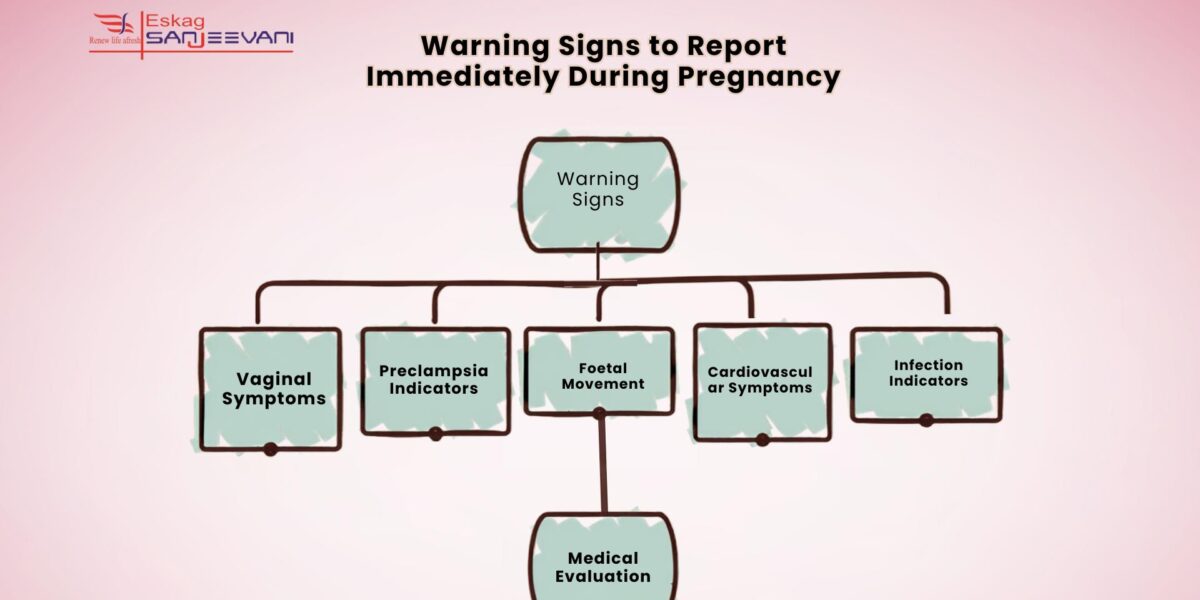
Warning Signs to Report Immediately
Scheduled high-risk pregnancy tests are essential, but watch for signs that need urgent attention. Contact your doctor or the hospital immediately if you notice:
- Vaginal bleeding, watery discharge, or a sudden change in discharge colour or volume at any point during pregnancy.
- Severe headaches, blurred or disturbed vision, or sudden swelling of the face, hands, or feet, potential signs of preeclampsia.
- A significant drop in foetal movement after the baby has been regularly active requires prompt medical evaluation.
- Chest pain, shortness of breath, or dizziness disproportionate to your usual activity level during pregnancy.
- Burning pain during urination, fever, or chills, indicators of infection that can affect both you and your baby if untreated.
Expert Care At Eskag Sanjeevani
Eskag Sanjeevani Hospitals provides the best gynaecology care with experienced specialists, advanced technology, and personalised treatment. From routine women’s health concerns to high-risk pregnancies and complex gynaecological conditions, patients receive expert care at every stage of life. With modern facilities and a patient-first approach, the hospital focuses on safe, ethical, and evidence-based treatment.
Closing Thoughts
A high-risk pregnancy is not a prediction of a bad outcome; it is taking a step ahead of time to monitor closely and act early. High-risk pregnancy tests, from a first-trimester pregnancy blood test and genetic screen to third-trimester foetal monitoring, give your care team the information they need to protect both you and your baby.
Understanding common tests during pregnancy, knowing when to take pregnancy test milestones, and following your doctor’s full schedule can make a meaningful difference. If you have concerns about a high-risk pregnancy or want expert support, speak with a specialist at Eskag Sanjeevani. Our team is here to guide you with the right high-risk pregnancy tests at every stage.

Microbiologist with over 2 years of experience in medical writing, specialising in evidence-based healthcare content.

Clinical experience in diagnosis, treatment, and evidence-based patient care across a range of conditions.
References
- Wang J, Tang XX, Zhou Q, Yang S, Shi Y, Yu B, Zhang B, Wang LL. Prenatal Diagnostic Testing Following High-Risk Result from Serological Screening: Which Shall We Select? Int J Womens Health. 2021 Sep 22;13:879-888.
- Johns Hopkins Medicine. “Common Tests During Pregnancy.” Www.Hopkinsmedicine.Org, 2024,
- Mayo Clinic. “High-Risk Pregnancy: Know What to Expect.” Mayo Clinic, 18 Jan. 2022.
The tests that are usually recommended depend on your health and your baby’s condition. Common tests include blood and urine tests, ultrasound scans, glucose testing, and many others. In some cases, your doctor may recommend CVS or amniocentesis.
Doctors identify a high-risk pregnancy by reviewing your medical history, age, current health, and pregnancy test results. Regular check-ups help in detecting any risks earlier and guide further.
Most women with a high-risk pregnancy have their first ultrasound between 6 and 9 weeks of pregnancy. This scan confirms the pregnancy, checks the baby’s heartbeat, estimates the due date, and looks for any early concerns. Depending on the mother’s condition, the doctor may advise an earlier scan or additional follow-up ultrasounds.
Yes, high-risk pregnancies are usually monitored with more frequent ultrasound scans to assess the baby’s growth, movement, amniotic fluid levels, placental function, and overall development. The number of scans varies based on the reason the pregnancy is considered high-risk.
Diagnostic ultrasounds are considered safe during pregnancy when performed by trained healthcare professionals. Your doctor will recommend only the scans needed to monitor your health and your baby’s.