

 Medically Reviewed
Diabetic Foot: How a Small Wound Leads to Amputation
A small blister. A forgotten cut. A shoe rubbing in the wrong place. For most people, these are minor annoyances that heal within days. For someone living with diabetes, they can set off a chain of events ending in diabetic foot amputation. Diabetes quietly damages the nerves and blood vessels in the feet over time, meaning wounds that should heal simply do not. Infection sets in and tissue dies. What began as something barely visible becomes a threat to the limb and sometimes to life itself.
Understanding why this happens, how fast it can progress, and what can stop it is one of the most important things a person with diabetes can know.
Key Takeaways
- Diabetic foot is a clinical manifestation of diabetes with symptoms ranging from ulceration and osteomyelitis to gangrene, all consequences of advanced, poorly managed disease.
- Nerve damage and poor blood supply work together to allow small wounds to deepen silently, making diabetic foot infection one of the leading drivers of lower limb amputation.
- Daily foot checks, proper footwear, and early treatment can help prevent serious diabetic foot problems, including amputation.
Quick Answer: Diabetic foot amputation happens when nerve damage and poor circulation allow a small wound to become infected, then gangrenous, and ultimately unsalvageable.
- Why Diabetes Makes Foot Wounds So Dangerous
- From Wound to Infection: How Damage Progresses
- What is Diabetic Foot Gangrene?
- Who Is at Risk of Diabetic Foot Amputation?
- Necessity to Identify Diabetic Foot Infection Early
- Importance of Diabetic Foot Care
- Treatment Options When a Wound Is Already Serious
- When to See a Specialist

Why Diabetes Makes Foot Wounds So Dangerous
Most foot wounds heal on their own. In diabetes, two separate problems combine to make that nearly impossible.
Let’s understand them:
1. The Nerve Damage
Loss of protective sensory function is one of the main reasons ulcers form; as many as 27% of patients also experience painful diabetic peripheral neuropathy to varying degrees [1]. A person may walk on a broken blister for days without realising anything is wrong.
2. Reduced Blood Supply
Peripheral artery disease describes atherosclerotic occlusive disease of the lower extremities. Chronic hyperglycaemia, dyslipidaemia, and insulin resistance cause vascular wall damage through inflammation, endothelial dysfunction, and abnormalities in blood cells. Macroangiopathy or microangiopathy tends to inhibit nutrient and oxygen supply to the foot, putting it at risk for ulceration and hindering wound healing.
Together, these two forces create a situation where wounds deepen silently, and danger arrives before anyone notices.
From Wound to Infection: How Damage Progresses
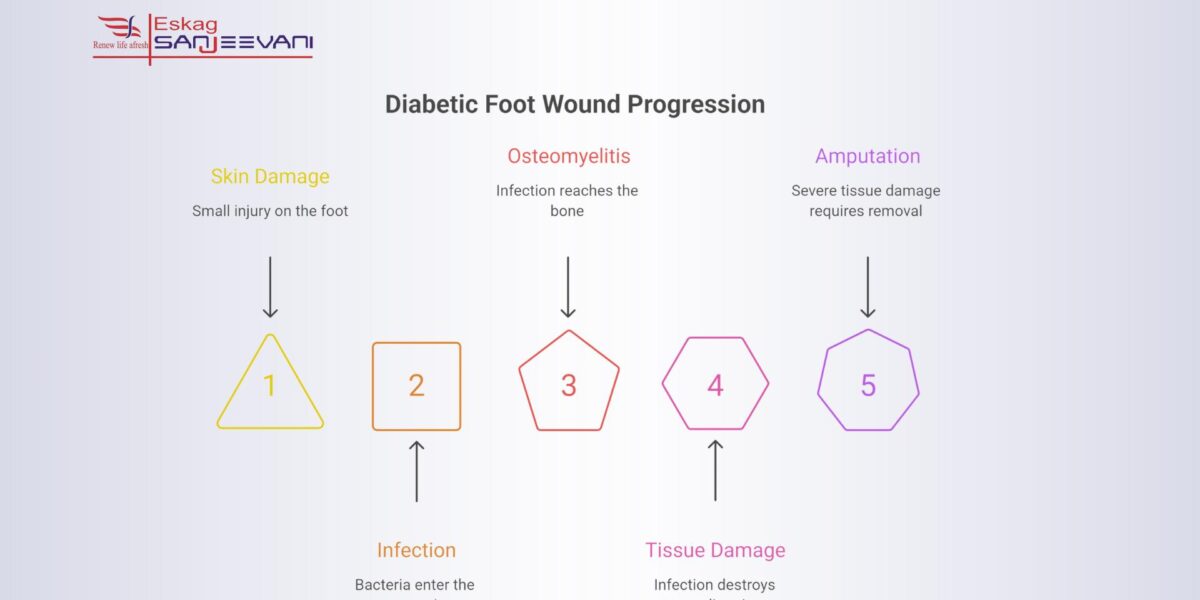
Not every diabetic foot wound leads to amputation. But the pathway from small injury to serious danger follows a clear pattern.
Stage 1: Skin Damage
Skin breakdown. Friction, pressure, or a minor cut opens the skin. Reduced sensation means the person may not feel it.
Stage 2: Infection
Infection. Infection is a common complication in diabetes, attributable to hyperglycaemia-related immunosuppression, which hinders white blood cell activity. Infection results in prolonged inflammation that prevents wound healing and keeps the entry point open, causing further infection.
Stage 3: Osteomyelitis
Bone involvement. Diabetic foot osteomyelitis is the consequence of a soft tissue infection that spreads into the bone, involving the cortex first, then the marrow. Osteomyelitis impedes infection control and increases the need for further treatment and surgery.
Stage 4: Tissue Damage
Gangrene. Blood supply is cut off. Tissue dies. At this stage, diabetic foot gangrene has developed and surgical removal becomes unavoidable.
What is Diabetic Foot Gangrene?
When blood flow is irreversibly compromised and infection has taken hold, tissue begins to die. This is diabetic foot gangrene, a limb- and life-threatening stage of disease.
At this point, the indications for amputation include a dead limb, threat to the patient’s life, severe pain, loss of function, or a functionless limb where prosthesis use would offer better outcomes than preservation. Amputation is generally the last choice for non-salvageable limbs, but it becomes the most appropriate one when the goal shifts from saving the limb to saving the person.
| Clinical finding | What it signals |
| Spreading infection or necrotic tissue | Immediate threat to life |
| Osteomyelitis unresponsive to antibiotics | Bone too compromised to preserve |
| Functionless limb with contracture | Amputation + prosthesis may restore independence |
| Inadequate blood supply for healing | Revascularisation required before any surgery |
Choosing the amputation level is critical. Amputation must be performed at a level with sufficient blood supply for wound healing, verified through arterial angiography, Doppler ultrasonography, or transcutaneous oxygen pressure measurement.
Also read: Type 2 Diabetes in Children: Why More Indian Kids Are Developing It Early
Who Is at Risk of Diabetic Foot Amputation?
Certain factors raise the risk significantly. These interact in ways that make diabetic foot amputation far more likely if left unaddressed:
- Poor glycaemic control drives advanced glycation end product accumulation, which damages blood vessels and disrupts the body’s ability to grow new ones [1].
- Peripheral artery disease reduces circulation to the feet, meaning even small wounds receive inadequate blood supply to heal or fight infection.
- Diabetic foot osteomyelitis is associated with an increase in multidrug-resistant organisms, including methicillin-resistant Staphylococcus aureus, making infection control far harder.
- High blood sugar, smoking, kidney disease, and high blood pressure above 140/80 mmHg compound overall risk and make wound healing less predictable [2].
- Recurrent ulcers, a significant cause of hospitalisation, are themselves one of the strongest predictors of eventual amputation.
Necessity to Identify Diabetic Foot Infection Early
Early recognition of diabetic foot infection can prevent it from advancing to gangrene.
Check feet every day and contact a doctor at once if you notice any of the following:
- A wound that has not started to heal within one to two weeks, even if it appears minor and causes no pain.
- Skin that is warm, red, or swollen around a cut or blister, suggesting early infection beneath the surface.
- A foul smell from the foot, which often signals bacterial activity spreading within the wound.
- Discharge, pus, or visible darkening of the skin around or beneath the wound site.
- A sore deep enough that bone or tendon is visible at the base of the wound.
Do not wait for pain to appear. In diabetic foot infection, pain is often absent because nerve damage has already disrupted sensation, which is precisely what makes the condition so dangerous.
Importance of Diabetic Foot Care
Managing diabetes is the best way to prevent complications, including foot ulcers, through good eating habits, regular exercise, frequent blood sugar checks, and consistent medication [2]. Beyond glycaemic control, daily diabetic foot care is non-negotiable:
- Check your feet every day for cuts, blisters, redness, or swelling; use a mirror for the soles and always inspect between the toes.
- Wash feet in warm (never hot) water, dry thoroughly between the toes, and apply moisturiser to prevent skin cracking that lets bacteria in.
- Never walk barefoot, even at home; an unprotected foot can pick up a cut or pressure wound that goes unnoticed for hours.
- Wear well-fitted shoes that cushion the heel, arch, and ball of the foot; avoid tight shoes, high heels, or narrow toe boxes that create pressure points.
At least one full foot examination per year by a doctor is strongly recommended for anyone with diabetes.
Treatment Options When a Wound Is Already Serious
When a diabetic foot wound reaches the stage of infection or early gangrene, treatment escalates quickly. Limb salvage in diabetic patients with peripheral artery disease requires comprehensive management with glucose-lowering drugs, lipid-lowering drugs, antiplatelet therapy, and medications that improve vascular function.
Revascularisation, restoring blood supply by addressing blocked vessels, is often the prerequisite for any further surgical procedure. At one-year follow-up, 60% or more ulcers had healed following endovascular procedures or open bypass surgery. Without restoring blood flow first, re-amputation is likely even after a successful initial procedure [1].
For wounds that cannot be salvaged, the care team must address not just amputation, but the level, timing, and post-operative rehabilitation plan. Older age, poor balance, previously low function, and higher amputation level all affect how well a patient recovers.
When to See a Specialist
The right time to see a doctor is before a wound develops. But if a wound has already appeared, the answer is: immediately.
Anyone with diabetes should consult the best endocrinologist in Kolkata if they notice numbness or tingling in the feet, have any open wound not improving within a few days, have been told they have peripheral neuropathy or peripheral artery disease, or have risk factors such as smoking, kidney disease, or high blood pressure alongside diabetes [2].
Diabetic Foot Amputation Is a Preventable Outcome
Diabetic foot amputation is not inevitable. It is the end result of a series of missed moments: a wound not checked, an infection not treated, a follow-up not attended to. The objective of good diabetic foot care is to protect the patient’s quality of life, not just to preserve the limb, but to prevent that decision from arising at all.
Most of what drives diabetic foot amputation is controllable: blood sugar, foot hygiene, footwear, and access to specialist care. People who manage these consistently and seek attention at the first sign of a wound give themselves the strongest possible protection.
If you or someone you care for is living with diabetes, do not wait for symptoms to appear. Book a foot assessment with the best endocrinologist in Kolkata at Eskag Sanjeevani today.

Microbiologist with over 2 years of experience in medical writing, specialising in evidence-based healthcare content.

Clinical experience in diagnosis, treatment, and evidence-based patient care across a range of conditions.
References
- Primadhi RA, Septrina R, Hapsari P, Kusumawati M. Amputation in diabetic foot ulcer: A treatment dilemma. World J Orthop. 2023 May 18;14(5):312-318.
- Mayo Clinic. “Avoiding Amputation: Jump Feet First into Diabetes Foot Care.” 8 Sept. 2022.
Minor wounds may heal if blood sugar is well controlled and circulation is adequate. However, any wound in a person with diabetes should be assessed by a doctor within 24-48 hours, as what appears minor can worsen rapidly.
Very quickly. Infection results in prolonged inflammation that prevents wound healing and keeps the entry point open, allowing further infection to spread. People with poor circulation or very high blood sugar are at greatest risk.
Yes. Loss of protective sensory function means many people feel nothing as wounds develop. Annual foot examinations are recommended for all people with diabetes, regardless of how they feel.
Not always. Where blood supply can be restored through revascularisation, limb salvage remains possible. However, when the limb is dead, poses a threat to the patient’s life, or is functionless, amputation followed by prosthesis use may offer a better quality of life.
Frame it as a routine rather than a concern, checking feet after bathing, for example. A single consultation with a diabetologist or podiatrist, presented as a standard annual check-up, often establishes the habit more effectively than repeated reminders at home.