

 Medically Reviewed
Postpartum Depression: Signs New Mothers Often Miss
A baby changes everything and not always in ways you expect. Many new mothers feel overwhelmed, tearful, or disconnected after delivery, but assume it is just tiredness. This is not simply being tired or emotional. Postpartum depression may affect up to 1 in 7 women. In India, the overall prevalence is 22%, means roughly one in five new mothers is affected [2]. Understanding postpartum depression meaning can help you tell the difference between a difficult week and a condition that needs proper care. This guide covers the signs, reasons, and steps to take.
Key Takeaways
- Postpartum depression meaning goes beyond sadness; it is a clinical condition affecting mood, bonds, and daily function for weeks or months after delivery.
- Signs of postpartum depression can appear gradually, making them easy to dismiss as normal adjustment; recognising them early leads to faster recovery.
- Effective treatment exists, from talk therapy to medication, and help from a postpartum depression therapist is a sign of strength, not failure.
Quick Answer: Postpartum depression is a form of clinical depression that begins after childbirth and affects mood, energy, and daily function.
What Does Postpartum Depression Mean?
Postpartum depression means being very sad, worried, or tired after having a baby. It is a type of depression that can start soon after childbirth or even several months later. It can happen because of changes in the body, hormones, sleep, and daily life after pregnancy. With the right help and treatment, most mothers can feel better.
Mothers often feel emotional after the arrival of a baby in their lives. They may cry easily, feel worried, or become moody. This is called the ‘baby blues’ and is common in the first week after delivery. It happens because of changes in hormones and usually gets better on its own within one to two weeks.
Baby Blues vs Postpartum Depression After Delivery
Mothers usually experience emotional ups and downs in the first week after delivery, called baby blues, which is a normal response to hormonal shifts. Baby blues affect up to 3 in 4 people after delivery and typically resolve within one to two weeks on their own.
| Feature | Baby Blues | Postpartum Depression After Delivery |
| Onset | Within 2–3 days of delivery | Within weeks to months postpartum |
| Duration | Resolves within 1–2 weeks | Lasts several weeks to months |
| Intensity | Mild emotional swings | Persistent, disrupts daily life |
| Treatment | Usually not required | Yes, therapy, medication, or both |
If difficulties persist beyond two weeks, or interfere with caring for yourself or your baby, speak to a doctor. There is also a rare third form postpartum psychosis, which affects 1 in 1,000 people and requires immediate emergency care [1].
Also read: Pelvic Floor Dysfunction After Childbirth in Indian Mothers
Signs of Postpartum Depression to Watch For
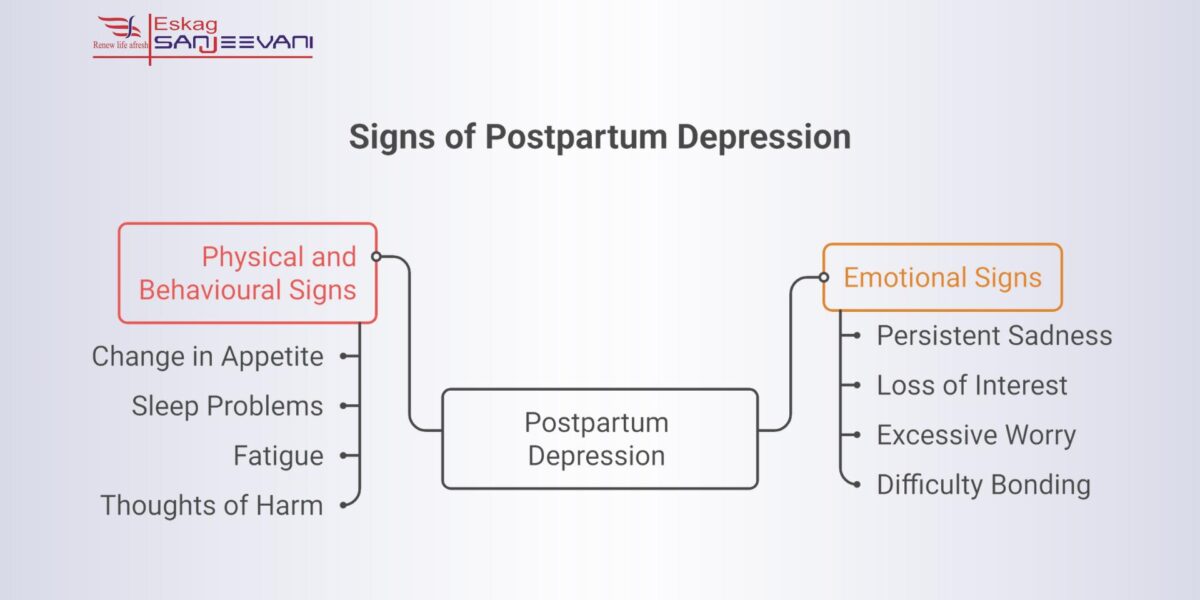
Signs of postpartum depression do not always look the way people expect. Many mothers assume it means constant crying, but the reality is more varied and more subtle. Emotional signs include:
- Sadness, emptiness, or hopelessness that lasts most of the day for two or more weeks.
- Loss of interest in your hobbies or other activities you enjoy, including time with your baby or partner.
- Excessive worry or panic, a constant sense that matters are wrong even when they are not.
- Guilt to not feel the way you think a new mother should feel about her baby.
- Difficulty with a bond with your newborn, or a sense of detachment or anxiety when you care for them.
Physical and behavioural signs of postpartum depression include:
- A change in appetite, such as eating much more or much less than usual without any clear reason.
- Sleep problems beyond normal newborn disruption: unable to sleep at all, or constant sleep.
- Fatigue and poor concentration that feel disproportionate even after rest.
- Less contact with family and friends and a sense of inability to ask for support.
- Thoughts of harm to yourself or your baby; these require immediate medical attention.
Reasons for Postpartum Depression
There is never any one cause. Reasons for postpartum depression are usually a mix of biological, hormonal, and social factors. Levels of oestrogen and progesterone increase tenfold during pregnancy but drop sharply after delivery, which may return to pre-pregnancy levels within three days of birth. This rapid shift can trigger depressive symptoms in susceptible women [1].
Other biological reasons for postpartum depression include a history of depression or anxiety, delivery complications, premature birth, and nutritional deficiencies such as low vitamin D, iron, or vitamin B12.
Psychosocial factors also play a major role. Studies from Karnataka, Tamil Nadu, and Goa have identified financial hardship, marital conflict, lack of social support, and delivery of a female child as specific risk factors in India [2]. Sleep deprivation is another recognised contributor; chronic poor sleep directly affects the mood-regulating systems in the brain.
Women who underwent a caesarean section, had an unplanned pregnancy, or experienced an unsatisfactory delivery are also at higher risk of postpartum depression after delivery [2].
How Postpartum Depression Affects Mother and Baby
Left unaddressed, postpartum depression affects more than the mother. Research has linked maternal depression to delays across multiple areas of infant development:
- Language and social skill development may slow, and affects how the baby communicates in early years.
- Cognitive and emotional regulation can be impaired, with effects that carry into later childhood.
- The bond of mother-infant is affected, when a mother struggles to respond to her newborn’s cues.
- Sleep and diet patterns in the baby are disrupted when the mother’s mental state is unstable.
- Long-term attachment insecurity is higher in babies of mothers with untreated chronic depression.
For the mother, untreated postpartum depression can lead to chronic depression, strained relationships, and, in severe cases, thoughts of self-harm. Early intervention significantly reduces these risks for both mother and child.
How to Deal With Postpartum Depression
It is important to know how to deal with postpartum depression that starts with one step: speak to someone. Many women delay this out of shame or because they do not recognise their symptoms as a medical condition.
Therapy is often the first recommendation. Cognitive Behavioural Therapy (CBT) and Interpersonal Therapy (IPT) both have strong clinical evidence and help mothers rebuild certain strategies and thought patterns [2]. A trained postpartum depression therapist or psychiatrist can guide this process.
Doctors may suggest medicines for moderate to severe postpartum depression. SSRIs, such as sertraline, are commonly used and can be safe after childbirth. If a mother is breastfeeding, she should speak to her doctor before she takes any medicine, as some medicines may pass into breast milk more than others [1].
A mother may feel better when she gets help with household work, eats well, goes outside for fresh air, and talks to people who care about her. But these steps should go along with proper medical treatment, not replace it.
When to See a Doctor
Talk to a doctor if sadness, worry, or a lack of connection with your baby lasts for more than two weeks. Seek help if you find it hard to care for yourself or your baby on most days, or if you have negative thoughts about yourself or your baby. Eskag Sanjeevani hospitals have a Gynaecology and Obstetrics team that works alongside our Psychiatry department to support new mothers through postpartum care, across our Baghbazar, Baranagar, and Khardah units.
Final Thoughts
Postpartum depression is a real medical condition that can affect a mother’s mood, thoughts, daily life, and bond with her baby. It is more than the usual tiredness or mood changes that may follow childbirth. To understand the postpartum depression meaning and recognise the signs of postpartum depression can help mothers seek timely help. Hormonal changes, poor sleep, past mental health concerns, stress, and limited support can all play a role. If symptoms continue or make daily life difficult, talk to a doctor or postpartum depression therapist for help. With the right treatment and care, mothers can recover and feel more like themselves again.

Microbiologist with over 2 years of experience in medical writing, specialising in evidence-based healthcare content.

Clinical experience in diagnosis, treatment, and evidence-based patient care across a range of conditions.
References
- Panolan S, Thomas M B. Prevalence and associated risk factors of postpartum depression in India: A comprehensive review. J Neurosci Rural Pract. 2024 Jan-Mar;15(1):1-7.
- Postpartum depression (PPD): Causes, symptoms & treatment. Available at:
Postpartum depression can result from hormonal changes, sleep deprivation, physical recovery, emotional stress, and a history of depression or anxiety.
It may feel like persistent sadness, emptiness, hopelessness, guilt, anxiety, irritability, exhaustion, or difficulty feeling connected to the baby.
Postpartum depression can last for weeks or months without treatment. With proper support and treatment, many women begin to feel better and recover.
Treatment may include counselling, support from loved ones, lifestyle changes, and medication when prescribed by a healthcare professional.
Yes, with right support from family and friends, and maintaining healthy habits, it is possible to recover from postpartum depression naturally, but only to some extent. In severe cases, you may need professional help.