

 Medically Reviewed
High Creatinine Levels and Kidney Health Explained
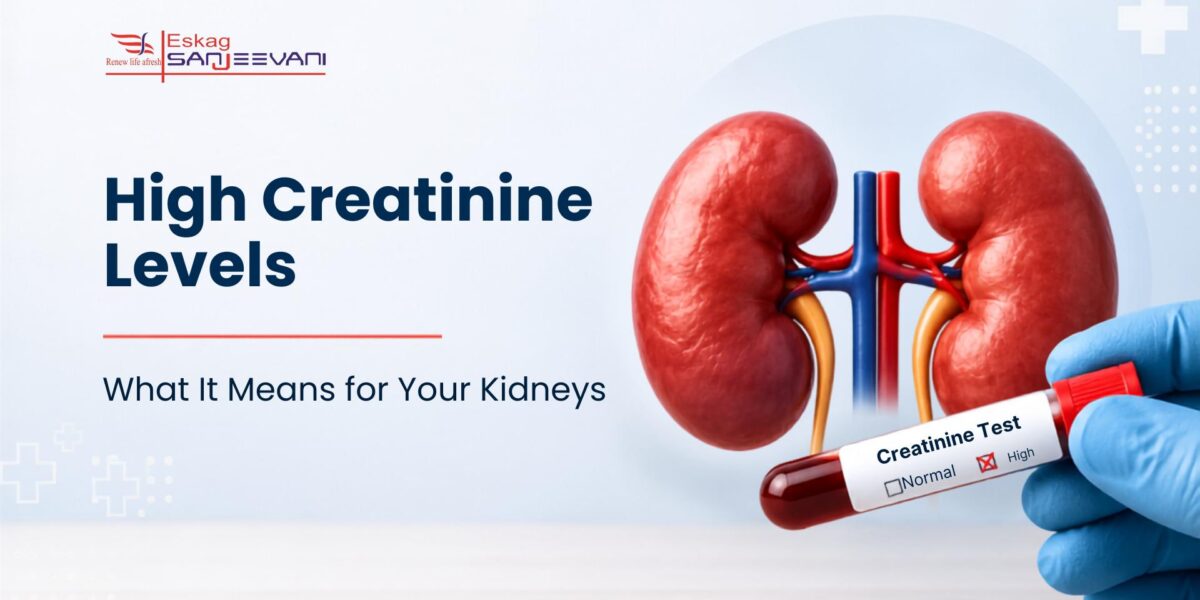
Did you know that around 11 to 16% of the adult population in India suffers from creatinine problems? Your kidneys do far more than most people realise. Two organs that look like beans, each roughly the size of your fist, filter your blood, remove waste, balance minerals, control blood pressure, and even help produce red blood cells. When something disrupts this system, one of the earliest signs shows up in a routine number: your creatinine level. A high creatinine reading on a blood test report often prompts concern, and rightly so. Understanding what it means, how it is measured, and what to do next can make a real difference in your kidney health.
Key Takeaways
- A creatinine test measures a waste product in your blood or urine to assess how well your kidneys filter waste.
- High creatinine levels do not always confirm kidney disease — dehydration, diet, and certain medicines can also raise them.
- Stage 3 kidney disease, usually linked to high creatinine, can often be managed without progressing to kidney failure with early treatment.
Quick Answer: High creatinine levels may indicate that your kidneys aren’t filtering waste properly and may require medical evaluation.
- What Is Creatinine and Why Does It Build Up?
- Understanding the Creatinine Test
- Creatinine Test Normal Range: What Numbers Mean
- What Causes High Creatinine Levels?
- What Is Stage 3 Kidney Disease?
- Symptoms to Watch For
- Who Is at Risk of High Creatinine Levels?
- Treatment for High Creatinine Levels
- When to See a Nephrologist
What Is Creatinine and Why Does It Build Up?
Creatinine is a chemical waste product your body produces when muscles break down a compound called creatine. Under normal conditions, your kidneys filter creatinine from the blood and pass it out through urine.
When the kidneys are not working well, they struggle to clear this waste. Creatinine then accumulates in the blood, and that build-up is what a creatinine test detects [1].
The kidneys contain around one million tiny filtering units called nephrons. Each nephron has a glomerulus (a cluster of small blood vessels) that filters blood and a tubule that returns useful substances to the bloodstream while sending waste out as urine [2].
If this process is disrupted, whether by disease, dehydration, or long-term conditions like diabetes, creatinine clearance slows down, and blood levels rise.
Understanding the Creatinine Test
The creatinine test measures creatinine in a blood sample (serum creatinine), a urine sample, or both. It is one of the most commonly ordered tests to assess kidney function.
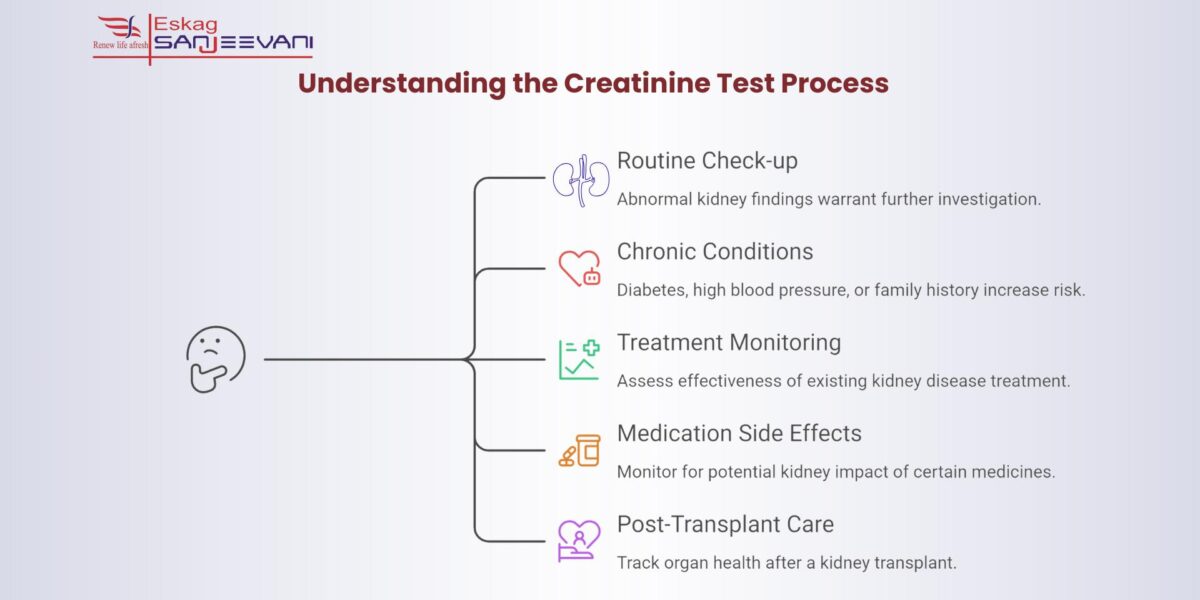
Doctors may advise a creatinine test if:
- A routine health check reveals abnormal kidney findings that warrant further investigation.
- You have diabetes, high blood pressure, or a family history of kidney disease.
- To monitor how well existing kidney disease treatment is working.
- When certain medicines that may affect the kidneys are being taken.
- After a kidney transplant, to track organ health over time.
The test result alone is rarely enough to make a diagnosis. Doctors typically pair it with an estimated glomerular filtration rate (eGFR). This calculation uses the creatinine level, along with age, sex, and body size, to estimate renal function. This gives a more accurate picture than creatinine alone [1].
Creatinine Test Normal Range: What Numbers Mean
The normal range for the creatinine test varies by sex, age, and muscle mass. People with greater muscle bulk naturally produce more creatinine and may have slightly higher baseline values.
|
Normal ranges can differ slightly between laboratories. Always try to check the reference range printed on your lab report alongside your result [1].
It is important to know that a creatinine value within the normal range does not always confirm healthy kidneys. In the initial stages of kidney problems, blood creatinine may still appear normal; levels rise as the condition becomes more serious.
What Causes High Creatinine Levels?
High creatinine levels do not always lead to kidney disease. Several other factors can raise them temporarily or chronically.
Kidney-related causes:
- Chronic kidney disease (CKD) reduces filtration over time
- Acute kidney injury from infections, poor blood flow, or blockages
- Conditions that affect the kidneys, such as heart failure or uncontrolled diabetes
- Urinary tract blockages preventing waste clearance
Non-kidney causes:
- Dehydration, which concentrates waste products in the blood
- A high intake of cooked red meat, which releases creatinine during cooking
- Intense physical exercise increases muscle breakdown temporarily
- Certain muscle disorders, including muscular dystrophy
- Some medicines that can affect how the kidneys filter
If your creatinine is elevated, a single reading is not a diagnosis. Your doctor will likely repeat the test, check your eGFR, and run a urine test to look for protein, all of which together give a clearer picture of kidney health.
What Is Stage 3 Kidney Disease?
Chronic kidney disease (CKD) is classified into five stages based on eGFR. Stage 3 is the middle stage, in which the kidneys have mild to moderate damage, and their filtering ability has declined notably.
| CKD Stage | eGFR Range | Kidney Function Status |
| Stage 1 | ≥ 90 | Normal or near-normal |
| Stage 2 | 60 – 89 | Mildly reduced |
| Stage 3a | 45 – 59 | Mild to moderate reduction |
| Stage 3b | 30 – 44 | Moderate to severe reduction |
| Stage 4 | 15 – 29 | Severely reduced |
| Stage 5 | < 15 | Kidney failure |
In stage 3, waste and fluid can begin to accumulate in the body. This may lead to complications such as high blood pressure, anaemia, and bone problems. Many patients with stage 3 CKD do not progress to stage 4 or stage 5 with proper management [3].
Patients in Eskag Sanjeevani’s Nephrology department are evaluated not only by creatinine but also by eGFR and the urine albumin-to-creatinine ratio (uACR), a more complete assessment of kidney damage.
Symptoms to Watch For
Stage 3 kidney disease and elevated creatinine levels, in general, may produce noticeable symptoms as kidney function declines. These include:
- Swelling in the hands, feet, or around the eyes due to fluid retention.
- Persistent fatigue or low energy from waste build-up and anaemia.
- Changes in urination — more frequent, less frequent, foamy, or blood-tinged urine.
- Dry, itchy skin is linked to mineral imbalances in the blood.
- Muscle cramps, nausea, or difficulty sleeping as toxins accumulate.
Symptoms often appear late in the disease process. Many people with early CKD have no symptoms at all — which is why regular testing matters, especially for those with diabetes and kidney disease risk. Early detection is the best tool for preventing serious damage.
Who Is at Risk of High Creatinine Levels?
Some people are more likely to develop elevated creatinine and kidney disease than others. Key risk factors include:
- Diabetes: High blood sugar damages kidney blood vessels, reducing their ability to filter properly.
- High blood pressure: Uncontrolled hypertension increases pressure within kidney filters, worsening structural damage.
- Family history: A genetic predisposition to kidney disease significantly increases lifetime risk.
- Age over 50: Kidney filtration naturally slows with age, making older adults more vulnerable.
- Obesity and smoking: Both accelerate kidney damage and are linked to CKD progression.
In India, diabetes and high blood pressure together account for a significant portion of CKD cases. If you have any of these risk factors, regular kidney function check-ups are essential, not optional.
Treatment for High Creatinine Levels
There is no single treatment for high creatinine levels. The goal is to address the underlying cause, slow further kidney damage, and manage related conditions. Treatment for high creatinine levels typically involves a combination of medical, dietary, and lifestyle approaches.
Medical Treatment
- ACE inhibitors and ARBs (blood pressure medicines) are commonly prescribed. They reduce pressure within the kidney’s blood vessels and slow the progression of kidney damage, even in patients without high blood pressure [3].
- Blood sugar control with appropriate medication is essential for diabetic patients with kidney involvement.
- Treating infections or blockages that cause acute kidney injury can reverse elevated creatinine quickly.
- In advanced stages, dialysis or a kidney transplant becomes necessary. See dialysis explained at Eskag Sanjeevani.
Dietary Adjustments
- Reduce intake of red and processed meat, as cooked meat can raise creatinine levels.
- Limit sodium-, potassium-, and phosphorus-rich foods to reduce the burden on the kidneys.
- Choose plant-based proteins like lentils and tofu over animal proteins where possible.
- Increase fibre-rich foods, including vegetables, whole grains, and berries [3].
Lifestyle Changes
- Stay well hydrated to help the kidneys flush waste — around eight glasses of water daily, unless your doctor advises otherwise.
- Exercise regularly at a moderate level; avoid intense workouts if creatinine is already elevated.
- Limit alcohol, which can worsen kidney function over time.
- Maintain a healthy weight, as obesity strains the kidneys.
If creatinine remains elevated despite lifestyle changes, a nephrologist will adjust the treatment plan and run additional tests to find and address the underlying cause.
When to See a Nephrologist
Consult a kidney specialist promptly if you notice any of the following:
- A high creatinine reading on two separate blood tests taken at least three months apart.
- Swelling, persistent fatigue, reduced urine output, or shortness of breath alongside a high creatinine result.
- An eGFR below 60 indicates reduced kidney filtration.
- Known risk factors like diabetes or hypertension that have not been well controlled.
- Foamy or blood-tinged urine that does not resolve.
Dr Sourav Sadhukhan, Nephrologist at Eskag Sanjeevani Hospital, Baranagar, specialises in managing CKD, diabetic nephropathy, acute kidney injury, and hypertension-related kidney disorders. Early consultation with the best nephrologist in Kolkata can help you preserve kidney function and plan the right course of care before damage becomes irreversible.
Wrapping Up
High creatinine levels are a signal worth taking seriously but not one to panic over. They indicate that the kidneys may not be clearing waste as efficiently as they should, and the causes range from dehydration and diet to chronic kidney disease. A creatinine test, combined with an eGFR and urine albumin test, gives your doctor the full picture needed to guide treatment.
Whether you are managing stage 3 kidney disease or simply monitoring a borderline result, the combination of medical care, diet adjustments, and lifestyle changes can go a long way. If your creatinine is high, speak to a kidney doctor — early action is key to protecting long-term kidney health. Contact the best nephrologist in Kolkata at Eskag Sanjeevani Hospitals for expert kidney evaluation and personalised care.

Microbiologist with over 2 years of experience in medical writing, specialising in evidence-based healthcare content.

Clinical experience in diagnosis, treatment, and evidence-based patient care across a range of conditions.
References
- MedlinePlus. “Creatinine Test: MedlinePlus Lab Test Information.” Medlineplus.Gov, 5 Dec. 2023. Accessed 16 July 2026.
- National Institute of Diabetes and Digestive and Kidney Diseases. “Your Kidneys & How They Work.” National Institute of Diabetes and Digestive and Kidney Diseases, June 2018,
- American Kidney Fund. “Stages of Kidney Disease.” Www.Kidneyfund.Org, 2025,
High creatinine levels indicate that your kidneys may not be filtering waste from your blood efficiently. It can signal kidney disease, dehydration, muscle disorders, or the effects of certain medicines, and needs a medical evaluation to find the cause.
For adult men, normal serum creatinine is roughly 0.7–1.3 mg/dL. For adult women, it is approximately 0.5–1.1 mg/dL. Ranges vary slightly between laboratories, so always check your lab report’s reference range alongside your result.
Yes, in some cases. If the cause is temporary — such as dehydration, intense exercise, or a short illness — creatinine can normalise once the cause is addressed. In chronic kidney disease, the goal is to slow the further rise rather than reverse it completely.
Not necessarily. Stage 3 kidney disease means moderate kidney damage, but many patients do not progress to kidney failure with proper management. Dialysis is typically only required at stage 5 (end-stage renal disease) when kidney function drops below 10–15%.
Eskag Sanjeevani Hospitals at Baranagar, Baghbazar, and Khardah offer expert nephrology consultations. A kidney doctor can review your creatinine test, calculate your eGFR, run a urine albumin test, and create a personalised kidney care plan.