

 Medically Reviewed
Safe Drinking Water & Waterborne Diseases in Monsoon
The monsoon season brings relief from the heat, but it also increases the risk of infections that spread through contaminated food and water. Flooding, waterlogging, and poor sanitation can allow harmful bacteria, viruses, and parasites to enter drinking water sources.
Some of the most common waterborne diseases in the monsoon are typhoid and gastroenteritis, which can affect people of all ages. Maintaining safe drinking water practices, proper hygiene, and timely medical attention can reduce the chances of these infections. [1]
Key Takeaways
- Water contamination becomes more common during the monsoon due to overflowing drains, poor sanitation, and mixing of sewage with drinking water sources.
- Typhoid and gastroenteritis are common monsoon diseases that usually spread through unsafe water and contaminated food.
- Drinking boiled or purified water, washing hands frequently, and seeking early treatment are important for staying healthy.
Quick Answer: Prevent waterborne diseases in the monsoon by drinking safe water, maintaining hygiene, avoiding contaminated food, and seeking timely medical care.
Why Does the Risk of Waterborne Diseases Increase During Monsoon?
The rainy season creates conditions that make it easier for germs to spread through food and water. Changes in the environment and daily habits can increase exposure to infections.
Contamination of Drinking Water Sources
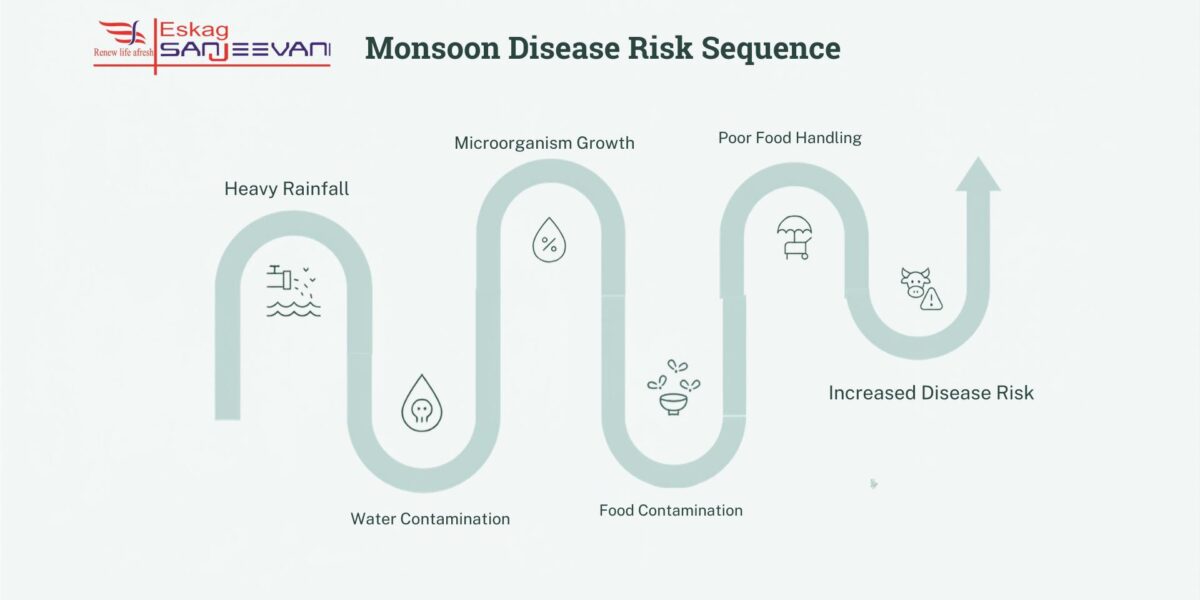
Heavy rainfall can cause sewage water and harmful microorganisms to mix with water reservoirs, pipelines, and other sources of drinking water. If this water is consumed without proper purification, it can cause infections such as typhoid and gastroenteritis [1].
Increased Growth of Disease-Causing Microorganisms
The warm and humid environment during the monsoon supports the growth of many bacteria and viruses. Food and water stored in unhygienic conditions may become contaminated more quickly during this period [2].
Poor Food Handling and Storage
Street food, uncovered meals, and food kept for long hours can become breeding grounds for harmful germs. Eating freshly prepared, properly cooked food reduces the risk of monsoon-related diseases.
How to Prevent Typhoid and Gastroenteritis During Monsoon
Preventing these infections mainly depends on maintaining good hygiene and ensuring safe drinking water. Simple daily precautions can protect you and your family from water-related illnesses.
- Drink only clean water. Wash your hands more often with soap and clean water before eating and even after using the washroom. Avoid drinking water from unknown sources, especially during the rainy season.
- Maintain proper hand hygiene. Wash your hands thoroughly with soap and clean water before eating and after using the washroom. This simple habit reduces the transfer of germs from hands to food.
- Choose freshly prepared and well-cooked food. Hot, freshly cooked meals have a lower chance of carrying harmful microorganisms. Avoid stale food, uncovered dishes, and foods that may have been exposed to contaminated surroundings.
- Store food and water safely. Keep drinking water in clean, covered containers and avoid touching stored water with unclean hands or utensils. Proper storage prevents contamination after purification.
- Avoid unhygienic eating places during monsoon. Food prepared in places with poor sanitation may contain bacteria or viruses that cause infections. Choosing hygienic meals is an important step in preventing waterborne diseases in monsoon.
Also read: Why Eskag Sanjeevani is Among the Best Hospitals for Gastroenterology in Kolkata?
Symptoms of Typhoid and Gastroenteritis That Cannot Be Ignored
Although the symptoms may vary between individuals, early identification can help prevent the illness from becoming severe.
Symptoms of Typhoid
Common signs of typhoid include:
- Persistent high fever is one of the most common signs of typhoid. The fever usually develops gradually and may persist for several days if not diagnosed and treated promptly.
- Weakness and extreme tiredness are common symptoms that can make routine activities difficult. People with typhoid may feel drained and lack energy throughout the day.
- Stomach pain and headaches often occur as the body responds to the infection. Many individuals may also experience a reduced appetite and post-meal discomfort.
- Nausea and digestive discomfort can develop as the infection affects the digestive system. Without proper medical care, these symptoms may worsen and affect overall health.
- Bowel movements may change during typhoid, with some people experiencing constipation while others may have diarrhoea. These symptoms can differ from person to person and may vary based on the severity of the infection [1].
Symptoms of Gastroenteritis
Gastroenteritis often affects the digestive system and can lead to symptoms such as:
- Frequent loose stools are among the most common symptoms of gastroenteritis and can lead to significant fluid and electrolyte loss. If diarrhoea persists for a long time, it may increase the risk of dehydration.
- Vomiting and nausea can make it difficult for the body to retain fluids and essential nutrients. Continuous vomiting may require medical attention to prevent dehydration and weakness.
- Abdominal cramps and stomach discomfort may result from inflammation and irritation of the digestive tract. The pain usually varies from slight discomfort to severe pain and cramps.
- Fever and general weakness may develop as the body fights the infection. Many individuals may feel tired, low on energy, and unable to carry out their regular activities.
- Dehydration and its signs like dry mouth, dizziness, and reduced urination should not be ignored. Severe dehydration can become a serious condition and may require prompt medical treatment [2].
How to Treat Gastroenteritis and Typhoid
Treatment depends on various things, especially the cause and severity of the infection. Self-medicating, especially with antibiotics, should be avoided because proper diagnosis is necessary before starting treatment.
Treatment for Typhoid
Typhoid requires medical evaluation and appropriate treatment prescribed by a doctor. Completing the full course of prescribed medicines and following hygiene precautions helps prevent recurrence and spread of infection [1]. At Eskag Sanjeevani, you’ll find the best general medicine doctor who will provide you with the best treatment and help you to recover faster.
Managing Gastroenteritis
Most cases of gastroenteritis focus on preventing dehydration and relieving symptoms. Drinking enough fluids, using oral rehydration solutions, and following medical advice can help the body recover by replacing lost fluids and salts [2]. At Eskag Sanjeevani, patients with gastroenteritis receive detailed care through a dedicated Gastroenterology Department. The specialists provide proper evaluation, diagnosis, and personalised treatment plans to help manage digestive infections and related complications.
Consulting a Doctor
While mild stomach problems may improve with home care, certain symptoms require medical attention.
- Fever that persists for several days or keeps increasing despite taking basic precautions. A medical examination is mandatory to identify the hidden causes and begin timely treatment.
- Frequent vomiting or diarrhoea that causes weakness and makes it difficult to drink enough fluids. Prolonged fluid loss can lead to dehydration and other health complications.
- Signs of dehydration include feeling extremely thirsty, dizzy, having a dry mouth, or passing less urine than usual. Getting medical help at an early stage can prevent the condition from worsening.
- Severe abdominal pain or symptoms that become worse instead of improving over time. These may indicate a more serious infection and should not be ignored.
- Illness in children, elderly individuals, or people with weakened immunity requires earlier medical assessment. These groups are more vulnerable to complications and may need prompt medical care.
If you are experiencing these symptoms and looking for the best general medicine doctor in Kolkata, stop hesitating and book your appointment with us. It can help to identify the hidden cause and ensure timely treatment.
Closing Thoughts
The risk of waterborne diseases in the monsoon increases because rainwater can contaminate food and drinking water sources. However, simple habits such as drinking safe water, maintaining hygiene, and eating freshly prepared food can greatly reduce the risk of developing typhoid and gastroenteritis.
Do not ignore persistent fever, diarrhoea, vomiting, or signs of dehydration. Early check-up and appropriate treatment can prevent complications and help you recover faster. Eskag Sanjeevani and its team is always there to help you recover.

Microbiologist with over 2 years of experience in medical writing, specialising in evidence-based healthcare content.

Clinical experience in diagnosis, treatment, and evidence-based patient care across a range of conditions.
References
- Mehta, K., Joshi, M. and Omar, M.A. (2024). Typhoid fever in India: A growing concern requiring immediate preventive efforts. Health science reports, [online] 7(2).
- Gupta, D.P. (2025). Stomach Problems in Monsoon: Early Signs & Prevention Tips. [online] Maxhealthcare. in. Available at:
Typhoid and gastroenteritis are among the most common waterborne diseases in monsoon. They usually spread through contaminated water, unhygienic food, and poor sanitation.
You can ensure safe drinking water by boiling it, using proper purification systems, storing it in clean, covered containers, and avoiding water from unknown sources.
Mild gastroenteritis may improve with rest, adequate fluid intake, and oral rehydration solutions. However, persistent diarrhoea, vomiting, high fever, or dehydration should be evaluated by a doctor.
Typhoid requires proper medical diagnosis and treatment with medicines prescribed by a doctor. Completing the full course of treatment and maintaining good hygiene are essential for a full recovery.
Monsoon diseases become more common because heavy rainfall can contaminate water supplies, while humidity and poor food storage conditions support the growth and spread of harmful microorganisms.