

 Medically Reviewed
Heart Attack in Youth: Why Young Indians Are Getting It at 35
Losing a young colleague or family member to a sudden heart attack at 35 is no longer rare. Most young adults dismiss chest discomfort and breathlessness as stress, overlooking critical cardiac warning signs that require urgent evaluation. Heart attack in youth follows a distinct pattern driven by genetic predisposition, silent metabolic dysfunction, and lifestyle behaviours accumulating undetected. Indians develop coronary artery disease a full decade earlier than Western populations, yet most remain entirely unscreened until a cardiac event occurs.
In this blog, we’ll explore causes, ignored symptoms, missed risk factors, and practical steps to reduce your cardiac risk.
Key Takeaways:
- Heart attack in youth in India occurs a decade earlier, with 1 in 5 patients now under 40.
- Early heart attacks frequently present as jaw pain, breathlessness, and cold sweats rather than classic chest pain.
- Silent hypertension, abdominal obesity, undiagnosed pre-diabetes, and family history are the most commonly missed cardiac risk factors.
Quick Answer: Heart attack in youth occurs in India a decade earlier due to genetic predisposition, uncontrolled metabolic risk factors, chronic stress, and lifestyle behaviours damaging coronary arteries silently from young adulthood.
Quick Links
- Why Are Young Indians Getting Heart Attacks Earlier?
- Causes of Heart Attack in Young Adults
- Early Heart Attacks: Symptoms Young Adults Ignore
- Silent Heart Attack: When Your Heart Sends No Warning
- Risk Factors for Heart Disease That Many Young Adults Miss
- Why Should You See a Cardiologist in Eskag Sanjeevani?
Why Are Young Indians Getting Heart Attacks Earlier?
Indians are more likely to suffer from cardiovascular disease over a decade earlier than their Western counterparts. Pattern driven by genetic predisposition, rapid urbanisation, and metabolic risk factors accumulating silently from the 20s onward. Between 25% and 40% of patients suffering acute myocardial infarction in India are under the age of 40, fundamentally contradicting the widely held belief that heart attacks are an older person’s condition [1]. Over 50% of cardiovascular disease mortality in India occurs in individuals aged below 50 years, with smoking, dyslipidemia, and hypertension identified as the primary risk factors in younger age groups. India accounts for one-fifth of global cardiovascular disease deaths, yet most young adults remain unscreened and unaware of their personal cardiac risk until a catastrophic event forces clinical attention.
Causes of Heart Attack in Young Adults
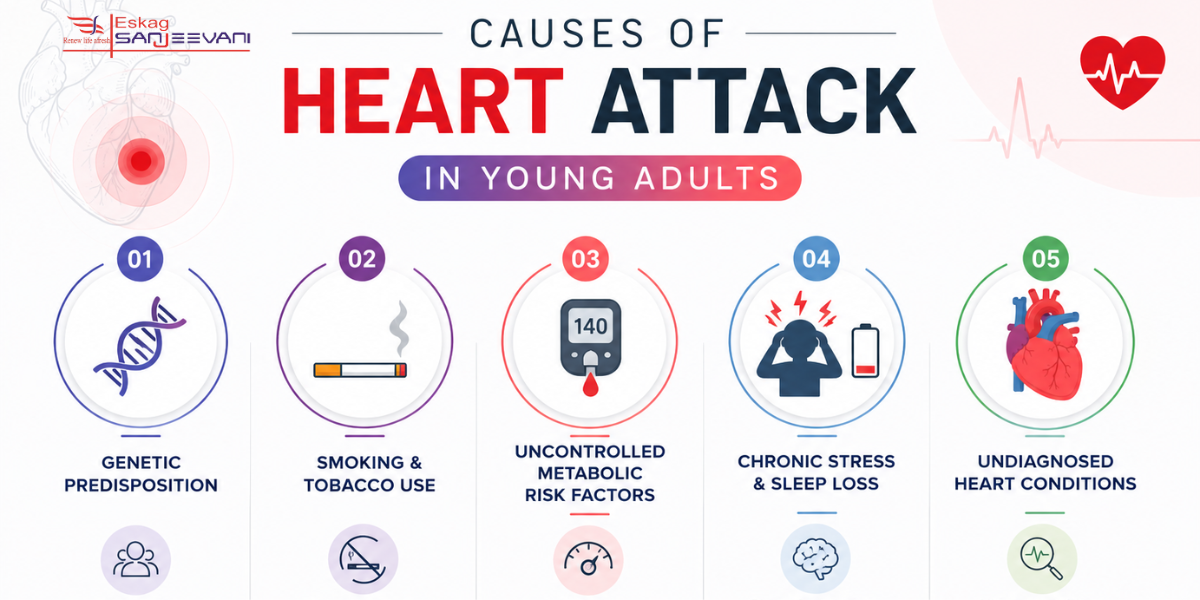
Heart attack in youth rarely results from a single cause. Early heart attacks develop through converging genetic vulnerabilities, metabolic dysfunction, chronic stress, and lifestyle behaviours accumulating silently over years.
Here are five major causes for heart attack in young adults:
1. Genetic Predisposition
Familial hypercholesterolaemia causes severely elevated LDL cholesterol from birth, accelerating coronary plaque formation decades before symptoms appear. Young adults with a first-degree relative who suffered a heart attack before 55 carry significantly elevated risk requiring early cardiac screening.
2. Smoking and Tobacco Use
Tobacco smoking causes 33-52% increased odds of premature structural and functional cardiac injury before age 25 [2]. Smoking damages arterial endothelium, raises blood pressure, and accelerates coronary atherosclerosis, making it among the strongest modifiable causes of heart attack in young adults.
3. Uncontrolled Metabolic Risk Factors
Undiagnosed hypertension, dyslipidaemia, and type 2 diabetes silently damage coronary arteries for years before symptoms appear. Causes of heart attack in young adults increasingly include metabolic syndrome driven by high-sodium, high-carbohydrate processed diets and physical inactivity.
4. Chronic Stress and Sleep Deprivation
Chronic psychological stress triggers sustained cortisol release, elevating blood pressure and accelerating inflammatory processes within coronary arterial walls. Sleep deprivation below six hours nightly independently increases heart attack risk by 20%, compounding cardiovascular damage from work pressure and irregular schedules.
5. Undiagnosed Heart Conditions
Many young adults carry undetected congenital heart defects, hypertrophic cardiomyopathy, or abnormal coronary artery origins without any symptoms. These structural abnormalities remain invisible without cardiac screening, silently increasing sudden cardiac death risk during physical exertion or emotional stress.
Now, with a better understanding of the prominent causes of heart attacks, let’s understand what is commonly referred to as an early heart attack and the symptoms that are associated with it.
Early Heart Attacks: Symptoms Young Adults Ignore
Early heart attacks in young adults frequently present with atypical symptoms that are misattributed to acidity, anxiety, muscle strain, or fatigue.
Here are some of the symptoms that you must know to ascertain the onset of an early heart attack:
- Chest Discomfort: Young adults frequently dismiss persistent chest pressure or tightness as indigestion or acid reflux. Unlike acidity, cardiac chest discomfort does not resolve with antacids and worsens with physical exertion or emotional stress. Any chest pressure lasting more than five minutes without relief requires immediate emergency evaluation.
- Breathlessness: Sudden shortness of breath during routine activity, climbing stairs, or even at rest signals inadequate cardiac output. Young adults often attribute this to poor fitness rather than recognising it as a cardiac warning sign.
- Jaw, Neck, and Left Arm Pain: Pain radiating to the jaw, neck, left shoulder, or arm without any injury represents referred cardiac pain through shared nerve pathways. The symptom is dismissed as muscle tension or dental pain by young adults unaware of its cardiac significance. Women particularly experience jaw and back pain as their dominant heart attack symptom rather than classic chest pain.
- Cold Sweats and Fatigue: Sudden extreme fatigue without exertion, cold sweats while sitting still, and unexplained light-headedness are early cardiac warning signs. These symptoms appear hours or days before a heart attack occurs, giving a critical intervention window.
- Palpitations: Sudden awareness of a racing, fluttering, or skipping heartbeat indicates cardiac electrical dysfunction requiring urgent assessment. Palpitations in young adults with undiagnosed hypertrophic cardiomyopathy or arrhythmias represent a high sudden cardiac death risk.
Important Note: Any episode of palpitations accompanied by dizziness or near-fainting requires immediate evaluation by a cardiologist.
Silent Heart Attack: When Your Heart Sends No Warning
A silent heart attack occurs without chest pain, affecting an estimated 45% of all myocardial infarctions and remaining undetected until discovered on an ECG [3]. Young adults are disproportionately affected because atypical presentations, including mild jaw discomfort, unexplained fatigue, and brief breathlessness, are dismissed as stress or indigestion. Silent heart attacks cause identical myocardial damage to symptomatic events, leaving permanent scarring that reduces cardiac function and doubles future heart attack risk without any prior warning. Diabetic patients face the highest silent heart attack risk because autonomic neuropathy blunts pain perception entirely, masking even significant myocardial ischemia during daily activities.
Risk Factors for Heart Disease That Many Young Adults Miss
Many young adults carrying multiple cardiovascular risk factors remain unaware because heart attack in youth develops silently through conditions producing no symptoms until irreversible organ damage or cardiac events occur.
1. Silent Hypertension
High blood pressure damages arterial walls and heart muscle continuously without producing any symptoms. Research from the Framingham Offspring Study confirms non-optimal blood pressure during young adulthood independently predicts coronary heart disease events decades later [4]. Routine annual blood pressure screening remains the single most actionable step to prevent early heart disease.
2. Abdominal Obesity
Excess visceral fat simultaneously drives insulin resistance, inflammation, and dyslipidaemia, thereby accelerating coronary atherosclerosis independent of total body weight. Many young adults with normal BMI carry dangerous visceral fat levels undetected without waist circumference measurement during routine medical checkups.
3. Chronic Psychological Stress
Sustained work-related stress and sleep deprivation chronically elevate cortisol, raising blood pressure and promoting arterial inflammation. Heart disease risk factors, including hypertension, obesity, and diabetes, are expected to rise by 2050, with chronic stress identified as a primary driver [5].
4. Underreported Family History
First-degree relatives with premature coronary artery disease before age 55 in men or 65 in women significantly elevate personal cardiac risk. Most young adults fail to report family history accurately, preventing physicians from initiating early interventions that dramatically reduce heart attack risk in young adults.
5. Undiagnosed Pre-Diabetes
Pre-diabetes affects millions of young adults who remain unaware because HbA1c is rarely included in basic health screenings under 40. Insulin resistance silently damages endothelial function and promotes coronary plaque formation years before clinical diabetes diagnosis, making early screening essential to prevent heart disease progression.
Suggested read: Your Heart Health Matters: The Critical Role of Regular Cardiac Checkups
Why Should You See a Cardiologist in Eskag Sanjeevani?
Eskag Sanjeevani’s cardiology department provides 24/7 cardiac care across Baghbazar, Baranagar, and Khardah hospitals through experienced interventional and preventive cardiologists. The department offers comprehensive diagnostics including ECG, echocardiography, coronary angiography, angioplasty, and stenting, covering everything from risk assessment through emergency intervention under one roof. A dedicated team of interventional cardiologists, preventive cardiology specialists, and heart failure management experts provides personalised cardiac assessments for patients across all risk levels. For young adults with family history, uncontrolled metabolic risk factors, or unexplained cardiac symptoms, the department delivers targeted heart health evaluations with diagnostic precision.
Final Thoughts
Heart attack in youth is not inevitable; most early cardiac events are preventable when risk factors are identified early. Get blood pressure, fasting glucose, HbA1c, and lipid profile checked annually from age 25 onward. Report your complete family history of heart disease accurately to every physician you consult without exception. If you experience chest discomfort, jaw pain, shortness of breath, or cold sweats, seek an emergency cardiac evaluation immediately. Eskag Sanjeevani provides young adults with access to experienced cardiologists, 24/7 diagnostics, and interventional cardiology across multiple hospitals in West Bengal.

Microbiologist with over 2 years of experience in medical writing, specialising in evidence-based healthcare content.

Clinical experience in diagnosis, treatment, and evidence-based patient care across a range of conditions.
References
- Keswani, K. (2023). Young Indians With Fatigued Hearts – American College of Cardiology. [online] American College of Cardiology.
- Walther, O. (2024). Smoking Tobacco from Childhood Can Cause Premature Heart Damage – American College of Cardiology. [online] American College of Cardiology.
- Cheng, Y., Jia, Y., Yao, F., Mei, W., Zhai, Y., Zhang, M. and Wu, S. (2021). Association Between Silent Myocardial Infarction and Long‐Term Risk of Sudden Cardiac Death. Journal of the American Heart Association, 10(1).
- Pletcher MJ, Vittinghoff E, Thanataveerat A, Bibbins-Domingo K, Moran AE. Young Adult Exposure to Cardiovascular Risk Factors and Risk of Events Later in Life: The Framingham Offspring Study. PLoS One. 2016 May 3;11(5):e0154288. doi: 10.1371/journal.pone.0154288. PMID: 27138014; PMCID: PMC4854462.
- American Heart Association (2024). Heart Association names biggest advances in cardiovascular research for 2024. [online]
Yes; many young adults who appear physically fit carry undetected familial hypercholesterolaemia, hypertrophic cardiomyopathy, or silent hypertension producing no outward signs. Coronary atherosclerosis advances silently for years before manifesting as a cardiac event, making routine screening essential regardless of apparent physical fitness or athletic activity.
Young adults more commonly experience heart attacks from coronary artery spasm, spontaneous coronary artery dissection, or undetected structural abnormalities rather than advanced plaque rupture. Symptoms are frequently atypical in younger patients, presenting as jaw pain, breathlessness, or cold sweats rather than classic crushing chest pain seen in older adults.
Chronic psychological stress alone rarely causes a direct heart attack but accelerates every major risk factor simultaneously, including hypertension, inflammation, and cortisol-driven arterial damage. When combined with undiagnosed metabolic dysfunction or genetic predisposition, sustained stress significantly raises acute cardiac event risk in young adults under 40.
Annual blood pressure, fasting glucose, HbA1c, and lipid profile screening should begin from age 25, or earlier for those with first-degree relatives who experienced premature heart disease. Young adults with multiple risk factors, including smoking, abdominal obesity, or diabetes, require cardiac evaluation including ECG and echocardiography before age 30.
Full recovery is possible with prompt treatment, cardiac rehabilitation, and sustained lifestyle modification following a heart attack in youth. However, young heart attack survivors carry equal risk of subsequent cardiac events as older adults, making long-term cardiologist follow-up, medication adherence, and risk factor control permanently essential.