
 Medically Reviewed
Preventive Health Checkup for Every Indian, Decade by Decade
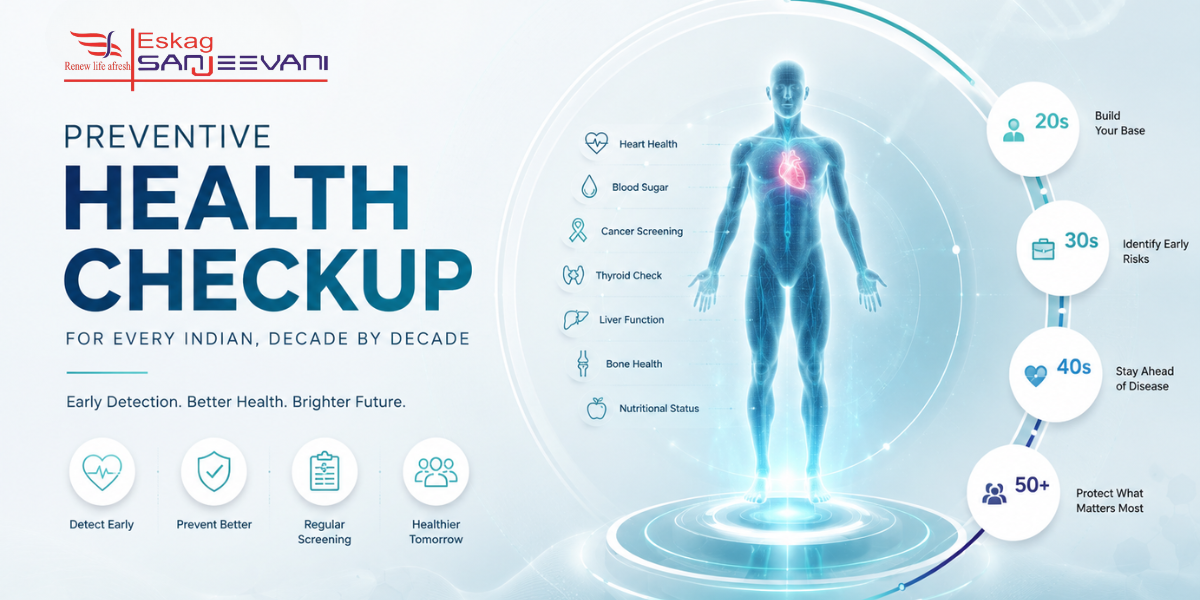
Many serious diseases develop quietly for years before symptoms become obvious, which often leaves people surprised by a diagnosis that could have been detected much earlier. In India, conditions such as diabetes, hypertension, thyroid disorders, heart disease, and certain cancers frequently remain unnoticed until complications affect daily life or require hospital care. A timely preventive health checkup helps detect silent disease, nutritional deficiencies, and metabolic risks before long-term organ damage begins. Screening also changes with age, family history, lifestyle, and gender, which means the health tests you need in your 20s differ significantly from those required in your 40s or beyond.
In this blog, you will learn which health screenings matter most in every decade of life, why they matter, and how a structured screening plan can support healthier ageing and earlier medical intervention.
Key Takeaways:
- Health screening needs change with age, family history, lifestyle, and gender-specific risk factors.
- Early screening helps detect diabetes, hypertension, cancers, and metabolic disease before complications develop.
- A structured, full-body checkup test list improves long-term disease prevention and medical planning.
Quick Answer: A preventive health checkup helps detect silent diseases early through age-appropriate screening tests before symptoms develop.
Quick Links
- Why Preventive Health Checkup Matters in India
- In Your 20s: Building Your Health Baseline
- In Your 30s: Catching Lifestyle Diseases Early
- In Your 40s: When Full Body Checkup Becomes Annual
- In Your 50s and Beyond: Comprehensive Screening Priority
- Full Body Checkup Tests List: What Every Package Should Include
- Government Schemes Covering Preventive Health Checkups in India
Why Preventive Health Checkup Matters in India
Every year, approximately 5.8 million Indians die from non-communicable diseases, including heart disease, stroke, cancer, and diabetes [1]. This translates to one in four Indians at risk of dying before age 70 from a preventable condition. Type 2 diabetes is frequently diagnosed 5-7 years after organ damage has already silently begun without any symptoms. Catastrophic health expenditures push nearly 55 million Indians into poverty annually, mostly from hospitalisations for conditions that early screening could have detected and prevented.
India’s deeply reactive healthcare culture means most people visit a doctor only after symptoms significantly affect daily quality of life. A structured preventive health check-up reverses this pattern by detecting disease during the latent stage when intervention remains most effective and least invasive.
In Your 20s: Building Your Health Baseline
Your 20s represent the ideal decade to establish baseline health metrics, identify silent risk factors, and develop screening habits that enable meaningful comparison in future decades.
- Complete Blood Count (CBC): CBC detects anaemia, infections, platelet disorders, and blood cell abnormalities before symptoms develop. Iron deficiency anaemia affects approximately 53% of Indian women of reproductive age, making early detection clinically critical for this age group.
- Blood Glucose and HbA1c: Fasting blood glucose and HbA1c screening identifies pre-diabetes in young adults whose sedentary lifestyles and high-carbohydrate diets accelerate metabolic dysfunction. India’s diabetes onset is shifting younger, with urban adults in their 20s increasingly presenting with pre-diabetic markers during routine screening.
- Lipid Profile: Establishing a cholesterol baseline in your 20s allows physicians to track progression meaningfully rather than interpreting isolated future results without comparative context. Dyslipidemia is increasingly common among young urban Indians consuming diets high in refined oils, processed foods, and trans fats.
- Blood Pressure Monitoring: Hypertension affects nearly 30% of urban Indians under 30, yet most remain undiagnosed due to absence of symptoms until organ damage occurs. Every clinical visit should include blood pressure measurement, as this single reading costs nothing and detects one of India’s most underdiagnosed cardiovascular risk factors.
- Vitamin D and B12 Status: Vitamin D deficiency affects over 70% of Indians across all age groups despite abundant sunlight, driven by indoor lifestyles, skin tone, and dietary patterns. B12 deficiency is prevalent among vegetarians and vegans; both deficiencies cause fatigue, neurological symptoms, and bone loss that worsen progressively without supplementation.
In Your 30s: Catching Lifestyle Diseases Early
Your 30s demand more targeted preventive health checkup screening as metabolic, hormonal, and cardiovascular risks accelerate significantly beyond what basic medical checkups in your 20s addressed.
1. Thyroid Function (TSH)
Hypothyroidism prevalence is disproportionately high among Indian women in their 30s, causing fatigue, weight gain, and depression frequently misattributed to stress. TSH should appear on every full-body checkup test list from age 30 onward, regardless of symptoms.
2. Liver Function Test (LFT)
Non-alcoholic fatty liver disease affects 38% of urban Indians, with peak onset occurring between 30-45 years, driven by sedentary lifestyles and processed food consumption. Annual LFT screening detects hepatic inflammation before irreversible fibrosis develops.
3. HbA1c and Fasting Glucose
Pre-diabetes affects millions of Indians who remain entirely asymptomatic for years before progressing to Type 2 diabetes. Annual health screenings combining fasting glucose with HbA1c identify pre-diabetes when dietary and lifestyle intervention can still fully reverse progression.
4. Cardiac Baseline (ECG + Lipid Profile)
An annual lipid profile, combined with a resting ECG, establishes cardiovascular baselines before risk escalates in the 40s. Together, these two tests remain among the most cost-effective health screenings for detecting silent cardiac risk in asymptomatic adults.
5. Pap Smear and Breast Examination (Women)
Cervical cancer is one of India’s most preventable cancers yet remains a leading killer due to absent screening programs. A Pap smear every 3 years and an annual clinical breast examination must be on every woman’s medical checkup list from age 30 onward.
In Your 40s: When Full Body Checkup Becomes Annual
The 40s are the highest-risk decade for the onset of silent disease. A nationwide Indian screening campaign across 100,107 participants found hypertension prevalence of 33% and diabetes prevalence of 15%, with most cases entirely undetected before screening [2].
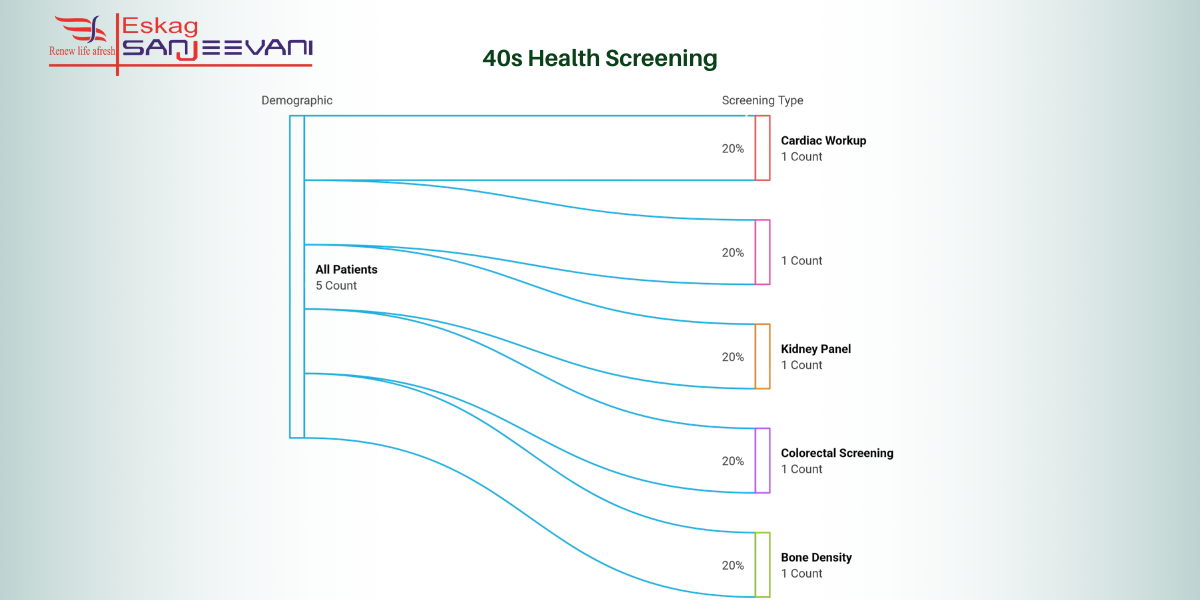
1. Cardiac Workup
Annual ECG, echocardiography, and complete lipid profile become non-negotiable medical checkups from age 40 onward. Cardiovascular risk escalates sharply in this decade, particularly in Indians with abdominal obesity, family history, or uncontrolled blood pressure.
2. Mammography (Women)
Annual mammography becomes the primary breast cancer screening tool, replacing clinical examination alone from age 40. Breast cancer is the most common cancer among Indian women, making this single health screening clinically essential regardless of symptoms.
3. Kidney Function Panel
Annual screening for creatinine, eGFR, and urine microalbumin levels detects silent CKD in patients with diabetes and hypertension before irreversible nephron loss occurs. Early detection of CKD at this stage enables interventions that prevent dependence on dialysis in later decades.
4. Colorectal Screening
Colonoscopy every 5-10 years from age 40-45 detects precancerous polyps before malignant transformation occurs. Breast, cervix, and oral cavity cancers together account for approximately 34% of all Indian cancers, making structured full body checkup tests list compliance essential.
5. Bone Density (DXA) for Women
Perimenopause-associated estrogen decline accelerates bone loss significantly in Indian women with chronically low calcium and Vitamin D intake. DXA scanning every 2 years starting at age 40 establishes a fracture risk baseline before osteoporosis becomes symptomatic and irreversible.
In Your 50s and Beyond: Comprehensive Screening Priority
The 50s introduce entirely new screening categories including prostate cancer, abdominal aortic aneurysm, cognitive decline, and depression with no clinical relevance in earlier decades.
1. PSA Testing (Men)
Prostate-specific antigen testing through shared decision-making is recommended for men aged 55-69 years. Individualised screening discussions, based on family history and patient preferences, determine the appropriate testing frequency.
2. Abdominal Aortic Aneurysm
Men aged 65-75 who have ever smoked require a one-time abdominal ultrasound screening for aortic aneurysm. This single ultrasound detects dangerous vessel dilation before life-threatening rupture occurs.
3. Cognitive Screening
MMSE or Montreal Cognitive Assessment should be administered annually from age 70 onward. Early dementia is consistently missed because families attribute progressive memory loss to normal ageing rather than a detectable neurological condition.
4. Depression Assessment
Depression screening becomes clinically essential from age 50 as social isolation, bereavement, and chronic illness converge simultaneously. Untreated depression independently increases cardiovascular mortality and treatment non-adherence across all concurrent chronic conditions.
5. Low-Dose CT for Smokers
Annual low-dose CT is recommended for adults aged 50-80 with a 20-pack-year smoking history. Lung cancer detected at Stage I carries over 70% five-year survival versus below 10% at Stage IV [3].
Also read: Understanding Heart Health: A Complete Guide to Cardiology for Every Age.
Full Body Checkup Tests List: What Every Package Should Include
A comprehensive full-body checkup test list must cover blood, metabolic, cardiac, hormonal, imaging, and cancer screening categories simultaneously, rather than isolating individual organ systems in fragmented packages.
Here is a tabular representation for the full-body test checklist:
| Category | Essential Tests | Frequency |
| Blood Health | CBC, ESR, peripheral smear | Annual |
| Metabolic Panel | Fasting glucose, HbA1c, insulin resistance | Annual |
| Lipid Profile | Total cholesterol, LDL, HDL, triglycerides, VLDL | Annual |
| Liver Function | SGOT, SGPT, ALP, bilirubin, albumin | Annual |
| Kidney Function | Creatinine, eGFR, urea, uric acid, microalbumin | Annual |
| Thyroid Panel | TSH, T3, T4 | Annual |
| Vitamins & Minerals | Vitamin D, Vitamin B12, calcium, iron, ferritin | Annual |
| Imaging | Chest X-ray, abdominal ultrasound | Annual |
| Cardiac Tests | ECG, echocardiography, blood pressure | Annual |
| Cancer Markers | Pap smear (women), PSA (men 50+), CA-125 (women at risk) | As indicated |
| Urine Analysis | Routine urine examination, microalbuminuria | Annual |
| Eye & Dental | Visual acuity, intraocular pressure, dental examination | Annual |
Government Schemes Covering Preventive Health Checkups in India
Several central and state government schemes make preventive health checkup services accessible and affordable for eligible Indian citizens across different employment categories and income groups.
- Central Government Health Scheme (CGHS): CGHS provides comprehensive healthcare coverage to central government employees, pensioners, and their dependents across 80+ Indian cities. Preventive health checkups, vaccinations, specialist consultations, diagnostics, and hospitalisation are covered through empanelled government and private hospitals under cashless arrangements.
- Ayushman Bharat PM-JAY: India’s flagship health insurance scheme provides ₹5 lakh annual coverage per family for secondary and tertiary hospitalisation at empanelled hospitals. Coverage includes pre-hospitalisation costs up to 3 days and post-hospitalisation costs up to 15 days, targeting the bottom 40% of the population by income.
- Swasthya Sathi (West Bengal): Residents of West Bengal receive cashless hospitalisation coverage of up to ₹5 lakh per family annually under this state scheme, with zero premium contribution. All pre-existing diseases are covered from day one; Eskag Sanjeevani is an empanelled facility through which Swasthya Sathi cardholders can access eligible treatments without out-of-pocket expenses.
- Employees’ State Insurance Scheme (ESIS): ESIS covers organised sector workers earning below a specified wage threshold, providing medical care, hospitalisation, and preventive health services. Beneficiaries access comprehensive medical checkups, specialist care, and diagnostic services through ESIS dispensaries and empanelled hospitals nationwide without additional cost.
- NPCDCS: Screening Programme India’s National Programme for Prevention and Control of Cancer, Diabetes, Cardiovascular Diseases and Stroke provides opportunistic screening at community health centres and district hospitals. During 2015-2016, more than 1.29 crore persons were screened through NPCDCS clinics, with 8% diagnosed as diabetic and 12% as hypertensive during these free screening sessions.
Final Thoughts
Preventive healthcare works best when it becomes a habit rather than a reaction to illness. A structured preventive health checkup can help identify diabetes, hypertension, high cholesterol, thyroid disorders, kidney disease, nutritional deficiencies, and certain cancers before symptoms appear or complications develop. The right screening schedule depends on age, medical history, family risk, and lifestyle, making regular review with a doctor important rather than relying solely on generic health packages. If you have risk factors such as obesity, smoking, chronic stress, sedentary work, or a family history of disease, timely screening becomes even more valuable. Access to organised diagnostic support and experienced clinicians, such as those available at Eskag Sanjeevani, can help you make informed health decisions and reduce avoidable health risks over time.

Microbiologist with over 2 years of experience in medical writing, specialising in evidence-based healthcare content.

Clinical experience in diagnosis, treatment, and evidence-based patient care across a range of conditions.
References
- Arulselvan G, Chidambaram S, George N, Rizvana S, Narayan P, Annamalai P, Vadakaraiyan PHR, Rajagopal N, Dharmaraj RB, M T. Preventive Health Checkup: Utilization, Motivators, and Barriers Among the General Population in a Rural District in Tamil Nadu, India. Cureus. 2024 Jan 18;16(1):e52529. doi: 10.7759/cureus.52529. PMID: 38371042; PMCID: PMC10874466.
- Verberk WJ, Goswami N. Cardiovascular risk factors of airport visitors in India: results from a nation-wide campaign. J Clin Hypertens (Greenwich). 2022 Jan;24(1):74-82. doi: 10.1111/jch.14413. Epub 2021 Dec 13. PMID: 34904364; PMCID: PMC8783355.
- USPSTF (2021). Lung Cancer: Screening. [online] U.S. Preventive Services Task Force.
A preventive health checkup usually includes blood sugar, HbA1c, lipid profile, liver and kidney function tests, thyroid screening, CBC, urine analysis, blood pressure, and age-specific cancer screening. Depending on age and risk factors, doctors may also recommend ECG, imaging, mammography, PSA testing, or bone density assessment.
Health screenings should ideally begin in your 20s to establish baseline values for blood pressure, cholesterol, blood sugar, and nutritional status. Earlier screening may become necessary if you have obesity, a smoking history, diabetes risk, or a strong family history of medical conditions.
Most healthy adults benefit from annual medical checkups, although screening frequency depends on age, symptoms, and health risks. People with diabetes, hypertension, obesity, or family history of heart disease may require more frequent monitoring.
Yes. Many serious conditions such as diabetes, hypertension, thyroid disease, kidney disease, and some cancers remain silent for years. Regular health screenings help detect disease before symptoms appear and improve treatment outcomes.
A preventive health checkup focuses on age-specific risk detection and evidence-based screening, while some full body packages may include broad tests regardless of medical need. The most useful approach depends on your age, symptoms, and personal health risks.