
 Medically Reviewed
Myomectomy: What Fibroid Removal Surgery Really Involves
A diagnosis of uterine fibroids can raise many questions, especially when symptoms begin to affect your daily life or future pregnancy plans. Although fibroids are non-cancerous growths, they can cause heavy menstrual bleeding, pelvic pressure, pain, fertility problems, and other complications in some women. When treatment becomes necessary, myomectomy offers a uterus-preserving surgical option that removes fibroids while maintaining reproductive potential. The decision to proceed with surgery depends on several factors, including symptom severity, fibroid location, and personal health goals.
In this blog, you will learn how myomectomy works, when it is recommended, the available surgical approaches, and what recovery typically involves.
Key Takeaways:
- Myomectomy removes fibroids while preserving the uterus, which makes it suitable for many women with fertility goals.
- Symptoms such as heavy bleeding, pelvic pressure, pain, or infertility may warrant specialist evaluation and treatment.
- Surgical approach depends on fibroid size, number, location, symptom severity, and future pregnancy plans.
Quick Answer: Myomectomy removes uterine fibroids while preserving the uterus and may help relieve symptoms and protect fertility.
Quick Links
- What Is Myomectomy?
- What Causes Uterine Fibroids?
- Symptoms of Uterine Fibroids: When to Consider Surgery
- 5 Types of Myomectomy: Which Approach Is Right for You?
- Complications of Uterine Fibroids: Why Timely Treatment Matters
- What to Expect: Before, During & After Myomectomy
- A Record That Speaks for Itself: Limca Book of Records
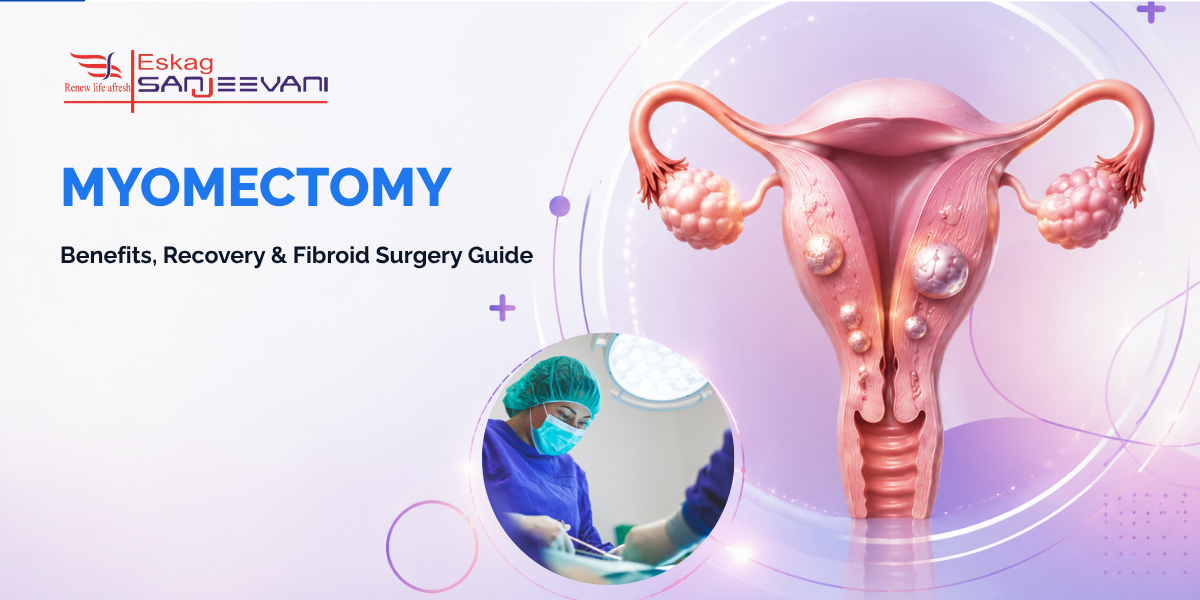
Myomectomy is a surgical procedure to remove uterine fibroids from the uterus. Fibroids are lumps that grow within the uterus and cause complications. In medical terms, they are also known as leiomyomas and are benign tumours, and globally almost 70-80% of women are affected by the age of 50 [1]. In India, the number of diagnosed cases is increasing due to greater public awareness; however, many cases remain undiagnosed. It is important to understand that uterine fibroids are not cancer; however, they can still cause problems such as heavy periods and pain in the lower belly. The primary purpose of myomectomy is to remove fibroids, and unlike hysterectomy, which involves the removal of the whole uterus, the surgery removes only the fibroids.
Next, let’s explore some of the primary factors that are responsible for causing uterine fibroids.
What Causes Uterine Fibroids?
There are multifactorial causes of uterine fibroids. Some of the factors include hormonal, genetic, and biological factors. However, the exact reason remains unclear to most researchers.
Here are some of the causes of uterine fibroids:
- Hormonal Imbalance: Both oestrogen and progesterone stimulate fibroid growth, and uterine fibroids grow exponentially during reproductive years. They shrink after menopause; however, fibroids have more receptors than the uterine muscle, and greater hormonal exposure increases the risk of uterine fibroids.
- Genetic Predisposition: Genetics are a major contributor, and women whose mothers or sisters have uterine fibroids are highly likely to develop them. In some cases, genetic mutation is a concerning factor that triggers abnormal growth.
- Obesity: Oestrogen levels spike significantly with the increase of fat tissues. In some cases, being overweight triggers the development of uterine fibroids, and such individuals often have a higher chance of developing symptoms of uterine fibroids.
- Vitamin D Deficiency: A recent study found that 46.5% of individuals tested across India had vitamin D deficiency, with 26% having insufficient levels [2]. Vitamin D deficiency is a leading risk factor for uterine fibroids, and adequate levels may inhibit fibroid cell proliferation.
- Stress: Both acute and chronic stress negatively affect hormonal regulation. Persistent stress reduces the lifetime exposure to hormones and ultimately leads to fibroid growth.
- Environmental Factors: Nowadays, there is heavy exposure to chemicals that mimic oestrogen, such as those found in cosmetics, plastics, and other products, which increases the risk of uterine fibroids.
With a clear understanding of the causes, let’s explore some concerning symptoms to look for to help isolate complications of uterine fibroids.
Symptoms of Uterine Fibroids: When to Consider Surgery
Uterine fibroids are non-cancerous, and while several women do not face any symptoms, others may suffer from disruptive conditions. Early recognition of symptoms can improve quality of life and enable early control before severe deterioration of the condition.
Here are some of the most common symptoms associated with uterine fibroids that every woman should know:
- Prolonged Menstrual Bleeding: It is one of the primary symptoms and usually disrupts daily life with persistent bleeding, ultimately affecting the quality of life. Longer periods of more than 7 days, along with fatigue and signs of anaemia, require immediate medical attention.
- Frequent Urination: Fibroids growing on the outer wall of the uterus press against the bladder, which causes frequent urination. The symptoms become more pressing when pelvic pressure combines with abdominal bloating.
- Lower Back or Leg Pain: Large fibroids growing on the back side of the uterus can press against nerves, causing lower back pain, including along the sciatic nerve, which can radiate to the back, hips, and legs. If you are someone dealing with chronic leg or back pain without injury, it is important to consider fibroids as a cause.
- Changes in Menstrual Cycle: Fibroids can cause irregular periods, with unpredictable cycle lengths and variations in flow volume. An unpredictable menstrual cycle, compared with regular periods, is a potential red flag. While fibroids are the common cause, abnormal bleeding can also be a sign of other conditions.
- Enlarged Uterus: Doctors discover uterine fibroids during routine pelvic examinations, and the abnormally enlarged and irregular shapes are what medical practitioners isolate for early recognition of the condition.
Note: Surgery is usually considered when symptoms persist despite treatment or significantly impact quality of life.
Also read: The Role of a Gynaecologist in Women’s Overall Health.
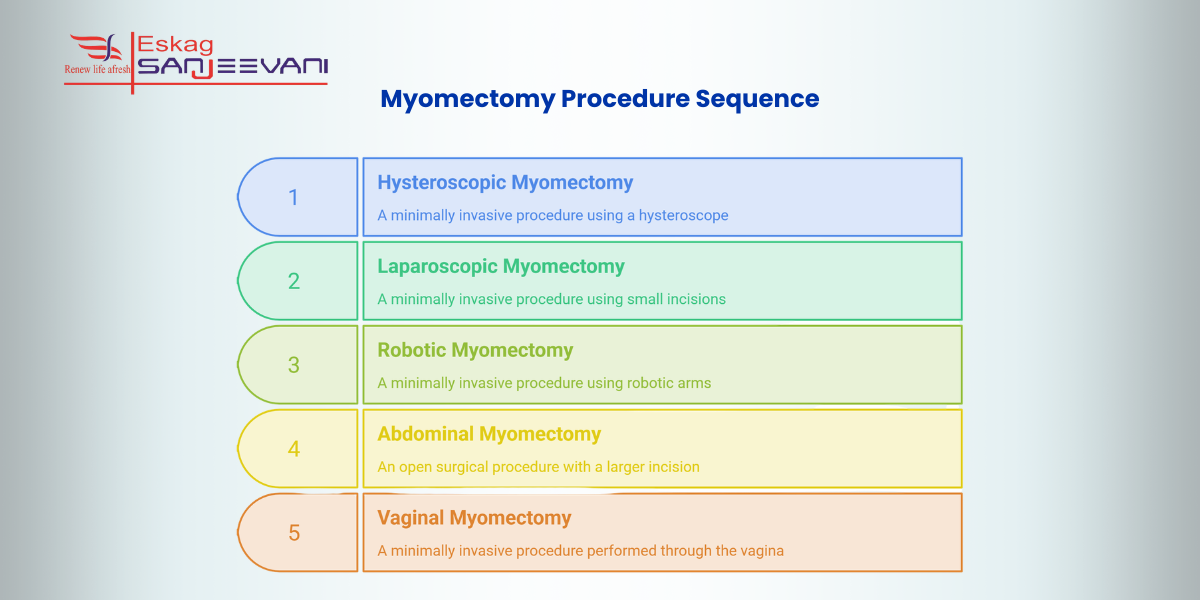
5 Types of Myomectomy: Which Approach Is Right for You?
There is no single type of myomectomy that suits every patient. The choice depends on the size, number, and location of uterine fibroids, along with your symptoms, fertility goals, and the advice of your surgeon.
Here is a comprehensive description of the five primary types of myomectomy.
1. Hysteroscopic Myomectomy
A hysteroscopic myomectomy works best for fibroids that grow inside the uterine cavity, also called submucosal fibroids. During this procedure, your surgeon passes a thin instrument through the vagina and cervix into the uterus, so no cuts on the abdomen are necessary. Recovery is usually faster than other surgical methods, and many women return to routine activity within 1-2 days.
2. Laparoscopic Myomectomy
A laparoscopic myomectomy removes fibroids through a few small cuts in the abdomen with the help of a camera and specialised surgical tools. This method often suits women with a limited number of medium-sized fibroids that do not deeply affect the uterus. Compared with open surgery, you may experience less pain, a shorter hospital stay, and quicker recovery. However, like open surgeries, a laparoscopic myomectomy is performed under general anaesthesia and total recovery time is between 2 and 4 weeks.
3. Robotic Myomectomy
Robotic myomectomy follows the same minimally invasive approach as laparoscopy but uses robotic-assisted surgical instruments controlled by a trained surgeon. This approach may help in cases that require greater precision, especially when fibroids are in difficult locations or when uterine repair requires extra care. Although recovery often remains quicker than open surgery, access and cost may vary across hospitals.
4. Abdominal Myomectomy
An abdominal myomectomy, also called open myomectomy, involves a larger cut in the lower abdomen to remove fibroids directly from the uterus. Doctors usually consider this method for very large fibroids, multiple fibroids, or cases where minimally invasive surgery may not be safe. Recovery takes longer than laparoscopic or hysteroscopic methods and is between 4 and 6 weeks, but it allows the surgeon better access to complex fibroid patterns.
5. Vaginal Myomectomy
Vaginal myomectomy is less common and may suit selected cases where fibroids remain accessible through the vaginal route. This approach avoids abdominal cuts and may reduce visible scars and recovery time. However, only certain fibroid positions allow this method, so it is not suitable for most women. A difficulty with this procedure is the likelihood of conversion to laparoscopic or abdominal myomectomy. The infection rate is also higher for such a procedure.
A Gynecologic Surgeon can assess your condition and recommend the safest treatment plan based on your symptoms, fertility goals, and the exact position of your fibroids.
Complications of Uterine Fibroids: Why Timely Treatment Matters
Uterine fibroids vary in size, and a small one measures between 1 and 5 cm. A fibroid is intermediate when it is 10cm or less. Large fibroids can be more than 10cm, and complications vary from patient to patient.
Here are some of the clinical complications that make a uterine fibroid risky:
- Blood clots: It is a rare condition; however, large fibroids can lead to pulmonary embolism, a blood clot in the lungs, which can be fatal.
- Damage to the uterus: Fibroids that are larger than a three-month foetus can cause uterine injury during surgical removal and need immediate treatment.
- Urinary tract infections: A fibroid in the bladder wall can cause excessive urination and, in severe cases, lead to UTIs.
- Damage to the uterine lining: A fibroid present inside the uterus may affect the overall shape of the uterine lining and, without proper removal, impairs the overall ability to become pregnant.
What to Expect: Before, During & After Myomectomy
Before surgery, your doctor will review your symptoms, medical history, imaging results, and blood tests to determine the most suitable type of myomectomy. During the procedure, which usually takes two to three hours under general anaesthesia, the surgeon removes the fibroids while preserving the uterus. The surgical approach depends on the size, number, and location of the fibroids. After surgery, recovery varies by technique. Most women recover within a few days after hysteroscopic myomectomy, two to four weeks after laparoscopic surgery, and four to six weeks after abdominal myomectomy. Follow-up visits help monitor healing and symptom improvement.
A Record That Speaks for Itself: Limca Book of Records
Recognition in the Limca Book of Records reflects more than a surgical milestone. It highlights the level of expertise required to manage complex fibroid cases while preserving the uterus and future reproductive potential. Procedures involving multiple fibroids demand meticulous surgical planning, careful control of blood loss, and precise reconstruction of the uterine wall to maintain its structural integrity.
For women diagnosed with large, multiple, or difficult-to-access uterine fibroids, the experience of the surgical team can significantly influence treatment outcomes. The record-setting achievement at Eskag Sanjeevani demonstrates the institution’s longstanding expertise in advanced gynaecological surgery. It reinforces its reputation as a destination for women seeking an experienced gyno surgeon in Kolkata for fertility-preserving fibroid treatment.
For a comprehensive overview, here are details for the breakthrough case: Fibroid Surgery in Limca Records: Eskag Sanjeevani
Final Thoughts
Uterine fibroids affect women differently, which is why treatment decisions should always reflect individual symptoms, fertility goals, and overall health. While some fibroids require only observation, others may cause significant bleeding, pelvic pressure, anaemia, or reproductive challenges that warrant medical intervention. Myomectomy remains an important treatment option for women who wish to preserve their uterus while addressing fibroid-related symptoms. If you experience persistent symptoms, seek timely evaluation rather than waiting for complications to develop. Access to experienced specialists and comprehensive gynaecological care, such as that available at Eskag Sanjeevani, can help you make informed decisions with confidence.

Microbiologist with over 2 years of experience in medical writing, specialising in evidence-based healthcare content.

Clinical experience in diagnosis, treatment, and evidence-based patient care across a range of conditions.
References
- Kumari, L. (2025). A Clinical Study on Fibroids. Journal of Contemporary Clinical Practice, [online] 11, pp.228–231.
- Bureau, E.N. (2025). Metropolis Healthcare study reveals 46% of tested individuals show Vitamin D deficiency across India. [online] Express Healthcare. Available at: [Accessed 2 Jun. 2026].
It depends on the type of procedure. An abdominal myomectomy is considered major surgery because it involves a larger incision, general anaesthesia, and a longer recovery period. Hysteroscopic and laparoscopic myomectomy are less invasive and usually allow a faster return to normal activities. The complexity also depends on the number, size, and location of the fibroids removed.
After a myomectomy, the uterus remains in place, but the areas from which fibroids were removed need time to heal. Scar tissue forms as part of the healing process, and the uterine wall gradually regains strength over several months. Many women continue to have normal menstrual cycles after surgery, and some may achieve successful pregnancies, depending on their overall reproductive health and the extent of the procedure.
The duration of fibroid removal surgery varies according to the number and size of fibroids. Most myomectomy procedures take between two and four hours. Complex cases with multiple or deeply embedded fibroids may require additional operating time to ensure safe removal and careful reconstruction of the uterus.
Recovery improves when you follow your surgeon’s instructions closely. Adequate rest, early gentle walking, good hydration, a protein-rich diet, and avoidance of heavy lifting can support healing. It is also important to attend follow-up appointments and report symptoms such as fever, excessive bleeding, severe pain, or wound problems without delay.
Recovery time depends on the surgical approach. Women who undergo hysteroscopic myomectomy often resume routine activities within a few days. Recovery after laparoscopic surgery usually takes two to four weeks, while abdominal myomectomy may require four to six weeks before a full return to normal activity. Your surgeon will provide advice based on your procedure and overall health.