

 Medically Reviewed
Top 10 Brain Tumour Warning Signs You Should Never Ignore
Many health problems can cause headaches, tiredness, or changes in vision. However, when such symptoms are unusual, persistent, or gradually become worse, they should not be ignored. In some cases, they may be linked to a brain tumour.
Recognising brain tumour warning signs at an early stage can help doctors identify the condition sooner and plan the right treatment. Not every symptom means a person has a tumour, but knowing the possible signs can help you seek timely medical advice [1].
Key Takeaways
- Brain tumour symptoms depend on the size, location, and growth rate of the tumour, and they may develop gradually or appear suddenly.
- Persistent headaches, unexplained seizures, vision changes, and difficulties with speech or balance are some important warning signs.
- Brain tumour treatment may include radiation therapy, chemotherapy, surgery, or a combination of treatments depending on the individual case.
Quick Answer: Brain tumour warning signs like persistent headaches, seizures, and vision changes should be recognised early for timely diagnosis and treatment.
Know about Brain Tumours
A brain tumour is the growth of abnormal cells inside the brain or nearby tissues. Some tumours are non-cancerous (benign), while others are cancerous (malignant). These can cause symptoms by pressing on nearby brain areas and disrupting normal functions [1].
The symptoms a person experiences can vary greatly depending on where the tumour is located and how much pressure it places on surrounding brain tissue.
Understanding Different Brain Tumour Types
Brain tumours are usually classified based on where they start and the type of cells involved.
| Brain tumour type | Explanation |
| Primary brain tumour | These tumours begin inside the brain or surrounding tissues. They may be benign or malignant and can affect different areas of the brain. |
| Secondary or metastatic brain tumour | These tumours develop when cancer from another part of the body spreads to the brain. They are more common than primary brain tumours in adults [1]. |
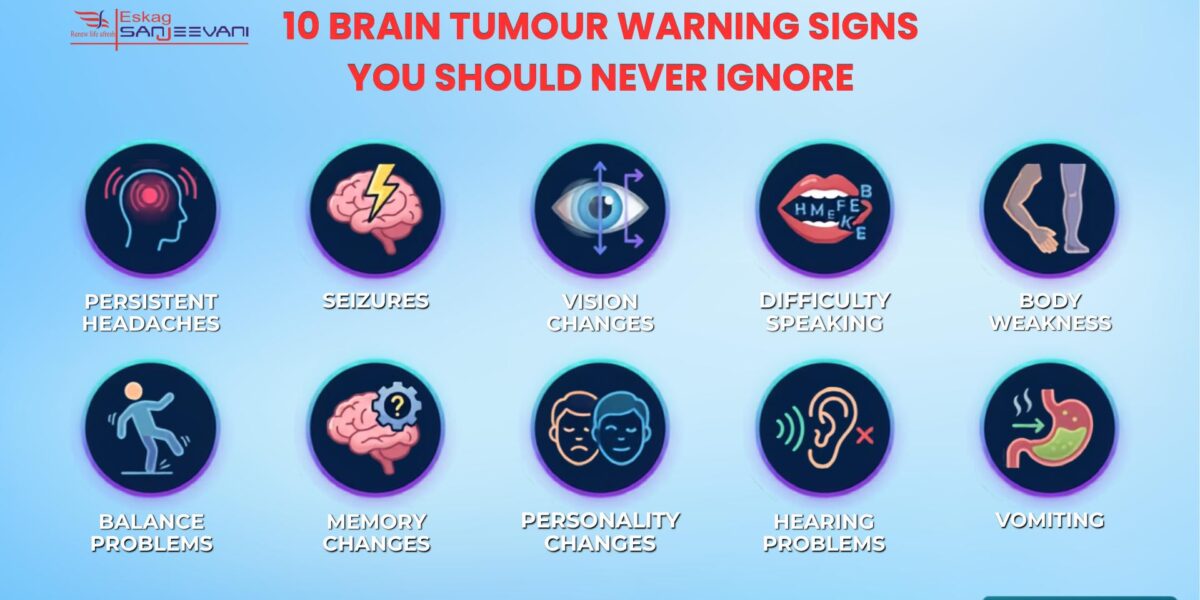
Top 10 Early Brain Tumour Warning Signs
Brain tumour warning signs are different for every person. Some symptoms appear slowly over weeks or months, while others may occur suddenly. The following signs should be discussed with a doctor, especially if they are new, persistent, or worsening.
1. Persistent Headaches
Headaches associated with a brain tumour may feel different from your usual headaches. They can become more frequent, gradually worsen over time, or be more noticeable during the morning.
A headache alone is not always a sign of a brain tumour, as many common conditions can cause headaches. However, a new pattern of severe or ongoing headaches requires medical attention [1].
2. Seizures Without a Previous History
A seizure can be one of the first signs of a brain tumour, even in people who have never experienced one before. It may involve uncontrolled body movements, unusual sensations, temporary confusion, or loss of awareness.
Any new seizure should be evaluated by a healthcare professional because it can indicate changes affecting normal brain activity.
3. Changes in Vision
A brain tumour can sometimes lead to changes in your vision; you may develop blurred vision, double vision, or difficulty seeing clearly from the sides.
It may also be difficult for some people to read, notice objects around them, or judge distances properly. These changes can appear gradually, which is why paying attention to unusual vision problems is important.
4. Difficulty Speaking or Understanding Words
Speech problems can occur when a tumour affects the brain parts which are responsible for language. A person may struggle to find the right words, speak clearly, or understand conversations.
These changes may be mild at first but can become more noticeable with time. Any unexplained change in communication should be medically assessed.
5. Weakness or Numbness in the Body
A tumour affecting areas that control movement or sensation may cause weakness, numbness, or tingling in the face, arm, or leg.
These symptoms may occur on one side of the body and can make everyday activities like walking, lifting objects, or maintaining coordination more difficult.
6. Problems with Balance and Coordination
The brain has the most important role in controlling movement and maintaining balance. A tumour in certain areas can lead to frequent falls, dizziness, unsteady walking, or difficulty performing coordinated movements.
You must not ignore these problems, particularly when they develop suddenly or continue to progress.
7. Changes in Memory or Thinking Ability
Brain tumours may sometimes affect concentration, memory, and decision-making abilities. A person may become more forgetful, struggle to complete familiar tasks, or have difficulty focusing.
Family members and close friends often notice these changes before the person suffering recognises them, especially when they develop slowly.
8. Personality Changes
Changes in behaviour can occur when a tumour affects brain areas involved with emotion and decision-making. A person may become unusually irritable, confused, withdrawn, or display changes in their usual personality.
These symptoms are often mistaken for stress or emotional problems; they may sometimes be overlooked.
9. Hearing Problems
Some brain tumours may cause hearing changes, such as reduced hearing in one ear, ringing sounds in the ears, or difficulty understanding conversations.
These symptoms are more concerning when they occur without an obvious reason and continue to worsen over time. [2]
10. Vomiting Without a Clear Cause
Repeated nausea or vomiting, especially when it occurs in the morning or without a stomach-related illness, can sometimes be associated with increased pressure inside the brain.
Although digestive problems are much more common causes, persistent unexplained symptoms should be evaluated by a doctor.
Also Read: Debunking the Myths About Diagnosis and Treatment of Brain Tumours
How Are Brain Tumours Diagnosed?
When doctors suspect a brain tumour, they may perform a detailed neurological examination, including an MRI and other tests to assess vision, hearing, balance, reflexes, and other brain functions.
Additional tests such as brain imaging scans help determine the location, size, and other characteristics of the tumour. In some cases, a sample of the tumour tissue may be examined to identify its exact type.
Brain Tumour Stages and Grading
People often search for brain tumour stages, but brain tumours are commonly described using grades rather than traditional cancer stages. The grade indicates how abnormal the tumour cells appear and how quickly they are likely to grow.
Some brain tumours grow slowly, while others may grow faster and need more intensive treatment. The tumour grade gives doctors useful information when planning the next steps in treatment.
Brain Tumour Treatment Options
The treatment of a brain tumour may differ and depends on its type, size, location, and the patient’s overall health.
Surgery
A brain tumour operation is often the first treatment option when the tumour can be safely removed. The aim of surgery may be the complete removal of the tumour or the reduction of its size to relieve symptoms and improve the effectiveness of other treatments.
Radiation Therapy
In radiation therapy, high-energy radiation is directed at the tumour to help kill cancer cells and control their growth. It may be used after surgery or as the main treatment when surgery is not possible.
Chemotherapy
Chemotherapy uses medicines that target tumour cells. It may be given alone or in combination with other treatments, depending on the type of brain tumour.
When Should You Consult a Neurosurgeon?
It is important to consult an expert if you experience constant neurological symptoms, especially headaches that are different from usual, unexplained seizures, changes in vision, or difficulty with speech and movement.
Eskag Sanjeevani has the best neurosurgeon in Kolkata and neighbouring areas. We have expert neurologist specialists who will help you to recover faster and lessen your pain. Early detection allows doctors to identify the cause of these symptoms and recommend appropriate treatment. If you are looking for the best neurosurgeon in Kolkata, choose a specialist with experience in diagnosing and treating different types of brain tumours and other complex neurological conditions.
In Summary
Brain tumour warning signs can vary from one person to another. Many symptoms may be caused by conditions other than a brain tumour, but symptoms that are new, persistent, or gradually worsening should never be ignored.
Understanding the early signs of a brain tumour, its types, diagnostic methods, and available treatment options can help people make informed decisions and seek medical attention at the right time.

Microbiologist with over 2 years of experience in medical writing, specialising in evidence-based healthcare content.

Clinical experience in diagnosis, treatment, and evidence-based patient care across a range of conditions.
References
- Mayo Clinic. “Brain Tumor – Symptoms and Causes.” Mayo Clinic, 21 Apr. 2023.
- Jain, Dr Kapil. “8 Silent Signs of Brain Tumour You Should Know About.” Maxhealthcare.in, Max Healthcare, 6 Nov. 2024.
The earliest brain tumour warning signs may include persistent headaches, seizures, changes in vision, difficulty speaking, weakness, problems with balance, or changes in memory and behaviour. The symptoms depend on the tumour’s location and size.
No, not all brain tumours are cancerous. Some are benign and grow slowly, while others are malignant and can grow quickly. However, both types can cause symptoms because they may affect surrounding brain structures.
A brain tumour operation can completely remove some tumours, while in other cases it may reduce tumour size and relieve symptoms. Additional treatments, such as radiation therapy or chemotherapy, may be required depending on the tumour type.
Doctors diagnose a brain tumour through neurological examinations, imaging tests, and sometimes by analysing a tissue sample to determine the tumour type and characteristics.
You should consult a doctor or neurosurgeon if you have persistent headaches, a first-time seizure, unexplained vision changes, weakness, speech difficulties, or any neurological symptom that gradually worsens.