

 Medically Reviewed
Prostate PSA Test After 50: What Your Number Means
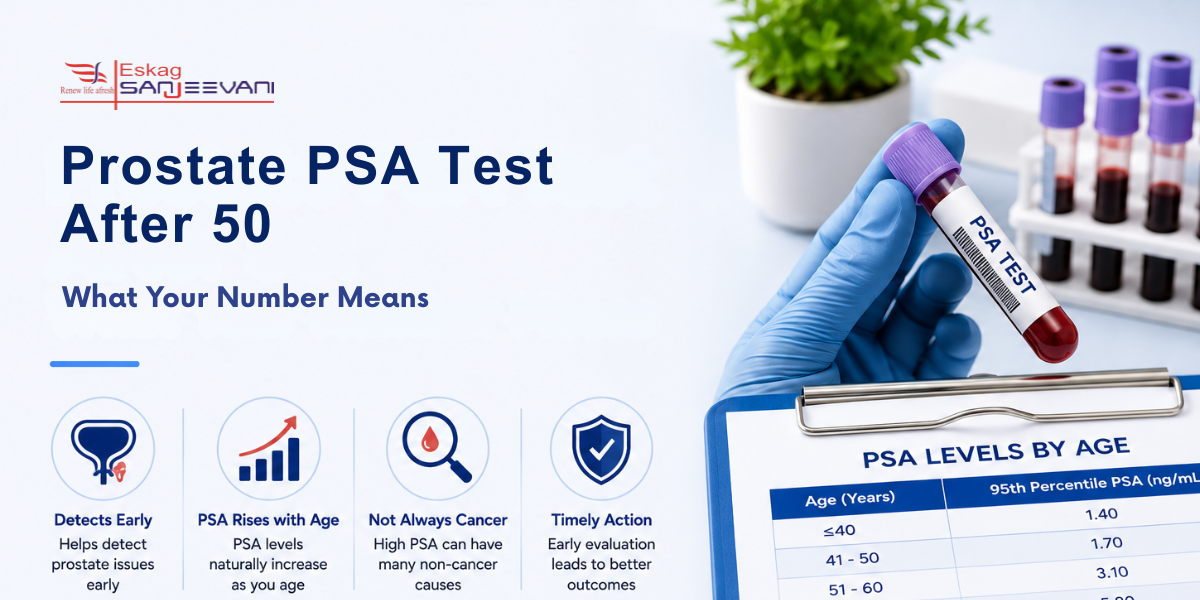
A PSA test measures prostate-specific antigen in your blood. PSA naturally increases with age, but a higher result can also occur with an enlarged prostate, infection, inflammation or prostate cancer. For men over 50, a rising PSA does not automatically mean prostate cancer. The NCI notes that even among men with PSA levels of 4-10 ng/mL, only about 25%-30% are diagnosed with prostate cancer on biopsy.
This article explains normal PSA levels, PSA levels by age, reasons for an elevated result, and what your doctor may recommend next.
Key Takeaways:
- PSA increases naturally with age. A large Indian study of 86,728 men found the 95th percentile PSA increased from 1.40 ng/mL in men aged ≤40 to 11.31 ng/mL in men over 80.
- An elevated PSA does not automatically mean prostate cancer. Benign prostate enlargement, prostatitis, urinary infection and recent ejaculation or vigorous cycling can temporarily increase PSA.
- A PSA result should be interpreted with your age, symptoms, family history, prostate size and previous PSA values. Some men with a low PSA can still have prostate cancer.
Quick answer: A prostate-specific antigen test measures prostate health; high levels can result from an enlarged prostate, infection, inflammation or cancer.
What Is a PSA Test and Why Is It Done After 50?
The prostate-specific antigen test is a blood test that measures PSA, a protein produced mainly by prostate cells. PSA is organ-specific but not cancer-specific. This means prostate conditions other than cancer can also increase the PSA level.
After 50, prostate enlargement becomes more common, and the risk of prostate cancer also increases. For this reason, men in this age group may discuss PSA testing with their doctor as part of prostate cancer risk assessment. Screening is not automatically appropriate for every man. The decision should consider life expectancy, overall health, family history and personal preferences.
The European Association of Urology recommends discussing early PSA testing with well-informed men from age 50 who have no additional risk factors.
PSA Levels by Age: Why Does Age Matter?
PSA levels by age are useful because the prostate usually becomes larger as men grow older. A 52-year-old and a 72-year-old can have the same PSA value but may not have the same level of concern. Prostate size, previous PSA measurements and other clinical findings also influence interpretation. For example, the large Indian study found a 95th percentile PSA of 3.10 ng/mL for men aged 51-60, compared with 5.80 ng/mL for those aged 61-70 [1].
Doctors also look at:
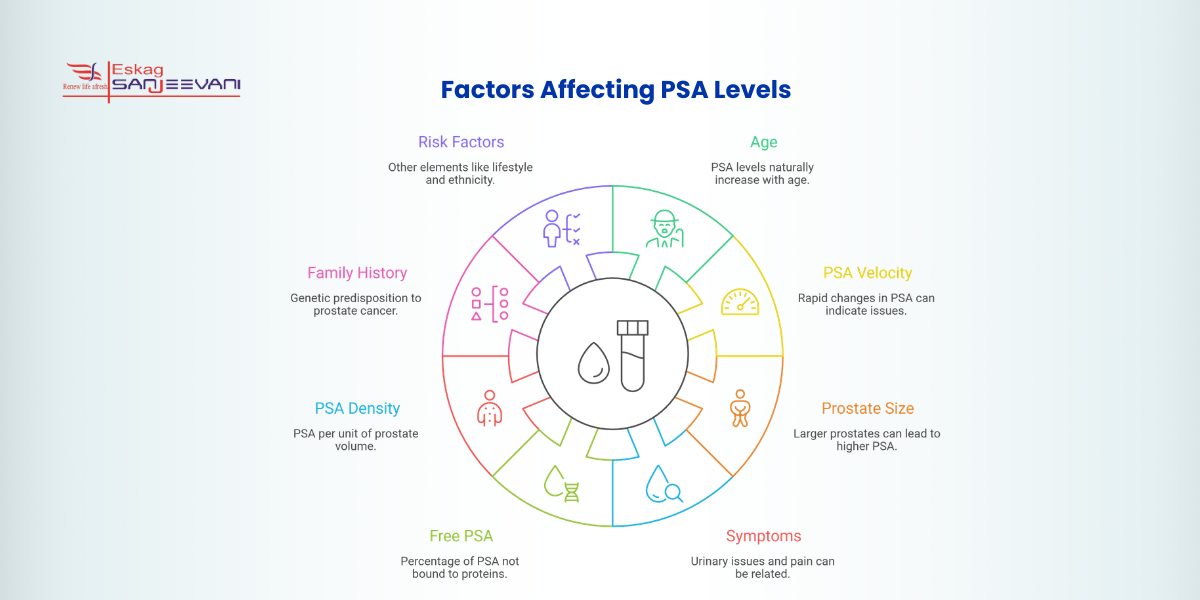
- Previous PSA results and PSA velocity: PSA velocity refers to the rate at which PSA changes over time. For men with serial PSA measurements, a consistently rising PSA can provide more information than a single elevated result. However, PSA velocity should not be used alone to diagnose prostate cancer because temporary rises can occur with infection, inflammation or other prostate conditions.
- Prostate size and PSA density: A larger prostate can naturally produce more PSA. PSA density compares the PSA level with prostate volume, usually measured through imaging. A higher PSA relative to prostate size can warrant closer assessment.
- Free PSA percentage: PSA circulates in both free and protein-bound forms. The percentage of free PSA can help distinguish between benign prostate enlargement and cancer in selected men with an intermediate PSA level. A lower free PSA percentage is generally associated with a higher likelihood of cancer.
- Symptoms and examination findings: Urinary symptoms, prostate findings on digital rectal examination and signs of infection can change how a PSA result is interpreted. Symptoms alone cannot confirm whether an elevated PSA is due to cancer.
- Family history and other risk factors: A close family history of prostate cancer, particularly at a younger age, can increase risk. Doctors may therefore consider a lower threshold for further assessment in men with significant risk factors.
What Are Normal PSA Levels?
There is no single PSA value that can reliably separate healthy men from those with prostate cancer. A value below 4 ng/mL has traditionally been considered reassuring in many clinical settings. Age matters because PSA tends to increase as the prostate grows with age.
A large Indian study involving 86,728 men provides useful age-specific data. The researchers reported the following 95th percentile values [1]:
| Age | 95th percentile PSA |
| ≤40 years | 1.40 ng/mL |
| 41-50 years | 1.70 ng/mL |
| 51-60 years | 3.10 ng/mL |
| 61-70 years | 5.80 ng/mL |
| 71-80 years | 8.82 ng/mL |
| >80 years | 11.31 ng/mL |
What Causes Elevated PSA Levels?
There are several causes of elevated PSA levels, and prostate cancer is only one possibility.
Benign Prostatic Hyperplasia
Benign prostatic hyperplasia, or BPH, is a non-cancerous enlargement of the prostate. A larger prostate produces more PSA and raises the blood level. BPH can also cause urinary symptoms such as:
- Weak urine stream
- Difficulty starting urination
- Frequent urination
- Urgency
- Getting up repeatedly at night to urinate
- A feeling that the bladder has not emptied completely
Prostatitis or Urinary Infection
Inflammation or infection involving the prostate can raise PSA. A urinary infection may also affect the result. If an infection is suspected, your doctor will treat the underlying condition before repeating the PSA test.
Recent Ejaculation or Vigorous Cycling
PSA often temporarily increases after ejaculation or vigorous exercise such as cycling. The National Cancer Institute advises avoiding activities that can raise PSA for 2 days before testing and allowing relevant medical conditions to resolve where appropriate [2].
Recent Prostate Procedures
Procedures involving the prostate can temporarily alter PSA levels. Your doctor should know about recent urological procedures before interpreting the result.
Prostate Cancer
Prostate cancer can increase PSA, but PSA alone cannot confirm the diagnosis. Some men with elevated PSA do not have cancer, while some men with lower PSA levels can still have prostate cancer. When prostate cancer becomes symptomatic, possible features include:
- Difficulty urinating: A weak or interrupted urine stream, difficulty starting urination or incomplete bladder emptying can occur, although these symptoms are also common with BPH.
- Blood in the urine: Haematuria can occur with prostate cancer and should be medically evaluated rather than attributed to prostate enlargement alone.
- Bone pain: Persistent pain in the back, hips or other bones can occur when prostate cancer has spread to the bones. This is more concerning when accompanied by other abnormal findings.
Age helps put a PSA result into context, but it does not explain why the level is elevated. The next step is to consider the different prostate and non-prostate conditions that can affect PSA.
What Should You Do If Your PSA Is High?
Do not assume that a high PSA means cancer. If your PSA is unexpectedly elevated, your doctor will first review possible temporary causes and consider repeating the test. This is particularly relevant when there are no symptoms and the elevation is modest. The next step can include:
- Reviewing previous PSA results.
- Checking for urinary infection or prostate inflammation.
- Reviewing medicines and recent prostate procedures.
- Performing a clinical examination.
- Considering additional PSA-based tests where appropriate.
- Considering prostate MRI when further assessment is needed.
- Recommending a prostate biopsy when the overall assessment indicates sufficient concern.
For example, the EAU recommends repeating PSA before further investigations in asymptomatic men with PSA between 3 and 10 ng/mL in specified clinical circumstances. Further evaluation then includes an MRI, a risk calculator or an additional biomarker test.
How to Reduce PSA Levels Safely?
If you are searching for how to reduce PSA levels, the goal should not be to lower the number artificially. PSA can rise because of benign prostate enlargement, prostatitis, urinary infection, recent prostate procedures or prostate cancer.
Therefore, the first step is to identify the reason for the elevation. Your doctor recommends the following based on your symptoms and PSA pattern:
- Treat an identified infection or inflammation: Prostatitis and some urinary infections can raise PSA. If an infection is confirmed, treating the underlying condition brings PSA down as the inflammation settles.
- Manage benign prostate enlargement: BPH can increase PSA as the prostate grows. Treatment is based on urinary symptoms, prostate size, kidney function and other clinical findings.
- Review medicines before interpreting the result: Commonly prescribed for BPH, can reduce PSA levels by about 50% after sustained treatment.
- Avoid factors that can temporarily affect PSA before testing: Prostate inflammation, recent prostate biopsy, and vigorous cycling can temporarily increase PSA.
- Investigate persistent or rising PSA: If PSA remains elevated or continues to rise, lowering the number should not be the priority. Your doctor may recommend a digital rectal examination, repeat PSA, additional biomarker testing, prostate MRI or biopsy depending on your overall risk. The Urological Society of India recommends further evaluation for appropriate patients rather than using a single PSA value to decide on biopsy.
When Should Men Over 50 Consider a PSA Test?
PSA testing is most valuable when used as part of an ongoing prostate health assessment rather than as a one-time test. For men who choose testing, the timing and frequency depend on their initial PSA level and overall risk.
Before giving a PSA sample, tell your doctor about urinary symptoms, recent infections, prostate procedures and medications. These factors can affect PSA levels and change how the result is interpreted.
PSA testing can be particularly useful in the following situations:
- For establishing a baseline: An initial PSA provides a reference point for future comparisons. Subsequent results can be assessed against this baseline rather than relying only on a single age-based cutoff.
- When PSA needs monitoring over time: Serial PSA measurements show whether the level remains stable or changes consistently. A rising pattern may prompt further assessment.
- Before interpreting an unexpectedly high result: If PSA is higher than expected, doctors may first check for infection, inflammation, recent procedures or other temporary factors.
- When urinary or prostate-related symptoms develop: Changes such as difficulty passing urine, a weak stream, blood in the urine or persistent pelvic discomfort warrant clinical assessment.
- When the PSA result does not match the clinical picture: A relatively low PSA does not completely exclude prostate cancer, while an elevated PSA does not confirm it.
- When a previous abnormality needs follow-up: A prolonged elevated or progressively increasing PSA requires a different approach from an isolated abnormal result.
Managing an elevated PSA is different from deciding when to test in the first place. Understanding when PSA testing is appropriate can help men avoid both unnecessary testing and delayed evaluation.
PSA Testing and Pathology Lab Services at Eskag Sanjeevani Hospitals
A reliable pathology lab test is an important first step, but the PSA number should not be interpreted in isolation. At Eskag Sanjeevani Hospitals, patients can access NABL-accredited pathology lab services, hospital-based diagnostic services, and medical consultation. PSA testing can be followed by clinical assessment when the result needs further evaluation. Visit us if you are looking for best Urology Services in Kolkata.
You can explore the hospital’s pathology services and doctor directory if you need help interpreting an abnormal PSA result. For patients looking for the best pathology lab in Kolkata, focus on reliable testing, appropriate laboratory methods, and access to medical professionals who can interpret the result in context.
Final Thoughts
A PSA test is useful for monitoring prostate health, but a raised result does not automatically indicate cancer. Age, prostate size, previous PSA values, urinary symptoms and other factors should be considered before deciding on further testing. If your PSA remains elevated or changes consistently, medical evaluation can help determine whether repeat testing, imaging or other investigations are needed.
With Eskag Sanjeevani Hospitals’ pathology lab, patients can access reliable testing and specialist consultation for a coordinated evaluation of abnormal PSA results.

Microbiologist with over 2 years of experience in medical writing, specialising in evidence-based healthcare content.

Clinical experience in diagnosis, treatment, and evidence-based patient care across a range of conditions.
References
- Addla SK, Selvaraj N, Sakthivel DK, Ragavan N. Determining age-specific prostate-specific antigen for healthy Indian men: A retrospective study. Indian J Urol. 2023 Oct-Dec;39(4):317-321.
- Kumar, A., Yadav, S., Krishnappa, R., Gautam, G., Raghavan, N., Bakshi, G., Prakash, G., Ahluwalia, P., Tamankar, A., Surekha, S., Kumar, N., Kumar, S., Mallya, A., Saini, G., Singhal, M., Mavuduru, R., Nayak, B., Singh, P., Jaipuria, J., Kumar, V., Rawal, S. and Gupta, N. (2022). The Urological Society of India guidelines for the evaluation and management of prostate cancer (executive summary). Indian Journal of Urology, 38(4), p.252.
There is no single normal PSA level for every man. PSA naturally increases with age, and Indian studies have reported different age-specific reference distributions.
No. BPH, prostatitis, urinary infection and other factors can raise PSA. Cancer is one possible cause, so persistent elevation requires appropriate assessment.
A large Indian study reported 95th percentile PSA values of 3.10 ng/mL for men aged 51-60 and 5.80 ng/mL for those aged 61-70. These are population reference data, not individual diagnostic cut-offs.
The interval depends on your initial PSA, age, family history, health and previous results. Your doctor can recommend an appropriate testing schedule.
There is no proven method to safely lower PSA simply to change the test result. The appropriate approach is to identify and manage the cause of elevation.
Ejaculation and vigorous cycling can temporarily increase PSA. Avoiding these activities for about two days before testing may reduce temporary effects. Tell your doctor about recent prostate procedures or urinary infections.
Yes. Benign prostate enlargement can increase PSA because a larger prostate can produce more PSA.
Your doctor may repeat the test, assess the prostate and consider additional blood or urine tests, MRI or biopsy depending on your overall risk.