

 Medically Reviewed
Urine ACR Test for Diabetes: Normal Range and Results
Approximately 7.7 crore Indians live with diabetes, and nearly one-third of them develop kidney complications within 10 years of diagnosis [1]. The urine albumin-to-creatinine ratio (ACR) test is a simple, non-invasive screening tool that detects kidney damage years before symptoms appear. This urine ACR test measures how much albumin leaks into your urine, signalling early glomerular dysfunction. For diabetic patients in India, where kidney disease progression often goes undetected until advanced stages, regular ACR testing can be life-changing. Early identification allows doctors to intervene with proven treatments that slow disease progression and prevent dialysis or transplantation.
This guide explains what the urine albumin-to-creatinine ratio test is, why it matters for people with diabetes, and how to interpret results.
Key Takeaways
- A normal urine albumin-to-creatinine ratio is less than 30 mg/g, indicating healthy kidney function with minimal protein leakage.
- ACR values between 30-300 mg/g signal microalbuminuria, an early warning sign of diabetic kidney disease.
- The ACR test demonstrates high within-individual variability (coefficient of variation 48.8%), meaning results can fluctuate significantly.
- Annual ACR screening is recommended for all type 2 diabetics at diagnosis and type 1 diabetics after 5 years.
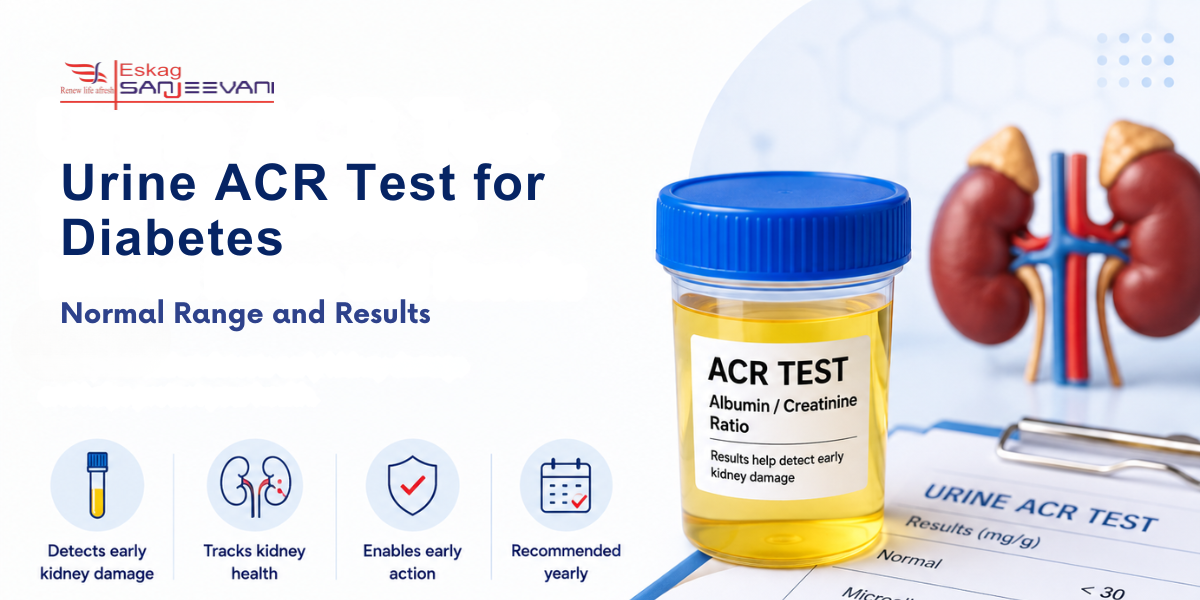
Quick answer: A urine ACR test measures albumin leakage in urine and helps detect early kidney damage in people with diabetes.
Understanding The Urine ACR Test
The urine albumin to creatinine ratio measures two substances in your urine: albumin and creatinine. Albumin is a protein your liver produces to maintain blood pressure and transport nutrients. Creatinine is a waste product your muscles generate during normal activity. Healthy kidneys filter creatinine into urine while preventing albumin from leaking out. In damaged kidneys, the glomerular filtration barrier weakens, allowing albumin to escape into urine, a condition called albuminuria.
The ACR test corrects for urine dilution by comparing albumin levels to creatinine concentration. This makes it more reliable than measuring albumin alone, as urine concentration varies throughout the day based on hydration status. A spot urine sample (first morning void) is collected and analysed in the laboratory. Results are reported as milligrams of albumin per gram of creatinine (mg/g) or as milligrams per millimole (mg/mmol).
Why is this test critical for diabetics? Hyperglycemia damages the glomerular basement membrane through multiple mechanisms, as follows:
- Advanced glycation end-products neutralise the negative charge on the filtration barrier, allowing albumin to pass through.
- Inadequate blood sugar control inhibits enzymes needed to maintain the barrier’s charge selectivity.
- Systemic vascular endothelial dysfunction increases albumin permeability across multiple organ systems, not just the kidneys.
Normal Albumin Levels In Urine
Understanding the normal albumin level in urine is vital for interpreting your results. The American Diabetes Association and National Kidney Foundation define normal albumin levels as follows:
| ACR Range | Classification | Clinical Significance |
| Less than 30 mg/g | Normal/Normoalbuminuria | Healthy kidney function; low risk of progression |
| 30-300 mg/g | Microalbuminuria | Early kidney damage; requires intervention |
| Greater than 300 mg/g | Macroalbuminuria | Advanced kidney disease; high risk of decline |
An ACR below 30 mg/g is generally considered normal. However, cardiovascular and kidney risk increases gradually even within the normal range, so a normal ACR does not mean zero risk [2]. For this reason, even patients with ACR values in the lower-normal range should maintain tight glycemic control and blood pressure management.
What Is A Urine ACR Test?
The urine ACR test is a straightforward screening procedure performed in outpatient settings. No fasting or blood draws are required. The test involves collecting a random spot urine sample, preferably the first morning void, which has the lowest variability due to overnight concentration.
The collection procedure for the urine ACR test includes the following steps:
- Wash hands with soap and water.
- Clean the genital area with a sterile wipe to prevent contamination.
- Urinate a small amount into the toilet, then stop.
- Collect 30-60 mL of midstream urine in a sterile container.
- Cap the container and return it to the laboratory.
The laboratory uses immunoturbidimetry, immunonephelometry, or enzyme-linked immunosorbent assays to measure albumin and creatinine concentrations. Results are available within 24-48 hours.
Patient point: Why spot urine instead of 24-hour collection? The 24-hour urine collection was historically considered the gold standard but is labour-intensive and prone to collection errors. Spot urine ACR is the preferred screening method for albuminuria because it is convenient, less prone to collection errors and correlates well with 24-hour urine measurements. Major diabetes and kidney guidelines recommend it for routine screening.
Interpreting Your ACR Test Results
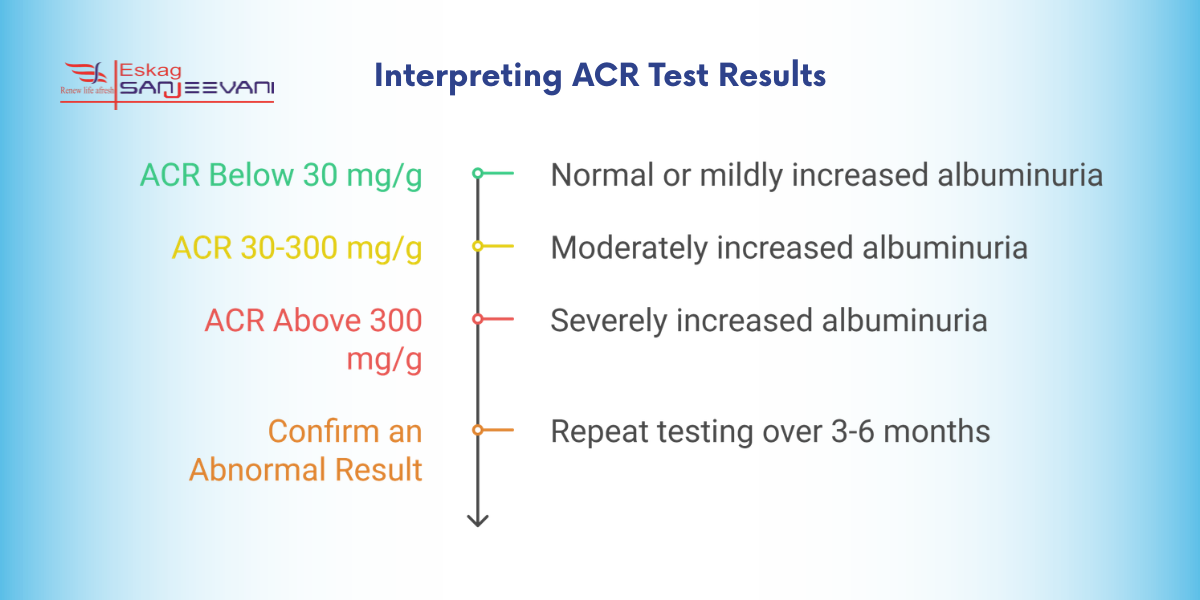
Your ACR result falls into one of three main categories. Interpret the result with repeat testing, eGFR, and your overall health.
Step 1: ACR Below 30 mg/g
This is generally considered normal or mildly increased albuminuria and indicates low albumin leakage.
Continue to do the following:
- Get annual ACR screening.
- Maintain good blood sugar and blood pressure control.
- Stay physically active and follow a kidney-friendly diet.
Step 2: ACR 30-300 mg/g
This range indicates moderately increased albuminuria, which can be an early sign of kidney damage. Microalbuminuria can develop early in diabetes. In type 1 diabetes, its prevalence increases significantly after about 5 years, while some patients with type 2 diabetes already have albuminuria when they receive their diagnosis [3].
At this stage, eGFR may still be normal. Early treatment and lifestyle changes can help slow kidney disease progression.
Step 3: ACR Above 300 mg/g
This indicates severely increased albuminuria and a higher risk of kidney disease progression. Your doctor recommends prompt nephrology assessment, especially when eGFR is also reduced.
Step 4: Confirm an Abnormal Result
ACR can vary because of hydration, exercise, menstruation, urinary infections and fever. One elevated result does not confirm kidney disease.
Your doctor repeats the test over 3-6 months. Prolonged ACR ≥30 mg/g on repeated testing supports a diagnosis of chronic kidney disease when the abnormality continues for at least 3 months.
Why Diabetics Need Regular ACR Screening
Diabetes is a major cause of chronic kidney disease. ACR screening can detect kidney damage before symptoms appear.
Know the Progression Risk
- Type 1 diabetes: Kidney damage may develop after the first 5 years of disease.
- Type 2 diabetes: Kidney damage can already be present at diagnosis because diabetes may remain undetected for years.
- Around 30-40% of people with type 2 diabetes may develop diabetic kidney disease.
Detect Kidney Damage Early
Early kidney disease often causes no symptoms. Swelling, fatigue, or raised creatinine may appear only after significant damage has occurred. ACR lab testing can detect albumin leakage before these symptoms develop, allowing earlier intervention.
Why Early Treatment Matters
At the albuminuria stage, treatment can help slow kidney damage:
- ACE inhibitors or ARBs: Help protect kidney function, particularly in patients with albuminuria.
- SGLT2 inhibitors: Provide additional kidney and cardiovascular protection in appropriate patients.
- Good blood sugar control: Helps reduce the risk of worsening albuminuria.
- Regular ACR monitoring: Helps track treatment response and disease progression.
Comprehensive Kidney Care For Diabetics at Eskag Sanjeevani Hospitals
Eskag Sanjeevani Hospitals is a leading multispecialty healthcare institution dedicated to providing world-class nephrology and endocrinology services tailored to Indian patients’ needs. Our NABH-accredited hospitals take an integrated approach to diabetic kidney disease, combining early detection, evidence-based treatment, and patient education.
Our nephrology department offers:
- Advanced ACR and eGFR testing through our ACR lab, with rapid turnaround times.
- Comprehensive kidney disease screening programs for diabetic patients.
- Specialised clinics for diabetic nephropathy management.
- Multidisciplinary team approach involving nephrologists, endocrinologists, and nutritionists.
- Personalised treatment plans incorporating the latest medications, such as SGLT2 inhibitors and finerenone.
- Renal ultrasound and Doppler studies for structural assessment.
- Kidney biopsy services when indicated for diagnostic clarity.
Final Thoughts
If you have diabetes, do not wait for symptoms; by then, significant damage may have occurred. If your result shows microalbuminuria, view it as an opportunity to intervene before progression. At Eskag Sanjeevani Hospitals, our nephrology and endocrinology teams are committed to helping you preserve kidney function and prevent complications. We offer comprehensive screening, personalised treatment plans, and ongoing support. Whether you need your first ACR test or management of established kidney disease, we are here to guide you.

Microbiologist with over 2 years of experience in medical writing, specialising in evidence-based healthcare content.

Clinical experience in diagnosis, treatment, and evidence-based patient care across a range of conditions.
References
- WHO (n.d.). Diabetes – India. [online].
- Diabetes.ca. (2024). Diabetes Canada | clinical practice guidelines. [online].
- Sacks, D.B., Arnold, M.A., Bakris, G.L., Bruns, D.E., Horvath, A.R., Lernmark, Å., Metzger, B.E., Nathan, D.M. and Kirkman, M.S. (2023). Guidelines and recommendations for laboratory analysis in the diagnosis and management of diabetes mellitus. Diabetes Care, [online].
Annual ACR screening is recommended for all type 2 diabetics starting at diagnosis and type 1 diabetics after 5 years of disease. If your ACR is abnormal, your doctor may recommend testing every 3-6 months to monitor progression and treatment response.
ACR can fluctuate by up to 40% due to hydration, exercise, infection, or stress. This is why doctors confirm abnormal results with repeat testing over 3-6 months before diagnosing kidney disease.
This indicates microalbuminuria, an early sign of kidney damage. Start or optimise blood sugar and blood pressure control, begin kidney-protective medications (ACE inhibitors or ARBs), and repeat testing in 3-6 months. See a nephrologist if results remain abnormal.
A normal ACR indicates good kidney function at present, but it does not guarantee future health. Continue annual screening, maintain tight diabetes control, manage blood pressure, and follow a kidney-friendly lifestyle to prevent future damage.
The ACR test requires only a urine sample collected in a cup. There are no needles, blood draws, or invasive procedures involved.