
 Medically Reviewed
Endometriosis In Indian Women: Signs You Shouldn't Ignore
Approximately 4.2 crore women in India live with endometriosis, a chronic condition affecting roughly 10% of reproductive-age women [1]. This means one in every ten women you know may be silently battling this disease. Endometriosis occurs when tissue similar to the uterine lining grows outside the uterus, typically in the pelvic region. For Indian women, recognising the early signs of endometriosis is crucial.. Delayed diagnosis often leads to years of unnecessary suffering and diminished quality of life. Many women dismiss their symptoms as normal menstrual discomfort, missing the opportunity for timely intervention and relief.
This article will guide you through the endometriosis symptoms, causes, and treatments in Indian women.
Key Takeaways
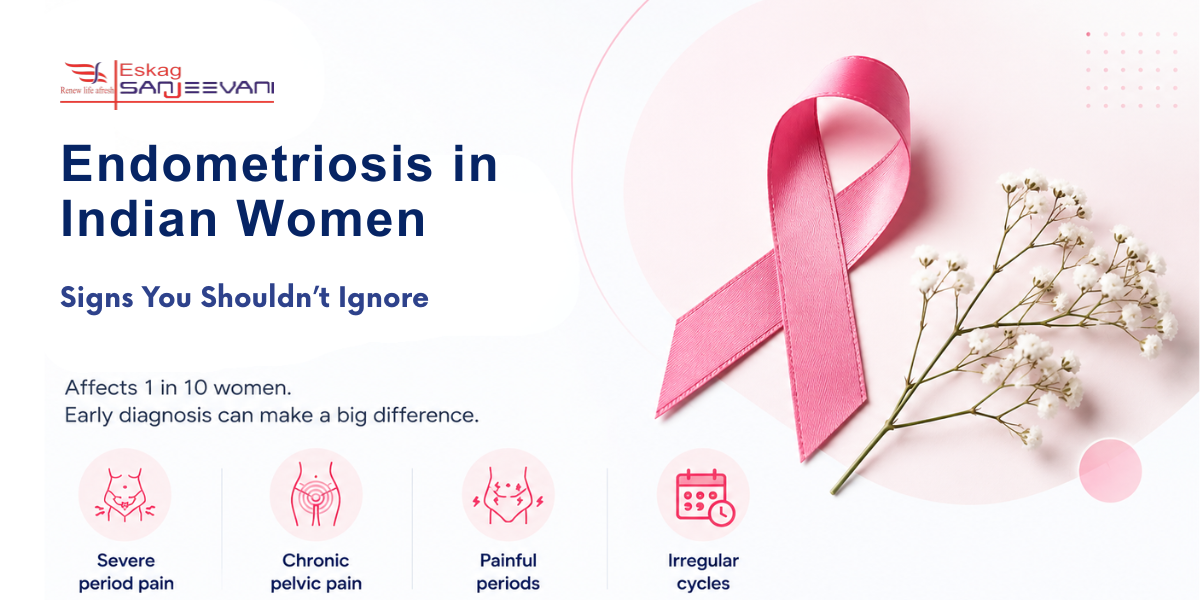
- Severe menstrual pain that worsens over time, pain during intercourse, and chronic pelvic pain are primary signs of endometriosis that warrant immediate medical evaluation.
- Approximately 77% of Indian women with endometriosis experience dysmenorrhea, while 34% suffer from chronic pelvic pain that significantly impacts daily activities.
- Multiple treatment options for endometriosis exist, from hormonal therapies to minimally invasive surgery.
Quick answer: Endometriosis causes tissue similar to the uterine lining to grow outside the uterus, resulting in severe pain and difficulty getting pregnant.
Understanding Endometriosis: What It Is
To define endometriosis simply, it is a chronic inflammatory condition in which tissue similar to the uterine lining grows outside the uterus. This ectopic tissue responds to hormonal changes during the menstrual cycle, causing inflammation, bleeding, and scar formation. The condition affects the ovaries, fallopian tubes, pelvic peritoneum, and uterosacral ligaments. In some cases, endometrial tissue implants on the bladder, bowel, or even surgical scars from cesarean sections.
The disease exists in three main forms:
- Superficial peritoneal endometriosis affects the outer lining of pelvic organs
- Ovarian endometriomas are cysts filled with endometrial tissue on the ovaries
- Deep infiltrating endometriosis penetrates more than 5mm beneath the peritoneal surface
Research from Indian cohorts shows that ovarian endometriomas are the most common subtype (58%), followed by deep infiltrating endometriosis (24%) and superficial peritoneal endometriosis (15%) [1]. Understanding which type affects you helps guide treatment decisions and predict outcomes.
Primary Signs of Endometriosis
The following signs of endometriosis involve menstrual pain, pelvic pain and pain during intercourse, and may worsen as endometriosis progresses.
Dysmenorrhea: Severe Menstrual Pain
Dysmenorrhea, or painful periods, is the most common symptom of endometriosis. Unlike primary dysmenorrhea (pain from the start of menstruation), endometriosis-related dysmenorrhea develops after years of pain-free periods. The pain begins before menstruation and persists throughout the cycle, sometimes extending several days after bleeding stops.
The pain occurs because endometrial tissue bleeds during menstruation, causing inflammation and irritation in the pelvic cavity. Prostaglandins (hormone-like substances produced by endometrial tissue) increase in women with endometriosis, intensifying uterine contractions and pain severity. Indian studies document that 77% of women with endometriosis experience dysmenorrhea, making it the most prevalent symptom [1]. The pain can be so severe that it interferes with work, school, and daily activities, forcing women to take leave during their menstrual cycle.
Chronic Pelvic Pain
Chronic pelvic pain affects 34% of Indian women with endometriosis and represents one of the most debilitating signs [1]. This pain occurs outside the menstrual cycle and is constant or intermittent. Women describe it as a dull ache, sharp stabbing sensation, or pressure in the lower abdomen and pelvis. Chronic pelvic pain in endometriosis results from multiple mechanisms, such as:
- Nerve fibre infiltration into endometriotic lesions increases pain sensitivity.
- Inflammatory cytokines and prostaglandins create a pro-inflammatory environment.
- Adhesions (scar tissue) pull on organs, causing discomfort.
- Direct irritation of peritoneal nerves by endometrial implants.
Dyspareunia: Pain During Intercourse
Dyspareunia, or pain during sexual intercourse, affects approximately 23% of Indian women with endometriosis [1]. The pain occurs during deep penetration and results from endometrial implants on the rectovaginal septum and uterosacral ligaments. Deep dyspareunia in endometriosis has a complex aetiology involving direct lesion irritation, pelvic floor muscle tension, and psychological factors. The pain can be sharp, burning, or a deep ache that persists after intercourse.
Secondary Signs of Endometriosis That You Shouldn’t Ignore
Beyond the primary symptoms, several secondary signs indicate endometriosis may be present, as detailed in the following manner:
- Dyschezia (painful bowel movements) occurs in a significant percentage of Indian women with endometriosis, particularly when lesions affect the rectosigmoid colon.
- Heavy or prolonged menstrual bleeding results from increased vascularisation and inflammation.
- Fatigue and low energy levels accompany chronic inflammation and pain.
- Difficulty conceiving affects one in three women with endometriosis.
- Recurrent miscarriages occur in 33% of Indian women with endometriosis who conceive [1].
These secondary signs often coexist with primary symptoms, creating a complex clinical picture that requires comprehensive evaluation.
Endometriosis in Indian Women
Among Indian women with endometriosis in women issues, 66% of the cohort experienced either primary or secondary difficulty conceiving [1].
The condition affects women through multiple pathways as described in the table below:
| Factor | How Endometriosis Affects Women |
| Mechanical factors | Adhesions can distort pelvic anatomy, block fallopian tubes or interfere with egg release. |
| Ovarian endometriomas | Can damage healthy ovarian tissue, reducing ovarian reserve and egg quality. |
| Inflammation | Increased prostaglandins, cytokines and macrophages can impair sperm function and embryo development. |
| Hormonal changes | Reduced progesterone receptor expression can affect the lining’s ability to support embryo implantation. |
Research shows that women with superficial peritoneal endometriosis and single lesion types have better outcomes after surgery, with 69% achieving natural conception [1].
Diagnostic Approaches for Indian Women with Endometriosis
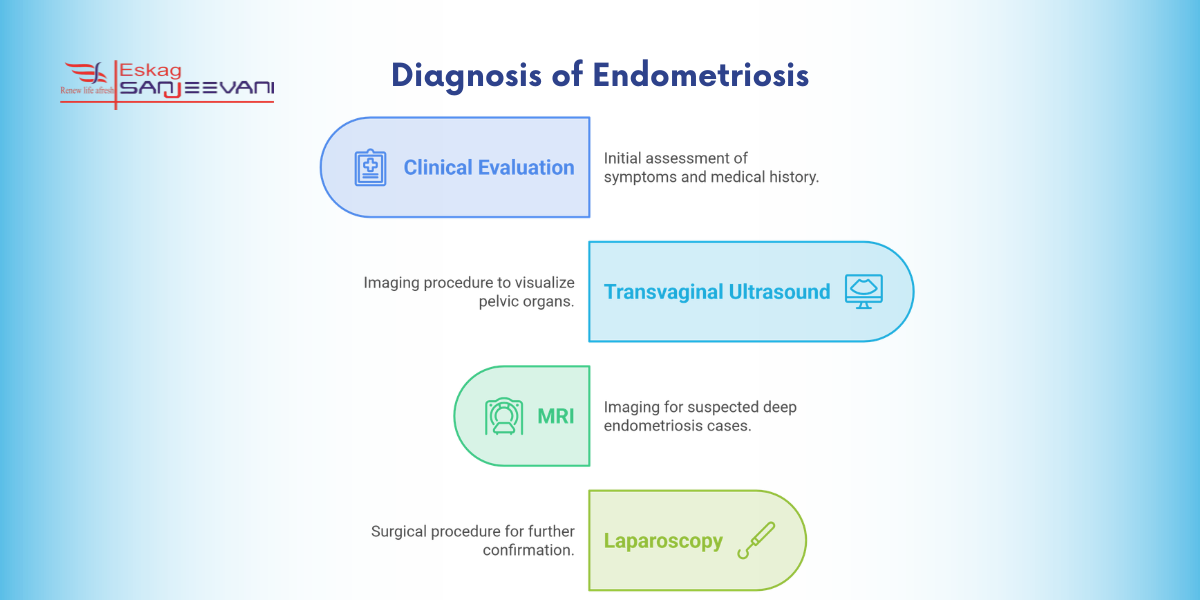
If your symptoms suggest endometriosis, diagnosis usually progresses from clinical assessment to imaging and, when needed, laparoscopy. A normal examination or scan does not completely exclude the condition, particularly superficial endometriosis.
Step 1: Clinical Evaluation
Your doctor will first review:
- Menstrual pattern and severity of period pain
- Pelvic or abdominal pain between periods
- Pain during intercourse
- Painful bowel movements or urination
- How symptoms affect daily activities
A pelvic examination detects tenderness, nodules or reduced movement of pelvic organs. However, a normal examination does not rule out endometriosis.
Step 2: Transvaginal Ultrasound
A transvaginal ultrasound is recommended for women with suspected endometriosis, even when the pelvic examination is normal. It helps identify ovarian endometriomas, deep endometriosis and other causes of pelvic pain. The scan also helps your doctor decide whether you need specialist referral or additional imaging.
Step 3: MRI for Suspected Deep Endometriosis
A pelvic MRI provides detailed images when deep endometriosis is suspected, particularly when lesions may involve the bowel, bladder or other pelvic structures. Specialist ultrasound is also used for this purpose. The choice depends on your symptoms, initial scan findings and clinical assessment.
Step 4: Laparoscopy When Further Confirmation Is Needed
Laparoscopy is a minimally invasive procedure in which a surgeon uses a small camera to examine the pelvis. Doctors consider it when symptoms and clinical suspicion remain despite normal or inconclusive imaging, or when planning surgical treatment.
During the procedure, the surgeon will do the following:
- Directly inspect the pelvic organs
- Identify visible endometriotic lesions
- Assess the extent of disease
- Take a biopsy when appropriate
- Treat suitable lesions during the same procedure
Quick insight for patients:
A normal ultrasound or MRI does not automatically mean you do not have endometriosis. If symptoms remain or significantly affect your daily life, your doctor may recommend further specialist assessment or laparoscopy despite normal imaging.
Endometriosis Treatment Options
Endometriosis treatment depends on your symptoms, disease extent, age and previous treatments. The main options include pain relief, hormonal therapy, surgery and supportive care, and doctors often combine these approaches.
| Treatment | How it helps |
| Combined hormonal contraceptives | Reduce pain and can be used continuously to limit bleeding |
| Progestogens | Suppress endometrial activity and help control pain |
| GnRH medications | Lower ovarian hormone production; used as second-line options |
| Aromatase inhibitors | Considered for pain that remains despite other treatments |
GnRH medicines cause low-oestrogen symptoms and bone loss. Doctors therefore consider add-back hormone therapy during treatment. Pain medicines such as non-steroidal anti-inflammatory drugs can also form part of symptom management.
Surgical Management
Doctors discuss surgery when pain remains significant despite medical treatment, when deep endometriosis causes organ-related symptoms, or when surgery forms part of the cure plan.
Laparoscopic surgery removes endometriotic lesions and adhesions. When surgery is performed, ESHRE suggests excision rather than ablation in appropriate cases, although the choice depends on disease location and surgical expertise. For ovarian endometriomas, cystectomy reduces recurrence and endometriosis-related pain, but surgeons must minimise damage to healthy ovarian tissue because surgery can affect ovarian reserve.
For women who have completed childbearing, hysterectomy is considered in selected cases, particularly when symptoms remain severe, or conditions such as adenomyosis or heavy menstrual bleeding coexist.
Patient point: Surgery is not automatically the next step after diagnosis. Your pain severity, ovarian reserve, lesion location and previous treatment all influence the decision.
Multidisciplinary Care
Endometriosis can affect pain, sexual health and emotional well-being, so treatment involves more than one specialist. Include the following in your treatment plan:
- Gynaecologist: Diagnosis, hormonal treatment and surgical planning.
- Pain specialist: Management of persistent or complex pelvic pain.
- Pelvic floor physiotherapist: Support for pelvic floor muscle tension and pain.
- Mental health professional: Help with anxiety, depression and the emotional impact of chronic pain.
Complete Endometriosis Care at Eskag Sanjeevani Hospitals
Eskag Sanjeevani Hospitals specialises in advanced gynaecological care, endometriosis diagnosis expertise and management. Our NABH-accredited hospital offers state-of-the-art diagnostic facilities, including high-resolution transvaginal ultrasound and MRI imaging performed by experienced radiologists. Patients who need an endometriosis specialist can access gynaecology consultation. The gynaecology department includes fellowship-trained laparoscopic surgeons skilled in minimally invasive endometriosis treatment.
Final Thoughts
If you experience severe menstrual pain or chronic pelvic pain, schedule an appointment with a gynaecologist. Document your symptoms, including pain intensity, duration, and impact on daily activities. Transvaginal ultrasound is non-invasive and can detect ovarian endometriomas. If deep endometriosis is suspected, ask about MRI imaging. Patients looking for the best endometriosis specialist in Kolkata can consult the gynaecology team at Eskag Sanjeevani Hospitals for evaluation and treatment planning. Explore medical and surgical options with your healthcare team to choose the most suitable endometriosis treatment for your condition.

Microbiologist with over 2 years of experience in medical writing, specialising in evidence-based healthcare content.

Clinical experience in diagnosis, treatment, and evidence-based patient care across a range of conditions.
References
- Gajbhiye RK. Endometriosis and inflammatory immune responses: Indian experience. Am J Reprod Immunol. 2023 Feb;89(2):e13590.
Endometriosis has a genetic component. Women with a family history of endometriosis in mothers, sisters, or grandmothers have an increased risk. However, genetics alone don’t determine disease development; environmental and hormonal factors also play crucial roles.
Currently, no permanent cure exists for endometriosis. However, medical and surgical treatments can effectively manage symptoms. Many women achieve significant pain relief and improved quality of life with appropriate management.
Endometriosis increases risk, but many women with endometriosis conceive naturally or with assisted reproductive technologies. Early diagnosis and treatment improve outcomes, particularly for women with superficial disease.
Diagnostic delay averages 7-10 years from symptom onset to confirmed diagnosis. This delay occurs because symptoms overlap with other conditions and many healthcare providers lack endometriosis awareness. Seeking care from specialists reduces diagnostic delay.
Regular exercise, stress reduction, an anti-inflammatory diet, adequate sleep, and pelvic floor physical therapy can relieve symptoms for many women. These complementary approaches work best alongside medical or surgical treatment.