

 Medically Reviewed
Hepatitis B & C In India: Silent Liver Killers And How To Get Tested
In India, 4 crore people are infected with Hepatitis B & C, with 1.2 crore affected by hepatitis C, as per the latest estimates. This silent epidemic affects 3-4% of India’s general population, making it one of the largest disease burdens in the country. Hepatitis C adds another layer of concern, with an estimated 0.09-15% prevalence across India’s diverse regions [1]. Unlike dramatic illnesses that announce themselves with immediate symptoms, hepatitis B and C operate quietly, often causing irreversible liver damage before patients realise they’re infected. Understanding Hepatitis B & C and getting tested early can help prevent serious liver complications.
This article explains the critical importance of hepatitis testing, which has become essential for every Indian patient.
Key Takeaways
- India carries 10-15% of the global hepatitis B burden, with 4.2 crore carriers at risk of developing cirrhosis and liver cancer without early detection and intervention.
- Hepatitis B and C are primarily transmitted through unsafe blood transfusions, contaminated medical injections, and unsafe practices.
- A hepatitis test using the triple panel (HBsAg, anti-HBs, and total anti-HBc) can detect infection in its earliest stages.
- Early detection through hepatitis testing followed by appropriate management can prevent 90% of new infections and reduce mortality by 65% by 2030, according to WHO elimination targets.
Quick answer: Hepatitis B and C are forms of viral hepatitis that affect the liver; blood tests can detect infection, immunity and whether the virus is currently active.
- Understanding Hepatitis B and C in the Indian Context
- Why Hepatitis Testing Matters for Indian Patients?
- Transmission Routes: How Hepatitis B and C Spread in India?
- Types of Hepatitis Tests: Understanding Your Options
- Interpreting Your Hepatitis Test Results
- Hepatitis Prevention: Protecting Yourself and Your Family
- Complete Hepatitis Care at Eskag Sanjeevani Hospitals
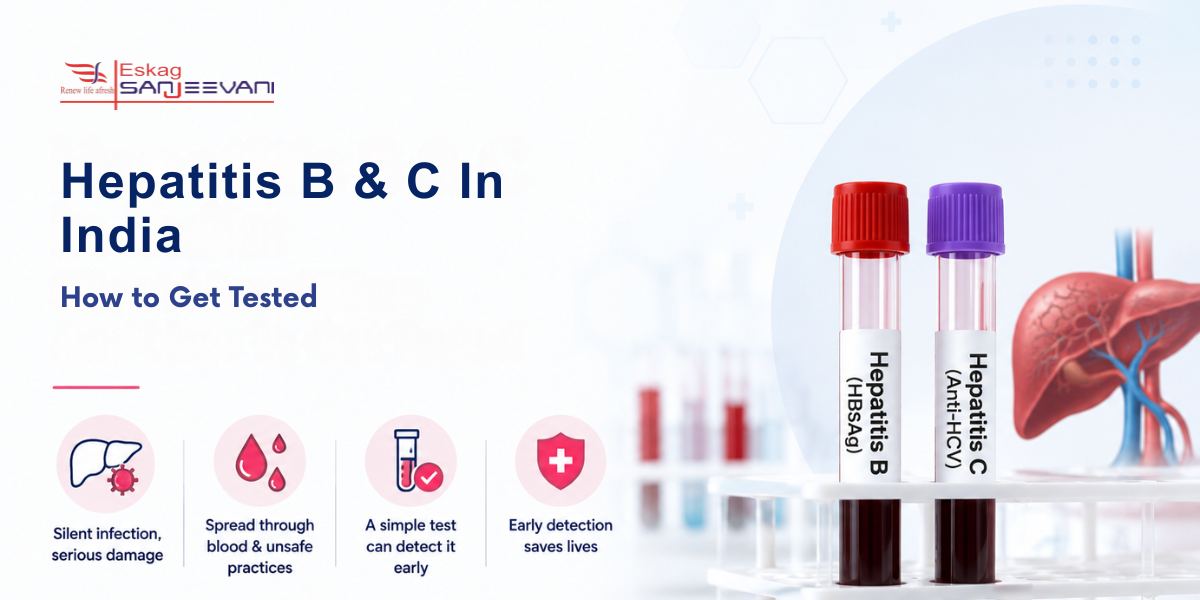
Understanding Hepatitis B and C in the Indian Context
Hepatitis B and C represent two distinct viral infections that attack the liver, yet they share a common characteristic in India: they often go undetected until significant damage occurs. Hepatitis B surface antigen (HBsAg) prevalence plateaus by age 5 in Indian children, suggesting most chronic infections establish during early childhood through horizontal transmission within families.
These are two important types of hepatitis that require different testing, monitoring and treatment approaches.
The epidemiological landscape varies considerably across India. Among the Idu Mishmi tribe of Arunachal Pradesh, hepatitis B surface antigen prevalence was 21.2%. Studies from the Andaman and Nicobar Islands have also reported high prevalence among several tribal groups, including 23.3% among the Nicobarese and 37.8% among the Shompen [2].
Hepatitis C shows considerable geographic and population-level variation in India. The estimated prevalence in the general population is around 0.5-1.5%, with higher rates reported in parts of Northeast India, tribal populations and Punjab. People who inject drugs have a particularly high prevalence, especially in some northeastern states. Genotype 3 is the most common HCV genotype in India [3].
Why Hepatitis Testing Matters for Indian Patients?
More than half of people with hepatitis B remain unaware of their infection status. This knowledge gap creates a dangerous cycle where infected individuals unknowingly transmit the virus to family members, and through unsafe healthcare practices.
Early hepatitis testing serves multiple critical functions as follows:
- Enables early linkage to care before cirrhosis develops
- Prevents mother-to-child transmission through timely interventions
- Identifies household contacts requiring vaccination
- Breaks transmission chains in healthcare settings
- Allows monitoring for hepatocellular carcinoma in chronic cases
The window for preventing serious complications remains open only if infection is detected early. Once cirrhosis develops, treatment becomes exponentially more complex and expensive.
Transmission Routes: How Hepatitis B and C Spread in India?
Hepatitis B spreads through blood, semen, and other body fluids. In India, predominant transmission routes differ from those in Western countries.
Unsafe Medical Injections
India administers around 300 crore injections annually, of which an estimated 189 crore (62.9%) were considered unsafe in a nationwide study. Unsafe injection practices have been estimated to contribute to 38% of hepatitis C infections in India and a substantial proportion of hepatitis B infections [4]. Healthcare providers often reuse syringes, contaminate multidose vials through needle reinsertion, or use single needles for multiple patients.
Blood Transfusions
Although mandatory screening of donated blood for hepatitis C began in India in 2001, transfusion-related transmission has not been completely eliminated. Thalassaemia patients who require regular blood transfusions remain at higher risk, with Indian studies reporting anti-HCV prevalence ranging from 7.7% overall across multiple centres to 30% in some centres [3].
Family and Household Transmission
Hepatitis B can spread within families through mother-to-child transmission and close household contact, particularly during early childhood. Sharing toothbrushes, razors, or other personal-care items that may contact infected blood can also transmit the virus.
Who Needs a Hepatitis Test: Risk Assessment for Indian Patients
Universal screening recommendations now apply to all adults aged 18 and above, regardless of perceived risk. However, certain populations require more frequent or urgent testing:
- All pregnant women during each pregnancy
- Healthcare workers with occupational exposure
- People with elevated liver enzymes or signs of liver disease
- Dialysis patients (5-13% hepatitis B prevalence in this group)
- Thalassemia patients requiring regular transfusions
- Household contacts of infected individuals
- People with a history of unsafe injections or blood transfusions
Even without identified risk factors, getting tested at least once during your lifetime provides baseline status and peace of mind.
Types of Hepatitis Tests: Understanding Your Options
The type of hepatitis test depends on whether you are being screened for hepatitis B or C, confirming an infection, or monitoring an existing condition.
Hepatitis B: Triple Panel Test
For initial hepatitis B screening, the triple panel provides a clearer picture of your infection and immunity status from one blood sample.
| Test | What it indicates |
| HBsAg | Current hepatitis B infection |
| Anti-HBs | Immunity from vaccination or past infection |
| Total anti-HBc | Previous or current exposure to hepatitis B |
Hepatitis C: Antibody and RNA Testing
Hepatitis C screening starts with an anti-HCV antibody test.
- Anti-HCV negative: No evidence of previous exposure in most cases.
- Anti-HCV positive: Shows previous or current exposure and requires an HCV RNA test.
- HCV RNA detectable: Confirms current hepatitis C infection.
- HCV RNA undetectable: Usually indicates that the infection has cleared or was successfully treated.
Around 30% of people with hepatitis C clear the infection spontaneously, which is why a positive antibody test alone does not confirm an active infection.
Tests After Infection Is Confirmed
Once hepatitis B or C is confirmed, your doctor may recommend additional tests to assess liver health and disease severity:
| Test | Purpose |
| HBV DNA / HCV RNA | Measures the amount of virus in the blood |
| ALT, AST and bilirubin | Assesses liver injury and function |
| Platelet count and albumin | Provides information about liver health |
| FibroScan or transient elastography | Assesses liver stiffness and fibrosis |
Patient point: A positive hepatitis screening test does not always mean you have an active infection. Confirmatory testing and the complete set of results help your doctor determine what the result means and whether treatment or monitoring is needed.
Interpreting Your Hepatitis Test Results
Interpreting test results requires understanding marker combinations. A single positive result doesn’t necessarily indicate active infection. A hepatitis doctor can interpret these results together and determine whether you need treatment, monitoring or further testing.
Hepatitis B Results Interpretation:
| Test Outcome | Interpretation | Next Steps |
| HBsAg positive, anti-HBc positive, anti-HBs negative | Chronic infection | Link to hepatology care |
| HBsAg positive, anti-HBc positive, IgM anti-HBc positive | Acute infection | Immediate medical evaluation |
| HBsAg negative, anti-HBc positive, anti-HBs positive | Resolved infection | Counsel on reactivation risk |
| HBsAg negative, anti-HBc negative, anti-HBs positive | Immune from vaccination | No further action needed |
| All three negative | Susceptible | Offer hepatitis B vaccination |
Hepatitis C Results Interpretation:
Anti-HCV positive requires HCV RNA testing. Detectable HCV RNA indicates current infection requiring treatment. Undetectable HCV RNA suggests past infection that cleared spontaneously or successful treatment response.
Hepatitis Prevention: Protecting Yourself and Your Family
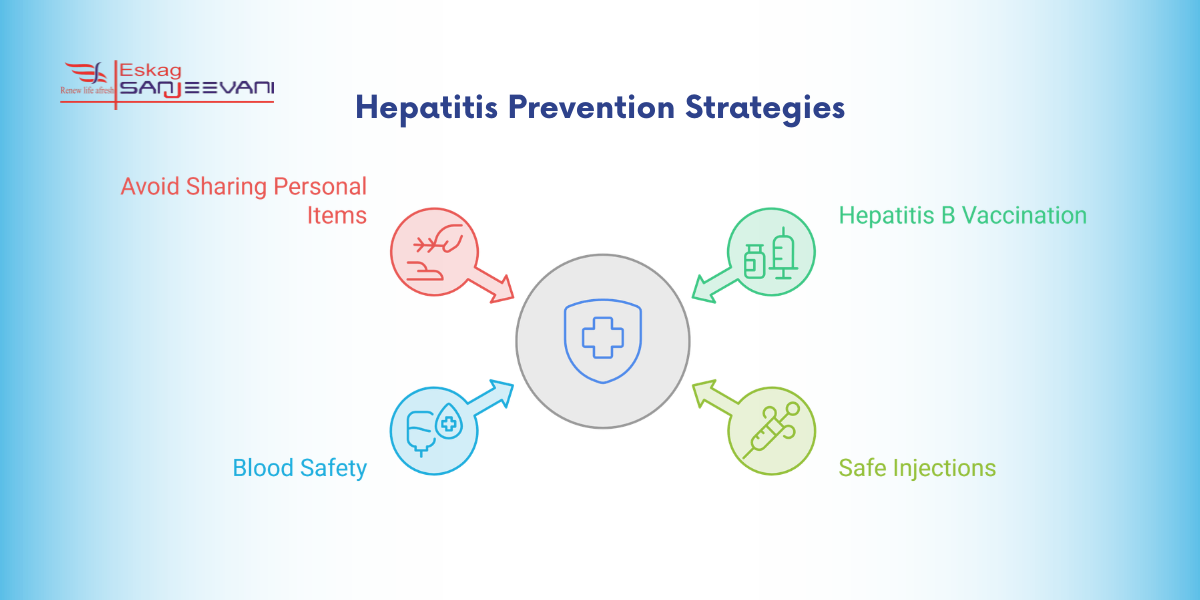
Effective hepatitis prevention focuses on vaccination, safe healthcare practices and avoiding exposure to infected blood and body fluids. Prevention starts with reducing exposure to infected blood and body fluids. The following steps can lower your risk of hepatitis B and C.
Step 1: Get the Hepatitis Vaccine
The hepatitis vaccine for type B provides up to 95% protection when the recommended series is completed. India’s immunisation programme includes a birth dose, while unvaccinated adults can also receive vaccination after discussing it with their doctor.
Step 2: Choose Safe Injections
Always ensure healthcare providers use new, sterile, single-use syringes and needles. Avoid unnecessary injections and ask about sterilisation practices, especially in informal healthcare settings.
Step 3: Check Blood Safety
Receive blood only when medically necessary and use blood screened according to approved safety standards. Choose licensed blood banks and hospitals that follow established screening procedures.
Step 4: Avoid Sharing Personal Items
Do not share razors, toothbrushes, nail clippers or other items that may come into contact with blood. Cover cuts and wounds properly and maintain good hygiene.
Complete Hepatitis Care at Eskag Sanjeevani Hospitals
The NABH-accredited Eskag Sanjeevani Hospitals have excellence in hepatitis diagnosis and management across India. Our hepatology department combines the latest diagnostic capabilities with compassionate patient-centred care. Patients looking for a hepatitis doctor can consult the hepatology team at Eskag Sanjeevani Hospitals for testing, result interpretation and treatment planning.
Our comprehensive hepatitis services include:
- Hepatitis Testing: Rapid hepatitis B and C testing at our NABL-accredited lab, with trained blood collection staff and home sample collection options.
- Specialist Consultation: Hepatologists provide clear interpretation of results and personalised treatment plans.
- Integrated Care: Coordinated support from hepatology, gastroenterology, infectious disease and nutrition teams.
- Treatment Support: Assistance with treatment planning, affordability and available healthcare support programmes.
- Vaccination: Hepatitis B vaccination for eligible patients, including those at higher risk of infection.
Final Thoughts
Hepatitis B and C remain silent threats only when left undetected. Schedule a hepatitis test immediately if you fall into any risk category or simply wish to know your status. Early detection through hepatitis testing transforms hepatitis from a life-threatening condition into a manageable disease.
Contact Eskag Sanjeevani Hospitals Hepatology Department to schedule your hepatitis test today. Our qualified team will guide you through the process, explain results clearly, and connect you with appropriate care if needed. Don’t let hepatitis silently damage your liver; take control of your health through testing and prevention.

Microbiologist with over 2 years of experience in medical writing, specialising in evidence-based healthcare content.

Clinical experience in diagnosis, treatment, and evidence-based patient care across a range of conditions.
References
- Technical guidelines for. (n.d.). [online].
- Biswas D, Borkakoty BJ, Mahanta J, Jampa L, Deouri LC. Hyperendemic foci of hepatitis B infection in Arunachal Pradesh, India. J Assoc Physicians India.
- Puri P, Anand AC, Saraswat VA, Acharya SK, Dhiman RK, Aggarwal R, Singh SP, Amarapurkar D, Arora A, Chhabra M, Chetri K, Choudhuri G, Dixit VK, Duseja A, Jain AK, Kapoorz D, Kar P, Koshy A, Kumar A, Madan K, Misra SP, Prasad MV, Nagral A, Puri AS, Jeyamani R, Saigal S, Sarin SK, Shah S, Sharma PK, Sood A, Thareja S, Wadhawan M. Consensus Statement of HCV Task Force of the Indian National Association for Study of the Liver (INASL). Part I: Status Report of HCV Infection in India. J Clin Exp Hepatol.
- Arora NK. Injection practices in India. WHO South East Asia J Public Health. 2012 Apr-Jun;1(2):189-200.
Hepatitis B requires contact with infected blood or body fluids. Sharing meals, hugging, or casual contact cannot transmit the virus. However, sharing toothbrushes, razors, or other items that may come into contact with blood poses a transmission risk.
While chronic hepatitis B carries cirrhosis risk, early treatment prevents progression in most cases. Regular monitoring and appropriate antiviral therapy significantly reduce the risk of developing cirrhosis.
Modern direct-acting antiviral medications cure hepatitis C in over 95% of cases with 8-12 weeks of treatment. Early detection and prompt treatment initiation maximise cure rates.
Those with ongoing risk factors should undergo periodic testing. Healthcare workers, dialysis patients, and injection drug users benefit from annual testing. Discuss personalised testing intervals with your healthcare provider.
Blood donation is contraindicated for anyone with hepatitis B or C to prevent transmission to recipients. However, you can receive blood transfusions if medically necessary, provided donors are properly screened.