
 Medically Reviewed
Platelet Rich Plasma Therapy: Process and What to Expect
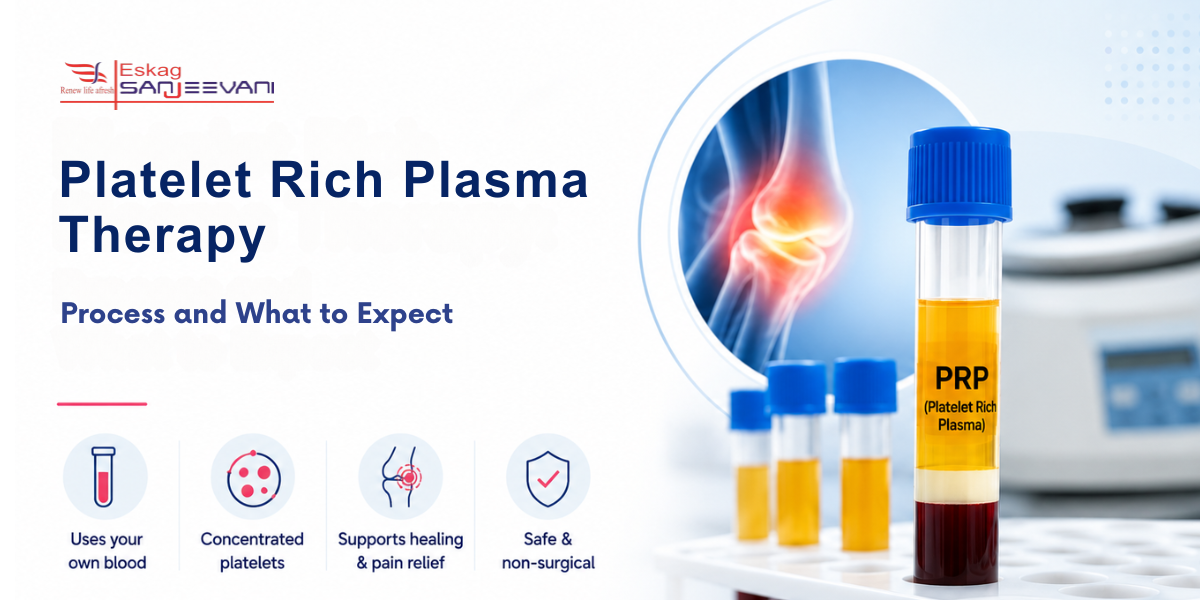
Platelet rich plasma therapy is a non-surgical option for managing pain and supporting tissue healing in selected musculoskeletal conditions. PRP uses concentrated platelets from your own blood to deliver growth factors to the affected area. Osteoarthritis is one of the common conditions for which patients explore PRP as an alternative to more invasive treatments. Approximately 3.3 to 3.6% of the global population currently suffers from osteoarthritis, with lakhs seeking non-surgical treatment options [1]. Platelet-rich plasma (PRP) treatment has emerged as a regenerative therapy that harnesses your body’s natural healing capacity.
This article explains everything you need to know about PRP treatment in India.
Key Takeaways
- PRP treatment activates growth factors within 10 minutes of injection, with nearly 95% of bioactive proteins released within one hour to stimulate tissue repair and regeneration.
- Multiple injections spaced 2-3 weeks apart show better outcomes than single injections.
- Leukocyte-poor PRP formulations prove more effective for pain relief than leukocyte-rich variants, reducing inflammation and adverse reactions at injection sites.
Quick answer: PRP treatment uses concentrated platelets from your blood to support tissue healing and manage pain without surgery.
- Understanding the Platelet Rich Plasma Therapy
- How Does Platelet Rich Plasma Therapy Work at the Cellular Level?
- Platelet Rich Plasma Therapy Applications in India
- PRP Treatment Cost Considerations
- Platelet-Rich Plasma Therapy: Preparation Methods
- Platelet-Rich Plasma Therapy Effectiveness
- Comprehensive PRP Treatment at Eskag Sanjeevani Hospitals
Understanding the Platelet Rich Plasma Therapy
The process of PRP therapy begins with a simple blood draw from your arm. A 30-millilitre venous blood sample holds approximately 3-5 millilitres of concentrated PRP, depending on your baseline platelet count. The blood collection uses anticoagulants like citrate dextrose A (a sterile chemical solution) to prevent clotting.
The preparation process involves differential centrifugation, a technique that separates cellular components based on specific gravity. During the first centrifugation spin, your blood separates into three distinct layers: red blood cells at the bottom, a middle layer containing platelets and white blood cells, and platelet-poor plasma at the top. Technicians carefully transfer the upper layers to a sterile tube for the second centrifugation. This second spin concentrates platelets into a small plasma volume, creating the therapeutic PRP solution.
Research shows that first-spin settings of 900 grams for 5 minutes, followed by second-spin settings of 1000 grams for 10 minutes at 16°C, constantly give platelet concentrations exceeding 1 million per millilitre [2]. Temperature control during processing proves critical; maintaining 12-16°C prevents unintended platelet activation.
How Does Platelet Rich Plasma Therapy Work at the Cellular Level?
Your platelets contain more than 30 bioactive proteins essential for tissue healing. Seven fundamental growth factors actively secreted by platelets initiate all wound healing processes: platelet-derived growth factor (PDGF), transforming growth factor-beta (TGF-β), vascular endothelial growth factor (VEGF), fibroblast growth factor (FGF), hepatocyte growth factor, epidermal growth factor, and insulin-like growth factor (IGF).
When exogenous activators activate PRP during injection, platelets aggregate and coagulate within the target tissue. Within 10 minutes, degranulation begins (the process in which platelet granules fuse with cell membranes, releasing bioactive proteins). Within one hour, nearly 95% of pre-synthesised growth factors are secreted into surrounding tissues.
These growth factors bind to transmembrane receptors on target cells, including mesenchymal stem cells, osteoblasts, fibroblasts, endothelial cells, and epidermal cells. This binding activates intracellular signal proteins that trigger gene expression, directing cellular proliferation, matrix formation, collagen synthesis, and tissue regeneration. TGF-β specifically inhibits inflammatory cytokines that interfere with chondrocytes while preventing cell death. PDGF promotes osteoblast proliferation and enhances collagen synthesis.
Platelet Rich Plasma Therapy Applications in India
Indian patients increasingly access PRP treatment for musculoskeletal conditions, particularly knee osteoarthritis affecting millions across the country. Clinical evidence demonstrates that PRP injections effectively improve pain scores, functional activity, and quality of life in Indian patient populations.
The treatment addresses the following conditions:
- Knee osteoarthritis with significant pain reduction and improved mobility
- Shoulder injuries including rotator cuff tendinopathy and impingement syndrome
- Plantar fasciitis causing heel pain and walking difficulties
- Lateral epicondylitis (tennis elbow) affecting work capacity
- Hip osteoarthritis in ageing populations
- Temporomandibular joint disorders affecting jaw function
Indian healthcare facilities now standardise PRP preparation protocols, ensuring constant platelet yields and therapeutic outcomes.
PRP Treatment Cost Considerations
PRP treatment cost in India varies based on geographic location, facility type, and treatment complexity. Urban centres typically charge between ₹15,000 and ₹50,000 per injection, with most treatment courses requiring 2-3 injections. Rural areas may offer more affordable options, though facility quality varies considerably.
Common cost factors include the following:
- Blood collection and processing expenses
- Centrifuge equipment and maintenance
- Physician expertise and ultrasound guidance
- Facility overhead and sterilisation protocols
- Number of injections required
- Additional treatments combined with PRP
Many Indian patients find PRP treatment cost-effective compared to surgical interventions, which often exceed ₹100,000-300,000 with extended recovery periods.
Platelet-Rich Plasma Therapy: Preparation Methods
Standardising PRP preparation proves essential for consistent therapeutic outcomes. Two primary preparation methods exist: the PRP method and the buffy coat method. The PRP method involves two centrifugation spins, producing pure platelet-rich plasma with minimal white blood cells. The buffy coat method uses high-speed centrifugation to collect the middle layer containing both platelets and white blood cells.
Leukocyte-poor PRP (LP-PRP) preparations contain high platelet concentrations with minimal white blood cells. Research demonstrates LP-PRP superiority for pain relief in osteoarthritis patients. Leukocyte-rich PRP (LR-PRP) contains both platelets and white blood cells and may trigger more acute inflammatory responses.
Centrifugation parameters critically influence final PRP composition. Relative centrifugal force (RCF) measured in gravitational units (g), centrifugation duration, and temperature all affect platelet recovery and growth factor concentration. Optimal protocols achieve 70-80% platelet recovery while maintaining platelet viability and integrity.
Anticoagulant selection impacts PRP quality. Citrate dextrose A and trisodium citrate preserve platelet functionality better than EDTA, which can damage platelet membranes. Proper anticoagulant concentration prevents premature clotting while maintaining optimal pH and calcium levels for platelet activation.
Platelet-Rich Plasma Therapy Effectiveness
Clinical evidence strongly supports the effectiveness of PRP therapy for multiple conditions. A meta-analysis of 24 randomised controlled trials found that PRP injections significantly reduced pain in knee, ankle, and temporomandibular joint osteoarthritis compared with control treatments. Pain scores improved by about 1.0-1.4 points on visual analogue scales [3].
Functional improvement metrics show substantial benefits. Knee Injury and Osteoarthritis Outcome Score (KOOS) assessments reveal significant improvements in pain symptoms, activities of daily living, and quality of life following PRP treatment.
Multiple injections prove more effective than single injections. Treatment protocols involving 2-3 injections spaced 2-3 weeks apart produce better outcomes than single-injection approaches. This sequential treatment allows sustained growth factor delivery and progressive tissue remodelling.
Long-term effectiveness extends beyond initial treatment periods. Many patients maintain functional improvements for 6-12 months following treatment completion.
Comprehensive PRP Treatment at Eskag Sanjeevani Hospitals
Patients looking for PRP treatment in Kolkata can access orthopaedic consultation, PRP assessment, treatment planning and follow-up care at Eskag Sanjeevani Hospitals.
Our NABH-accredited Eskag Sanjeevani Hospitals offer excellent PRP treatment utilising advanced centrifugation technology and standardised preparation protocols. Our orthopaedic specialists have extensive experience administering PRP injections for musculoskeletal conditions affecting Indian patients.
Eskag Sanjeevani Hospitals specialises in treating knee osteoarthritis, shoulder injuries, plantar fasciitis, and sports-related musculoskeletal injuries common among Indian patients. We provide detailed pre-treatment assessments, personalised treatment protocols, and structured follow-up care to monitor your progress.
Final Thoughts
PRP treatment represents a scientifically supported regenerative medicine option for Indian patients seeking non-surgical solutions to musculoskeletal pain and dysfunction. Consult with qualified orthopaedic specialists at Eskag Sanjeevani Hospitals for PRP treatment in Kolkata and to determine whether PRP suits your specific condition and health status. Schedule a comprehensive evaluation where specialists assess your injury severity and discuss treatment protocols. Begin your journey toward tissue regeneration and functional restoration through evidence-based PRP therapy today.

Microbiologist with over 2 years of experience in medical writing, specialising in evidence-based healthcare content.

Clinical experience in diagnosis, treatment, and evidence-based patient care across a range of conditions.
References
- Al-Saleh, J.A., Albelooshi, A.A., Salti, A.A., Farghaly, M., Ghorab, A.M., Linga, S., Ramachandrachar, B.C., Natarajan, A. and Joury, J.G. (2021). Burden, treatment patterns and unmet needs of osteoarthritis in Dubai: A retrospective analysis of the Dubai real-world claims database. Rheumatology and Therapy, 9(1), pp.151–174.
- Dhurat R, Sukesh M. Principles and Methods of Preparation of Platelet-Rich Plasma: A Review and Author’s Perspective. J Cutan Aesthet Surg. 2014 Oct-Dec;7(4):189-97.
- Xiong Y, Gong C, Peng X, Liu X, Su X, Tao X, Li Y, Wen Y, Li W. Efficacy and safety of platelet-rich plasma injections for the treatment of osteoarthritis: a systematic review and meta-analysis of randomised controlled trials. Front Med (Lausanne). 2023 Jun 27;10:1204144.
Most patients require 2-3 injections spaced 2-3 weeks apart. Multiple injections prove more effective than single injections for sustained tissue regeneration and pain relief.
Initial improvements typically appear within 4-6 weeks, with most significant benefits emerging between 3-6 months as growth factors continue stimulating tissue repair.
PRP suits most patients, though those on anticoagulants, with active infections, or with certain medical conditions should consult a physician first. The safety profile remains exceptional, with less than 0.1% serious complications.
Results typically last 6-12 months, with some patients achieving lasting benefits requiring no additional treatment. Others benefit from periodic maintenance injections.
Yes, PRP combines effectively with physical therapy, hyaluronic acid injections, and other regenerative treatments. Your physician will recommend the best combination protocol for your condition.