

 Medically Reviewed
Signs of a Fatty Liver Most People Mistake for Gas
Fatty liver disease is far more common in India than most people realise. The prevalence of signs of a fatty liver in India ranges from 9% to 53% of the general population, with urban residents at considerably higher risk [2]. Most people with the condition feel nothing at first. By the time bloating, right-side pain, or fatigue become obvious, the liver has often been accumulating fat quietly for years. Fatty liver disease symptoms are easy to dismiss as indigestion or stress, which is exactly what makes early awareness so important. This blog explains what to watch for, what drives the condition, and how the right lifestyle choices and timely specialist care can make a meaningful difference.
Key Takeaways
- Signs of a fatty liver are often silent; bloating, right-side pain, and fatigue are the most common early fatty liver disease symptoms.
- Diet modifications for fatty liver disease, including reducing sugary drinks and red meat, are a cornerstone of fatty liver disease self-care.
- India has integrated NAFLD into its national non-communicable disease programme, underscoring the scale of this public health concern.
Quick Answer: Bloating, right-side discomfort, and fatigue are the most recognised signs of a fatty liver. Diet and lifestyle changes help.
- What Exactly Is Fatty Liver Disease?
- Recognising the Early Signs of a Fatty Liver
- When Fatty Liver Disease Symptoms Become Serious
- Who Is at Risk?
- What Causes Fat to Build Up in the Liver?
- Fatty Liver Disease Diet: What to Eat and Avoid
- Fatty Liver Disease Self-Care Beyond Diet
- When to See a Specialist at Eskag Sanjeevani
What Exactly Is Fatty Liver Disease?
The liver sits in the upper right portion of the abdomen, beneath the diaphragm [1]. Non-alcoholic fatty liver disease (NAFLD) happens when too much fat builds up in the liver, even though a person does not drink much alcohol. It ranges from simple fat accumulation (steatosis) to a more inflamed, damaging form called non-alcoholic steatohepatitis (NASH), which can progress to fibrosis, cirrhosis, and liver failure [2].
Many patients have no signs of fatty liver in the early stages. This is what makes the condition particularly deceptive: internal damage accumulates while the person goes about daily life, unaware.
Recognising the Early Signs of a Fatty Liver
Early-stage fatty liver disease symptoms are subtle and easily attributed to other causes. Knowing what to look for is the first step toward protecting your liver health.
The most reported early signs of a fatty liver include:
- Persistent fatigue or a general sense of not feeling well that does not improve with rest or sleep.
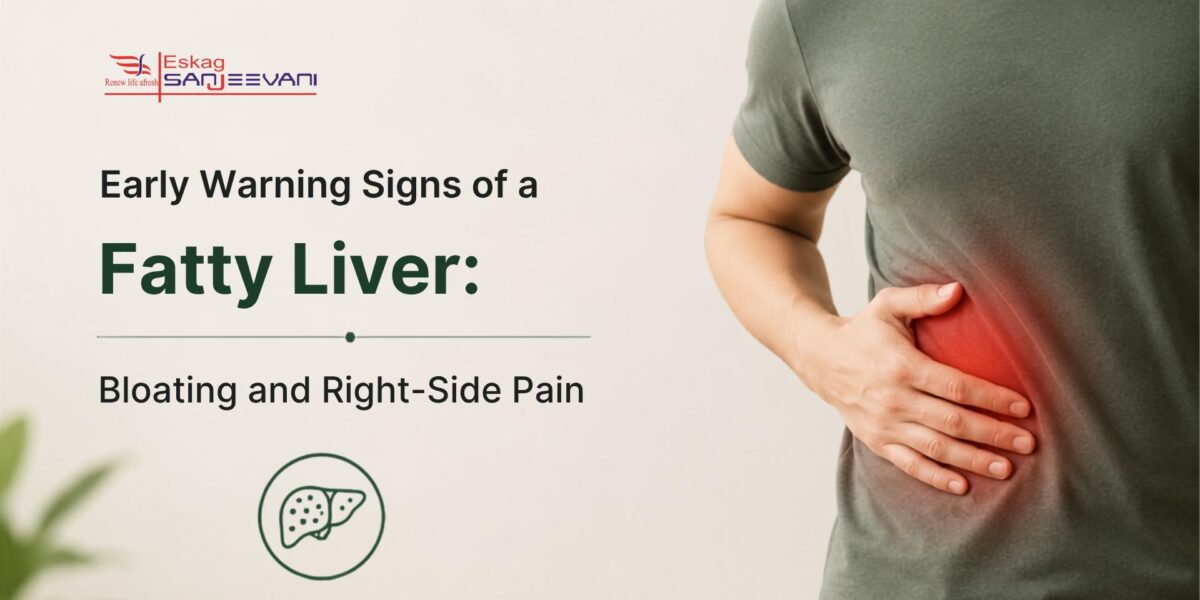
- A dull ache, heaviness, or discomfort in the upper right side of the abdomen, directly below the ribs.
- Bloating and a feeling of fullness, particularly after meals, which occurs as the liver enlarges slightly.
- Mild nausea that comes and goes, often mistaken for acidity or indigestion in everyday life.
- Unexplained weight gain around the abdomen, which often accompanies and worsens fatty liver disease symptoms.
As the disease progresses to NASH, the symptom picture changes significantly and becomes harder to manage.
When Fatty Liver Disease Symptoms Become Serious
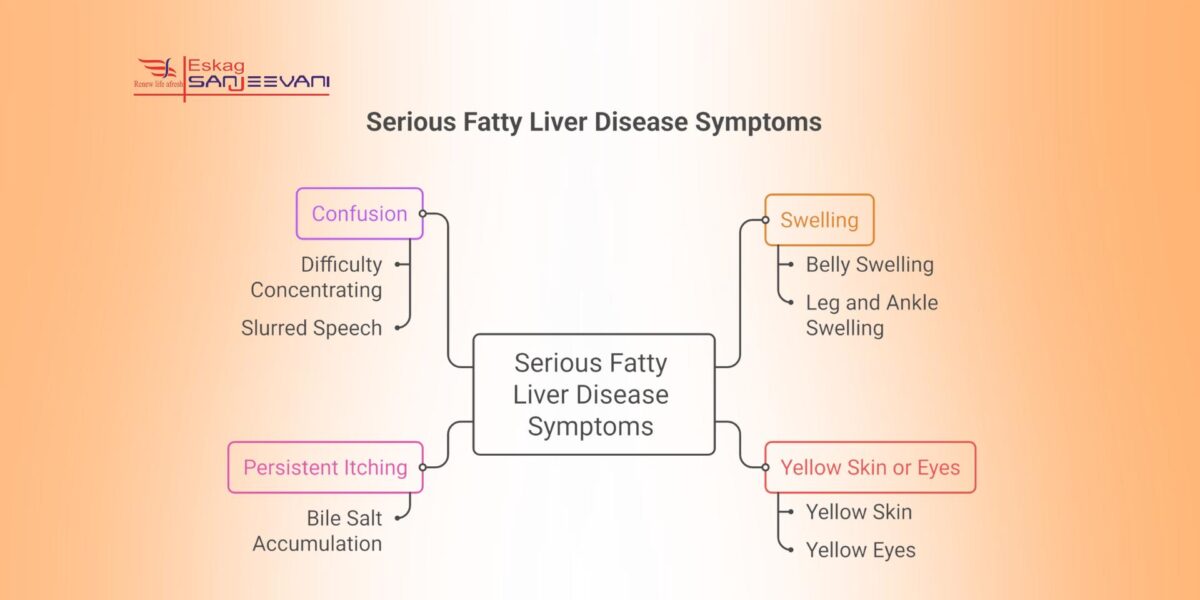
If fat accumulation triggers inflammation and scarring, fatty liver disease symptoms intensify. Advanced disease and cirrhosis produce signs of a fatty liver that go well beyond discomfort [1, 3].
Some of the following warning signs need immediate attention:
Here’s a much simpler version:
- Swelling in the belly because fluid has built up, which can mean the liver is very badly damaged.
- Yellow skin or eyes, which can happen when the liver is not working properly.
- Swelling in the legs and ankles because the liver is not working properly and fluid builds up in the body.
- Skin that itches persistently, caused by bile salt accumulation when liver function deteriorates significantly.
- Confusion, difficulty concentrating, or slurred speech, which points to hepatic encephalopathy as a serious complication.
Who Is at Risk?
Signs of a fatty liver in India appear across a wide population spectrum, including people with a normal body weight. Roughly 10% to 15% of Indian NAFLD patients are classified as “lean NAFLD,” with a BMI below 23 kg/m² [2]. This matters because many Indians do not associate fatty liver disease symptoms with themselves unless they are visibly overweight.
| Risk Factor | Relevance in India |
| Type 2 Diabetes | NAFLD prevalence of 56.5% among diabetic patients across 101 Indian cities |
| Central Obesity | Present in 84% of NAFLD patients in the ICON-D study |
| Metabolic Syndrome | Found in 43% of NAFLD patients in the ICON-D study |
| Urban Residence | Urban communities show significantly higher NAFLD prevalence than rural |
| Lean NAFLD | 10.6% of patients had a normal BMI yet carried the disease |
The PNPLA3 and TM6SF2 gene variants have also been identified as significant contributors to NAFLD susceptibility in both North and South Indian populations, suggesting that genetic predisposition adds to environmental risk.
Understanding who is at risk helps, but understanding what drives the disease in the first place is equally important.
Also read: Non Alcoholic Fatty Liver In Urban Indians
What Causes Fat to Build Up in the Liver?
Insulin resistance is widely considered the primary driver of signs of a fatty liver in most patients [2, 3]. When the body’s cells stop responding effectively to insulin, excess fat accumulates in the liver rather than being processed normally.
The conditions most commonly linked with fatty liver disease are:
- Type 2 diabetes and pre-diabetes can make it easier for extra fat to build up in the liver.
- Dyslipidaemia, especially high triglyceride levels, can increase the amount of fat reaching the liver.
- Obesity concentrated around the abdomen, as visceral fat drives systemic insulin resistance more aggressively than other fat.
- Genetic variants such as PNPLA3 and TM6SF2, which increase the liver’s susceptibility to fat deposition and inflammation.
- A diet high in sugary drinks, refined carbohydrates, and red meat, all of which are consistently associated with NAFLD risk [3].
Fatty Liver Disease Diet: What to Eat and Avoid
Dietary change is the most accessible and effective form of fatty liver disease self-care. No medication has been universally approved for NAFLD; lifestyle intervention remains the primary treatment [1].
A well-structured fatty liver disease diet should include:
- Legumes, fruits, vegetables, and whole grains, which provide fibre and antioxidants that reduce the fats.
- Foods like fish and flaxseed are rich in omega-3, which improve liver biochemistry and reduce inflammation.
- Moderate, quality protein from poultry and plant sources, while limiting red meat consumption given its association with liver disease [3].
- Three or more cups of coffee per day, which research links to improved liver enzyme levels in a dose-dependent manner.
- Extra-virgin olive oil and a Mediterranean-style eating pattern, both associated with reduced liver fat accumulation.
Foods to limit or avoid in a fatty liver disease diet:
- Sugary drinks including sodas, fruit juices, and packaged beverages, which show a direct correlation with NAFLD progression [3].
- Refined carbs like white bread, polished rice, and packaged snacks can quickly raise your blood sugar.
- Red and processed meats may not be good for your heart and liver, especially if you have fatty liver disease.
- High-glycaemic-index foods that promote insulin resistance, the central mechanism driving signs of a fatty liver.
- Alcohol, which independently damages liver cells and worsens existing fatty liver disease symptoms significantly.
Fatty Liver Disease Self-Care Beyond Diet
Changing your diet alone may not be enough. Taking care of your liver works best when you eat healthy, stay active, and make other healthy changes in your daily life.
Effective fatty liver disease self-care practices include:
- Regular aerobic exercises reduces liver fat and improves insulin sensitivity significantly.
- Gradual weight loss, which has been shown to improve liver biochemistry and histological findings in NAFLD patients.
- Smoking cessation, as smoking independently worsens liver fibrosis in people already showing signs of a fatty liver [3].
- Consistent sleep and stress management, since poor sleep patterns and chronic stress worsen metabolic syndrome risk factors.
- Routine liver function tests, abdominal ultrasound, and metabolic screening, even when no fatty liver disease symptoms are present.
Even with the right self-care habits in place, regular specialist monitoring is essential, particularly for those with risk factors.
When to See a Specialist at Eskag Sanjeevani
Signs of a fatty liver caught early respond well to lifestyle intervention. Delayed diagnosis, however, allows fibrosis and cirrhosis to take hold. In India, liver biopsy-proven data shows histological NASH in more than 60% of NAFLD patients, and advanced fibrosis in 35% [2]. These are not mild numbers.
Eskag Sanjeevani’s team of specialists can check for fatty liver disease through blood tests, scans, and other health tests. If you have ongoing pain on the right side of your stomach, unexplained bloating, or have diabetes, are overweight, or have a family history of liver problems, speaking to a fatty liver specialist in Kolkata can help find the problem early.
Conclusion
Signs of fatty liver are often hard to notice, and this is what can make the condition serious. Bloating, pain on the right side, and tiredness may be early signs that something is wrong. Understanding fatty liver disease symptoms, following a proper fatty liver disease diet, and practising regular fatty liver disease self-care are important steps for people at high risk to protect their liver health in the long term.
India has become the first country to formally integrate NAFLD into its national non-communicable disease programme, which reflects how serious the signs of a fatty liver problem has become at a population level. Do not wait for advanced symptoms. Book a consultation with the best fatty liver doctor in Kolkata at Eskag Sanjeevani and take charge of your liver health today.

Microbiologist with over 2 years of experience in medical writing, specialising in evidence-based healthcare content.

Clinical experience in diagnosis, treatment, and evidence-based patient care across a range of conditions.
References
- Mayo Clinic Staff. Fatty liver disease (MASLD) symptoms and causes. Mayo Clinic. 2026.
- De A, Duseja A. Nonalcoholic fatty liver disease: Indian perspective. Clin Liver Dis (Hoboken). 2021 Sep 13;18(3):158–163. doi: 10.1002/cld.1141. PMID: 34691404.
- Pouwels S, Sakran N, Graham Y, Leal A, Pintar T, Yang W, et al. Non-alcoholic fatty liver disease (NAFLD): a review of pathophysiology, clinical management and effects of weight loss. BMC Endocr Disord. 2022 Mar 14;22:63. doi: 10.1186/s12902-022-00980-1. PMID: 35287643.
Fatigue, right-side stomach discomfort, and bloating are the most common signs of a fatty liver. Many patients, including lean individuals, have no symptoms in the early stages.
Yes, around 10% to 15% of NAFLD patients in India have a normal BMI, a category called lean NAFLD. Insulin resistance and genetic factors can drive the disease independently of body weight.
A Mediterranean-style fatty liver disease diet rich in vegetables, whole grains, fish, and olive oil is well-supported by evidence. Reducing sugary drinks, refined carbohydrates, and red meat intake is equally important for managing fatty liver disease symptoms
In early-stage NAFLD, consistent fatty liver disease self-care through diet, exercise, and weight management can significantly reduce liver fat and improve enzyme levels. Advanced disease, however, requires specialist medical evaluation alongside lifestyle changes.
If you experience persistent bloating, right-side discomfort, unexplained fatigue, or belong to a high-risk group such as diabetics or those with metabolic syndrome, consult a specialist promptly. Early intervention prevents progression to NASH, fibrosis, and cirrhosis.