

 Medically Reviewed
PFT Test for Lungs: Who Needs IT?
Breathing problems do not always start with serious symptoms. A PFT test for lungs helps doctors to check the condition of the lungs. The test measures how much air you can breathe in and out and how easily air moves through your lungs. If you have a cough that lasts for a long time, chest tightness, or feel short of breath during everyday activities, your doctor may recommend this test.
A PFT test for lungs is simple, safe, and painless. It does not involve needles or surgery, and most people can go home soon after the test. Doctors also use it to monitor lung conditions like asthma and COPD. This guide explains what a PFT test for lungs is, why it is done, how the test is performed, and what your results can tell you about your lung health.
Key Takeaways
- A PFT test is needed to check how much air the lungs hold and how well you can breathe it in and out.
- Doctors may recommend the test for symptoms such as a long-term cough, chest tightness, or shortness of breath.
- The test usually takes 15–45 minutes, and you should consult a lung specialist if your results are outside the normal range.
What Is PFT Test for Lungs?
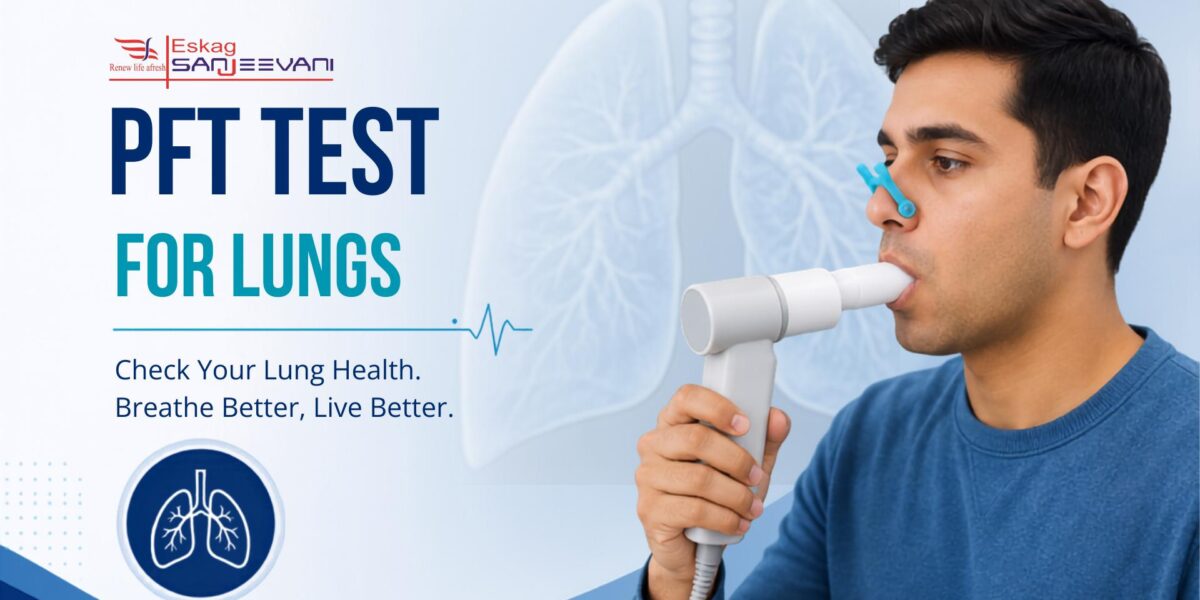
So, what is a PFT test? A pulmonary function test (PFT) for the lungs is a set of breath tests that show how your lungs work. The tests measure lung volume, airflow speed, and how well oxygen passes into your blood.
Doctors mostly rely on two methods for this test. Spirometry uses a mouthpiece linked to a small machine that records your airflow. Body plethysmography places you inside a sealed, clear box while you breathe normally through a mouthpiece [2].
A gas diffusion study is a third type of PFT test for lungs. This test checks how much oxygen your lungs pass into your blood, using a tiny and safe amount of carbon monoxide [3]. Each method gives your doctor a different piece of your full lung health picture, and together they build a complete report.
Why Is PFT Test Done?
Why is a PFT test done in the first place? Your doctor may recommend one if you show signs of a lung or airway problem. The test also helps track an existing condition over months or years.
Common reasons your doctor may order a PFT test for lungs include:
- Long-term cough that stays beyond three weeks, especially with mucus, often points to an airway issue that needs a closer look.
- Breathlessness or trouble taking a full breath during normal tasks, such as climbing stairs or brisk walks, is a frequent reason for referral.
- Signs like chest tightness can point to asthma, COPD, or another airway condition that a PFT test for lungs helps confirm.
- Surgeons often ask for lung function results before major surgery, to plan safe anaesthesia and recovery.
- People who smoke or work around dust, fumes, or chemicals face a higher risk of lung damage and may need regular checks.
Even without symptoms, some doctors add a PFT test for lungs to a routine health check, mainly for long-term smokers or older adults. A quick check-up at an early stage can save you from bigger treatment later.
Air quality plays a major role as in why a PFT test for lungs matters more in India than in other countries. Cities such as Kolkata, Delhi, and Mumbai see high dust and smoke levels through much of the year, and this raises the risk of chronic cough and reduced lung capacity among residents. Doctors also see a steady number of patients with old TB scars on their lungs, which can affect airflow years after treatment ends. A simple PFT test for lungs can pick up these changes long before symptoms turn severe.
Also read: Bronchoscopy Explained: Before, During and After the Test
PFT Test Procedure: What to Expect
A clear grasp of the PFT test procedure can ease any worry before your visit. Most tests happen in an outpatient clinic and need no injections or cuts.
Before the test, your doctor records your height, weight, age, and sex. These details set the normal range your results get compared against. [1] A little preparation on your end also helps the machine capture accurate numbers.
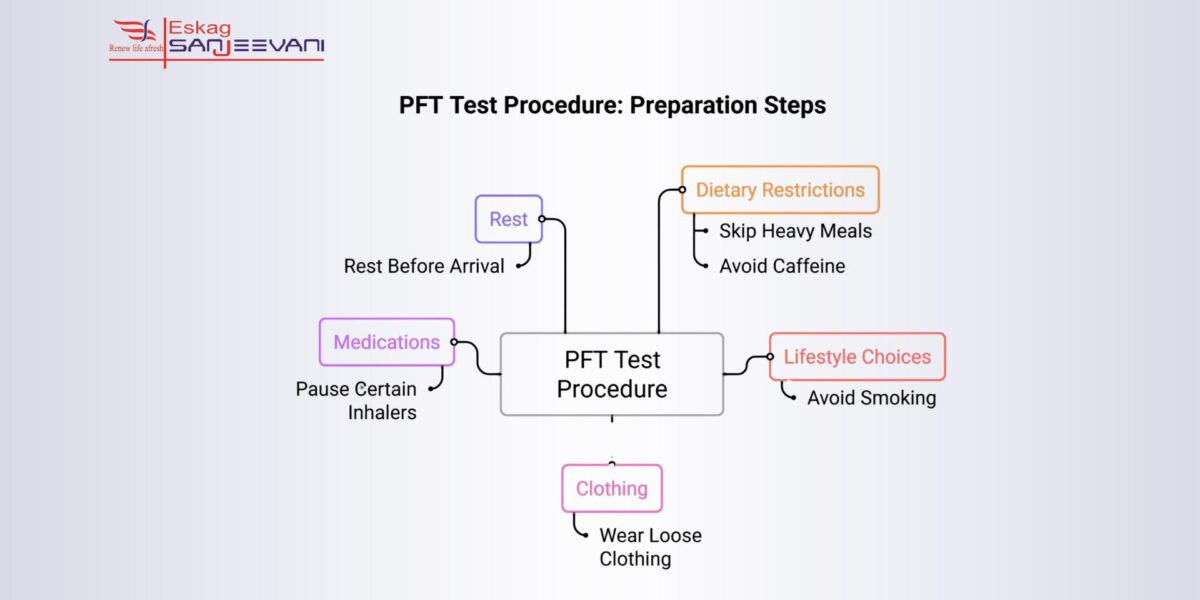
Simple steps to prepare for your PFT test procedure include:
- Skip heavy meals. Eat a light meal a few hours before your visit, since a full stomach can limit how deep you breathe.
- Avoid caffeine and smoking. Both can change your airway tone for a short while and skew your results.
- Wear loose clothing. Tight shirts or belts around your chest can restrict how far your lungs expand during the test.
- Pause certain inhalers. Your doctor may ask you to hold specific breathing medicines for several hours, so ask in advance.
- Rest before you arrive. Avoid heavy exercise on the day of your test, as tired muscles make deep breathing harder to sustain.
During spirometry, a soft clip closes your nose so you breathe only through your mouth. You seal your lips around a mouthpiece and follow simple instructions: breathe in deeply, then blow out as hard and fast as you can.
The full PFT test procedure often takes 15 to 45 minutes, based on how many methods your doctor orders [1]. You can rest between rounds if you feel tired, and the process causes no lasting pain once it ends.
PFT Test Results and Normal Range
Your PFT test results get compared against people of the same age, height, sex, and build. Two figures matter most here: FEV1 (the air you force out in one second) and FVC (the total air you force out).
A normal PFT test result shows an FEV1/FVC ratio above 0.70, with both FEV1 and FVC above 80% of the predicted value [2]. A ratio below 0.70 often points to an obstructive issue, such as asthma or COPD.
| Measure | PFT Test Normal Range | What a Low Score May Suggest |
| FEV1/FVC ratio | Above 0.70 | Obstructive lung disease (asthma, COPD) |
| FEV1 (% predicted) | Above 80% | Airway narrowing or muscle weakness |
| FVC (% predicted) | Above 80% | Restrictive lung disease (such as fibrosis) |
| Total lung capacity | Above 80% predicted | Reduced lung expansion |
Your doctor reads these numbers along with your medical history and a physical exam. A single low score never confirms a diagnosis on its own, so further tests often follow.
When Should You See a Lungs Specialist Doctor?
You should book time with a lungs specialist doctor if your PFT test results sit outside the normal range, or if breathing trouble affects your daily life. A specialist reads your report alongside your full medical history.
Book a visit to a lung specialist doctor if you notice:
- Worsening breathlessness. Breathing trouble that grows over several weeks, rather than easing with rest, needs a proper check.
- Frequent wheeze or chest tightness. Symptoms that return often, mainly at night or after exercise, point to poor airway control.
- A cough with blood or weight loss. A cough paired with blood, fever, or sudden weight loss needs urgent attention, not a wait-and-watch approach.
- Poor response to inhalers. If your current asthma or COPD medicine gives little relief, a specialist can review your treatment plan.
- Family history plus smoking. A family history of lung disease, combined with your own smoking history, raises your personal risk.
Eskag Sanjeevani’s pulmonology and chest medicine team supports patients across Kolkata with PFT testing and ongoing lung care. You can also find a doctor near you for your first consultation.
Final Thoughts
Most of us do not think about our lungs until breathing becomes difficult. A PFT test for lungs helps find small problems before they get worse. The test is simple, safe, and does not take much time. If you keep coughing, get out of breath easily, or feel tightness in your chest, talk to your doctor. They can tell you if this test is right for you. Finding a problem early can make treatment easier and help you keep your lungs healthy for years to come. At Eskag Sanjeevani, experts are there to help you detect your problems and recover faster, all under one roof.

Microbiologist with over 2 years of experience in medical writing, specialising in evidence-based healthcare content.

Clinical experience in diagnosis, treatment, and evidence-based patient care across a range of conditions.
References
- Cleveland Clinic. “Pulmonary Function Testing.” 12 Oct. 2022.
- Ponce, Mario C., et al. “Pulmonary Function Tests.” StatPearls Publishing, 28 Aug. 2023.
- Johns Hopkins Medicine. “Pulmonary Function Tests.”
A PFT test for lungs checks how much air you can breathe in and out, and how fast you can do it. Doctors use it to diagnose and track conditions such as asthma and COPD.
Surgeons order a PFT test to check whether your lungs can handle anaesthesia and recovery safely, mainly before chest or major abdominal operations.
No. The PFT test procedure only needs deep breaths through a mouthpiece. You may feel briefly dizzy or tired, but the test causes no pain.
A normal result shows an FEV1/FVC ratio above 0.70, with both FEV1 and FVC above 80% of your predicted value.
Yes, though younger children can find the deep-breath instructions harder to follow. Many doctors wait until a child can cooperate fully with each step.
Most patients get their pulmonary function test results within a few days of the visit. Your doctor will explain what each number means for your lung health.