

High Cholesterol Prevention: Diet, Lifestyle and Heart Health
High cholesterol is often described as a silent cardiovascular risk factor because it usually causes no noticeable symptoms. Yet over time, elevated LDL cholesterol and other abnormal blood lipids contribute to atherosclerotic plaque formation in the arteries. It increases the risk of conditions such as heart attack and stroke. The World Health Organisation (WHO) estimates that 39% of adults worldwide have raised total cholesterol, highlighting the widespread nature of dyslipidaemia [1].
For people in India, managing cholesterol therefore involves more than avoiding one particular food or trying to reach a single “normal” number. The appropriate LDL-C target depends on a person’s overall cardiovascular risk. The 2026 ACC/AHA dyslipidemia guideline recommends assessing factors such as previous cardiovascular disease, diabetes, kidney disease, family history and other risk-enhancing factors when determining treatment and LDL-C goals [2].
This blog explains how to prevent high cholesterol from rising in your blood. See how a balanced diet can keep cholesterol levels within the normal range.
Fast Facts
- High cholesterol is often silent: A lipid profile can measure cholesterol and triglyceride levels.
- Targets vary: LDL-C goals depend on a person’s cardiovascular risk and medical history.
- Food choices matter: Replacing saturated fats with unsaturated fats and increasing fibre support healthier cholesterol levels.
- Lifestyle is only one part: Some people need cholesterol-lowering medication because of their risk or genetic factors.
- Testing is individualised: The timing and type of cholesterol testing depend on age, risk factors, existing conditions and treatment.
What Exactly is High Cholesterol?
Cholesterol is a waxy substance the body needs for cell membranes and to produce certain hormones and other substances. Cholesterol travels through the blood in particles called lipoproteins.
A standard lipid profile commonly measures the following parameters:
| Lipid | What It Denotes |
| LDL-C | A major cholesterol-related risk factor for atherosclerosis |
| HDL-C | Helps provide information about cardiovascular risk |
| Triglycerides | A type of blood fat associated with cardiovascular and metabolic risk |
| Total cholesterol | A combined measure used as part of overall assessment |
What is LDL and HDL?
LDL-C is commonly described as “bad cholesterol” because higher levels are associated with greater risk of atherosclerotic cardiovascular disease. However, no single LDL-C value is the ideal treatment target for everyone. The appropriate goal depends on factors such as age, overall health, diabetes, family history and previous cardiovascular disease [3].
People with established cardiovascular disease or other high-risk conditions may have substantially lower LDL-C treatment goals than people at lower risk.
On the other hand,
HDL-C is often called “good cholesterol”. However, you should not assess cardiovascular risk simply by trying to increase HDL-C. A person’s overall risk depends on multiple factors, including LDL-C, blood pressure, diabetes, smoking, age, family history and previous cardiovascular disease.
Recognizing the Symptoms of High Cholesterol
High cholesterol usually does not cause symptoms. A person can have elevated LDL-C or triglycerides without headaches, dizziness, fever or other noticeable symptoms. Symptoms such as chest discomfort or breathlessness generally occur because of an underlying cardiovascular problem rather than because high cholesterol itself produces symptoms.
For example, chest discomfort during exertion can occur with coronary artery disease and requires appropriate medical assessment. Do not wait for symptoms to decide whether cholesterol needs attention. Whether testing is appropriate depends on your age, medical history, risk factors and clinical circumstances.
How Can You Manage Cholesterol Through Lifestyle?
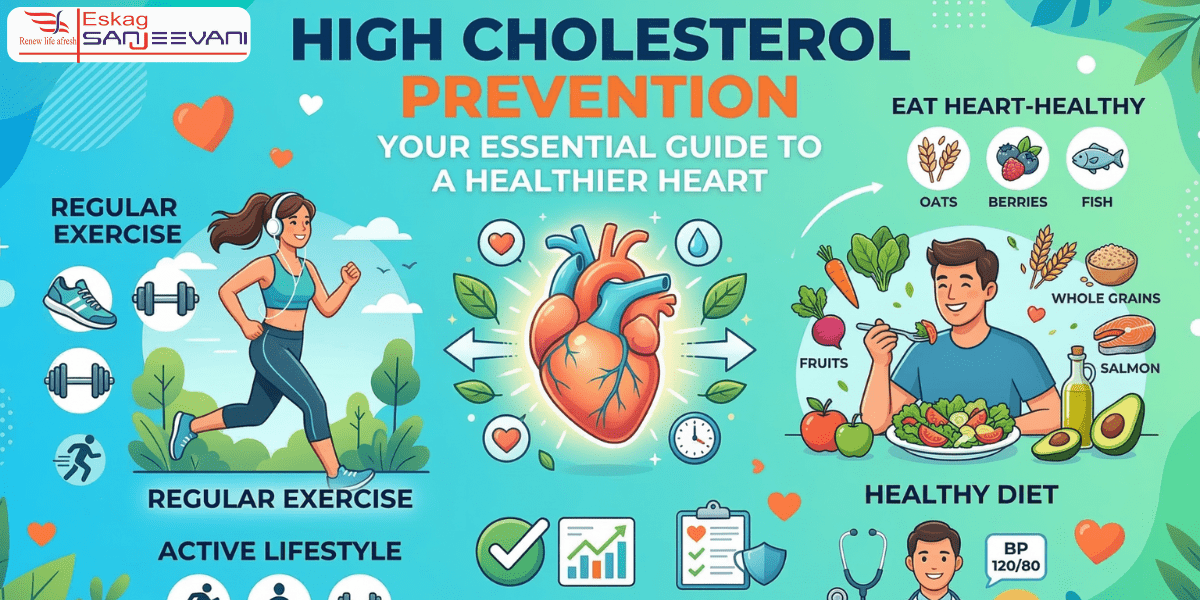
Lifestyle measures can support healthier lipid levels and overall cardiovascular health. Consider them part of a broader risk-reduction plan, not a guarantee against heart disease.
Here are a few practices you can consider while managing your cholesterol levels.
Step 1: Choose More Fibre-Rich Foods
Soluble fibre can help reduce LDL-C when consumed regularly.
A few useful Indian food choices include the following:
- Oats
- Barley
- Dal and other pulses
- Beans
- Chickpeas
- Fruits
- Vegetables
The overall dietary pattern matters more than relying on one “cholesterol-lowering” food. A varied diet based on minimally processed foods, whole grains, vegetables, fruits, and pulses aligns with healthy-diet guidance [4].
Step 2: Choose Unsaturated Fats More Often
Replacing some saturated fats with unsaturated fats can improve the lipid profile.
For example, you can consider the following:
- Nuts and seeds
- Fish
- Vegetable oils rich in unsaturated fats
- Avocado where available
This does not mean you must eliminate every saturated-fat source. The overall balance of your diet matters. WHO recommends favouring unsaturated fats over saturated and trans fats as part of a healthy dietary pattern.
Step 3: Limit Excess Saturated and Trans Fats
Frequent intake of foods high in saturated or trans fats can adversely affect blood lipids.
For an Indian diet, this may include limiting frequent consumption of the below-mentioned items:
- Deep-fried foods
- Commercial baked foods containing trans fats
- Foods high in butter or ghee
- Fatty processed meats
- Highly processed snack foods
The appropriate amount varies according to the individual’s overall diet and health needs.
Step 4: Stay Physically Active
Regular physical activity supports cardiovascular health and can favourably affect several cardiovascular risk factors. For many adults, public-health guidelines recommend at least 150 minutes of moderate-intensity physical activity per week, together with muscle-strengthening activity on at least two days a week, when appropriate. You do not need to complete all activity in one session. Walking, cycling, swimming and other activities can contribute to the weekly total.
Step 5: Maintain a Healthy Weight When Appropriate
For people who are overweight or have obesity, gradual and sustainable weight management can improve metabolic risk factors, including triglycerides and blood glucose. However, no single ideal weight-loss target fits everyone, and you should consider weight alongside overall health and medical history.
When Is Cholesterol Treatment Needed?
Lifestyle changes matter, but they are not always enough. Some people have persistently elevated LDL-C because of genetic factors or other medical conditions. People with established cardiovascular disease, diabetes or other risk factors may also require medication depending on their individual risk.
Common cholesterol-lowering treatments include the following:
- Statins: Statins reduce cholesterol production in the liver and are widely used to reduce cardiovascular risk in appropriate patients.
- Ezetimibe: Ezetimibe reduces cholesterol absorption from the intestine and may be used alone or alongside a statin in selected patients.
- PCSK9-Targeted Therapies: PCSK9 inhibitors and other PCSK9-targeted treatments can produce substantial LDL-C reductions and may be considered for selected people at high cardiovascular risk or with certain lipid disorders.
Important note for patients: What are the tests for cholesterol? If you are already taking cholesterol-lowering medication, your doctor can recommend repeat testing to assess the response to treatment. Tests such as lipoprotein(a) [Lp(a)] or apolipoprotein B (ApoB) may be useful in selected people when the results could change risk assessment or treatment decisions.
Final Thoughts
High cholesterol can remain unnoticed because it usually does not cause symptoms. A lipid profile can identify abnormal cholesterol and triglyceride levels, but the results must be interpreted in the context of the person’s overall cardiovascular risk. A heart-healthy eating pattern, regular physical activity, tobacco avoidance and appropriate weight management can support cardiovascular health. However, some people require cholesterol-lowering medication because of their individual risk or genetic factors.
Rather than focusing on one “normal” cholesterol number or one preventive food, work with a doctor to understand your personal risk and determine whether lifestyle changes, monitoring, medication or additional testing are appropriate. At Eskag Sanjeevani Hospitals, you can receive cardiovascular evaluation and related diagnostic services based on your clinical needs.
References
- World Health Organization: WHO (2026). Dyslipidaemia. [online] Who.int.
- Wiggins, B.S., Barac, A., Benziger, C.P., Blumenthal, R.S., Cibotti-Sun, M., Moore, M.M. and Morris, P.B. (2026). 2026 Dyslipidemia guideline-at-a-glance. JACC, [online] 87(19), pp.2617–2623. doi:10.1016/j.jacc.2026.02.4872.
- Lin Y, Mousa SS, Elshourbagy N, Mousa SA. Current status and future directions in lipid management: emphasizing low-density lipoproteins, high-density lipoproteins, and triglycerides as targets for therapy. Vasc Health Risk Manag. 2010 Mar 3;6:73-85. doi: 10.2147/vhrm.s8725.
- Anand SS, et al. Food Consumption and its Impact on Cardiovascular Disease: Importance of Solutions Focused on the Globalized Food System: A Report From the Workshop Convened by the World Heart Federation. J Am Coll Cardiol. 2015 Oct 6;66(14):1590-1614. doi: 10.1016/j.jacc.2015.07.050.
- Bull FC, et al. World Health Organization 2020 guidelines on physical activity and sedentary behaviour. Br J Sports Med. 2020 Dec;54(24):1451-1462. doi: 10.1136/bjsports-2020-102955.
Yes. While genetics play a role, lifestyle changes can still significantly lower your risk. A best cardiologist in Kolkata can help you determine if you need medication alongside these changes.
There are none. High cholesterol is a “silent” condition. The only way to detect it is through a blood test called a Lipid Profile.
Yes, we provide specialized geriatric cardiac care. Our high cholesterol treatment for seniors focuses on balancing medication with existing health conditions to ensure safety and efficacy.
Healthy adults should get a check-up every 4–6 years. However, if you have risk factors like diabetes or obesity, your best cardiologist in Kolkata may recommend annual testing.
In many cases, yes. By learning how to prevent high cholesterol through diet and exercise, many patients can maintain healthy levels. If levels remain high after 3–6 months of lifestyle changes, medication may be necessary.
Statins are the most widely prescribed medication. They are highly effective at lowering LDL and have a long-track record of safety.
Yes, our in-house nutritionists ensure that patient meals are heart-healthy, low in trans fats, and rich in fiber to support recovery.
We offer a combination of world-class technology, affordable diagnostics, and experienced specialists who focus on both high cholesterol treatment and long-term prevention.