

Lowering LDL Cholesterol: Healthy Indian Breakfast Swaps
Can changing your breakfast help improve your cholesterol levels? If a cholesterol report shows elevated LDL, it is natural to wonder whether changing your daily meals can make a difference. For many Indian households, breakfast may include foods such as luchi, puri, paratha, or other fried items. Depending on how often they are eaten and how they are prepared, these foods can increase saturated fat and overall calorie intake. A practical approach is not to look for a “heart detox”, but to make better food choices that support healthy cholesterol levels over time. Oats are a useful option because they contain beta-glucan, a type of soluble fibre shown to help reduce LDL cholesterol when consumed regularly [1].
This article explains how simple breakfast changes can fit into an Indian diet and when medical advice may be important for managing high cholesterol.
Key Takeaways
- LDL cholesterol is an important cardiovascular risk factor, and lower LDL levels are generally associated with lower cardiovascular risk.
- Regularly replacing foods high in saturated fat with foods containing soluble fibre can support healthier cholesterol levels.
- Oats contain beta-glucan, which can modestly reduce LDL with regular consumption.
Quick Links
Understanding LDL Cholesterol: Why It’s Called “Bad Cholesterol”
LDL (low-density lipoprotein) cholesterol carries cholesterol through the bloodstream. When LDL levels are elevated, cholesterol can contribute to atherosclerotic plaque in artery walls, increasing cardiovascular disease risk. No single LDL target applies to everyone. The appropriate level depends on a person’s overall cardiovascular risk, medical history, and whether they already have conditions such as cardiovascular disease or diabetes.
Because high LDL usually doesn’t cause noticeable symptoms, doctors commonly use a lipid profile to measure cholesterol levels. Your doctor can interpret the result in the context of your other risk factors rather than looking at LDL in isolation.
The Indian Breakfast Question: What Can You Swap?
Breakfast choices can influence the overall amount of saturated fat, fibre, and calories in your diet. Foods such as luchi, puri, and bhature are often deep-fried and can add a lot of fat to a meal. The nutritional impact also depends on the oil used, cooking method, portion size, and what the food is served with. Rather than completely avoiding traditional foods, consider how often you eat them and whether you can balance them with more fibre-rich, minimally processed choices.
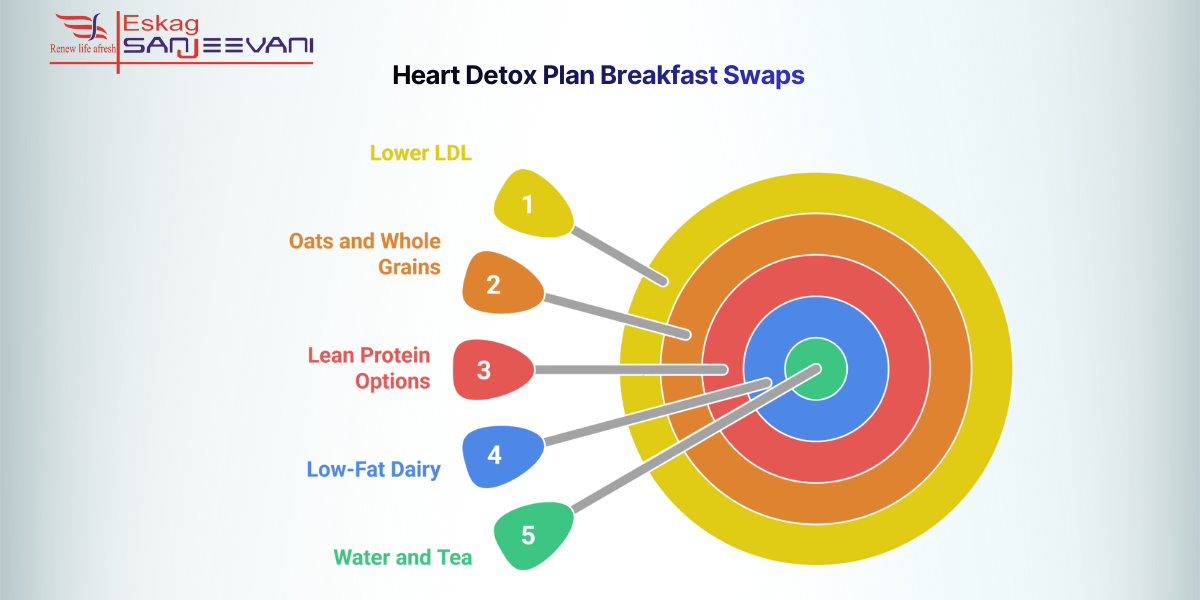
Here are simple breakfast swaps that Indians can follow, tabulated below.
| Instead Of | Consider | Why? |
| Luchi or puri | Oatmeal or another whole-grain breakfast | Can increase dietary fibre and reduce reliance on fried foods |
| Fried Paratha | Vegetable-based or minimally fried breakfast | May reduce overall saturated-fat and calorie intake |
| Sweetened lassi or sugary drinks | Water, unsweetened tea, or another low-sugar option | Reduces added sugar intake |
| Large Portions of Redefined Carbohydrates | Moderate portions with dal, vegetables, nuts, or seeds | Creates a more balanced meal |
The target is not to label traditional Indian foods as “bad.” Frequency, preparation, portion size, and the overall dietary pattern matter.
The Oats Advantage: What Can Beta-Glucan Do?
Oats contain beta-glucan, a soluble dietary fibre that has been studied extensively for its effects on cholesterol. Regular consumption of adequate amounts of oat beta-glucan can modestly reduce LDL cholesterol as part of a diet low in saturated fat. Food Standards Australia New Zealand has reviewed evidence on beta-glucan and cholesterol and recognises the relationship between regular consumption of oat or barley beta-glucan and reduced LDL cholesterol [2].
However, this is not an immediate two-day effect.
A single bowl of oats cannot “clean” or “detox” the heart, and dietary changes should not be described as a substitute for medical treatment when treatment is indicated. The benefit comes from making dietary changes over time.
Also read: Sudden Weight Loss and Metabolism.
How to Make Oats More Nutritious?
Instead of adding large amounts of sugar, try combining oats with:
- Apple, guava, berries, or other whole fruits
- Nuts such as almonds or walnuts
- Seeds such as flaxseed or chia
- Unsweetened curd or milk
- Cinnamon or other spices for flavour
You can adapt the exact combination to your dietary preferences and health needs.
A Simple 2-Day Breakfast Reset for Indians
If you want to use two days as a starting point for healthier eating, you can use the following plan. This is not a “heart detox” and should not be expected to produce a measurable LDL reduction within 48 hours. Instead, it is a simple way to begin replacing frequent fried or highly refined breakfast foods with higher-fibre choices.
Simple 2-day breakfast alternatives are tabulated below.
| Day | Breakfast Choice | Swaps | Potential Dietary Benefit |
| Day 1 | Oatmeal with whole fruit and a small portion of nuts | Luchi or another frequently fried breakfast | Adds soluble and other dietary fibre while reducing reliance on fried foods |
| Day 2 | Oats with apple and seeds, or vegetable-based whole-grain breakfast | Sweet paratha or puri | Provides fibre and can reduce saturated-fat intake depending on preparation |
| Both Days | Water or unsweetened tea | Sugary drinks or sweetened lassi | Reduces added sugar intake |
Think of these two days as the beginning of a healthier routine, rather than a treatment or detox programme.
Also read: How Half a Decade of No Sugar Repairs Your Arteries.
Beyond Oats: Indian Foods That Can Support Healthy Cholesterol Levels
Oats are not the only food that can contribute to a heart-healthy eating pattern. Here are some other foods Indians can eat to maintain healthy cholesterol levels.
- Pulses and Legumes: Moong dal, masoor dal, chana, rajma, and other pulses provide dietary fibre and plant protein.
- Vegetables: Vegetables such as spinach, lauki, carrots, beans, okra, and other seasonal vegetables add fibre and micronutrients.
- Whole Fruits: Fruits such as guava, apples, oranges, and other whole fruits provide fibre. Whole fruit is generally preferable to fruit juice when the goal is to increase fibre while limiting added or concentrated sugars.
- Nuts and Seeds: Almonds, walnuts, flaxseeds, and other nuts and seeds provide unsaturated fats and other nutrients.
- Whole Grains and Millets: Brown rice, oats, barley, and millets can provide more fibre than many refined grain products.
The broader dietary pattern matters more than any single “cholesterol-lowering” food.
Final Thoughts
No two-day “heart detox” can clean your arteries or rapidly reverse high LDL cholesterol. However, small dietary changes can be a practical starting point. Replacing fried breakfasts with options such as oats, whole grains, fruit, nuts, seeds, and other fibre-rich foods can help create a healthier eating pattern. Oat beta-glucan can contribute to modest LDL reduction when consumed regularly as part of an appropriate diet.
If your cholesterol remains high, or if you have other cardiovascular risk factors, do not rely on diet changes alone. Discuss your results with a healthcare professional to understand your overall cardiovascular risk and whether you need further treatment. At Eskag Sanjeevani Hospitals, our cardiology team can help you understand your cholesterol results and take appropriate next steps toward long-term heart health.
References
- Whitehead A, Beck EJ, Tosh S, Wolever TM. Cholesterol-lowering effects of oat β-glucan: a meta-analysis of randomized controlled trials. Am J Clin Nutr. 2014 Dec;100(6):1413-21. doi: 10.3945/ajcn.114.086108.
- Joyce SA, Kamil A, Fleige L, Gahan CGM. The Cholesterol-Lowering Effect of Oats and Oat Beta Glucan: Modes of Action and Potential Role of Bile Acids and the Microbiome. Front Nutr. 2019 Nov 27;6:171. doi: 10.3389/fnut.2019.00171.
Short dietary changes can affect cholesterol absorption, not blood LDL values immediately. Fibre intake may reduce intestinal cholesterol uptake. Blood test changes usually need several weeks.
Oil type affects saturated fat intake. Butter and ghee raise LDL more than liquid vegetable oils. Daily use matters due to cumulative fat exposure.
Non-fasting tests may show slightly higher triglycerides. LDL values remain reliable in most adults. Your doctor may repeat tests for clarity.
Vegetarian meals with excess refined flour or butter raise LDL. Plant-based diets still need fibre balance. Food choice matters more than labels.
Weight loss may reduce LDL indirectly. Fat loss improves lipid handling in the liver. Diet quality still plays a key role.