
 Medically Reviewed
Nausea and Stomach Pain: Spotting a Gallbladder Attack
Sudden pain under the right ribs with nausea can be caused by gallstones blocking the gallbladder outlet. Gallstone disease is also relevant in India, with a recent community-based study reporting marked regional variation in prevalence. In high-risk regions including parts of North and North-East India, gallstone prevalence reached about 10.7% to 10.8% [1]. A gallbladder attack can range from a short episode of biliary pain to acute gallbladder inflammation.
This article explains the symptoms, causes, diagnostic tests and treatment options that patients should know.
Key Takeaways
- Gallbladder attacks commonly cause steady upper-right abdominal pain with nausea or vomiting. Fever, jaundice or persistent pain can indicate inflammation or bile duct complications.
- Ultrasound is the first imaging test for suspected gallstones or acute cholecystitis. Blood tests and further imaging help assess inflammation, bile duct obstruction or pancreatitis.
- Gallstone disease varies across India. A community study of 28,395 adults found a prevalence of 10.8% in Mullanpur, 10.7% in Kamrup, and 0.3% in Barshi.
Quick answer: A gallbladder attack causes sudden right upper abdominal pain, often with nausea, and usually occurs when a gallstone blocks bile flow.
- What Is a Gallbladder Attack?
- Gallbladder Attack Symptoms: What Does the Pain Feel Like?
- Gallbladder Attack Causes: Why Does It Happen?
- How Is a Gallbladder Attack Diagnosed?
- Gallbladder Treatment: What Happens After Diagnosis?
- How Can You Reduce the Risk of Another Gallbladder Attack?
- Gallbladder Test and Treatment at Eskag Sanjeevani Hospitals
What Is a Gallbladder Attack?
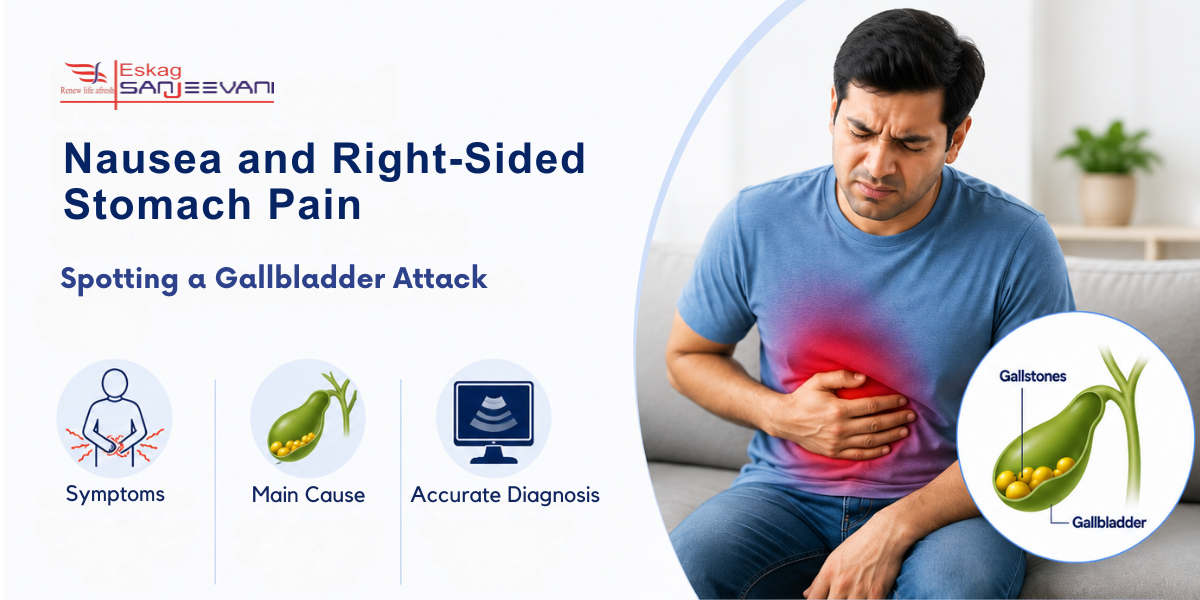
A gallbladder attack usually occurs when a gallstone temporarily blocks the cystic duct, the passage through which bile leaves the gallbladder. The gallbladder contracts to release bile during digestion. If a stone obstructs the outlet, pressure can build inside the gallbladder and cause pain. This pain is often called biliary colic. Despite the name, it is usually steady rather than a brief cramping pain. It can last for several hours before the stone moves away from the duct.
If the blockage continues, inflammation of the gallbladder can develop. This condition is called acute cholecystitis. It requires different management from an uncomplicated episode of biliary pain.
Gallstones can also move beyond the gallbladder. A stone entering the common bile duct can cause jaundice or bile duct infection. If it obstructs the pancreatic duct, it can trigger acute pancreatitis.
Gallbladder Attack Symptoms: What Does the Pain Feel Like?
The pain pattern is one of the most useful clues, but symptoms alone cannot confirm gallstone disease. A patient with a suspected gallbladder attack may experience several symptoms together.
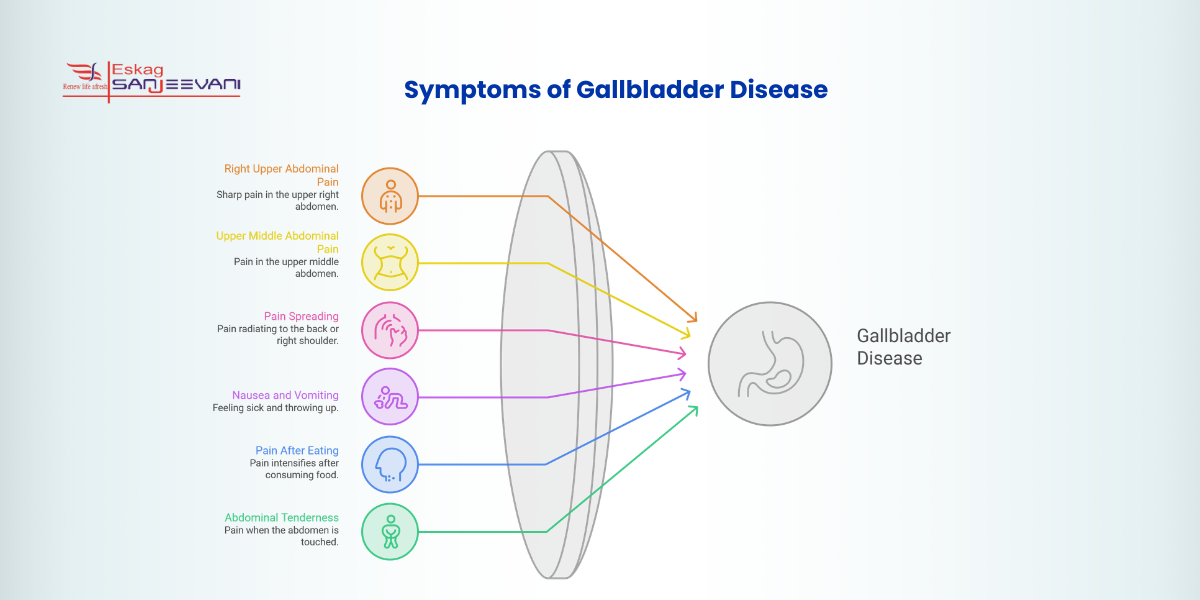
- Right upper abdominal pain: Pain commonly occurs beneath the right ribs. It can be severe and steady rather than coming in short spasms.
- Upper middle abdominal pain: Some patients feel the pain in the epigastric (between the ribs above the stomach) area.
- Pain spreading to the back or right shoulder: Gallbladder irritation can cause referred pain towards the back or right shoulder blade.
- Nausea and vomiting: Nausea frequently accompanies biliary pain.
- Pain after eating: Episodes can occur after meals because eating stimulates gallbladder contraction.
- Abdominal tenderness: Continued inflammation often makes the right upper abdomen tender during examination.
- Fever or chills: These are more concerning for inflammation or infection and are not typical of uncomplicated biliary colic.
- Jaundice: Yellowing of the eyes or skin can indicate that a stone has entered the common bile duct and obstructed bile flow.
Gallbladder Attack Causes: Why Does It Happen?
The most common gallbladder attack causes are related to gallstones. Gallstones develop when components of bile form solid particles inside the gallbladder.
India has a significant regional variation in gallstone disease. A recent community-based study involving 28,395 adults found a gallstone prevalence of 10.8% in Mullanpur and 10.7% in Kamrup, compared with 0.3% in Barshi. The study also found a higher prevalence among women in the high-risk regions [1].
The main conditions associated with a gallbladder attack include:
- Gallstones blocking the cystic duct: A stone lodged at the gallbladder outlet causes biliary pain.
- Acute cholecystitis: Prolonged obstruction causes inflammation of the gallbladder.
- Common bile duct stones: A stone leaving the gallbladder and enter the common bile duct, resulting in jaundice, abnormal liver tests or cholangitis.
- Gallstone pancreatitis: A stone obstructing the area where the bile and pancreatic ducts drain. This can trigger acute pancreatitis and usually causes significant upper abdominal pain.
- Acalculous cholecystitis: Gallbladder inflammation can occasionally occur without visible gallstones. It is more common in seriously ill or hospitalised patients and requires prompt assessment.
- Gallbladder dysfunction: Some patients develop biliary-type symptoms without obvious stones. Doctors may consider gallbladder emptying disorders after other causes have been assessed.
The symptoms and possible causes can suggest a gallbladder problem, but they cannot confirm the diagnosis on their own. The next step is to use blood tests and imaging to identify the cause and check for complications.
How Is a Gallbladder Attack Diagnosed?
Doctors diagnose gallbladder problems by combining the patient’s symptoms with physical examination, blood tests and imaging. No single blood test confirms every type of gallbladder disease.
Blood Tests
Blood investigations can help identify inflammation, infection, bile duct obstruction or an alternative cause of abdominal pain. Commonly considered tests include:
- Complete blood count: A raised white blood cell count can support an inflammatory or infectious process.
- CRP: C-reactive protein provides information about systemic inflammation and can support assessment of acute cholecystitis.
- Liver function tests: Bilirubin, ALT, AST and ALP can help identify liver abnormalities or possible bile duct obstruction.
- Pancreatic enzymes: Lipase, with or without amylase, may be tested when gallstone pancreatitis is suspected.
Ultrasound
An abdominal ultrasound is generally the first Gallbladder test for suspected gallstones or acute cholecystitis. It does not use ionising radiation and can identify gallstones, gallbladder wall changes, distension and fluid around the gallbladder.
Ultrasound can also provide information about the bile ducts. However, a normal or inconclusive ultrasound does not always end the investigation when clinical suspicion remains high.
MRCP, CT and Other Tests
Additional imaging depends on what the initial evaluation shows.
- MRCP provides detailed images of the bile ducts and can help identify suspected common bile duct stones without inserting an endoscope. CT can be useful when complications or other causes of abdominal pain need evaluation.
- If a common bile duct stone is strongly suspected or confirmed, doctors may consider ERCP because it can remove the obstructing stone. Unlike ultrasound or MRCP, ERCP is primarily a therapeutic procedure rather than a routine first-line diagnostic test.
Gallbladder Treatment: What Happens After Diagnosis?
Gallbladder treatment depends on the diagnosis, not the presence of gallstones alone. Patients with gallstones that have never caused symptoms often do not need surgery. Observation may be appropriate when stones are discovered incidentally, and there are no related symptoms or complications.
When gallstones cause recurrent biliary pain, treatment may involve laparoscopic cholecystectomy. This procedure removes the gallbladder through small abdominal incisions. It is commonly used for patients with symptomatic gallstone disease who are suitable for surgery.
For acute cholecystitis, early laparoscopic cholecystectomy is preferred when the patient’s condition allows surgery. The decision depends on the severity of inflammation, other medical conditions, surgical risk and available expertise. Treatment can differ when a stone has moved into the common bile duct.
A confirmed common bile duct stone may require duct clearance using ERCP, surgical exploration or another appropriate technique. SAGES notes that common bile duct stones can cause biliary obstruction, cholangitis and pancreatitis and require treatment based on the patient’s clinical risk and imaging findings.
How Can You Reduce the Risk of Another Gallbladder Attack?
Dietary changes can help some patients manage symptoms, but they do not dissolve established gallstones in most cases. A patient who is experiencing a symptomatic episode should therefore not rely only on dietary restriction.
While you wait for medical assessment, consider the following:
- Identify foods that trigger symptoms: Fat-rich meals worsen symptoms in some people. Reducing foods that consistently trigger pain may help while awaiting assessment.
- Avoid crash diets: Rapid weight loss often increases the risk of gallstone formation.
- Maintain regular meals: Long periods without food affect normal gallbladder emptying.
- Do not self-medicate: Do not take antibiotics, pain medicines, or supplements specifically to treat gallstones without medical advice.
- Complete the recommended evaluation: If an ultrasound identifies symptomatic gallstones, follow-up is important even if the pain has disappeared.
A low-fat diet may reduce symptoms for some patients, but it should not replace treatment when complications are present. Fever, jaundice, repeated vomiting or prolonged abdominal pain requires medical assessment rather than dietary management at home.
Gallbladder Test and Treatment at Eskag Sanjeevani Hospitals
When nausea and right-sided abdominal pain recur, identifying the cause is more important than treating the pain alone. Gallstones, acute cholecystitis, common bile duct stones and pancreatitis can require different investigations and treatment.
At Eskag Sanjeevani Hospitals, patients can access specialist evaluation through the Gastroenterology department and hospital-based diagnostic facilities. A doctor can assess the pain pattern, review blood investigations and determine whether an ultrasound or another Gallbladder test is appropriate.
The hospital also provides access to ERCP services when bile duct evaluation or treatment is indicated.
For patients with confirmed gallstone disease, the next step depends on whether the stones are asymptomatic, causing recurrent biliary pain, producing acute cholecystitis or obstructing the common bile duct. This assessment helps determine whether observation, medication, endoscopic treatment or surgery is appropriate.
Final Thoughts
A gallbladder attack should not be dismissed as acidity when right-sided abdominal pain keeps returning or lasts for several hours. Vomiting, nausea, fever or jaundice require prompt medical assessment.
At Eskag Sanjeevani Hospitals, patients can access gastroenterology consultation, diagnostic evaluation and ERCP services when bile duct treatment is required. An appropriate Gallbladder test can help identify the cause and guide treatment. If gallstones are confirmed, discuss the most suitable gallbladder treatment with your gastroenterologist or surgical specialist rather than relying only on dietary changes.

Microbiologist with over 2 years of experience in medical writing, specialising in evidence-based healthcare content.

Clinical experience in diagnosis, treatment, and evidence-based patient care across a range of conditions.
References
- Mohite SU, Panse N, Kannan R, Tapkire R, Pradhan S, Gulia A, Mirgane K, Dhalgade S, Sangale V, Khandagale S, Kadir Laskar A, Das U, Dutta J, Chakraborty T, Pathak R, Krishnatreya M, Pahwa V, Kotkar L, Manjrekar A, Kadam K, George GS, Moirangthem R, Bharmal K, Doibale P, Ostwal V, Shrikhande SV, Kulkarni S, Shetty N, Dikshit R, Chaturvedi P, Mhatre S. Prevalence of gallstone disease in India: insights from a community-based cross-sectional study. BMJ Public Health. 2026 Feb 5;4(1):e004015.
The most common symptom is sudden, steady pain in the upper-right or upper-middle abdomen. The pain can last several hours and may occur with nausea or vomiting.
Yes. Upper abdominal pain from gallstones can sometimes resemble indigestion or other digestive problems. Recurrent or severe pain needs medical assessment rather than repeated self-treatment for acidity.
Abdominal ultrasound is generally the first imaging test used to look for gallstones and assess the gallbladder. Additional tests may be required depending on the suspected problem.
No. Silent gallstones often do not require treatment. Symptomatic or complicated gallstone disease may require treatment, commonly laparoscopic gallbladder removal.
Most people can return to a normal diet after recovery. Some patients experience temporary softer or more frequent stools after surgery. Your doctor can advise on diet during recovery.