

 Medically Reviewed
10 Hormonal Symptoms of PCOS in Women in India
Approximately 1 in 5 Indian women of reproductive age experience polycystic ovary syndrome (PCOS), making it the most common endocrine disorder affecting women in the country [1]. Beyond the visible physical changes, PCOS is fundamentally a hormonal condition that disrupts the delicate balance of your body’s chemical messengers. Understanding the hormonal symptoms for PCOS and treatment options can help you recognise the condition early and take control of your health.
This guide explores the ten key hormonal manifestations of PCOS in women, particularly those Indian women should know about. This will help you to seek timely medical intervention and make informed decisions about your well-being.
Key Takeaways
- PCOS affects nearly 1 in 5 Indian women, with hormonal imbalances being the root cause of most symptoms.
- Irregular periods, excess facial and body hair, and acne are among the most visible signs of elevated male hormones in PCOS.
- Insulin resistance, present in up to 70% of women with PCOS, can contribute to weight gain, impaired blood sugar control, type 2 diabetes and increased androgen levels.
Quick answer: PCOS can cause irregular periods, excess hair growth, acne, hair loss and insulin resistance due to hormonal and metabolic changes.
Understanding PCOS: The Hormonal Foundation
PCOS is not simply a reproductive disorder but a complex endocrine condition characterised by three key hormonal features: elevated androgens (male hormones), irregular ovulation, and polycystic ovarian morphology [2]. The hormonal imbalance in PCOS primarily involves three mechanisms:
- Elevated luteinizing hormone (LH) that overstimulates androgen production in the ovaries.
- Insulin resistance that exacerbates androgen synthesis and suppresses sex hormone-binding globulin (SHBG).
- Dysregulation of the hypothalamic-pituitary-ovarian axis, disrupting normal menstrual cycling.
These hormonal disruptions create symptoms that extend far beyond reproductive health, affecting metabolism, skin, hair growth, and mental well-being. Recognising the signs of PCOS early can help you seek evaluation before symptoms begin affecting metabolic health.
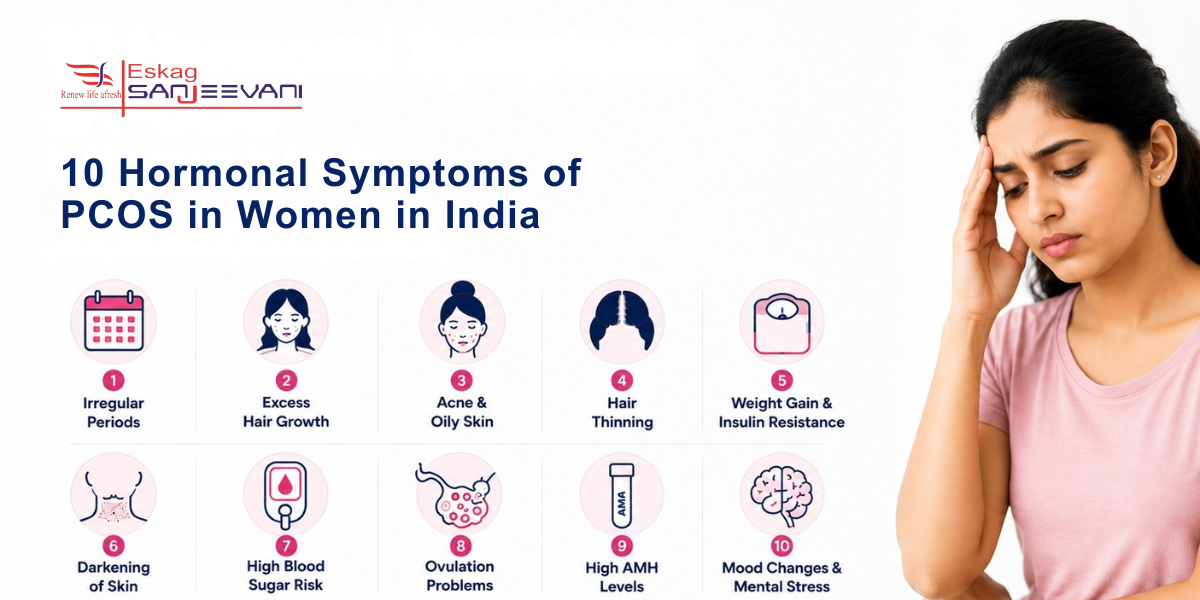
1. Irregular or Absent Menstrual Periods
Irregular periods are among the most common reproductive features of PCOS. Hormonal changes can disrupt ovulation, causing fewer or widely spaced periods. Irregular periods for multiple months should be evaluated because prolonged periods without ovulation can increase the risk of endometrial thickening
Common patterns include:
- Fewer than 8 periods in a year
- Cycles consistently longer than 35 days
- Periods stopping for several months without another clear cause
2. Elevated Androgens and Excess Hair Growth
PCOS can increase androgen activity, leading to hirsutism, which means coarse, dark hair growth in a male-pattern distribution.
| Feature | What you may notice |
| Facial hair | Coarse hair on the chin, upper lip or jawline |
| Body hair | Increased hair on the chest or abdomen |
| Acne | Persistent or recurrent hormonal acne |
| Scalp hair | Gradual thinning or widening of the hair part |
Hirsutism is an important clinical sign of androgen excess, particularly when it occurs with irregular periods. Your doctor may recommend hormone testing to determine the cause.
3. Severe Acne and Oily Skin
Hormonal changes in PCOS can increase androgen activity and stimulate sebum production, contributing to persistent acne. Acne alone does not confirm PCOS, but it becomes more relevant when it occurs with other hormonal symptoms.
Look for:
- Repeated adult acne
- Frequent flare-ups despite treatment
- Acne affecting the face, chest or upper back
- Oily skin occurring with irregular periods or excess hair growth
4. Female Pattern Hair Loss
PCOS-related androgen excess can contribute to gradual thinning of scalp hair, particularly around the crown and along the central parting.
You may notice:
- A widening hair part
- Reduced hair density around the crown
- Increased visibility of the scalp
- Gradual rather than sudden hair thinning
Also note: Hair loss can also occur with thyroid disorders, iron deficiency, nutritional deficiencies, and other hormonal conditions.
5. Insulin Resistance and Weight Changes
Insulin resistance is closely linked with PCOS and contributes to its metabolic effects. It increases insulin levels, which in turn can promote androgen production and worsen hormonal imbalance.
The metabolic picture can include:
| Finding | Why it matters |
| Increased waist circumference | Suggests central fat accumulation |
| Weight gain | Common but not present in every woman with PCOS |
| Prediabetes | Indicates impaired glucose regulation |
| Type 2 diabetes | Risk is higher with PCOS |
| Abnormal cholesterol levels | Can increase long-term cardiovascular risk |
Weight gain is not necessary for PCOS. Women with a healthy body weight can also have insulin resistance and metabolic complications.
6. Darkening of Skin
Acanthosis nigricans causes darker, thicker, velvety skin, commonly around the neck, armpits, or groin. It is often associated with insulin resistance. Look for:
- Darkening at the back of the neck
- Thick or velvety skin texture
- Similar changes in the armpits or groin
- Skin changes occurring with weight gain or irregular periods
7. Abnormal Blood Sugar and Increased Diabetes Risk
Women with PCOS have a higher risk of impaired glucose regulation and type 2 diabetes. Indian studies have reported diabetes and impaired glucose tolerance among women with PCOS [1].
The metabolic assessment includes:
- Fasting blood glucose
- HbA1c
- Oral glucose tolerance testing
- Lipid profile, based on individual risk
Also read: How to Read CBC, Blood Glucose, Lipid Profile Reports
8. Hormonal Changes Affecting Ovulation
PCOS affects the normal hormonal regulation of ovulation. Increased androgen activity and altered ovarian function can interfere with ovarian follicle development and egg release.
This can lead to:
- Irregular or absent ovulation
- Infrequent periods
- Challenges with conception
An abnormal LH-to-FSH ratio can occur in PCOS, but it is not required to diagnose the condition.
9. Elevated Anti-Müllerian Hormone (AMH)
Anti-Müllerian hormone is produced by ovarian follicles and reflects the number of small developing follicles. Women with PCOS often have higher AMH levels because of the increased number of small follicles. However, AMH should be interpreted carefully:
- A raised AMH can support assessment of polycystic ovarian morphology in adults.
- AMH alone cannot diagnose PCOS.
- AMH is not required when the clinical and hormonal findings already establish the diagnosis.
- Age, body weight, hormonal contraception and the laboratory method can affect the result.
10. Mental Health and Quality-of-Life Changes
PCOS can affect mental health as well as reproductive and metabolic health. Studies have reported anxiety in 28-39% and depression in 11-25% of women with PCOS. [4]
Common concerns include:
- Always low mood
- Anxiety or excessive worry
- Distress about weight, acne or hair changes
- Reduced confidence
- Stress related to menstrual problems
These symptoms should be treated as part of overall PCOS care rather than dismissed as a personal response to the condition.
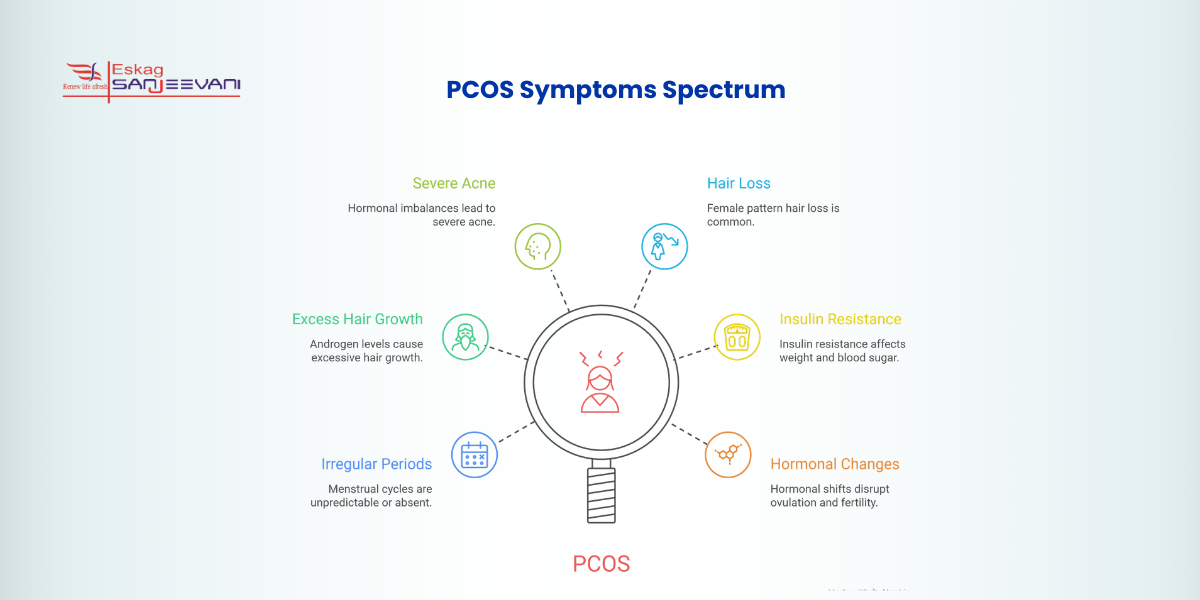
PCOS Symptoms at a Glance:
|
No. |
Symptoms | Common Signs |
| 1 | Irregular periods | Long, missed or absent periods |
| 2 | Excess androgens | Excess facial and body hair |
| 3 | Acne | Persistent adult or hormonal acne |
| 4 | Hair loss | Gradual scalp hair thinning |
| 5 | Insulin resistance | Weight gain and blood sugar changes |
| 6 | Acanthosis nigricans | Dark, thick, velvety skin |
| 7 | Diabetes risk | Prediabetes or abnormal blood glucose |
| 8 | Ovulation problems | Irregular ovulation and other problems |
| 9 | High AMH | Increased number of small follicles |
| 10 | Mental health changes |
Anxiety, low mood and body-image concerns |
Best Fruits for PCOS Management
While fruits contain natural sugars, certain fruits have a lower glycemic index and provide valuable nutrients as part of a balanced PCOS diet. Berries, including blackberries and strawberries, are excellent choices due to their low glycemic index, high fibre content, and anti-inflammatory properties.
Other beneficial fruits for PCOS include:
- Apples (with skin) for fibre and polyphenols that support metabolic health
- Citrus fruits like oranges and lemons for vitamin C and antioxidants
- Avocados (technically a fruit) for healthy fats that support hormone production
- Pomegranates for their anti-inflammatory and antioxidant properties
Fruits to limit or consume in moderation include high-glycemic options like mangoes, grapes, and dried fruits, which can cause rapid blood sugar spikes.
How to Cure PCOS Permanently? Is It Possible?
While PCOS cannot be “cured” in the traditional sense, it can be effectively managed to minimise symptoms and prevent long-term complications. The goal of PCOS treatment is not to eliminate the condition but to restore hormonal balance, improve insulin sensitivity, and support your overall health and quality of life.
The most effective approach to managing PCOS involves a combination of strategies:
- Lifestyle modifications including diet, exercise, and stress management
- Hormonal medications to regulate menstrual cycles and reduce androgen levels
- Insulin-sensitising medications to improve metabolic function
- Mental health support to address the psychological impacts of PCOS
- Regular monitoring and adjustment of treatment based on your response
For Indian women, understanding that PCOS management is a long-term commitment. Many women find that their PCOS symptoms improve significantly within 3-6 months of starting appropriate treatment, with continued improvement over time.
PCOS Exercise: Building an Effective Fitness Routine
Physical activity is a cornerstone of PCOS management, with research showing that exercise improves insulin sensitivity, reduces androgen levels, and supports weight management independent of weight loss [2].
Recommended exercise guidelines for PCOS include:
- At least 150 minutes of moderate-intensity aerobic activity per week (such as brisk walking, cycling, or swimming)
- Resistance training 2-3 times per week to build muscle mass and improve insulin sensitivity
- Flexibility and balance work such as yoga or Pilates to reduce stress and support overall fitness
For Indian women, incorporating traditional forms of exercise can make fitness more enjoyable and sustainable. Yoga, a practice with deep roots in Indian culture, offers particular benefits for PCOS by reducing stress, improving insulin sensitivity, and supporting hormonal balance.
Comprehensive PCOS Care at Eskag Sanjeevani Hospitals
Eskag Sanjeevani Hospitals is committed to provide comprehensive, patient-centred care for women with PCOS. Our multidisciplinary team includes experienced gynaecologists, endocrinologists, nutritionists, and mental health professionals who work collaboratively.
Our PCOS services include:
- Advanced hormonal and metabolic testing through our 24/7 NABL-accredited pathology laboratory.
- Ultrasound imaging to evaluate ovarian morphology.
- Counselling and treatment for women seeking to conceive.
- Nutritional guidance tailored to Indian dietary preferences and cultural context.
At Eskag Sanjeevani Hospitals, we understand that PCOS affects every aspect of a woman’s life.
Final Thoughts
If you are experiencing irregular periods, excess hair growth, acne, or other symptoms suggestive of PCOS, seeking medical evaluation is the first step. Do not dismiss these symptoms as normal or inevitable; they are signs of hormonal imbalance that responds well to treatment. Visit our NABH-accredited Eskag Sanjeevani Hospitals to learn more about our comprehensive PCOS care and consult with the best doctor for PCOS today.

Microbiologist with over 2 years of experience in medical writing, specialising in evidence-based healthcare content.

Clinical experience in diagnosis, treatment, and evidence-based patient care across a range of conditions.
References
- Multiple Contributors, Jama Network. Prevalence, Phenotypes, and Comorbidities of Polycystic Ovary Syndrome Among Indian Women. JAMA Network Open, [online] 7(10), p.e2440583.
- Singh S, Pal N, Shubham S, Sarma DK, Verma V, Marotta F, Kumar M. Polycystic Ovary Syndrome: Etiology, Current Management, and Future Therapeutics. J Clin Med. 2023 Feb 11;12(4):1454.
- Eunice Kennedy Shriver National Institute of Child Health and Human Development – NICHD. (n.d.). [online]
- Dewani D, Karwade P, Mahajan KS. The Invisible Struggle: The Psychosocial Aspects of Polycystic Ovary Syndrome. Cureus. 2023 Dec 30;15(12):e51321.
PCOS diagnosis requires a combination of clinical evaluation, hormonal blood tests, and ultrasound imaging. No single test can definitively diagnose PCOS; instead, doctors use the Rotterdam criteria, which require two of three findings: elevated androgens, irregular ovulation, and polycystic ovarian morphology on ultrasound.
PCOS is a hormonal and metabolic disorder with genetic and environmental factors, not a consequence of weight. However, weight gain can worsen PCOS symptoms, and weight loss can improve them. Women of all body sizes can have PCOS, though obesity may increase symptom severity.
Lifestyle modifications including diet, exercise, and stress management can significantly improve PCOS symptoms for many women. However, some women require hormonal medications to regulate periods and reduce androgen levels.
PCOS has a genetic component, and daughters of women with PCOS have an increased risk of developing the condition. However, not all daughters will develop PCOS. Screening is recommended if your daughter develops symptoms like irregular periods or excess hair growth, rather than routine screening of asymptomatic individuals.