

Blood Test for Weight Loss: 5 Reasons You May Need One
If you are losing weight without changing your diet or exercise, a blood test for weight loss can help your doctor look for possible underlying causes. Some are temporary, while others need medical attention. A blood test for weight loss can help doctors look for conditions such as anaemia, diabetes, thyroid disorders, infection, inflammation, and liver or kidney problems. If weight loss continues, or if it occurs with unexpected fatigue, a medical assessment helps identify the cause and decide whether further tests are needed.
This article explains the 5 vital blood tests and how to address them.
Key Takeaways:
- Blood tests after unexplained weight loss check for diabetes, thyroid disorders, anaemia, inflammation, and liver or kidney problems.
- WHO estimates that 77 million adults in India have type 2 diabetes, while nearly 25 million have prediabetes. More than 50% of people with diabetes are estimated to be unaware of their condition.
- NFHS-5 reported anaemia in 53% of non-pregnant women aged 15-49 years in India, making anaemia an important consideration when unexplained weight loss occurs with persistent fatigue.
- Why Do You Need a Blood Test for Weight Loss?
- 5 Reasons For Blood Tests After Unexplained Weight Loss
- Which Blood Tests Are Done for Unexplained Weight Loss?
- Unexpected Weight Loss and Fatigue: Which Tests May Help?
- When Should You See a Doctor for Unexplained Weight Loss?
- Blood Test Lab at Eskag Sanjeevani Hospitals
Why Do You Need a Blood Test for Weight Loss?
Body weight often varies due to diet, exercise, stress, or illness. However, continued weight loss without trying to lose weight should not be ignored. A doctor orders blood tests when weight loss is:
- Weight loss without a change in diet or exercise: A blood test helps look for medical causes when you are losing weight despite eating and exercising as usual.
- Weight loss with persistent fatigue: Feeling unusually tired along with weight loss may occur with anaemia, thyroid problems, diabetes, infection or other conditions. A CBC and other targeted tests may help identify abnormalities.
- Increased thirst or frequent urination: These symptoms, with unexplained weight loss, occur when blood glucose is very high. Blood glucose and HbA1c can help check for diabetes.
- Weight loss with sweating, tremors or a fast heartbeat: These symptoms occur with an overactive thyroid.
- Weight loss with fever or night sweats: Prolonged fever or night sweats often point towards an infection or inflammatory condition.
- Weight loss with digestive symptoms: Persistent diarrhoea, vomiting, abdominal discomfort or poor appetite may affect nutrition and can occur with digestive or other systemic conditions.
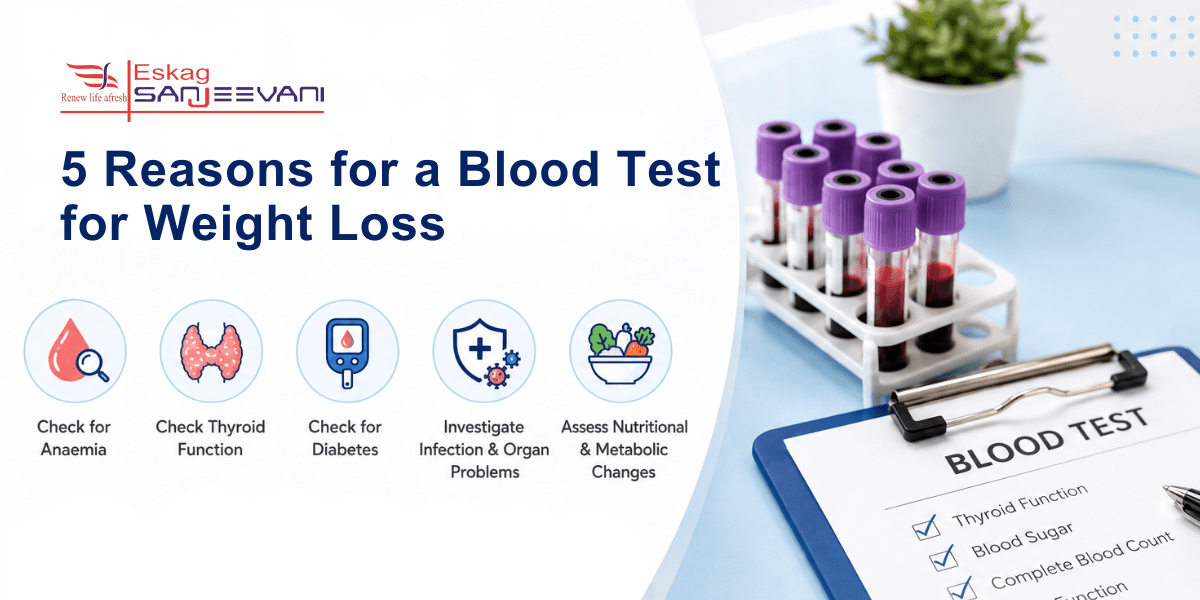
5 Reasons For Blood Tests After Unexplained Weight Loss
No single blood test explains every case of weight loss. The tests selected depend on the symptoms, medical history, and suspected cause.
1. To Check for Anaemia and Blood Abnormalities
A complete blood count (CBC) checks haemoglobin and different types of blood cells. It helps identify anaemia and other blood abnormalities associated with fatigue, weakness, dizziness or reduced exercise tolerance.
Key insight: Anaemia is common in India. NFHS-5 reported anaemia in 53% of non-pregnant women aged 15-49 years and 65.3% of children aged 6-59 months [2].
2. To Check Thyroid Function
An overactive thyroid increases the body’s metabolic activity and causes weight loss.
- An overactive thyroid (hyperthyroidism) increases metabolism and causes unintentional weight loss. It also causes sweating, tremors, a fast heartbeat, and increased bowel movements.
- An underactive thyroid (hypothyroidism) more commonly causes weight gain, but some patients experience changes in appetite or body weight that need assessment.
- A TSH test is commonly used as the initial test when thyroid disease is suspected.
Key insight: TSH is commonly used as an initial thyroid-function test when thyroid disease is suspected. The 2025 Endocrine Society of India guideline lists TSH as the first diagnostic test when thyroid assessment is clinically indicated [2].
3. To Check for Diabetes and Blood Glucose
Diabetes can cause weight loss, particularly when blood glucose is significantly elevated. Possible symptoms include:
- Increased thirst
- Frequent urination
- Increased hunger
- Tiredness
- Blurred vision
Fact: This is particularly relevant in India. WHO estimates that 77 million people over 18 years have type 2 diabetes, while nearly 25 million adults have prediabetes. More than 50% of people are estimated to be unaware of their diabetic status [1].
Depending on your symptoms, your doctor may recommend:
- Fasting blood glucose
- Post-meal blood glucose
- HbA1c
- Oral glucose tolerance testing in selected cases
Explore: Best Endocrinology & Diabetology Treatment at Eskag Sanjeevani Hospitals
4. To Investigate Infection, Inflammation or Organ Problems
Weight loss accompanied by fever, fatigue, digestive symptoms, or other systemic symptoms requires assessment for underlying disease.
Depending on the presentation, tests can include:
- CBC
- CRP
- ESR
- Liver function tests
- Kidney function tests
- Electrolytes
5. To Assess Nutritional and Metabolic Changes
Reduced food intake, poor absorption, and prolonged illness can lead to nutritional deficiencies during unexplained weight loss.
Depending on the symptoms and clinical findings, testing can include:
- Ferritin and iron studies
- Vitamin B12, when clinically indicated
- Albumin or other protein measurements
- Electrolytes
- Other targeted nutritional or metabolic tests
Which Blood Tests Are Done for Unexplained Weight Loss?
Indian endocrine guidance recommends that investigations be customised to the individual patient, rather than routinely performing every available test. Hence, there is no fixed panel that every person with unexplained weight loss needs.
The following table provides the most commonly used blood tests for unexplained weight loss:
| Blood test | What it may help assess |
| Complete blood count | Anaemia and blood-cell abnormalities |
| Blood glucose / HbA1c | Diabetes and blood glucose levels |
| TSH / thyroid tests | Thyroid disorders |
| Kidney function tests | Kidney function and electrolyte changes |
| Liver function tests | Liver-related abnormalities |
| CRP / ESR | Inflammation |
| Ferritin/iron studies | Iron deficiency |
Your symptoms help your doctor decide which tests are most relevant. If weight loss occurs with fatigue or other symptoms, targeted blood tests may help identify the underlying problem.
Unexpected Weight Loss and Fatigue: Which Tests May Help?
Unexpected weight loss and fatigue can occur together for several reasons. Your doctor considers different tests based on the combination of symptoms, as stated below.
| Symptoms | Tests that may be considered |
| Weight loss + fatigue | CBC, thyroid function, and other tests based on examination |
| Weight loss + increased thirst | Blood glucose and HbA1c |
| Weight loss + sweating or tremors | TSH and other thyroid tests |
| Weight loss + fever | CBC, CRP and infection-related tests |
| Weight loss + abdominal symptoms | Liver tests and other targeted tests |
| Weight loss + reduced appetite | CBC, metabolic tests and other investigations |
When Should You See a Doctor for Unexplained Weight Loss?
Understanding the reasons for sudden weight loss is important when it occurs without a planned change in diet or physical activity. Seek medical assessment when the weight loss is constant, rapid, or accompanied by other significant symptoms.
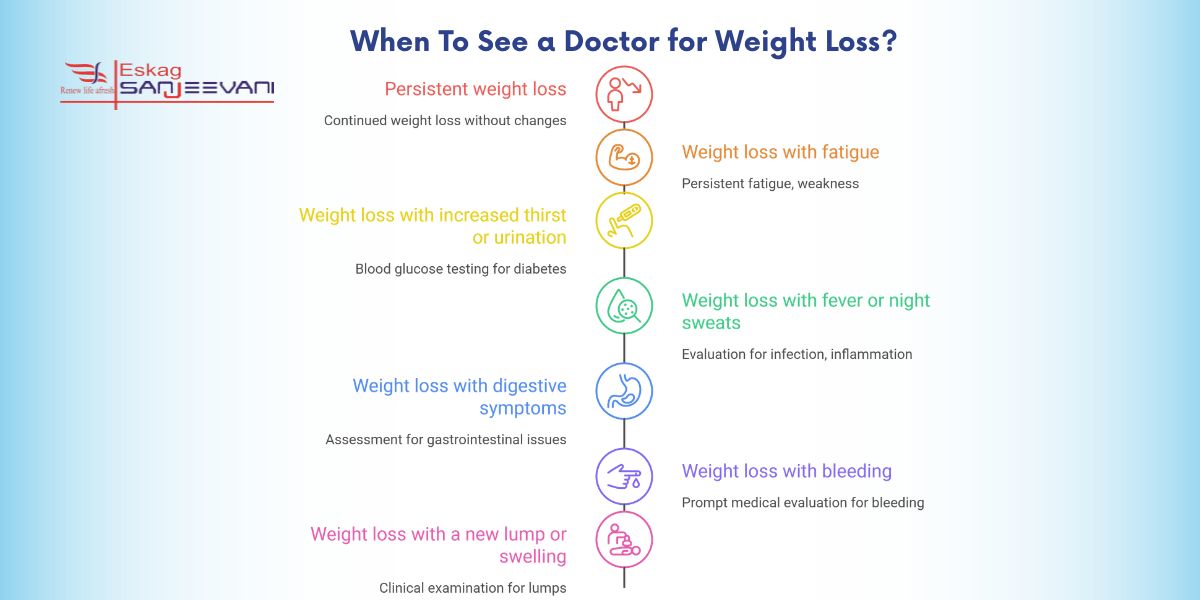
- Persistent weight loss: Continued weight loss without changes in diet or physical activity requires medical evaluation.
- Weight loss with fatigue: Persistent fatigue, weakness or reduced exercise tolerance warrants assessment for anaemia, diabetes, thyroid disorders and other underlying conditions.
- Weight loss with increased thirst or urination: These symptoms require blood glucose testing to assess for diabetes.
- Weight loss with fever or night sweats: Persistent fever or night sweats requires evaluation for infection, inflammation and other systemic conditions.
- Weight loss with digestive symptoms: Persistent diarrhoea, vomiting, abdominal pain or difficulty swallowing requires assessment for gastrointestinal and nutritional causes.
- Weight loss with bleeding: Blood in the stool, black stools or blood in the urine requires prompt medical evaluation.
- Weight loss with a new lump or swelling: A new or persistent lump requires clinical examination and further investigation when indicated.
- Rapid or significant weight loss: Marked unintentional weight loss over a short period requires medical assessment to establish the underlying cause.
Blood Test Lab at Eskag Sanjeevani Hospitals
If you are searching for a blood test lab, getting the test is only one part of the evaluation. The results need to be assessed alongside your symptoms and medical history. At Eskag Sanjeevani Hospitals, patients can access medical consultation and hospital-based diagnostic services. A doctor can assess unexplained weight loss, recommend relevant blood tests, and decide whether further evaluation is needed.
You can explore the Medicine department and doctor directory to find a suitable doctor. If you are losing weight unintentionally, do not start supplements or weight-gain medicines on your own.
Final Thoughts
Unplanned weight loss is not always a sign of a serious illness, but do not ignore continuous or significant weight loss. If you are losing weight without changing your diet or exercise, consult a doctor to identify the possible cause. Your doctor recommends blood tests such as a CBC, blood glucose or HbA1c, TSH, liver and kidney function tests, or iron studies, depending on your symptoms and medical history.
References
- WHO (n.d.). Diabetes – India. [online].
- Madhu SV, Kapoor N, Das S, Raizada N, Kalra S. ESI Clinical Practice Guidelines for the Evaluation and Management of Obesity in India – An Update (2025). Indian J Endocrinol Metab.
There is no single best test. Depending on your symptoms, your doctor may recommend a CBC, blood glucose, HbA1c, thyroid tests, kidney function, liver function, and other targeted tests.
Blood tests can identify abnormalities associated with conditions such as anaemia, diabetes, thyroid disorders, inflammation and liver or kidney problems. Additional tests may still be needed.
Yes. An overactive thyroid can cause weight loss along with sweating, tremors, a fast heartbeat, feeling unusually warm and increased bowel movements.
Yes. Significant high blood glucose can cause weight loss. Increased thirst, frequent urination, tiredness, and blurred vision may occur at the same time.
If the weight loss continues without an intentional change in diet or exercise, discuss it with a doctor. Your doctor can decide whether testing is appropriate.
Weight loss with fatigue can occur with anaemia, thyroid disorders, diabetes, infection, inflammation and other conditions. A medical assessment can help determine which tests are relevant.
Not necessarily. The appropriate tests depend on your symptoms, medical history and examination. Ordering every available test is not recommended simply because you are losing weight.