
 Medically Reviewed
Endoscopy vs Colonoscopy: What's the Difference?
Digestive health problems are more common in India than many people realise. According to data from India’s National Cancer Registry Programme, the annual incidence rate of colon cancer in Indian men stands at 5.36 per 1,00,000 [1]. Yet, many people delay getting tested simply because they do not know which procedure they need. If your doctor has mentioned an endoscopy scan or a colonoscopy procedure, understanding the difference between endoscopy and colonoscopy is the first step towards making an informed decision about your health.
Key Takeaways
- An endoscopy examines the upper digestive tract. This includes the oesophagus, stomach, and small intestine. On the other hand, a colonoscopy procedure examines the large intestine and rectum for polyps, cancer, and inflammation.
- Both endoscopy vs colonoscopy procedures use a flexible tube with a camera, but differ in entry point, preparation, duration, and the conditions they diagnose.
- Early screening through a colonoscopy surgery or an endoscopy scan can detect gastrointestinal conditions before they progress, significantly improving treatment outcomes.
Quick Answer: An endoscopy checks your upper gut through the mouth; a colonoscopy checks your lower gut through the rectum.
What Is an Endoscopy and How Does the Endoscopy Process Work?
An endoscopy is a procedure in which a healthcare provider places a long, thin, flexible tube called an endoscope inside your body to examine internal organs up close. The tube carries a light and a small camera at its tip. It transmits live images onto a screen your doctor watches in real time.
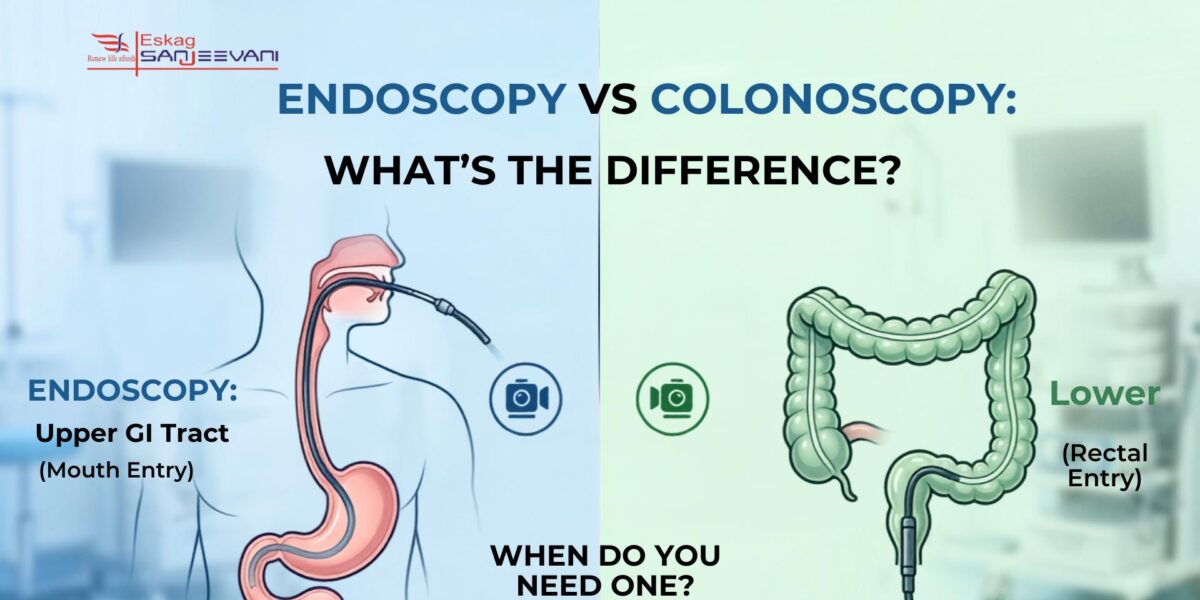
The endoscopy process for the upper digestive tract, also called an upper endoscopy or esophagogastroduodenoscopy (EGD), involves the scope entering through your mouth [2]. It then travels down the throat, through the oesophagus, into the stomach, and reaches the first part of the small intestine, known as the duodenum.
Beyond the upper GI tract, endoscopy is a broad term covering many types of internal examinations. These include bronchoscopy for the lungs, cystoscopy for the bladder, laparoscopy for the abdominal cavity, and hysteroscopy for the uterus. The name of each procedure usually reflects the organ being examined.
What makes the endoscopy scan particularly valuable is that it is not limited to diagnosis. During the same procedure, your doctor can:
- Collect a tissue sample (biopsy) to test for cancer or infection in the digestive tract lining.
- Remove small abnormal growths or polyps found in the oesophagus or stomach area.
- Stop internal bleeding from a stomach ulcer using tools passed through the scope.
- Widen a narrowed area of the oesophagus that is causing swallowing difficulties.
- Drain or inject fluid into targeted areas without the need for open surgery.
Preparing for an endoscopy scan is straightforward. You will need to fast for six to eight hours before the procedure. Your doctor may also ask you to stop blood-thinning medications temporarily. The endoscopy process typically takes between 30 minutes and two hours, depending on the type [2]. Most people go home the same day. Side effects such as a sore throat or nausea usually settle within two days.
Also read: Why Eskag Sanjeevani is Among the Best Hospitals for Gastroenterology in Kolkata?
What Is a Colonoscopy and What Does the Colonoscopy Procedure Involve?
A colonoscopy is a procedure that is used to examine the inside of your entire large intestine, or colon. It uses a long, flexible tube called a colonoscope, which has a light and a small camera at one end. Unlike the endoscopy process, this tube enters through your rectum rather than your mouth.
The large intestine is roughly five feet long in adults and has four sections: the ascending colon on the right, the transverse colon across the middle, the descending colon on the left, and the sigmoid colon leading to the rectum. The colonoscope travels through all these sections, giving your doctor a complete view of the colon lining.
During the colonoscopy procedure, your doctor may also:
- Inject air into the bowel to expand the colon walls and make the lining easier to see.
- Use a water jet to clean the colon lining for a clearer view during the examination.
- Remove polyps (abnormal growths) found during the procedure using surgical tools.
- Take tissue biopsies from suspicious areas of the colon or rectum.
- Treat sources of bleeding found in the lower digestive tract during the same session.
What to expect during the colonoscopy procedure: You will be asked to lie on your left side with your knees drawn towards your chest. An intravenous sedative will be given before the scope is inserted. You may feel mild pressure or cramping, but sedation keeps discomfort minimal. Most people are awake but deeply relaxed throughout. The colonoscopy procedure usually takes 30 to 60 minutes [3].
Preparation for a colonoscopy surgery is more involved. You will follow a clear liquid diet for at least 24 hours before the procedure. A bowel preparation solution taken the night before clears stool from the colon completely. This step is critical. Without a clean colon, your doctor cannot see the lining clearly, and the procedure may need to be repeated [3].
After the colonoscopy procedure, it is normal to feel bloated and pass gas. You should avoid alcohol for at least 24 hours and arrange for someone to drive you home.
Endoscopy vs Colonoscopy: A Direct Comparison
The table below summarises the key differences between endoscopy and colonoscopy across the most important clinical factors.
| Factor | Endoscopy (Upper GI) | Colonoscopy |
| Area examined | Oesophagus, stomach, duodenum | Entire colon and rectum |
| Entry point | Through the mouth | Through the rectum |
| Scope used | Endoscope | Colonoscope (longer tube) |
| Preparation | Fast for 6–8 hours | Bowel prep + clear liquid diet for 24 hours |
| Duration | 30 minutes to 2 hours | 30-60 minutes |
| Sedation | Moderate sedation or local anaesthesia | IV sedation |
| Primary use | Diagnose upper GI conditions | Screen for colorectal cancer; detect polyps |
| Can remove tissue? | Yes | Yes |
| Recovery | Same day | Same day |
| Common side effects | Sore throat, mild nausea | Bloating, gas, mild cramping |
Both procedures use the same basic technology: a flexible tube with a light and camera, and both allow biopsies and minor treatments during the same session. The main difference between endoscopy and colonoscopy is the part of the digestive tract examined and the symptoms or risks involved.
One important point: a colonoscopy is technically a type of endoscopy. The word “endoscopy” is a broad term for any camera-based internal examination. When most people in India refer to an “endoscopy scan,” they mean an upper GI endoscopy. A colonoscopy is a specialised form targeting the lower gut.
When Do You Need an Endoscopy Scan or a Colonoscopy?
Your symptoms and medical history guide which procedure your doctor recommends. The two procedures address distinct parts of the digestive system, so the location and nature of your symptoms matter significantly.
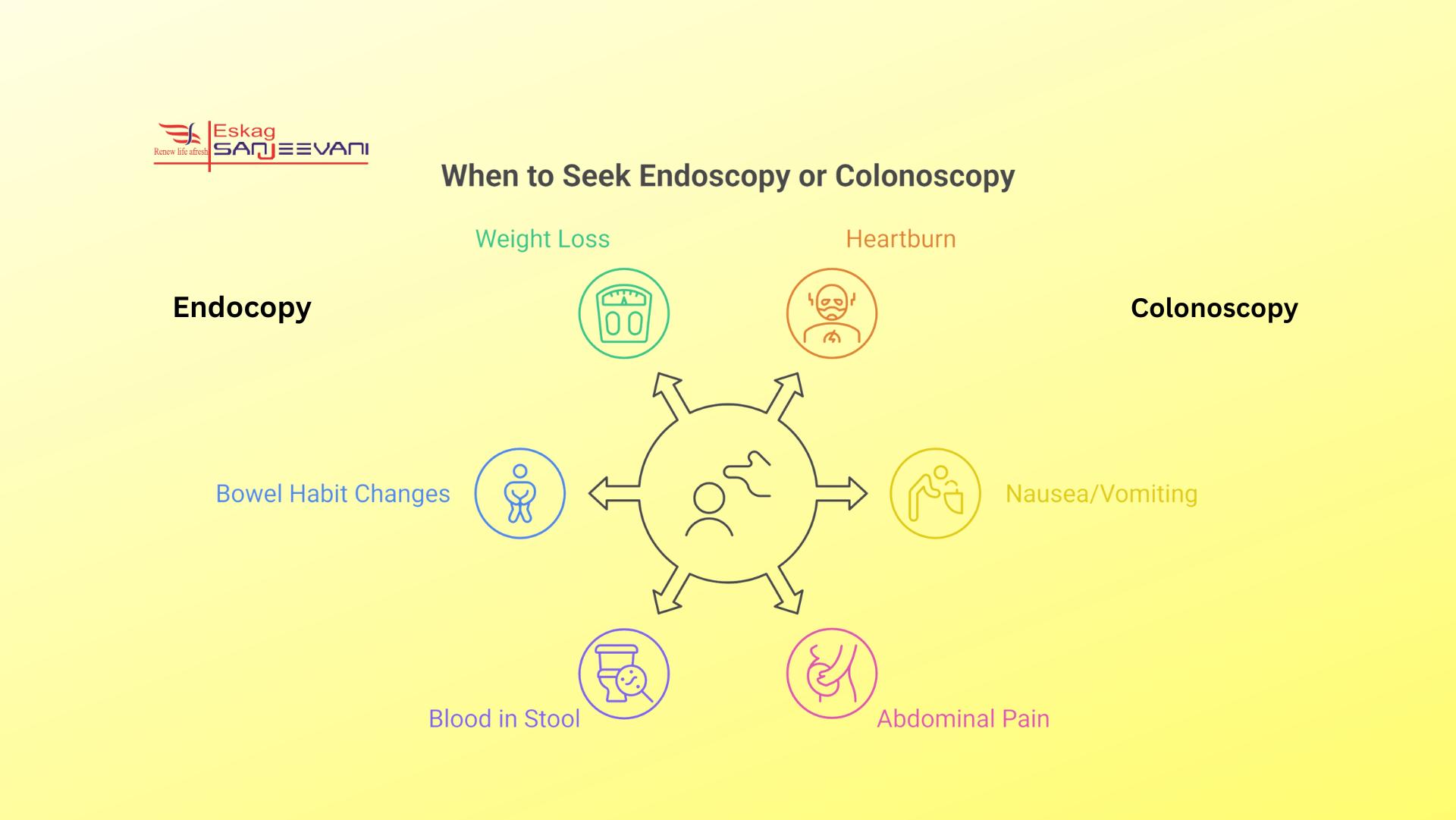
You may need an endoscopy scan if you experience:
- Persistent heartburn, acid reflux, or a burning sensation in the chest that does not respond to medication.
- Frequent nausea, vomiting, or difficulty swallowing that has lasted more than a few weeks.
- Unexplained upper abdominal pain or a feeling of fullness after eating small amounts.
- Suspected stomach ulcers, gastritis, or gastroesophageal reflux disease (GERD) requiring direct visual confirmation.
- Upper GI bleeding, identified by black or tarry stools, that needs diagnosis and possible treatment.
You may need a colonoscopy procedure if you experience:
- Blood in the stool, rectal bleeding, or dark-coloured stools that suggest lower GI bleeding.
- Persistent changes in bowel habits, chronic diarrhoea, constipation, or narrow stools lasting more than a few weeks.
- Unexplained weight loss combined with lower abdominal pain or discomfort without a clear cause.
- A family history of colorectal cancer or polyps, placing you at higher risk for the disease.
- Reaching the age of 45 or above, at which routine screening colonoscopy is recommended regardless of symptoms [3].
There are situations where both procedures may be needed. If you have bleeding from an unknown source, or if symptoms overlap between the upper and lower gut, your doctor may recommend both on the same day or in sequence.
Colorectal Cancer in India: Why Timely Screening Matters?
Colorectal cancer remains a growing concern in India, and the numbers make a case for early action. According to a review of data from 27 population-based cancer registries across India, the annual incidence rate for colon cancer in men is 5.36 per 1,00,000 and 4.3 per 1,00,000 in women [1]. The risk is highest in the Northeast and South regions of the country.
What makes colorectal cancer particularly dangerous is that it often develops silently. Most cases begin as small, non-cancerous polyps in the lining of the colon. These polyps take years sometimes over a decade to turn cancerous. A colonoscopy procedure catches and removes these polyps before they become a problem, breaking the cancer development cycle entirely.
People in India may delay seeing a doctor because symptoms like mild bloating, occasional rectal bleeding, or changes in bowel habits are often mistaken for simple digestive problems. As a result, many patients are diagnosed later, when treatment becomes harder and the chances of recovery are lower.
Colonoscopy is the main test for finding colorectal cancer because it examins the whole colon and can remove polyps during the same procedure. Endoscopy, on the other hand, is mainly used to find stomach cancer, Barrett’s oesophagus, and H. pylori infections, which are also common in India.
If you have a family history of GI cancers, are over 45, or are experiencing persistent digestive symptoms, consulting the best gastroenterologist early is one of the most effective steps you can take. A gastroenterologist in Kolkata at Eskag Sanjeevani can evaluate your symptoms and advise whether an endoscopy scan, a colonoscopy, or both are the right next step for you.
Final Thoughts
Understanding endoscopy vs colonoscopy puts you in a better position to act on your doctor’s advice with confidence. An endoscopy scan examines the upper digestive tract the oesophagus, stomach, and duodenum and is used to investigate symptoms like acid reflux, swallowing difficulties, and upper GI bleeding. A colonoscopy procedure examines the entire colon and rectum and is the gold standard for colorectal cancer screening and polyp detection.
The difference between endoscopy and colonoscopy is not just technical, it determines which part of your digestive system gets examined and which conditions can be found. Both are safe, minimally invasive day procedures performed by a gastroenterologist. The endoscopy process involves a simple fast beforehand, while the colonoscopy procedure requires full bowel preparation. Recovery for both is quick, and most people return to routine activities the following day.
Given the rising incidence of colorectal cancer across India, routine screening is no longer just for those with symptoms. If you are 45 or older, or carry any risk factors, speak to the best gastroenterologist at Eskag Sanjeevani and schedule a screening without delay.

Microbiologist with over 2 years of experience in medical writing, specialising in evidence-based healthcare content.

Clinical experience in diagnosis, treatment, and evidence-based patient care across a range of conditions.
References
- Labani, Satyanarayana, et al. “Incidence of Colorectal Cancers in India: A Review From Population-Based Cancer Registries.” Current Medicine Research and Practice, vol. 11, no. 2, 2021, p. 91, 10.4103/cmrp.cmrp_65_20.
- Cleveland Clinic. “Endoscopy: Procedure, Types, What to Expect.” Cleveland Clinic, 12 July 2023, https://my.clevelandclinic.org/health/diagnostics/25126-endoscopy. Accessed 22 Aug. 2026.
- John Hopkins Medicine. “Colonoscopy.” Www.Hopkinsmedicine.Org, https://www.hopkinsmedicine.org/health/treatment-tests-and-therapies/colonoscopy. Accessed 22 Aug. 2026.
Most people do not feel pain during an endoscopy or colonoscopy, as sedation is often given to keep you comfortable. You may feel slight pressure as the scope passes through your throat, but this settles quickly. You may feel mild pressure, bloating or cramping during or after the procedure.
Most people can resume normal activities after 24 hours. You may experience mild bloating or gas for a few hours after the procedure, but this resolves on its own.
For an endoscopy scan, you must fast for six to eight hours beforehand. For a colonoscopy procedure, you need to follow a clear liquid diet for at least 24 hours and complete a full bowel preparation the night before.
Routine screening colonoscopy is recommended from the age of 45 for average-risk individuals. If you have a family history of colorectal cancer or polyps, your doctor may recommend starting earlier.
Both endoscopy and colonoscopy are generally safe when performed by trained specialists. The safer option depends on your symptoms, health and the reason for the procedure.