
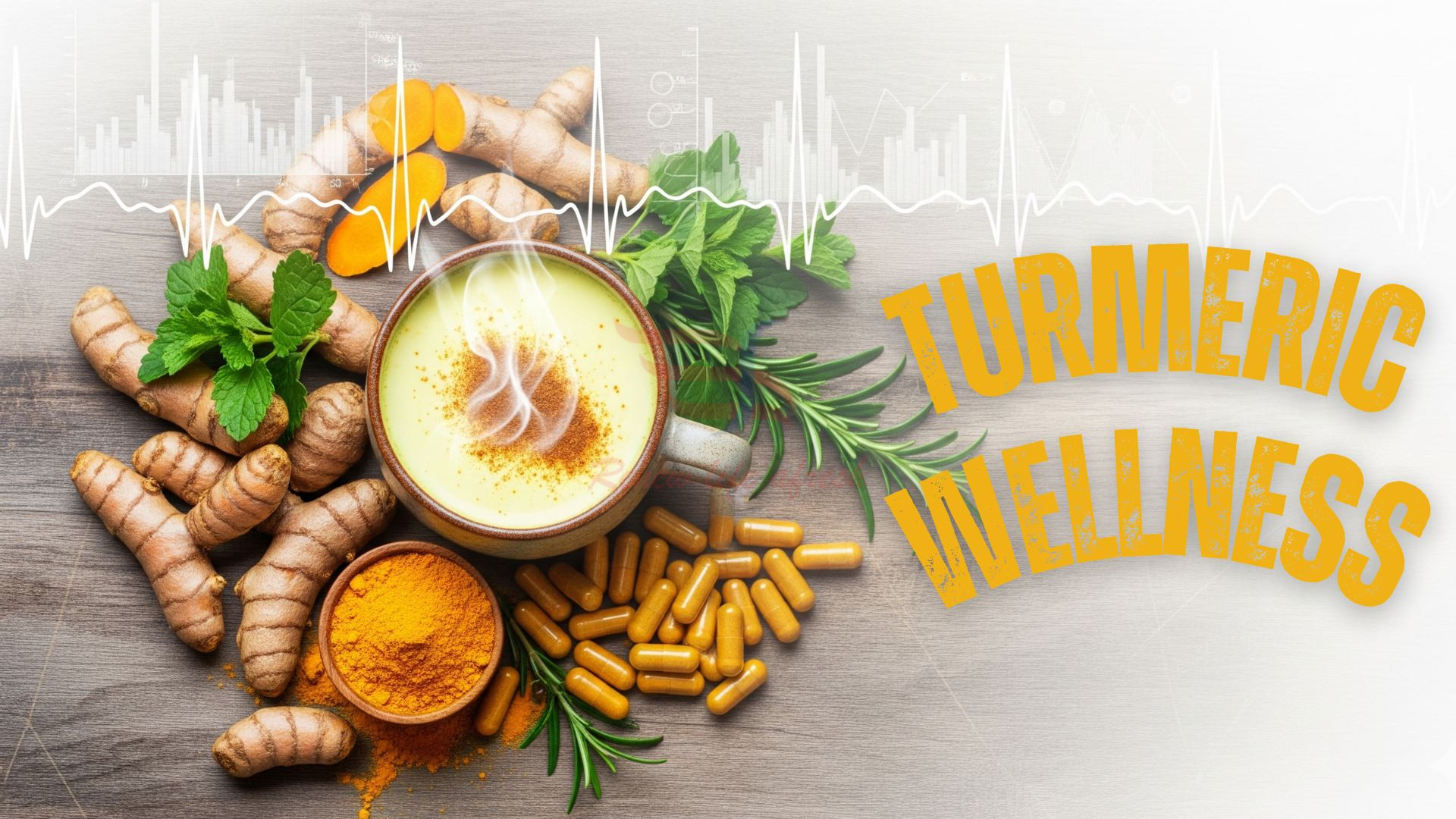
Benefits of Turmeric and Real-World Uses in India
Turmeric (Curcuma longa) has been used in Indian cooking and traditional medicine for centuries and is now widely studied for its bioactive compounds. It is particularly popular for curcuminoids such as curcumin. Research has explored curcumin’s effects on inflammation, oxidative stress, joint symptoms, metabolic health, and several other areas [1]. However, an important distinction remains: findings from laboratory and animal studies do not automatically translate into clinical benefit in humans. Human studies of curcumin have produced promising but variable results, and the effects can depend on the formulation, dose, duration, and health condition being studied [2]. Turmeric used as a culinary spice differs from concentrated curcumin supplements. The amount of curcuminoids consumed through ordinary food is generally much lower than that provided by standardised extracts.
This article reviews what current research suggests about turmeric and curcumin, where evidence remains limited, how culinary turmeric differs from supplements, and key safety considerations.
Fast Facts
- Turmeric and curcumin are not the same. Turmeric contains several compounds, while curcumin is one of its major studied curcuminoids.
- Some clinical studies suggest turmeric may help symptoms such as osteoarthritis pain, but evidence varies across conditions.
- Experimental studies show turmeric’s anti-inflammatory and antioxidant activity, but this does not establish that turmeric treats or prevents disease in humans.
What Is Turmeric?
Turmeric is the rhizome, or underground stem, of the flowering plant Curcuma longa, which belongs to the ginger family. It is widely used as a culinary spice, particularly in South Asian cuisine, where it contributes colour, flavour, and aroma to dishes such as curries, dals, vegetables, rice preparations, and spice blends. Turmeric has also been used traditionally in Ayurveda and other systems of traditional medicine. Traditional use provides important historical and cultural context; however, it does not by itself establish that a particular use is clinically effective.
What Does Research Say About Turmeric?
Researchers have studied curcumin for its effects on inflammatory signalling and oxidative stress. Some human studies have reported improvements in specific symptoms or biomarkers, particularly in conditions such as osteoarthritis. However, study quality, formulations, doses, and outcomes vary considerably [4]. It is therefore more accurate to describe turmeric and curcumin as subjects of ongoing clinical research rather than established treatments for a wide range of diseases.
Turmeric Vs. Curcumin: What’s The Difference?
Turmeric contains numerous plant compounds, including curcuminoids. Curcumin is one of the principal curcuminoids studied in scientific research. This distinction matters because many clinical studies investigate standardised curcumin extracts rather than ordinary turmeric powder. Results from a concentrated curcumin supplement therefore cannot automatically be applied to the amount of turmeric used in cooking.
Curcumin also has relatively low oral bioavailability. Researchers have investigated formulations designed to increase absorption, including combinations with piperine and other delivery systems [3]. However, increased absorption does not necessarily mean greater clinical benefit. A formulation that produces higher blood levels of curcumin may also have different safety and interaction considerations.
Benefits of Turmeric
Research has identified curcumin as one of the primary active compounds responsible for turmeric’s therapeutic potential. Some of the potential benefits of curcumin are stated below:
Anti-inflammatory Benefits of Turmeric
Human clinical trials and systematic reviews have reported that some curcumin preparations may modestly improve pain and physical function in people with osteoarthritis. However, evidence varies between studies, and curcumin should not be considered equivalent to established medical treatment for arthritis.
The formulation used in a study also matters. Results from a particular standardised extract cannot necessarily be generalised to ordinary turmeric powder or every curcumin supplement. People with chronic joint pain should receive an appropriate clinical assessment rather than relying on turmeric as a substitute for diagnosis or treatment.
Antioxidant Properties of Turmeric
Curcumin has antioxidant activity in laboratory experiments and can interact with measures involved in oxidative stress. Some human studies have also reported changes in selected oxidative-stress or antioxidant biomarkers following curcumin supplementation. However, an improvement in an antioxidant biomarker does not necessarily mean that a person will have a lower risk of cancer, heart disease, dementia, or another specific disease.
Turmeric’s Impact on Heart Health
Researchers have investigated curcumin in relation to several cardiovascular markers, including inflammation, blood pressure, endothelial function, lipid levels, and arterial stiffness.
Some small clinical studies have reported changes in individual markers, but the evidence is not sufficient to conclude that turmeric or curcumin prevents heart attacks or cardiovascular disease. A person’s cardiovascular risk depends on factors such as blood pressure, cholesterol, diabetes, smoking, physical activity, diet, age, and family history. Turmeric can be part of a balanced diet, but it should not replace evidence-based cardiovascular prevention or prescribed treatment.
Turmeric Benefits on Skin
Researchers have also studied turmeric and curcumin for potential effects on skin inflammation and oxidative stress. Laboratory research and some small clinical studies have investigated topical curcumin or turmeric-containing preparations for specific skin conditions. However, evidence varies considerably depending on the condition, formulation, and method of application. Claims that turmeric can heal acne, eczema, psoriasis, remove dark spots, or permanently brighten skin are not sufficiently established to present as general medical benefits. People with acne, eczema, psoriasis, unexplained pigmentation, or other skin problems should seek appropriate dermatological assessment.
Turmeric Benefits on Brain Health
Curcumin has attracted interest in neurological research because laboratory and animal studies have explored its effects on inflammatory pathways, oxidative stress, and processes involved in neurodegenerative disease. These findings are scientifically interesting, but they do not establish that turmeric or curcumin can prevent or treat Alzheimer’s disease or other neurodegenerative disorders. Human clinical evidence remains limited and inconsistent.
Therefore, turmeric should not be presented as a treatment for memory loss, Alzheimer’s disease, dementia, or other neurological conditions.
Final Thoughts
Turmeric is a culturally important culinary spice with a long history of traditional use and a substantial body of scientific research. Curcumin has demonstrated interesting anti-inflammatory and antioxidant activity in laboratory research. At the same time, some human studies suggest potential benefits for specific outcomes such as osteoarthritis symptoms. However, evidence is not equally strong for all proposed uses, and laboratory findings should not be presented as proof that turmeric prevents or treats serious diseases.
The distinction between culinary turmeric and concentrated curcumin supplements is also important. Ordinary dietary use and high-dose supplementation can have very different levels of exposure, absorption, and potential risk.
For most people, turmeric can be enjoyed as part of a varied, balanced diet. If you are considering concentrated curcumin for a specific health condition or are taking regular medication, discuss its suitability with a qualified healthcare professional. At our NABH-accredited Eskag Sanjeevani Hospitals, you can consult with our expert doctors to discuss how to include turmeric in your diet effectively.
References
- Hewlings SJ, Kalman DS. Curcumin: A Review of Its Effects on Human Health. Foods. 2017 Oct 22;6(10):92. doi: 10.3390/foods6100092.
- Gupta SC, Patchva S, Aggarwal BB. Therapeutic roles of curcumin: lessons learned from clinical trials. AAPS J. 2013 Jan;15(1):195-218. doi: 10.1208/s12248-012-9432-8.
- Pratti VL, Thomas M, Bhoite R, Satyavrat V. Investigating Bioavailability of Curcumin and Piperine Combination in Comparison to Turmeric Rhizomes: An in vitro Study. J Exp Pharmacol. 2024 Jan 30;16:37-47. doi: 10.2147/JEP.S427818.
- Hsueh HC, Ho GR, Tzeng SI, Liang KH, Horng YS. Effects of curcumin on serum inflammatory biomarkers in patients with knee osteoarthritis: a systematic review and meta-analysis of randomized controlled trials. BMC Complement Med Ther. 2025 Jul 4;25(1):237. doi: 10.1186/s12906-025-04951-6.