

A Complete Guide to Diabetes and Eye Health
When you have diabetes, you may think about your blood sugar, heart, kidneys, or feet, but your eyes also need attention. Over time, diabetes can affect the eye’s blood vessels and other structures. Some diabetic eye conditions may develop without noticeable vision changes at first. Regular eye assessments can therefore help identify problems before they advance. Diabetic eye disease includes conditions such as diabetic retinopathy and diabetic macular oedema (DME). Diabetes is also associated with an increased risk of conditions such as cataracts and glaucoma.
This guide explains how diabetes can affect the eyes, which symptoms need attention, how doctors evaluate diabetic eye disease, and what treatment options may be considered.
Key Takeaways
- Diabetes can affect the retina and other parts of the eye, sometimes before vision changes are noticeable.
- Diabetic retinopathy and diabetic macular oedema are important diabetes-related eye conditions.
- Good management of blood glucose, blood pressure, and other cardiovascular risk factors can reduce the risk of diabetic complications.
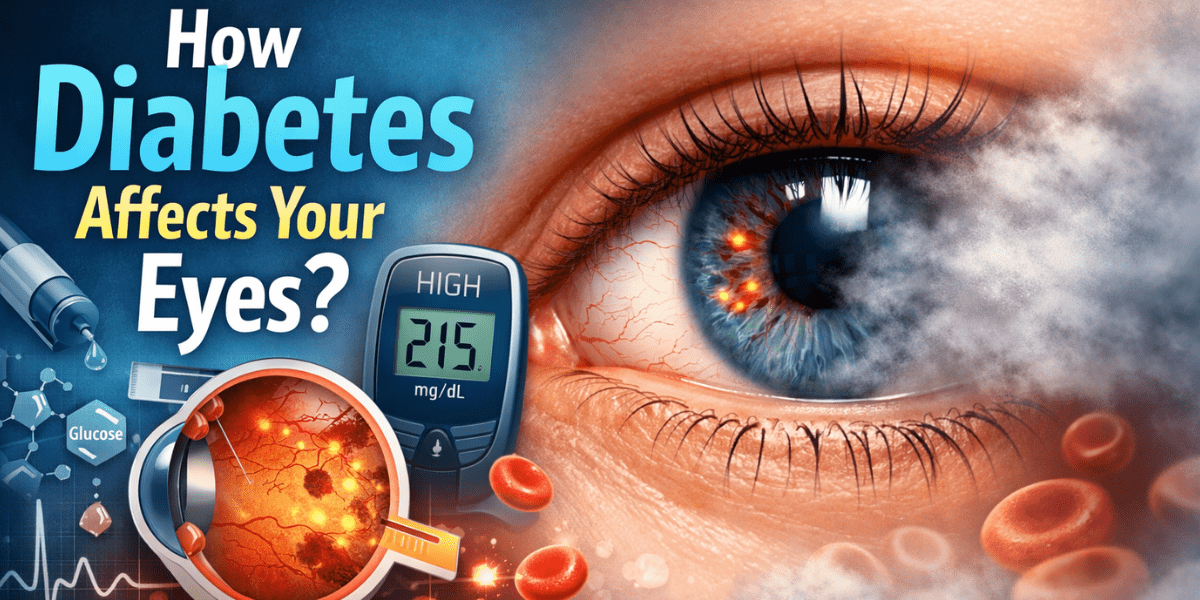
How Does Diabetes Affect the Eyes?
Constantly elevated blood glucose can damage small blood vessels and contribute to changes in the retina. The retina is the light-sensitive tissue at the back of the eye. It converts light into signals that are sent to the brain, allowing us to see.
Diabetes can cause the below-mentioned damage to the retinal blood vessels:
- Leak fluid or blood
- Become blocked
- Develop abnormal changes
- Contribute to swelling of the retina
Over time, these changes can affect vision.
Why Can Diabetic Eye Disease Be Difficult to Notice?
Early diabetic retinopathy may cause no obvious symptoms. A person may continue to see normally while retinal changes are developing. This is one reason people with diabetes may need eye examinations even when their vision seems fine. However, screening schedules should be individualised rather than assuming everyone with diabetes needs the same frequency of examinations.
Common Eye Problems Associated With Diabetes
There are several serious eye problems due to diabetes, and understanding them empowers patients to act early.
1.Diabetic Retinopathy
Diabetic retinopathy occurs when diabetes-related changes damage the retina’s blood vessels. It is broadly classified into the following two categories:
- Non-Proliferative Diabetic Retinopathy (NPDR): This is generally the earlier stage. Blood vessels may develop abnormalities such as small areas of swelling, leakage, or bleeding. Vision may remain normal, particularly in the earlier stages.
- Proliferative Diabetic Retinopathy (PDR): In more advanced disease, abnormal new blood vessels may develop. These vessels are fragile and can bleed into the vitreous. Scar tissue may also develop and, in severe cases, contribute to tractional retinal detachment.
2. Diabetic Macular Oedema (DME)
DME occurs when fluid accumulates in the macula, the central part of the retina responsible for detailed vision. A few of its symptoms include the following:
- Blurred central vision
- Difficulty reading
- Difficulty recognising faces
- Problems seeing fine details
DME can occur at different stages of diabetic retinopathy and requires assessment by an ophthalmologist.
3. Cataracts
A cataract occurs when the eye’s natural lens becomes cloudy. Cataracts become more common with age, and diabetes is associated with an increased risk of developing cataracts or developing them at a younger age. Symptoms include blurred vision, glare, difficulty seeing at night, and faded colours.
4. Glaucoma
People with diabetes may have an increased risk of glaucoma. Glaucoma refers to a group of conditions that can damage the optic nerve. Elevated eye pressure is a major risk factor for many forms of glaucoma, although it can occur without elevated pressure. The condition may progress without obvious symptoms, particularly in its early stages.
Warning Signs: When to See a Doctor
Early detection is critical to diagnosing diabetic eye disease. Do not ignore the following symptoms:
- Spots or dark strings (floaters) in your vision
- Blurred or fluctuating vision
- Dark or empty areas in your field of view
- Difficulty seeing at night
- Sudden vision loss
How Is Diabetic Eye Disease Diagnosed?
The examination depends on the suspected condition and the patient’s clinical situation.
The most common assessments are described below:
Dilated Eye Examination
Eye drops widen the pupil so an ophthalmologist can examine the retina and optic nerve more thoroughly. Dilated examination is an important component of diabetic eye assessment, but it is not appropriate to describe it as a universal “gold standard” for every eye-related diagnostic question.
Optical Coherence Tomography (OCT)
OCT is a non-invasive imaging technique that produces detailed cross-sectional images of the retina. It can help identify retinal thickening, fluid, and other structural changes, particularly when evaluating conditions such as DME.
Fluorescein Angiography
During fluorescein angiography, a dye is injected into a vein, and photographs are taken as the dye passes through the retinal circulation. When clinically indicated, the test helps evaluate retinal blood vessels and areas of leakage or abnormal circulation.
Also read: Why More Indian Children Are Developing Type 2 Diabetes Before Puberty
Treatment Options for Diabetic Eye Disease
Treatment is chosen based on the specific retinal condition, severity, and individual circumstances.
Anti-VEGF Injections
Anti-VEGF medicines are commonly used for conditions such as diabetic macular oedema and certain forms of proliferative diabetic retinopathy. They work by reducing vascular endothelial growth factor (VEGF) activity, which can contribute to abnormal blood-vessel growth and retinal fluid leakage. Treatment often involves a series of injections and follow-up examinations, depending on the patient.
Laser Treatment
Laser photocoagulation can be used for selected diabetic retinal conditions. Depending on the situation, laser treatment may reduce the risk of complications from abnormal retinal blood vessels or treat specific areas of retinal leakage. Laser is not appropriate for every type or stage of diabetic eye disease, and treatment goals vary.
Vitrectomy Surgery
Vitrectomy may be considered for certain advanced complications, such as significant vitreous haemorrhage or tractional retinal detachment. During the procedure, the surgeon may remove the vitreous gel and address blood, scar tissue, or traction affecting the retina.
Final Thoughts
Diabetes can affect the eyes in several ways, particularly through changes in the retina and its blood vessels. Diabetic retinopathy and diabetic macular oedema are important complications, while cataracts and glaucoma are also associated with diabetes. Because early diabetic retinal disease may have few or no symptoms, appropriate eye examinations are an important part of diabetes care. At the same time, there is no universal screening schedule or treatment plan for everyone with diabetes. The timing of examinations, choice of diagnostic tests, and treatment approach should depend on the individual’s medical history and eye findings. Eskag Sanjeevani Hospitals provide ophthalmic evaluation and treatment for patients with diabetes-related eye concerns.
Yes. If untreated, eye problems due to diabetes—such as retinopathy and glaucoma—can lead to irreversible blindness. However, early detection prevents up to 90% of severe vision loss.
A diabetic patient should see an eye doctor at least once a year for a complete eye check-up.
If there are any eye problems, the doctor may advise more frequent visits. Regular eye exams help protects your vision.
No, blurred vision is not always a sign of permanent damage.
High blood sugar can cause temporary blurred vision by making the lens of the eye swell. When blood sugar levels return to normal, vision often becomes clear again.
However, if blurred vision continues, it is important to see an eye doctor to check for diabetic eye problems.
A regular test checks your prescription. A diabetic eye disease diagnosis involves dilating the pupils to examine the retina and blood vessels for damage.
You cannot cure it naturally, but you can significantly delay or prevent it by controlling A1C, blood pressure, and cholesterol—the foundation of effective diabetes and eye care.
If you or a loved one is living with diabetes, don’t delay. Early screening saves sight—and at Eskag Sanjeevani Hospitals, your vision is in expert hands.