

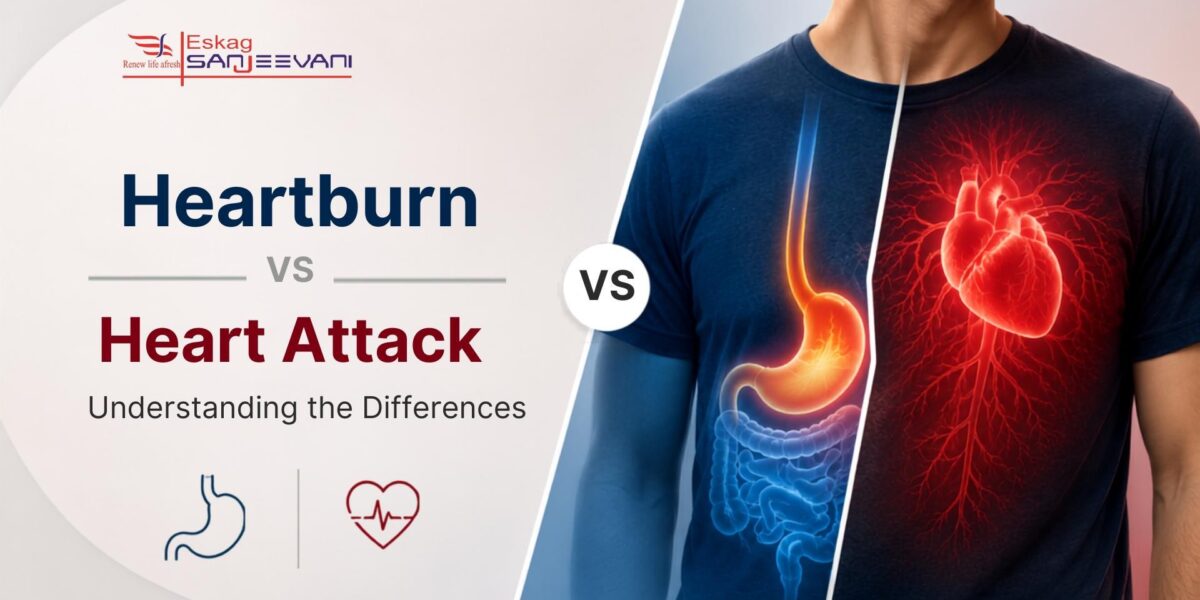
Heartburn vs Heart Attack: Understanding the Differences
A burning feeling in your chest after a heavy meal can be unsettling, especially if you are not sure whether it points to a digestive issue or something far more serious. Both heartburn and a heart attack can cause chest discomfort, and the two are confused more often than most people realise. Knowing the difference between heartburn vs heart attack could genuinely save your life or the life of someone near you. This guide breaks down what each condition is, why their symptoms overlap, and the clear warning signs that tell you when to call for emergency help. If you have been experiencing unexplained chest pain, this is worth reading in full.
Key Takeaways
- Heartburn takes place when stomach acid backs up into the oesophagus. A heart attack takes place when the heart does not get enough blood because its blood supply is blocked.
- Heartburn may worsen after eating, lying down, or bending over. A heart attack can also cause sweating, breathlessness, and pain that spreads to the arm or jaw.
- Both conditions are treatable. Heartburn responds to antacids and proton pump inhibitors, while a heart attack requires immediate emergency care and, in many cases, intervention from a cardiologist.
Quick Answer: Heartburn is a burning sensation behind the breastbone caused by acid reflux, not a heart problem.
What Is Heartburn?
Heartburn is a symptom of gastroesophageal reflux disease (GERD), a condition in which stomach acid flows back up into the oesophagus. This backward flow irritates the lining of the oesophagus and produces a sharp, burning sensation just behind the breastbone [1].
Despite its name, heartburn has nothing to do with the heart. The discomfort can feel alarmingly similar to cardiac pain, which is exactly why so many people find the difference between heartburn and a heart attack difficult to identify.
Common things that can trigger heartburn include:
- Eating large, fatty, or spicy meals, which can slow digestion and make heartburn more likely.
- Lying down or bending over soon after eating, making it easier for stomach acid to move up into the oesophagus.
- Being overweight or pregnant, as extra pressure on the stomach can push acid back into the oesophagus.
- Drinking alcohol, coffee, or carbonated drinks, which relax the valve between the oesophagus and stomach.
- Smoking, which weakens the oesophageal sphincter and reduces saliva that would normally neutralise acid.
What Is a Heart Attack?
A heart attack takes place when a blood clot blocks blood flow to part of the heart muscle. Without enough blood and oxygen, the affected heart tissue can become damaged. Without a continuous supply of oxygen, that section of heart muscle begins to die. A heart attack is always a medical emergency [2].
Unlike heartburn, a heart attack is a heart condition that requires immediate intervention. Delays in treatment can lead to permanent heart damage or death.
Heartburn vs Heart Attack: Symptom Comparison
This is where things get tricky. Both conditions can produce pain in the centre of the chest, making it genuinely difficult to tell them apart without medical assessment.
According to a case study published in the Cleveland Clinic Journal of Medicine, heartburn has been documented as a mimic of myocardial infarction, highlighting how easy it is to confuse the two conditions [1].
Harvard Health reports that more than 8 million people visit emergency departments for chest pain each year. In over half of these cases, serious heart problems are ruled out and severe heartburn may be the cause [2].
| Feature | Heartburn | Heart Attack |
| Type of pain | Burning, sharp | Tight, squeezing, heavy pressure |
| Location | Behind the breastbone | Centre of chest, sometimes spreading |
| Radiation | Up toward the throat | To arm, jaw, neck, or back |
| Triggered by | Food, lying down, bending over | Physical exertion or emotional stress |
| Relieved by | Antacids, sitting upright | Not relieved by antacids |
| Associated symptoms | Sour taste, food regurgitation | Sweating, breathlessness, dizziness |
| Onset | Gradual, after eating | Sudden, can happen at rest |
While these patterns can offer useful clues, symptoms can overlap, and some heart attacks may not follow the normal pattern. Therefore, it becomes important to know the signs that require immediate medical attention.
Also read: Heart Failure Isn’t a Heart Attack: Know the Difference.
Key Differences Between Heartburn and a Heart Attack
Heartburn produces a burning sensation behind the breastbone that worsens when you lie down or bend over and eases with antacids or sitting upright. Heart attack pain feels like tightness or crushing pressure that does not respond to antacids and may strike even at rest.
How the Pain Behaves
Heartburn pain usually starts at the breastbone and may reach upward towards the throat. It worsens when you lie down or bend over and improves when you sit up or take an antacid [2]. A heart attack, by contrast, produces a sensation of tightness or crushing pressure and does not improve with antacids.
Where the Pain Travels
One of the most important differences in the heartburn vs heart attack comparison is radiation. Heartburn pain does not typically spread to the shoulders, arms, or jaw. Heart attack pain frequently does, sometimes radiating down the left arm or up into the jaw or neck [2].
What Comes with the Pain
Heartburn may create a bitter or acidic taste in the mouth and even bloating. A heart attack commonly comes with cold sweating, shortness of breath, sudden nausea, lightheadedness, and an irregular or rapid heartbeat. These accompanying signs are red flags that should prompt an immediate call to emergency services.
What Sets It Off
Heartburn is connected to eating. Symptoms usually appear within an hour of a meal, particularly a heavy or spicy meal. The pain of Heart attack may appear while doing heavy physical activities, sudden stress, or even while resting, with no obvious trigger.
When Should You Be Worried?
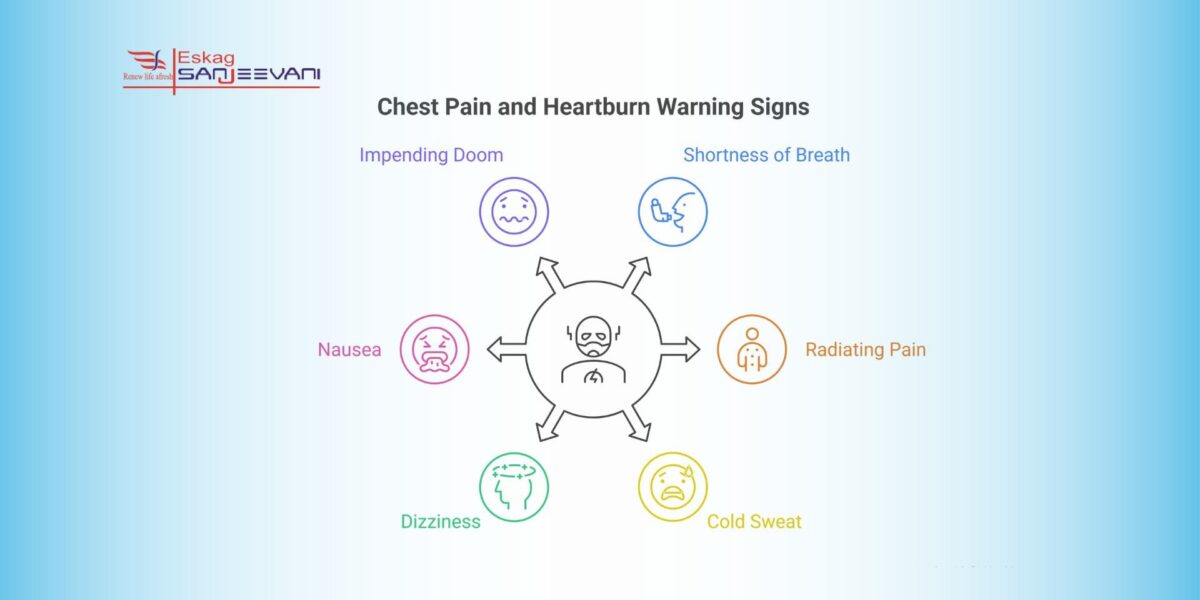
Do not try to diagnose yourself. If you feel unsure about your chest pain and heartburn or something more serious, it is always safer to seek medical attention. This is especially important if your chest pain is new, severe, or accompanied by any of the following [2]:
- Shortness of breath or difficulty breathing
- Pain radiating to your left arm, jaw, neck, or back
- Cold sweat or clamminess
- Sudden dizziness or weakness
- Nausea or vomiting without a dietary trigger
- A feeling of impending doom or severe anxiety
If any of these symptoms accompany your chest pain, call emergency services immediately. Do not drive yourself to the hospital.
Heartburn Treatment Options
For most people, what is heartburn can be managed effectively with lifestyle changes and medication. Treatment options include:
- Antacids such as calcium carbonate, which neutralise stomach acid and offer quick but short-lived relief.
- H2 blockers, which reduce acid production and are useful for moderate symptoms.
- Proton pump inhibitors (PPIs) such as omeprazole or pantoprazole are prescribed for frequent or severe heartburn. Harvard Health notes these reduce acid release from the stomach lining and also protect against bleeding ulcers [2].
- Dietary changes such as avoiding oily and heavy foods, eating smaller meals, and not lying down within two hours of eating.
- Weight management, as losing excess weight reduces pressure on the stomach.
- Elevating the head of the bed, which helps prevent acid from rising during sleep.
For persistent or severe symptoms, a gastroenterologist or our heartburn specialists can recommend further investigations such as endoscopy or 24-hour pH monitoring.
Heart Attack Treatment and Prevention
Heart attack management is completely different from heartburn treatment and must happen in a hospital setting. Depending on the situation, a cardiologist may recommend:
- Medications to dissolve the clot and restore blood flow
- Percutaneous coronary intervention (angioplasty with stenting)
- Bypass surgery in more complex cases
- Long-term medications including aspirin and cholesterol-lowering drugs
Prevention centres on managing risk factors: controlling blood pressure, cholesterol, and blood sugar; quitting smoking; maintaining a healthy weight; and staying physically active.
If you are at risk for heart disease or have experienced chest pain, the best cardiologist in Kolkata at Eskag Sanjeevani can guide you through a full cardiac evaluation.
Wrapping Up
The overlap in symptoms makes heartburn vs heart attack a genuinely confusing comparison, but the differences are real and clinically important. Heartburn is a digestive condition with a burning quality, typically linked to meals and relieved by antacids. A heart attack is an emergency involving crushing chest pressure, pain that spreads, and symptoms like sweating and breathlessness that no antacid will touch. When in doubt, always seek help. Chest pain is never something to wait out. Our heartburn specialists and cardiology team at Eskag Sanjeevani are here to help you get an accurate diagnosis and the right care.
References
- Bowman WS, Farid A, Aronowitz P. Heartburn or heart attack? A mimic of MI. Cleve Clin J Med. 2017 Sep;84(9):664-665.
- Harvard Health Publishing. Heartburn vs. heart attack. Harvard Health. Updated July 2023.
Heartburn usually causes burning pain after eating that worsens while lying down and improves with antacids or sitting upright.
A heart attack causes tightness or crushing pressure, often with sweating, breathlessness, dizziness, or pain spreading to the arm or jaw.
Some important signs include chest pressure, shortness of breath, cold sweating, dizziness, nausea, weakness, or pain spreading to the arm, jaw, neck, or back.
These symptoms can occur suddenly, even at rest, and require immediate emergency medical attention.
Heartburn, in general causes a burning sensation behind the breastbone, often after a large or spicy meal.
Some may also notice a sour or bitter taste, food coming back up, bloating, or discomfort that worsens when lying down.
Heartburn and a heart attack both can cause chest discomfort, making them difficult to distinguish without medical assessment.
If chest pain is new, severe, or comes with breathlessness, sweating, dizziness, or spreading pain, seek emergency help.
The blog does not state that the body gives a specific warning period before a heart attack. A heart attack can occur suddenly, even while resting, so new or unexplained chest pain should not be waited out.