

How Air Quality Impacts Asthma Management in Polluted Cities
For people living with asthma, poor air quality can make everyday breathing more difficult. This is a major concern in India, where Global Burden of Disease estimates put the number of people living with asthma at about 3.43 crore in 2019 [1]. Globally, the World Health Organisation estimates that 50 crore people were living with asthma in 2023, highlighting the scale of this chronic respiratory condition [2]. Air pollution is an important risk factor for asthma and can worsen symptoms in asthma patients. However, asthma has multiple causes and risk factors, so pollution is not the sole cause.
For people already living with asthma, understanding air-quality conditions and recognising personal triggers can form part of a broader asthma-management plan.
Key Highlights
- Air pollution can irritate the airways and worsen asthma symptoms in susceptible people.
- PM2.5, ozone, nitrogen dioxide and other pollutants can contribute to asthma exacerbations.
- Checking the local Air Quality Index (AQI) can help people understand daily pollution levels.
- Air purifiers may be useful in some indoor environments, but they should not replace prescribed asthma treatment.
How Air Pollution Can Affect Asthma
Asthma involves inflammation and narrowing of the airways, which can cause symptoms such as coughing, wheezing, chest tightness and shortness of breath [3]. Pollutants can irritate the respiratory system and may increase airway inflammation or worsen existing asthma symptoms. Research has linked exposure to pollutants such as particulate matter, ozone and nitrogen dioxide with asthma symptoms and exacerbations [4].
Effects vary from person to person. Some people notice symptoms after spending time outdoors on heavily polluted days, while others may be more affected by indoor smoke, dust, mould, cleaning products or other triggers.
Common effects of poor air quality may include the following:
- Increased coughing or wheezing
- Chest tightness
- Shortness of breath
- More frequent asthma symptoms
- Disturbed sleep because of respiratory symptoms
- Increased risk of an asthma exacerbation in susceptible individuals
Which Pollutants Matter?
A few pollutants that can affect respiratory health are tabulated below:
| Pollutant | Possible relevance to asthma |
| PM2.5 | Fine particles can penetrate deep into the respiratory tract and are associated with worsening respiratory symptoms. |
| PM10 | Larger inhalable particles can irritate the airways. |
| Ozone (O₃) | A respiratory irritant that can worsen asthma symptoms. |
| Nitrogen dioxide (NO₂) | Commonly associated with traffic and combustion; exposure can irritate the airways. |
| Smoke | Tobacco smoke and other forms of combustion can aggravate asthma. |
The Central Pollution Control Board’s National AQI includes pollutants such as PM10, PM2.5, NO₂, SO₂, CO, O₃, NH₃, and lead. Its AQI categories also indicate that higher pollution levels may have greater respiratory effects, particularly in people with existing lung disease such as asthma.
Recognising Asthma Symptoms
Asthma symptoms can vary from person to person and may change over time.
Common symptoms include the following conditions:
- Wheezing
- Recurrent coughing
- Shortness of breath
- Chest tightness
- Difficulty breathing during or after physical activity
- Symptoms that become worse at night or early in the morning
Symptoms may also become more noticeable after exposure to smoke, dust, pollen, cold air, workplace irritants or polluted outdoor air. If symptoms are frequent or changing, discuss them with a healthcare professional rather than assuming pollution is the only cause.
How Is Asthma Diagnosed?
Asthma is diagnosed using a combination of medical history, symptom patterns, physical examination and, when appropriate, lung-function testing.
Here is a summary of the tests considered to diagnose asthma:
| Test / Assessment | What it can help assess |
| Spirometry | Measures airflow and helps assess variable or reversible airway obstruction. |
| Peak expiratory flow | Can help monitor changes in airflow in selected patients. |
| Bronchodilator response testing | May help identify reversible airflow limitation. |
| Allergy testing | Considered when an allergic trigger is suspected. |
| Chest X-ray or other imaging | Usually considered when another condition needs to be evaluated rather than as a routine test for asthma. |
Practical Ways to Manage Asthma When Air Quality Is Poor
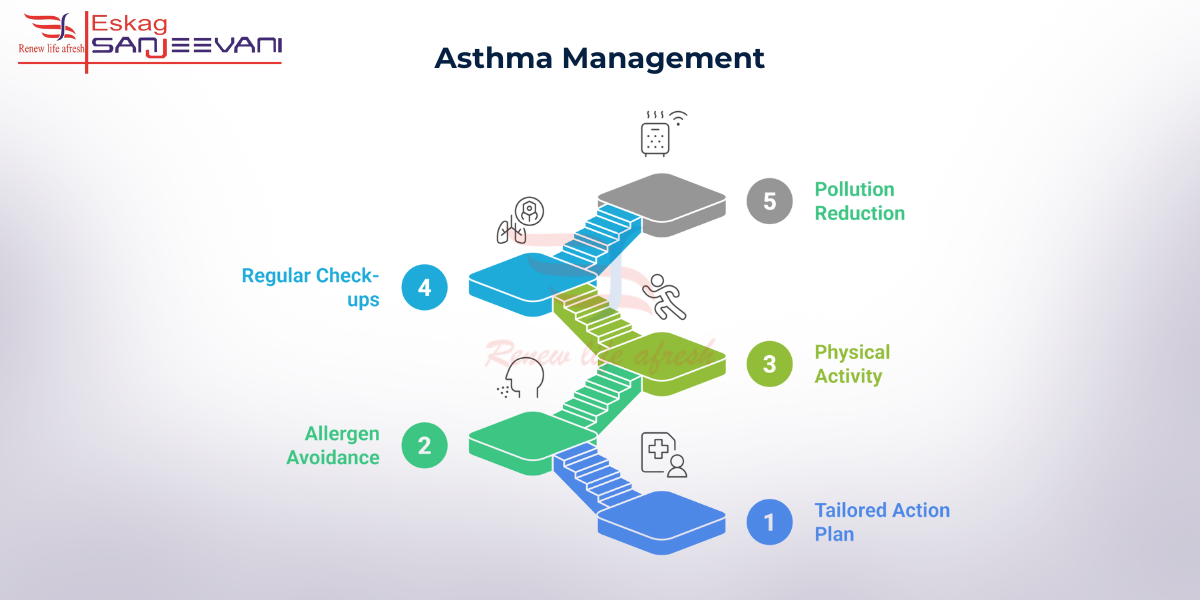
Here are a few practical asthma-management strategies to follow when air quality is poor.
1. Check the AQI
Checking the local AQI can help you understand the day’s pollution conditions. India’s National AQI classifies air quality into six categories: Good, Satisfactory, Moderately Polluted, Poor, Very Poor and Severe. If you notice that your asthma symptoms consistently become worse during certain pollution conditions, discuss this pattern with your doctor.
2. Reduce Exposure to Personal Triggers
Try to identify the exposures that actually worsen your symptoms. Depending on your circumstances, this may include the following:
- Avoiding tobacco smoke
- Reducing exposure to heavy traffic fumes where practical
- Keeping indoor areas free from excessive dust
- Addressing dampness and visible mould
- Avoiding strong fumes or sprays that trigger symptoms
- Following workplace safety measures if dust, fumes or chemicals affect your breathing
You do not necessarily need to stay indoors every time the AQI rises. Your response to pollution, the severity of your asthma, the outdoor conditions and your healthcare professional’s advice all matter.
3. Consider Indoor Air Quality
If outdoor pollution is high, improving indoor air quality may reduce exposure to some airborne particles. Depending on the indoor environment, the following measures may include:
- Avoiding smoking indoors
- Reducing dust accumulation
- Maintaining ventilation when outdoor conditions permit
- Controlling dampness and mould
- Using an appropriately maintained air purifier where it is suitable for the space
View an air purifier as an exposure-reduction measure, not a treatment for asthma. It does not replace prescribed inhalers or an asthma action plan.
4. Use Respiratory Protection When Appropriate
A well-fitting particulate-filtering mask may reduce exposure to some airborne particles in certain situations. However, masks do not eliminate all pollutants and may not suit everyone, particularly during significant breathing difficulty. If you have asthma and find masks uncomfortable or difficult to tolerate, discuss practical options with your healthcare professional.
5. Follow Your Asthma Action Plan
An asthma action plan can help you recognise symptom changes and understand when to use your prescribed medicines or seek medical care. Do not change or stop asthma medicines simply because the air quality improves or worsens.
6. Stay Physically Active When Asthma Is Controlled
Regular physical activity is generally encouraged for people with asthma when they can do it safely. It can support cardiovascular fitness, physical function and overall health. However, exercise should not be described as a way to automatically increase lung capacity or cure asthma. If exercise repeatedly causes coughing, wheezing or breathlessness, speak with your healthcare professional.
Final Thoughts
Air pollution can be a major trigger and irritant for people with asthma, especially when exposure to particulate matter and other respiratory irritants is high. Managing asthma in a polluted city is not about avoiding the outdoors completely or relying on a single device, food, exercise or home remedy. A more practical approach combines awareness of air quality, reducing personal triggers, appropriate indoor-air measures, and, most importantly, an individualised medical treatment plan. If asthma symptoms become more frequent, change in pattern, or interfere with sleep and daily activities, speak with a healthcare professional. At Eskag Sanjeevani Hospitals, patients with constant or recurring respiratory symptoms can receive clinical evaluation and respiratory care based on their individual symptoms and medical history.
References
- Swarnakar R, Dhar R. Call to action: Addressing asthma diagnosis and treatment gaps in India. Lung India. 2024 May 1;41(3):209-216. doi: 10.4103/lungindia.lungindia_518_23.
- Adhikari TB, Rashidi MM, Alupo P, Cieza A, Rylance S. WHO guidance for asthma and chronic obstructive pulmonary disease: why it matters. Bull World Health Organ. 2026 Aug 1;104(8):526-526A. doi: 10.2471/BLT.26.296819.
- Goldin, J., Hashmi, M.F. and Cataletto, M.E. (2024). Asthma. [online] PubMed.
- Guarnieri M, Balmes JR. Outdoor air pollution and asthma. Lancet. 2014 May 3;383(9928):1581-92. doi: 10.1016/S0140-6736(14)60617-6.
The best asthma management involves controlling symptoms, preventing flare-ups, and maintaining normal lung function through regular medication and lifestyle adjustments. It also includes monitoring triggers and using a personalised asthma action plan to ensure optimal control.
The five goals of asthma management are to reduce symptoms, improve lung function, prevent exacerbations, minimise medication side effects, and enhance quality of life. Achieving these goals requires regular monitoring and timely adjustments to treatment.
The first-line treatment for asthma typically includes inhaled corticosteroids (ICS), which help reduce airway inflammation and prevent asthma flare-ups. These medications are effective in managing both chronic symptoms and preventing long-term lung damage.
The first signs of asthma often include wheezing, shortness of breath and chest tightness. These symptoms may worsen at night or during physical activity, especially when exposed to asthma triggers.
An asthma management plan is a personalised plan created by a healthcare provider to help individuals control their asthma. It includes instructions for symptom management, preventing attacks, and adjusting medications based on the severity of the condition.