

Headache Due to Cold Weather: Causes, Relief & Warning Signs
Winter can be uncomfortable for people who are prone to headaches or migraines. In India, changes in temperature, cold winds, seasonal routines, dehydration, disrupted sleep, and shifts in atmospheric pressure may coincide with headache episodes for some people. A headache that occurs during winter does not automatically indicate a serious neurological problem, and being over 40 does not by itself make a headache dangerous. However, a new, unusually severe, or changing headache pattern deserves attention, particularly when it occurs with other concerning symptoms.
This blog helps you understand possible triggers and when to seek medical care so you can manage headaches more safely.
In Short:
- Cold weather may trigger or worsen headaches in some people, but triggers vary from person to person.
- Age 40 alone does not make a winter headache medically serious. However, a sudden severe headache or one accompanied by neurological symptoms requires immediate medical intervention.
- Keeping warm, staying hydrated, maintaining regular meals, and avoiding known triggers may help some people manage mild headaches.
How Can Cold Weather Affect Headaches?
People who are sensitive to weather changes may notice more headaches or migraine episodes during colder months. Changes in temperature and atmospheric pressure have been reported as possible migraine triggers, although the relationship varies between individuals. Cold exposure may also encourage people to tense their neck and shoulder muscles or spend more time in fixed postures indoors. These factors can contribute to tension-type headaches in some people. Therefore, it is not accurate to assume that every winter headache is caused by blood-vessel narrowing. Headaches can involve several interacting factors, including the nervous system, muscles, environmental triggers, sleep, hydration, and individual sensitivity.
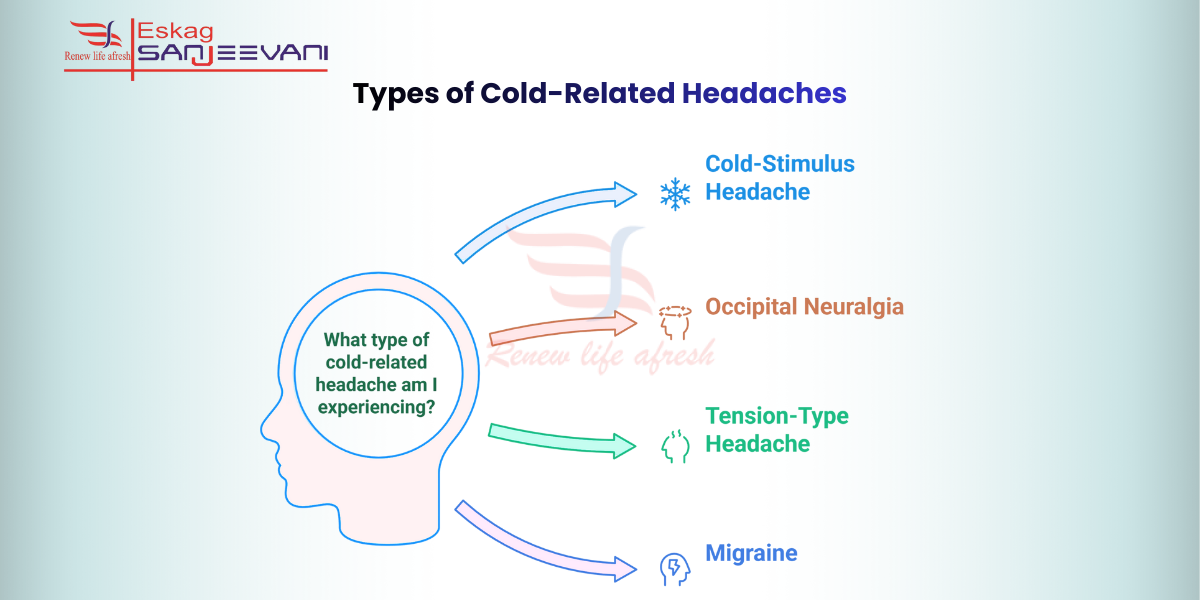
Common Headache Patterns That May Occur in Winter
Cold-Stimulus Headache
A short-lived headache can occur after exposure to very cold air, cold wind, or extremely cold foods and drinks. The pain generally develops during or soon after the cold stimulus and usually settles after the exposure ends.
Tension-Type Headache
Tension-type headaches commonly cause a pressing or tightening sensation rather than severe throbbing pain. Neck and shoulder tension, stress, poor posture, and longer screen time can contribute to these headaches. During winter, spending longer periods indoors or sitting in one position may make these factors more noticeable.
Migraine
Cold weather or weather changes may trigger migraines in some people. Migraine can cause moderate to severe head pain and may be accompanied by nausea or increased sensitivity to light and sound. Keeping a record can help identify whether cold weather, sleep changes, missed meals, stress, or other factors are associated with your episodes.
Pain at the Back of the Head
Pain around the back of the head and upper neck can have several causes, including tension-type headache, migraine, neck-related problems, and certain nerve conditions.
Pain location alone cannot determine its cause. Assess persistent or recurring pain based on the overall pattern and accompanying symptoms.
Also read: Heart Care in Winter: 5 Simple Ways to Stay Protected.
What Can You Do for Mild Cold-Related Headaches?
For a mild headache without concerning symptoms, the following simple measures may provide relief:
- Move to a comfortable, warm environment if cold exposure appears to be a trigger.
- Drink enough fluids throughout the day.
- Avoid skipping meals.
- Maintain a regular sleep schedule.
- Take breaks from prolonged screen use and sitting.
- Use gentle neck and shoulder movements if muscle tension is contributing to discomfort.
- Use a commonly recommended pain-relief medicine only when it is appropriate for you and according to your doctor’s advice.
Keeping the head and neck warm may make some people more comfortable, but it is not a proven way to “restore blood flow” or cure a headache. If headaches occur frequently, relying repeatedly on pain medicines without medical advice can also be problematic.
Also read: Brain and Body: The Neurological Benefits of Regular Physical Activity.
When Should You See a Doctor?
A headache deserves medical evaluation when it is:
- New and constant
- Becoming more frequent or severe
- Different from your usual headache pattern
- Interfering with sleep, work, or daily activities
- Repeatedly requiring pain medication
- Associated with other symptoms that concern you
A general physician can be an appropriate first point of contact. Depending on the symptoms and findings, they may recommend further evaluation or referral to a neurologist. You do not need to see a neurologist simply because you are over 40 or because a headache occurs during winter.
Final Thoughts
Cold weather can coincide with headaches or migraine episodes in some people, but a winter headache is not automatically a sign of a neurological disorder, and age 40 alone does not make it dangerous. For mild headaches, staying comfortable, eating regular meals, staying hydrated, getting adequate sleep, and identifying personal triggers may help. If headaches are new, increasingly frequent, or different from your usual pattern, speak with a healthcare professional. At Eskag Sanjeevani Hospitals, patients with constant, recurrent, or changing headaches can receive medical evaluation to help identify the possible cause. Depending on the clinical findings, a doctor may recommend further tests or specialist neurological assessment.
References
- American Migraine Foundation. (2021). Seasonal Migraine Triggers | American Migraine Foundation. [online]
- Wilhour, D. (2025). How weather changes cause migraines – a neurologist explains the triggers and what you can do to ease the pain. [online] The Conversation.
You can reduce cold-weather headaches by keeping your head and neck warm, staying hydrated, and avoiding direct exposure to cold wind. In addition, neck stretches and adequate rest also help relieve muscle tension linked to a cold.
An aneurysm headache often feels sudden, extremely severe, and unlike any headache you have had before. Many people describe it as a sharp, explosive pain that reaches peak intensity within seconds.
If cold triggers your headache, warm yourself gradually, drink fluids, and rest in a comfortable indoor environment. Seek medical advice if the pain persists, worsens, or appears with neurological symptoms.
A headache is severe if it disrupts daily activities, worsens quickly, lasts several days, or is accompanied by vision problems, vomiting, weakness, or confusion.
Emergency signs include sudden, intense head pain, loss of consciousness, slurred speech, limb weakness, seizures, or headache after a head injury. Immediate medical care is essential in these situations.