

Know the Benefits of Quinoa
In Kolkata, rice, roti, and luchi are familiar parts of everyday meals. As more people focus on balanced nutrition and managing weight or blood sugar, quinoa has become another option to consider. Quinoa is a nutrient-rich edible seed that is commonly prepared and eaten like a grain. It provides protein, dietary fibre, magnesium, folate, and other nutrients. Unlike many plant foods, quinoa is also considered a complete protein, meaning it contains all nine essential amino acids. But quinoa is not a magic weight-loss food. Its nutritional profile can make it a useful part of a balanced diet, but overall food choices, portions, physical activity, sleep, and individual health conditions matter more.
This blog explains what the research actually says about the benefits of quinoa.
Key Takeaways
- Quinoa provides protein and fibre and can replace refined grains such as white rice in many meals.
- Its protein and fibre content may help make meals more filling, although eating quinoa alone does not guarantee weight loss.
- Quinoa generally has a lower glycemic impact than many refined carbohydrate foods, but the effect depends on portion size, preparation, and what you eat with it.
- Clinical research on quinoa and blood glucose is promising but still limited, so it should not be described as a diabetes treatment.
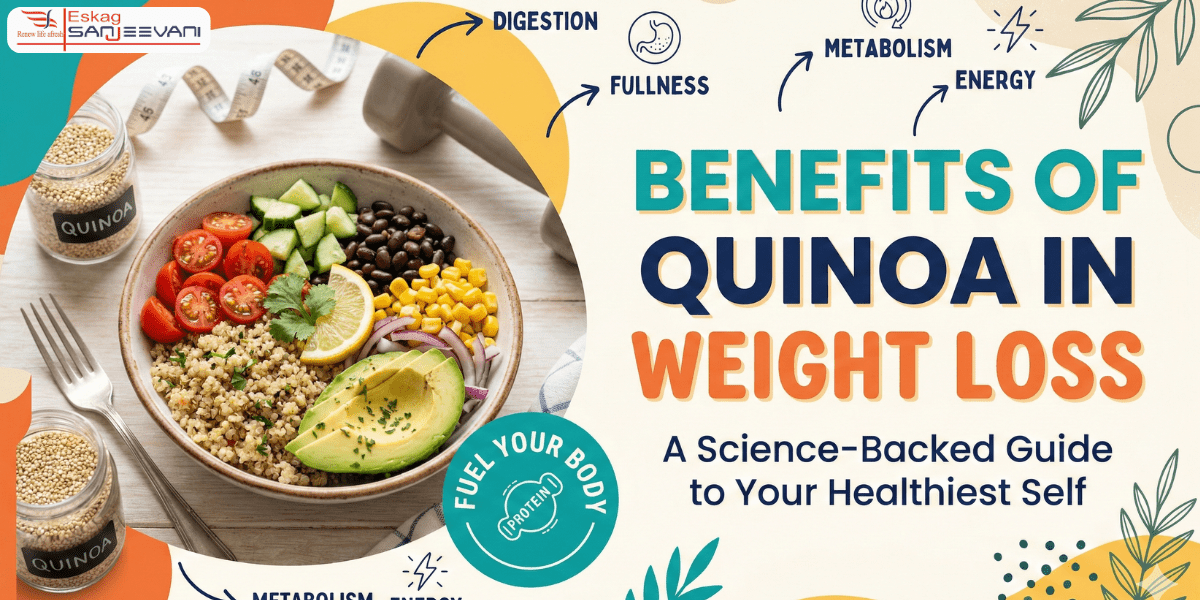
What is Quinoa? More Than Just a Grain
Quinoa is technically an edible seed, although it is commonly prepared and eaten like a whole grain. It provides a combination of carbohydrate, protein, fibre, and minerals. One cup of cooked quinoa contains approximately 8 grams of protein and 5 grams of fibre. This nutritional profile is one reason quinoa can be a useful addition to meals, especially compared with refined carbohydrate foods that provide less fibre and protein.
Quinoa and Satiety: Can It Help You Feel Full?
One potential advantage of quinoa is its combination of protein and fibre. Dietary fibre can slow digestion and help promote fullness, while protein is also an important component of satisfying meals. This means replacing some refined grains with quinoa may help create a more balanced meal for some people. However, this should not be interpreted as proof that quinoa directly prevents overeating or causes weight loss. Total calorie intake, meal composition, portion size, physical activity, and individual factors all influence body weight.
A Useful Indian Example: Instead of thinking of quinoa as a replacement for every carbohydrate in your diet, consider how it changes the overall meal. For example:
- Less balanced: Large portion of refined carbohydrate + little protein + few vegetables
- More balanced: Moderate portion of quinoa + dal/fish/egg/tofu + plenty of vegetables
The second pattern provides a broader combination of protein, fibre, and micronutrients.
Quinoa and Its Effects on Blood Sugar
Quinoa is often promoted as a low-glycemic food. However, a food’s glycemic index can vary by variety, preparation, cooking method, portion size, and the other foods eaten at the same meal. The glycemic index describes how quickly a carbohydrate-containing food raises blood glucose compared with a reference food. It does not tell us whether a food will cause weight gain or belly fat.
Research on quinoa and glucose control is developing. A systematic review and meta-analysis of seven clinical trials involving 258 adults found evidence of an effect on fasting blood glucose, but did not find a significant reduction in body weight or BMI compared with placebo [1]. Therefore, quinoa may be a useful carbohydrate choice for some people, but it should not be described as a diabetes treatment or as a food that automatically prevents insulin spikes. People with diabetes should consider their overall carbohydrate intake, medication, portion size, and individual blood glucose response.
Is Quinoa Good for Weight Management?
You can include quinoa in a weight-management diet, but calling it a “weight-loss game changer” would be misleading. Its protein and fibre content can make a meal more satisfying, and replacing some refined grains with whole-grain or minimally processed alternatives may improve overall dietary quality. However, clinical evidence does not show that simply adding quinoa to the diet causes substantial weight loss.
A meta-analysis of five controlled clinical trials involving 206 adults reported modest reductions in body weight, waist circumference, fat mass, insulin, triglycerides, total cholesterol, and LDL cholesterol with quinoa supplementation [2]. However, the number of trials and participants was relatively small, so interpret these findings cautiously.
The equation is simple: quinoa can be part of a weight-management diet, but it is not a weight-loss treatment on its own.
Quinoa’s Protein Advantage
Quinoa is unusual among plant foods because it provides all nine essential amino acids. It is therefore considered a complete plant protein. This can be particularly useful for people following vegetarian or plant-forward diets. However, eating quinoa does not automatically make the body “burn fat” or preserve muscle during weight loss. Maintaining muscle during weight loss depends on adequate overall protein intake, resistance or other appropriate physical activity, sufficient energy intake, and individual factors such as age and health status.
Practical Ways to Use Quinoa Seeds in an Indian Kitchen
You do not need to abandon rice or traditional Indian meals to include quinoa. Here are a few tips on how you can include quinoa in your daily food habits:
- Quinoa Upma: Use cooked quinoa instead of some or all of the semolina (sooji) and add vegetables, peas, or other ingredients for a more balanced breakfast.
- Quinoa Khichdi: Combine quinoa with moong dal and vegetables. This provides carbohydrate, plant protein, and fibre in one meal.
- Quinoa Pulao: Cook quinoa with seasonal vegetables and moderate amounts of oil and spices.
- Quinoa with Dal: Serve quinoa with dal and vegetables, just as you would with rice or roti.
The goal is not to label rice as “bad” and quinoa as “good.” Portion size and the overall meal pattern matter more than choosing one food exclusively.
Final Thoughts: A Sustainable Step Forward
Quinoa is a nutritious edible seed that provides protein, dietary fibre, magnesium, and other nutrients. Its complete protein profile and versatility make it a useful addition to vegetarian and non-vegetarian meals. Research has also explored its potential effects on blood glucose and cardiovascular risk factors. For weight management, the more important goal is to build a sustainable eating pattern that fits your lifestyle and cultural food preferences.
If you enjoy rice, you do not have to stop eating it. You can simply experiment with balanced portions and include foods such as quinoa alongside dal, vegetables, fish, eggs, curd, nuts, and other nutritious foods. At Eskag Sanjeevani Hospitals, our dietitians can help develop a personalised nutrition plan based on your weight, metabolic health, dietary preferences, and medical history.
References
- Atefi M, Heidari Z, Shojaei M, Askari G, Kesharwani P, Bagherniya M, Sahebkar A. Does Quinoa (Chenopodium quinoa) Consumption Improve Blood Glucose, Body Weight and Body Mass Index? A Systematic Review and Dose-Response Meta-Analysis of Clinical Trials. Curr Med Chem. 2024;31(4):502-513. doi: 10.2174/0929867330666230227151852.
- Karimian J, Abedi S, Shirinbakhshmasoleh M, Moodi F, Moodi V, Ghavami A. The effects of quinoa seed supplementation on cardiovascular risk factors: A systematic review and meta-analysis of controlled clinical trials. Phytother Res. 2021 Apr;35(4):1688-1696. doi: 10.1002/ptr.6901.
Yes, you can. However, variety is key to a healthy diet. You can alternate quinoa with other whole grains like millets or brown rice to ensure you get a wide spectrum of nutrients.
Both are excellent. While oats are slightly higher in fiber, quinoa offers more protein and a more complete amino acid profile. They serve different roles in a liver disease diet or weight loss plan.
Yes! Our nutritionists in Kolkata provide customized diet programs that consider your BMI, medical history (like thyroid or diabetes), and lifestyle to ensure safe and sustainable weight loss.
Quinoa has a natural coating called saponin that protects it from insects. Simply rinsing your quinoa seeds thoroughly under cold water for a minute before cooking will remove the bitterness.
Absolutely. Because of the low quinoa glycemic index, it helps stabilize blood sugar levels, preventing the dangerous spikes and crashes often seen with white bread or rice.
You can call our helpline or visit our Baghbazar, Khardah, or Baranagar units to consult with the best dietitian in Kolkata.