

 Medically Reviewed
The Hidden Summer Risk of Hyponatremia
Every summer, thousands of people in India — including right here in Kolkata — land in emergency rooms not from heatstroke, but from something far less expected: dangerously low sodium in their blood. This condition is called hyponatremia, and it can look a lot like ordinary tiredness, dehydration, or even anxiety. That is precisely what makes it so dangerous.
Key Takeaways
- Drinking too much plain water in summer can lower your sodium to dangerous levels. Hyponatremia is not just about not getting enough salt – it is often caused by diluting the sodium you already have. Replace sweat losses with fluids that contain electrolytes, especially during activity lasting over 60 minutes. [1]
- Early hyponatremia symptoms look like ordinary summer tiredness -and that is exactly why it gets missed. A headache, nausea, mild confusion, or extreme fatigue after being outdoors should prompt a blood sodium test, not just more water. At-risk groups include the elderly, children, and anyone on blood pressure medications. [2]
- Hyponatremia is highly treatable when caught early – but dangerous when ignored. Severe low blood sodium carries a mortality risk and can cause permanent brain damage if corrected too rapidly. A general physician can diagnose and manage it safely with a targeted treatment plan.
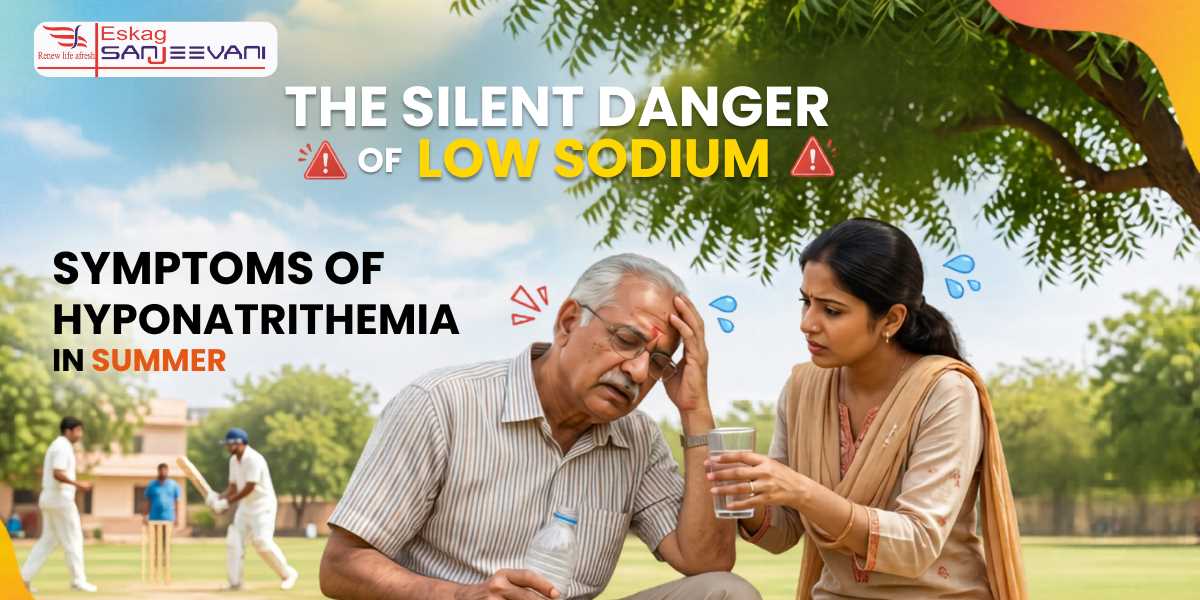
What Is Hyponatremia? The Science of Low Sodium Levels
Sodium is not just a seasoning — it is one of your body’s most critical electrolytes. It controls fluid balance between your cells and bloodstream, regulates blood pressure, and is essential for nerve and muscle function. Normal blood sodium sits between 135 and 145 mmol/L. Hyponatremia is diagnosed when sodium falls below 135 mmol/L.
When sodium drops, water rushes into your cells to equalise the concentration. This swelling is harmless in most tissues — but in the brain, which sits inside a rigid skull, even small amounts of swelling can trigger serious neurological symptoms.
Science Note: The brain is especially vulnerable because it cannot expand beyond the confines of the skull. A sodium drop of even 10–15 mmol/L can cause brain cells to swell enough to produce symptoms from mild confusion to life-threatening seizures. [4]
The three types of hyponatremia you should know
Understanding the three types of hyponatremia involves looking at the balance between water and salt in your body. Doctors categorize them based on your overall fluid volume—whether you have too little, too much, or a normal amount of total body water—to determine if the sodium is being physically lost or simply diluted.
Hypovolaemic hyponatremia
Both sodium and water are lost — typically through severe diarrhoea, vomiting, or excessive sweating — but sodium loss is proportionally greater, causing blood levels to fall. [2]
Euvolaemic hyponatremia
The most common summer type. Total body water increases, but sodium stays normal — seen when someone drinks large amounts of plain water without replenishing salts during exercise. [2] [3]
Hypervolaemic hyponatremia
Both sodium and water are retained, but water accumulates more, associated with heart failure, liver cirrhosis, and kidney disease, where fluid management is disrupted. [3]
Early hyponatremia symptoms to watch for in summer
One must know about the early hyponatremia symptoms this summer. According to a recent AQI report, Kolkata was one of the hottest cities in India in April 2026. Here are the low-sodium symptoms to highlight-
Persistent headache despite drinking water
A headache that does not improve after rehydration is a red flag. Brain swelling from low sodium causes a pressure-type headache different from ordinary dehydration headaches.
Nausea and loss of appetite
One of the earliest and most ignored signs. The gut is very sensitive to electrolyte imbalances and will signal distress before more obvious neurological symptoms appear.
Confusion or difficulty concentrating.
Even mild hyponatremia has been shown to impair cognitive function by up to 30%. Older adults may appear suddenly confused or disoriented — often mistaken for a stroke or dementia episode.
Muscle weakness and cramping
Sodium is essential for muscle contraction signals. Low levels disrupt nerve-to-muscle communication, causing cramps, twitching, or a general feeling of physical weakness.
Extreme fatigue and lethargy
Cellular energy production is disrupted when sodium gradients across cell membranes are off balance. The result is bone-deep exhaustion that sleep cannot resolve.
Hyponatremia does not announce itself with a dramatic warning. It creeps in quietly — disguised as tiredness, a headache, or an upset stomach.
| Sodium Level (mmol/L) | Severity | Common Symptoms |
| 135–145 | Normal | No symptoms — electrolytes balanced |
| 130–135 | Mild | Nausea, fatigue, mild headache, decreased appetite |
| 125–130 | Moderate | Vomiting, confusion, muscle cramps, disorientation |
| <125 | Severe | Seizures, loss of consciousness, respiratory arrest, coma |
Why Summer Is High Risk
Is Low Sodium Dangerous in Summer? Understanding the Season’s Hidden Risk
Kolkata’s summer is intense. Temperatures regularly cross 38–40°C with humidity above 80%, pushing the body to sweat heavily. A person doing moderate outdoor work in this weather can lose 1.5 to 2 litres of sweat per hour — and every litre of sweat contains roughly 900–1000 mg of sodium.
The problem arises when people replace that lost fluid with large amounts of plain water. This further dilutes the remaining sodium in the blood, dropping it below safe levels — a condition sports doctors call exercise-associated hyponatremia (EAH). [6] Studies from endurance events show that 13% of marathon runners develop some degree of hyponatremia, even without obviously excessive drinking.
Who is most at risk during the summer months?
It is a frequently asked question, and our doctors get this query almost every day. Here are the details-
Older adults above 60
Age dulls the thirst sensation and reduces the kidneys’ ability to excrete excess water, making sodium dilution more likely even with normal drinking habits.
Young children
Children have a higher body-surface-to-weight ratio, which means they sweat more proportionally. They are also unable to self-regulate fluid intake as effectively as adults.
Athletes and outdoor workers
Anyone sweating heavily for more than 60–90 minutes continuously — labourers, construction workers, cyclists, footballers — is at meaningful risk if only drinking plain water.
People on diuretics or certain medications
Thiazide diuretics — commonly prescribed for blood pressure — significantly increase urinary sodium loss and are one of the leading drug-related causes of hyponatremia. [5]
Summer Warning: Drinking more than 800 ml of plain water per hour during sustained sweating can drop your sodium to concerning levels within 2–3 hours. Always include a sodium source — oral rehydration salts, sports drinks, or light saline — during prolonged activity.
When to Seek a Doctor?
Here are some symptoms to check for when it comes to seeking a general physician.
- A headache that does not improve with water
- Sudden confusion or disorientation
- Nausea or vomiting in hot weather
- Muscle cramps with fatigue after sweating
- Seizure or loss of consciousness
- Swollen hands, feet, or face with fatigue
- Extreme drowsiness in a person on diuretics
- Feeling off after drinking large amounts of water
Our general physicians at Eskag Sanjeevani will run a serum electrolyte panel, assess your kidney function, and identify the exact cause of your sodium imbalance — so the right treatment starts immediately.

Expert medical content writer with a 3-year background in healthcare communications. Specializing in turning complex evidence into credible health content.

Expertise in clinical assessment, accurate diagnosis, and patient-centred treatment based on established medical guidelines.
References
- Sterns RH. Disorders of plasma sodium — causes, consequences, and correction. N Engl J Med. 2015;372(1):55–65.
- Spasovski G, et al. Clinical practice guideline on diagnosis and treatment of hyponatraemia. Eur J Endocrinol. 2014;170(3):G1–47.
- Rosner MH, Kirven J. Exercise-associated hyponatremia. Clin J Am Soc Nephrol. 2007;2(1):151–161.
- Upadhyay A, Jaber BL, Madias NE. Incidence and prevalence of hyponatremia. Am J Med. 2006;119(7 Suppl 1):S30–5.
- Moritz ML, Ayus JC. Prevention of hospital-acquired hyponatremia. Pediatrics. 2003;111(2):227–230.
- Hew-Butler T, et al. Statement of the Third International Exercise-Associated Hyponatremia Consensus Development Conference. Clin J Sport Med. 2015;25(4):303–320.
Mild cases can be managed by restricting plain water intake and taking ORS or salty foods. Never try to self-treat moderate or severe hyponatremia — always see a physician.
Yes. Drinking large amounts of plain water rapidly — especially during or after heavy sweating — dilutes blood sodium. This is the most common cause in summer and during endurance sports.
Dehydration is a lack of fluid; hyponatremia is a sodium imbalance. You can have hyponatremia even when well-hydrated, which is why symptoms and a blood test are the only reliable way to tell the difference.
Yes — older adults are at significantly higher risk because of reduced kidney function and thirst sensitivity. Even mild hyponatremia in the elderly is linked to increased fall risk and cognitive decline.
Buttermilk (chaas), coconut water with a pinch of salt, ORS, light soups, and salted snacks are good options. Avoid relying only on plain water during extended outdoor activity.