

 Medically Reviewed
HPV and Cervical Cancer in India: 2026 Guide
Cervical cancer is the second most common cancer among Indian women, claiming over 77,000 lives every year, nearly one woman every seven minutes. Almost every case is caused by Human papillomavirus (HPV), a common infection that most women never know they have. The critical fact is this: cervical cancer is one of the most preventable and detectable cancers in existence, but only if women have access to accurate information and act on it.
This guide covers everything you need to know about HPV and cervical cancer in 2026. What HPV is, how it causes cervical cancer, what symptoms to watch for, how the cervical cancer vaccine works in India, and what treatment options are available.
Key Takeaways:
- Nearly all cervical cancer cases are caused by HPV, yet most infected women have no symptoms, making regular screening the single most important step every woman can take.
- The cervical cancer vaccine is safe, effective, and available in India; it is most effective before sexual debut but offers protection at older ages too.
- Cervical cancer is highly curable when detected early; survival rates exceed 90% at Stage 1, making awareness and screening a genuine life-saving intervention.
Quick Answer: HPV causes most cervical cancers; regular screening and vaccination in India help detect early changes and prevent disease, ensuring timely and effective treatment.
Quick Links
What Is HPV and Why Does It Matter for Indian Women?
Human papillomavirus is the most common sexually transmitted infection in the world, and the direct cause of over 94% of all cervical cancer cases globally. Most people contract HPV at some point in their lives, yet the vast majority never develop symptoms or long-term complications.
Understanding Human Papillomavirus
HPV is a family of over 200 related viruses, transmitted through skin-to-skin contact during sexual activity [1]. Most strains are low-risk and resolve on their own without treatment. However, high-risk strains, particularly HPV 16 and HPV 18, can cause persistent infection that, over the years, triggers abnormal cell changes in the cervix that may progress to cancer.
Why India Carries a Disproportionate Burden
India accounts for approximately 25% of the world’s cervical cancer deaths despite having effective prevention tools available [2]. Low awareness, limited access to screening in rural areas, and social stigma around reproductive health discussions mean most Indian women are diagnosed at advanced stages, when treatment is significantly more complex. Addressing this gap starts with accurate information.
Is HPV Dangerous?
For most people, HPV clears naturally within one to two years without causing harm. It becomes dangerous when a high-risk strain establishes a persistent infection that the immune system fails to clear. This is the pathway through which cervical cancer develops, typically over ten to fifteen years. The long window between infection and cancer is precisely what makes screening so powerful; there is ample time to detect and treat abnormal cells before they become malignant.
Understanding HPV is the foundation, but knowing how to recognise when something may be wrong is equally critical, particularly because early-stage cervical cancer is often silent.
HPV Symptoms in Females: What to Watch For
HPV itself is largely asymptomatic. Most women with high-risk HPV strains experience no symptoms at all, which is why the infection so often goes undetected without active screening. Knowing the warning signs of cervical disease, rather than HPV infection itself, is what matters clinically.
Early Warning Signs of Cervical Abnormalities
- Unusual vaginal bleeding: Bleeding between periods, after sexual intercourse, or after menopause is the most common early symptom of cervical cancer
- Abnormal vaginal discharge: Watery, blood-tinged, or foul-smelling discharge that differs from your normal pattern
- Pelvic pain: Persistent pain in the lower abdomen or pelvis, particularly during or after intercourse, unrelated to menstruation
Painful or frequent urination: In more advanced cases, as the tumour presses on adjacent structures
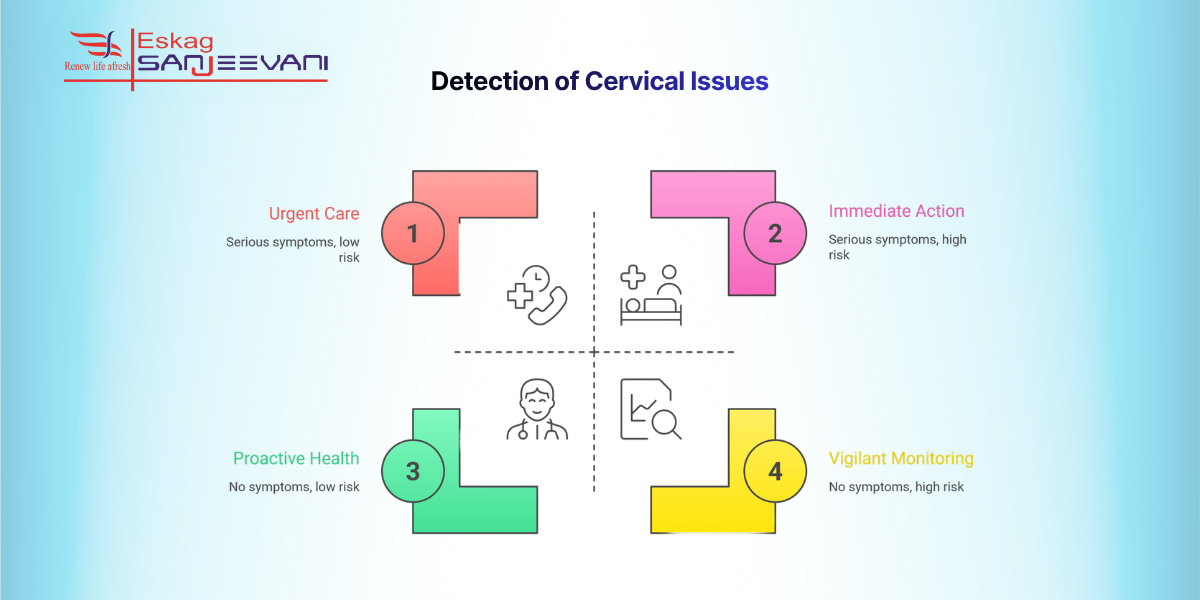
When to See a Doctor Immediately
Any unexplained post-coital bleeding, bleeding after menopause, or persistent pelvic discomfort warrants immediate gynaecological evaluation; do not wait for a scheduled check-up. These symptoms do not confirm cervical cancer, but they require clinical assessment without delay.
Early detection is the most powerful clinical tool available, but prevention through vaccination is even more effective. Here is what every Indian woman needs to know about the cervical cancer vaccine.
Cervical Cancer Vaccine in India: Everything You Need to Know
The HPV vaccine is one of modern medicine’s most effective cancer prevention tools. It works by generating an immune response against the high-risk HPV strains responsible for the majority of cervical cancers, before exposure occurs.
Here are the vaccines that are available in India:
| Vaccine | Strains Covered | Approved Age | Doses Required |
| Cervarix | HPV 16, 18 | 9-45 years | 2-3 doses |
| Gardasil 4 | HPV 6, 11, 16, 18 | 9-45 years | 2-3 doses |
| Gardasil 9 | HPV 6, 11, 16, 18, 31, 33, 45, 52, 58 | 9-45 years | 2-3 doses |
| Cervavac | HPV 16, 18 | 9-45 years | 2-3 doses |
Who Should Get Vaccinated?
- Girls aged 9-14: Two doses are sufficient at this age and provide the strongest immune response; this is the optimal vaccination window.
- Women aged 15-26: Three doses required; still highly effective, particularly if not yet sexually active.
- Women aged 27-45: Three doses; discuss with your gynaecologist, benefit depends on prior exposure history.
- Already sexually active women: Vaccination still provides meaningful protection against strains not yet encountered.
The HPV vaccine prevents infection; it does not treat existing HPV or reverse cervical changes already present. Women who have been vaccinated still require regular cervical screening, as the vaccine does not protect against all high-risk HPV strains.
Cervical Cancer Screening in India: Who Needs It and When
Cervical screening detects abnormal cell changes in the cervix before they progress to cancer. It is the single most important intervention for women who are or have been sexually active, regardless of vaccination status.
Here is a comprehensive recommended screening schedule:
| Age Group | Recommended Test | Frequency |
| 21-29 years | Pap smear | Every 3 years |
| 30-65 years | Pap smear + HPV co-test | Every 5 years |
| 30-65 years | HPV test alone | Every 5 years |
| 65+ years | Discuss with the doctor | Based on history |
Now, let’s understand the different types of cervical screening that are available in India:
- Pap smear (Pap test): Collects cells from the cervix to detect abnormalities, widely available across India’s urban hospitals and many government health centres
- HPV DNA test: Directly detects the presence of high-risk HPV strains, more sensitive than a Pap smear alone and increasingly recommended as a primary screening tool
- VIA (Visual Inspection with Acetic Acid): A low-cost, no-laboratory screening method widely used in rural India and government health programmes, an important tool where laboratory infrastructure is limited.
Is Cervical Cancer Curable? Treatment Options in 2026
Yes, cervical cancer is highly curable when detected at an early stage. Stage 1 cervical cancer carries a five-year survival rate exceeding 90%, and even Stage 2 responds well to treatment when managed by an experienced oncology team [3].
The critical variable is the timing of the diagnosis.
Treatment by Stage
- Pre-cancerous lesions (CIN 1, 2, 3): Abnormal cells detected through screening can be treated before they become cancerous using minimally invasive procedures, such as LEEP (Loop Electrosurgical Excision Procedure), cone biopsy, or cryotherapy. No major surgery required.
- Stage 1 (localised to cervix): Surgery, typically a radical hysterectomy, or radiation therapy, often with excellent outcomes. Fertility-sparing options are available for younger women in select cases.
- Stage 2-3 (regional spread): Concurrent chemoradiation, combining chemotherapy with radiation therapy, is the standard of care and achieves meaningful remission rates when delivered by a specialist team.
- Stage 4 (distant spread): Treatment focuses on systemic chemotherapy, targeted therapy, and immunotherapy options. Immunotherapy agents have shown improved survival outcomes in advanced cervical cancer in recent clinical trials.
If you have received an abnormal screening result, have HPV-related concerns, or are due for vaccination or a Pap smear, early specialist input makes a measurable difference in outcomes. The Oncology Department at Eskag Sanjeevani Hospital offers HPV vaccination, cervical screening, colposcopy, and comprehensive cervical cancer management, with care plans tailored to each patient’s clinical picture.
Final Thoughts
HPV and cervical cancer represent one of medicine’s most compelling preventable tragedies, almost entirely through a virus that can be vaccinated against and a cancer that can be caught before it begins. The science is settled, the tools are available, and the window for action is wide.
Get vaccinated if you have not. Screen regularly, even if you haven’t. And if something feels wrong, see a doctor before you talk yourself out of it.
Cervical cancer does not have to be a diagnosis. For most women, with the right information and access to care, it never will be. Book your screening or vaccination consultation at Eskag Sanjeevani Hospital today.

Microbiologist with over 2 years of experience in medical writing, specialising in evidence-based healthcare content.

Clinical experience in diagnosis, treatment, and evidence-based patient care across a range of conditions.
References
- World Health Organisation (2024). Cervical Cancer. [online] World Health Organisation.
- Padma, T.V. (2026). India, home to 25% of the world’s cervical cancer deaths, launches nationwide HPV vaccination. [online]
- National Cancer Institute (2022). Cervical Cancer Prognosis and Survival Rates – NCI. [online] www.cancer.gov.
HPV is a common virus that spreads through skin contact during sexual activity. High-risk types like HPV 16 and 18 can cause long-term infection that leads to cervical cancer.
Early cervical cancer often shows no symptoms, which makes screening essential. Warning signs include abnormal bleeding, unusual discharge, and persistent pelvic pain.
Most HPV infections clear naturally within one to two years without causing harm. Risk arises when high-risk strains persist, leading to abnormal cervical cell changes.
Girls aged 9-14 benefit the most due to a strong immune response. Women aged 45 and under can also take the vaccine after consulting a doctor.
Women aged 21-29 should take a Pap smear every three years. Women aged 30-65 should take HPV testing or co-testing every five years.
Yes, early-stage cervical cancer has a survival rate above 90%. Timely screening helps detect and treat pre-cancerous changes before they progress.