

 Medically Reviewed
Smartwatches & AI Wearables: A Guide on Health Tracking
Cardiovascular disease causes 27% of all deaths in India, and over 77 million Indians live with diabetes, yet most people visit a doctor only after symptoms have already progressed. AI wearables are closing this dangerous gap by delivering continuous, intelligent health monitoring between clinical visits.
India’s smart wearable market stood at USD 2.94 billion in 2025 and is projected to exceed USD 10 billion by 2031 [6]. This guide gives you the medically accurate picture: what AI wearables genuinely do, what the evidence proves, and the risks every Indian patient must understand before acting on device data.
Key Takeaways:
- AI wearables detect early signs of atrial fibrillation, continuously monitor glucose levels, and flag health deviations before symptoms appear, which is valuable for managing heart disease and diabetes.
- Accuracy gaps on darker skin tones, weak data privacy protections, and Western-skewed AI training mean a physician must verify all wearable readings before acting on them.
- The right device depends on your health needs; cardiac patients need ECG capability, and people with diabetes need a prescribed CGM. The wrong device creates dangerous false reassurance.
Quick Answer: AI wearables track health in real time using sensors and machine learning, useful but not a substitute for medical care.
Quick Links
What Are AI Wearables, & How Do They Work?
A basic fitness tracker counts steps. An AI wearable continuously collects biological signals, processes them through machine learning, and converts raw data into real-time health insights and personalised alerts.
Understanding the technology behind these devices helps you choose the right one and use it safely.
Here are the key sensors inside modern AI wearables
- Photoplethysmography (PPG): A green LED measures blood flow through your skin to detect heart rate and blood oxygen (SpO₂).
- ECG sensors: Detect the electrical activity of your heartbeat, the technology behind atrial fibrillation detection.
- Accelerometers: Track movement intensity, physical activity levels, and fall detection.
- Skin temperature sensors: Flag fever, infection, and hormonal cycle changes.
- Continuous Glucose Monitors (CGMs): Medical-grade arm sensors tracking interstitial glucose levels in real time [1].
How AI Turns Sensor Data Into Health Insight
AI algorithms learn your personal baseline, what is normal for your body, not a population average. Deviations from that baseline are flagged as potential health concerns, often before any symptom appears. The processing runs across two layers: Edge AI on the device for instant alerts, and Cloud AI for long-term trend analysis and risk scoring.
Here is a tabular representation of the types of AI wearables that are available in India:
| Type | Best For | India Examples |
| Smartwatch | Cardiac monitoring, sleep, activity, SpO₂ | Apple Watch S11, boAt Wave, Fastrack MYND |
| Smart Ring | Continuous HRV, recovery, metabolic health | Ultrahuman Ring Air |
| CGM (Glucose) | Real-time diabetes management | FreeStyle Libre, Dexcom |
| ECG Patch / Biosensor | Hospital-grade cardiac & respiratory tracking | Dozee |
Now that you understand how wearable technology works, it is worth looking at what the clinical evidence actually confirms, because the proven benefits go well beyond what most product marketing communicates.
Proven Health Benefits: What the Medical Evidence Actually Shows
AI wearables have moved well beyond step counting; clinical evidence now supports their role in early detection, chronic disease management, and preventive care. The benefits are real, but they are specific: here is where the science is strongest.
Early Detection of Heart Conditions
ECG-capable smartwatches can detect atrial fibrillation in patients with no symptoms whatsoever, dramatically reducing stroke risk through early intervention. Research has shown that AI models analysing smartwatch data can identify cardiac risk signals with over 96% accuracy [2]. One controlled study found AI-assisted smartwatch monitoring reduced systolic blood pressure by 3.8 mmHg, a clinically meaningful outcome for patients on the edge of medication adjustment [3].
Diabetes Management for India’s 77 Million Diabetics
CGMs deliver real-time glucose data across the full 24-hour cycle, including nocturnal hypoglycemia events that patients would otherwise never detect. The landmark DIAMOND randomised controlled trial, published in JAMA, demonstrated that CGM use substantially reduces HbA1c in patients with Type 1 diabetes [4]. For India’s enormous diabetes burden, this means fewer complications and a decisive shift from reactive to proactive disease management.
Chronic Disease Monitoring Beyond Heart and Blood Sugar
Wearable technology is increasingly relevant for a wide range of chronic conditions that are highly prevalent in India, not just cardiac and metabolic health.
- Respiratory health: Continuous SpO₂ and respiratory rate monitoring is critical for asthma and COPD patients, especially during India’s frequent air quality deterioration events
- Neurological care: AI-powered wearable sensors track tremors in real time and measure Parkinson’s disease progression using machine learning.
- Mental health: HRV and sleep disruption patterns show clinical promise in detecting anxiety and stress conditions, which are significantly underdiagnosed across India
- Preventive behaviour change: Daily feedback on sleep, activity, and stress measurably reduces hospital admissions and emergency visits over time.
The benefits, however, come with caveats that are just as important to understand. Before you act on any reading from your device, you need to know where these tools fall short.
Also read: 10 Tips for Managing Diabetes: A Beginner’s Guide to Lifestyle Changes.
The Real Risks Patients Must Understand
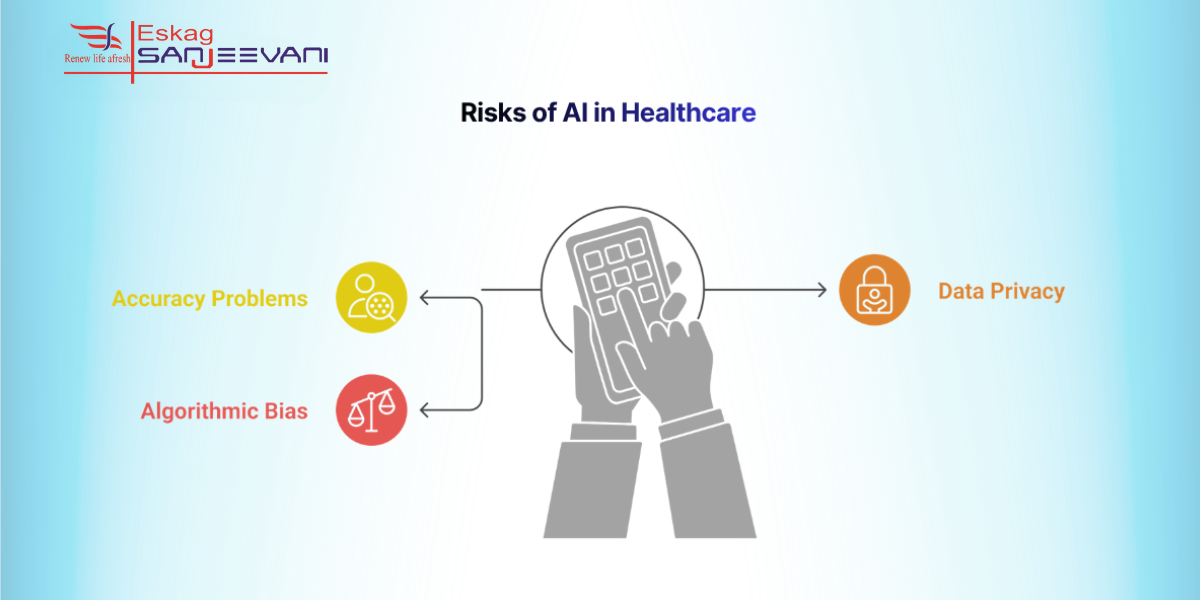
AI wearables carry documented limitations that are rarely addressed in product marketing, and several are especially consequential for Indian users. Understanding them is not optional; it is the difference between safe use and dangerous over-reliance.
1. Accuracy Problems: The Skin Tone Issue
PPG optical sensors work by shining light through your skin to measure blood flow. Melanin, which is present in higher concentrations in darker skin types, is common across India and absorbs the same wavelengths, making heart rate and SpO₂ readings measurably less accurate.
2. Data Privacy: Your Health Data Has a Target on It
A 2025 study evaluated the privacy policies of 17 leading wearable manufacturers and found that two of the most popular brands in India carried the highest cumulative data privacy risk scores [5]. Many manufacturers share health data with third parties for marketing and AI model training, often without meaningful user consent. India’s data protection framework is still evolving; unlike European consumers protected by GDPR, Indian users currently have limited legal recourse after a health data breach.
3. Algorithmic Bias: AI Trained on the Wrong Population
Most wearable AI algorithms were trained predominantly on datasets from Western countries, which are skewed toward lighter-skinned populations with different genetic profiles and lifestyle patterns than those of Indian users. It creates a documented performance gap; AI-generated health predictions may simply be less reliable for you. Until manufacturers train their models on diverse global datasets, treat AI health alerts as signals that require clinical verification, not as standalone diagnoses.
Understanding the risks makes you a smarter buyer. The next step is knowing exactly which device matches your specific health need, and what your budget realistically gets you in India’s market.
Choosing the Right AI Wearable: A Guide for Indian Buyers
Your device choice must be driven by your specific health needs, not by the most feature-rich option in the store. Buying the wrong category of wearable device can create a false sense of security that is more harmful than having no device at all.
Match the Device to Your Health Need
| Budget Range | Best For | Example Brands | Key Features |
| ₹3,000-₹8,000 | Basic wellness, sleep, and activity | boAt, Noise, Fastrack | Heart rate, step tracking, and sleep |
| ₹10,000-₹25,000 | ECG monitoring, blood pressure | Samsung Galaxy Watch FE, Garmin | ECG, SpO₂, BP monitoring |
| ₹40,000+ | Clinical-grade monitoring | Apple Watch S11, Ultrahuman Ring Air | FDA-cleared ECG, advanced AI health |
Check for ABDM Compatibility
India’s Ayushman Bharat Digital Mission (ABDM) allows supported wearables to sync health data directly with your Ayushman Bharat Health Account. It makes your continuous monitoring data securely accessible to treating physicians during consultations and telemedicine sessions. Verify ABDM compatibility before purchasing, as it significantly amplifies the clinical value of your wearable device.
Also read: PPP Model & Free Dialysis in India Explained: A 2026 Guide.
How to Use AI Wearables Safely: A Doctor-Backed Framework
Knowing how to use a wearable correctly is as important as choosing the right one. Safe daily habits and clear red-flag awareness determine whether your wearable technology helps or harms you.
Daily Best Practices
- Wear your device consistently, for wrist devices, one finger-width above the wrist bone, snug but not tight, to ensure accurate sensor contact.
- Treat every alert as a signal requiring professional evaluation, not a prompt for self-treatment.
- Restrict third-party data sharing in your privacy settings immediately after setup.
- Never adjust medication, diet, or treatment protocols based solely on wearable data.
When to Seek Immediate Medical Attention
Regardless of what your device reads, seek urgent clinical evaluation if:
- Your device shows persistent irregular heart rhythm alerts across multiple readings, even without physical symptoms.
- SpO₂ consistently falls below 94% across several measurements, especially if accompanied by breathlessness.
- Your device shows normal readings, but you feel unwell, experience chest discomfort, or experience unexplained fatigue or dizziness.
- Your CGM shows severe or sustained hypoglycemia.
Where Wearables Add the Most Clinical Value in India
AI for healthcare delivers its greatest value when wearables are used to extend, not replace, clinical care. These are the scenarios where continuous health tracking makes the biggest measurable difference.
- Post-cardiac event monitoring: Weeks of real-world ECG data give your cardiologist diagnostic context that a clinic visit simply cannot replicate.
- Diabetes management: CGMs allow your diabetologist to see glucose patterns across days and weeks, not just fasting snapshots.
- Post-surgery rehabilitation: Tracking activity levels, sleep recovery, and vital signs during home recovery.
- Elderly patients living independently: Fall detection and continuous vital monitoring provide a meaningful safety net between hospital visits.
- Sleep apnoea screening: Abnormal sleep patterns flagged by a wearable can prompt timely referral for polysomnography before the condition causes serious long-term harm.
The Cardiology Department at Eskag Sanjeevani Hospital works with patients who bring wearable health data, ECG trends, SpO₂ patterns, and heart rate variability reports to consultations. Our cardiologists, diabetologists, and general physicians can identify patterns worth investigating, contextualise AI-generated alerts, and build care plans around your real-world health data, not just how you present during a single visit.
Final Thoughts
AI wearables are one of the most genuinely promising developments in everyday healthcare in a generation. For India, where chronic disease burden is rising, and the gap between annual check-ups can mean the difference between early intervention and emergency care, continuous health monitoring through wearable devices is a meaningful step forward.
But a smartwatch is not a doctor, and data without clinical expertise to interpret it is just numbers. The patients who benefit most use their wearables as a bridge to better medical care, bringing their health-tracking data to their physician and acting on alerts by seeking professional evaluation, not by self-treating.
Your wearable is a starting point. Your doctor is the destination. Book your consultation at Eskag Sanjeevani Hospital and bring your data with you.

Microbiologist with over 2 years of experience in medical writing, specialising in evidence-based healthcare content.

Clinical experience in diagnosis, treatment, and evidence-based patient care across a range of conditions.
References
- Shajari, S., Kuruvinashetti, K., Komeili, A. and Sundararaj, U. (2023). The emergence of AI-based wearable sensors for digital health technology: A review. Sensors, [online] 23(23), pp.9498–9498.
- Moshawrab, M., Adda, M., Bouzouane, A., Ibrahim, H. and Raad, A. (2023). Smart Wearables for the Detection of Cardiovascular Diseases: A Systematic Literature Review. Sensors, [online] 23(2), p.828.
- LaBoone, P.A. and Marques, O. (2024). Overview of the future impact of wearables and artificial intelligence in healthcare workflows and technology. International Journal of Information Management Data Insights, [online] 4(2).
- Beck, R.W., Riddlesworth, T., Ruedy, K., Ahmann, A., Bergenstal, R., Haller, S., Kollman, C., Kruger, D., McGill, J.B., Polonsky, W., Toschi, E., Wolpert, H. and Price, D. (2017). Effect of continuous glucose monitoring on glycemic control in adults with type 1 diabetes using insulin injections: The DIAMOND randomized clinical trial. JAMA, 317(4), pp.371–378.
- Doherty, C., Baldwin, M., Lambe, R., Altini, M. and Caulfield, B. (2025). Privacy in consumer wearable technologies: a living systematic analysis of data policies across leading manufacturers. npj Digital Medicine, [online] 8(1).
- Mordor Intelligence (2025). INDIA SMART WEARABLE MARKET SIZE & SHARE ANALYSIS – GROWTH TRENDS AND FORECAST (2026 – 2031). [online]
A fitness tracker passively records basic metrics, steps, calories, and heart rate, without interpreting them. An AI wearable analyses patterns across multiple sensors, learns your personal physiological baseline, and flags deviations that may signal a health concern before symptoms appear. The distinction matters most when managing an existing condition.
Accuracy varies by device quality, skin tone, and placement. PPG-based sensors underperform on darker skin tones because melanin absorbs the sensor’s light wavelengths, a disparity confirmed by peer-reviewed research. For any clinical decision, verify smartwatch readings with a validated medical instrument.
FDA-cleared ECG wearables can reliably detect atrial fibrillation in asymptomatic patients, reducing stroke risk through early intervention. They are not validated to diagnose heart attacks or structural heart conditions in real time. A wearable cardiac alert is a reason to seek immediate medical evaluation, not a diagnosis.
No. CGMs are increasingly used in Type 2 diabetes, particularly for patients on insulin therapy, where detecting nocturnal hypoglycemia is critical. Some non-diabetic individuals also use them for metabolic insight. Whether a CGM suits your situation is a decision to make with your diabetologist.
Two opposite patterns are documented. Health anxiety can develop when users over-interpret normal physiological variation as illness. Conversely, false reassurance from a normal reading can delay care for genuine symptoms. Both are avoidable with one clear principle: wearables are a monitoring tool, not a substitute for clinical judgement.