

 Medically Reviewed
Anorexia Nervosa: Understand the Signs, Risks and Treatment
Anorexia nervosa is a serious eating disorder that affects both mental and physical health. It involves restricting food intake, an intense fear of gaining weight or becoming heavier, and changes in how a person experiences or evaluates their body and weight. It is not a lifestyle choice or simply a matter of willpower. Research suggests that genetic, metabolic, psychological, and environmental factors can all contribute to its development. Anorexia nervosa can lead to severe malnutrition and medical complications, but recovery is possible with appropriate treatment and ongoing support. A 2026 systematic review and meta-analysis of 30 studies involving more than 33,000 people with anorexia nervosa found a pooled standardised mortality ratio of 5.06, although estimates varied between studies [1].
In this blog, we break down the signs, causes, and evidence-based treatment for anorexia nervosa to help patients and families act decisively.
At A Glance
- Anorexia nervosa is a serious psychiatric condition that can cause significant physical complications.
- Anorexia nervosa can affect people of different ages, sexes, and body sizes.
- Early assessment is important when restrictive eating or other concerning symptoms appear.
In short: Anorexia nervosa is an eating disorder involving food restriction, fear of weight gain and distorted body-image perception.
Quick Links
What Is Anorexia Nervosa?
Anorexia nervosa is diagnosed using a combination of psychological, behavioural, and physical features.
The core features include the following:
- Restriction of energy intake leading to significantly low body weight relative to the person’s age, gender, developmental trajectory, and physical health.
- An intense fear of gaining weight or persistent behaviour that interferes with weight gain.
- Disturbance in the way body weight or shape is experienced, excessive influence of body weight or shape on self-evaluation, or difficulty recognising the seriousness of the current low body weight.
Importantly, body weight alone does not determine whether someone has a serious eating disorder. People can experience significant medical complications from restrictive eating even when they do not appear extremely underweight. Atypical anorexia nervosa, classified under other specified feeding or eating disorders, can involve many of the physical complications associated with anorexia nervosa [2].
Is Anorexia Nervosa Only Seen in Teenage Girls?
No. Anorexia nervosa commonly begins during adolescence or early adulthood, but it can occur in children, adults, and older people. It can also affect males and people of different body sizes and backgrounds. Therefore, eating-disorder symptoms should not be dismissed because of a person’s following factors:
- Age
- Gender
- Current body weight
- Previous body size
- Cultural background
Signs and Symptoms of Eating Disorders: Recognising Anorexia Nervosa
Recognising the signs and symptoms of eating disorders early significantly improves treatment outcomes and recovery potential. Anorexia nervosa manifests through physical, behavioural, and psychological changes that develop gradually.
Here are the five most common symptoms and signs that you must know:
1. Changes in Eating Behaviour
Possible warning signs include the following:
- Restricting portion sizes or skipping meals
- Avoiding particular food groups
- Increasing concern about calories or food ingredients
- Eating according to increasingly rigid rules
- Avoiding meals with family or friends
- Repeatedly checking food labels or body weight
- Showing distress around eating
These behaviours do not automatically mean that someone has anorexia nervosa, but persistent or escalating restriction deserves attention.
2. Excessive Exercise or Compensatory Behaviour
Some people with anorexia nervosa may exercise excessively or feel compelled to exercise despite illness, fatigue, injury, or medical advice to rest. Self-induced vomiting, misuse of laxatives or diuretics, repeated weighing, and other attempts to compensate for eating. The presence and type of these behaviours can help clinicians understand the eating disorder and its medical risks.
3. Physical Warning Signs
Restriction and malnutrition can affect multiple body systems.
Possible physical changes include the following:
- Significant or rapid weight loss
- Fatigue and weakness
- Feeling unusually cold
- Dizziness or fainting
- Low blood pressure
- Slow heart rate
- Abnormal heart rhythms
- Dehydration
- Gastrointestinal symptoms
- Hair thinning or hair loss
- Fine body hair growth
- Menstrual changes
- Reduced bone density
Children and adolescents may also experience slowed growth or delayed puberty. Not everyone develops all of these symptoms.
4. Psychological and Behavioural Changes
Possible psychological features include:
- Strong fear of weight gain
- Persistent concern about body shape or weight
- Distress associated with eating
- Increasing preoccupation with food, calories, exercise, or body image
- Anxiety or low mood
- Social withdrawal
- Difficulty concentrating
- Irritability
- Reduced interest in activities outside food, weight, or exercise
Some people may also feel ambivalent about treatment or may find it difficult to recognise how seriously the illness is affecting them. This does not mean that every person with anorexia is “in denial”. A supportive, non-judgemental approach is generally more appropriate than confrontation.
5. Medical Complications of Anorexia Nervosa
Prolonged restriction and malnutrition can affect the heart, bones, hormones, gastrointestinal system, kidneys, liver, and other organs.
Potential complications include the following:
| Area | Possible complications |
| Heart and circulation | Slow heart rate, low blood pressure, abnormal rhythms |
| Electrolytes | Abnormal potassium, sodium or other electrolyte levels |
| Bones | Reduced bone density and increased fracture risk |
| Hormonal health | Menstrual or reproductive changes and delayed puberty |
| Digestive system | Bloating, constipation and slowed gastrointestinal function |
| Kidneys | Problems related to dehydration or severe medical instability |
| Blood | Changes in blood-cell counts |
| Brain and cognition | Difficulty concentrating and cognitive changes associated with malnutrition |
Severe electrolyte abnormalities, dehydration, malnutrition, or signs of organ failure can require urgent medical care.
What Causes Anorexia Nervosa?
There is no single cause. Current research supports a multifactorial model involving biological, genetic, psychological, metabolic, and environmental factors.
Genetic Factors
Genetic research has identified a substantial inherited component. A large genome-wide association study involving 16,992 people with anorexia nervosa and 55,525 controls identified eight significant genetic loci. Earlier twin studies estimated heritability at approximately 50-60% [3].
This does not mean that a person with a family history will necessarily develop anorexia nervosa.
Psychological Factors
Certain traits may be associated with greater vulnerability, including the following:
- Perfectionistic tendencies
- Rigidity
- Anxiety
- Obsessive or compulsive traits
- Difficulties with self-esteem
- Strong concerns about body image
These characteristics are risk factors, not direct causes.
Environmental and Sociocultural Factors
Body-image concerns can be influenced by peer pressure, weight-related teasing or bullying and social media. Appearance-focused environments, sports or activities that emphasise body size or weight, and family or social attitudes toward food and body shape can also play a big role. These factors may interact with biological and psychological vulnerabilities rather than acting as a single cause.
Also read: Obesity in Women – Alert for Modern Girls!
Anorexia Nervosa Treatment: Evidence-Based Approaches in India
Anorexia nervosa treatment requires multidisciplinary intervention combining medical stabilisation, nutritional rehabilitation, psychotherapy, and family involvement for optimal outcomes.
Here are some of the treatments for anorexia nervosa:
- Medical stabilisation addresses life-threatening complications, including cardiac abnormalities, electrolyte imbalances, and severe malnutrition requiring hospitalisation. Close monitoring prevents refeeding syndrome, a potentially fatal complication when nutrition resumes after prolonged starvation.
- Nutritional rehabilitation, guided by registered dietitians, establishes individualised meal plans to target weight restoration and the normalisation of eating patterns. Micronutrient supplementation, including thiamine, prevents deficiencies during early refeeding. Weight gain during the first treatment month predicts better long-term recovery outcomes significantly.
- Psychotherapy forms the core of treatment, with enhanced cognitive behavioural therapy, family-based treatment for adolescents, and specialist supportive clinical management demonstrating effectiveness. Family-based treatment demonstrates the strongest evidence for adolescents, directly involving families in meal supervision and weight restoration.
- Psychiatric medication treats co-occurring conditions like depression, anxiety, and obsessive-compulsive disorder rather than anorexia itself directly. Antidepressants address comorbid mental health conditions once nutritional status improves sufficiently for medication efficacy.
- GLP-1 drugs used for obesity and diabetes management are contraindicated in patients with anorexia nervosa due to the risk of appetite suppression. These medications trigger relapse in recovered individuals and reinforce restrictive eating patterns dangerously. Misdiagnosis of a typical anorexia as obesity can lead to harmful, inappropriate prescribing.
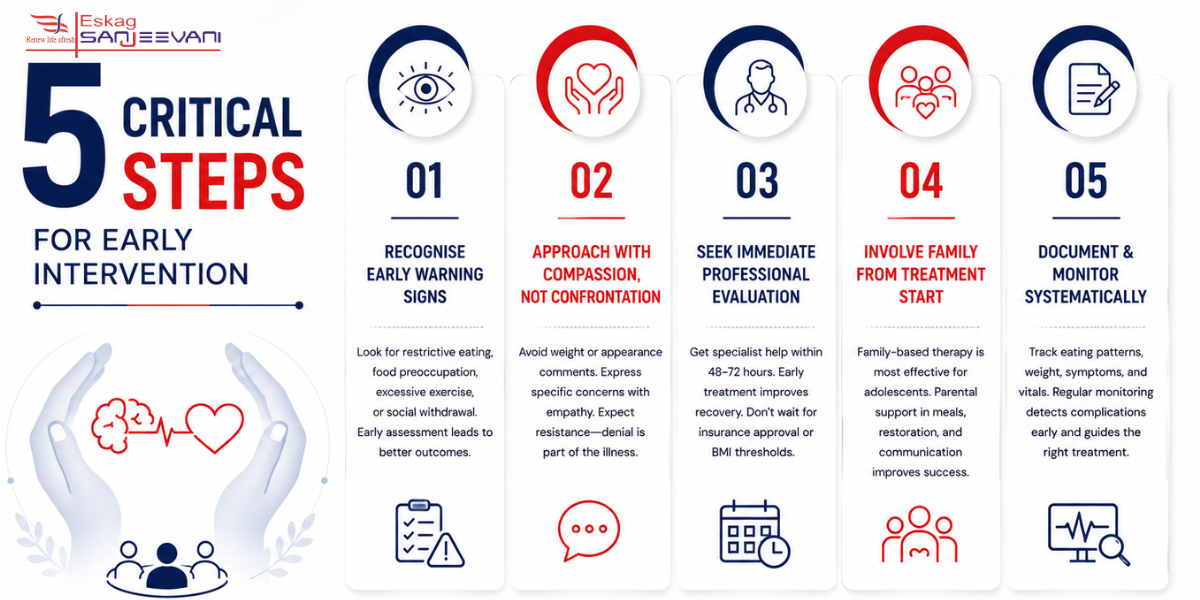
5 Critical Steps for Early Intervention
The following section provides a step-wise analysis for early intervention of anorexia nervosa.
Step 1: Recognise Early Warning Signs
Professional evaluation is warranted when disordered eating behaviours emerge, regardless of body weight. Initial indicators include restrictive eating patterns, obsessive food preoccupation, excessive exercise, and social withdrawal. Delay in assessment correlates with a poorer prognosis and a longer duration of illness.
Step 2: Approach with Compassion, Not Confrontation
Avoid weight-focused or appearance-based comments, which reinforce pathological preoccupations. Use non-judgmental language expressing specific behavioural concerns observed. Address resistance calmly; denial is a core feature of the illness, not willful non-compliance that requires repeated gentle attempts.
Step 3: Seek Immediate Professional Evaluation
Initiate psychiatric or eating disorder specialist assessment within 48-72 hours of identifying concerning symptoms. The duration of untreated illness directly affects recovery trajectories and treatment outcomes. Outpatient evaluation should proceed regardless of insurance authorisation delays or BMI thresholds.
Step 4: Involve Family from Treatment Start
Family-based therapy demonstrates superior efficacy for adolescent populations compared to individual approaches. Parental participation in meal supervision, weight restoration protocols, and addressing maladaptive family dynamics constitutes evidence-based first-line intervention. Systemic involvement reduces dropout rates and treatment resistance.
Step 5: Document and Monitor Systematically
Systematic documentation of eating patterns, weight fluctuations, physical symptoms, and behavioural changes facilitates accurate clinical assessment. Regular monitoring of vital signs, electrolyte panels, and cardiac function helps detect medical complications that require immediate intervention. Objective records appropriately guide treatment intensification decisions.
Final Thoughts
Anorexia nervosa is a serious eating disorder, but it is treatable. Warning signs may include eating behaviour, body-image concerns, excessive exercise, emotional changes, or physical symptoms. Importantly, a person’s appearance or weight alone cannot determine how medically serious an eating disorder is. Early professional assessment can help identify psychological and physical risks before complications worsen. Treatment may involve medical monitoring, nutritional rehabilitation, psychotherapy, and family involvement when appropriate. The specific combination and level of care should be tailored to the individual. Eskag Sanjeevani Hospitals can provide medical and mental-health assessment for patients experiencing eating-related and psychological concerns. If you are concerned about yourself or someone you know, seeking professional help is a constructive first step. Recovery can take time, but appropriate, coordinated care can support meaningful improvement and long-term recovery.

Microbiologist with over 2 years of experience in medical writing, specialising in evidence-based healthcare content.

Clinical experience in diagnosis, treatment, and evidence-based patient care across a range of conditions.
References
- Lai ET, Lai B, Wong CS, Wong LY, Cheng KS, Cheng PC, Heidi Ka-Ying L, Tse G, Chan WC, Chang WC, Chung KF. Systematic Review and Meta-Analysis of Mortality in Patients With Anorexia Nervosa. Int J Eat Disord. 2026 Mar;59(3):424-449. doi: 10.1111/eat.70002.
- Balasundaram, P. and Santhanam, P. (2023). Eating disorders. [online] National Library of Medicine.
- Watson HJ, Et al. Genome-wide association study identifies eight risk loci and implicates metabo-psychiatric origins for anorexia nervosa. Nat Genet. 2019 Aug;51(8):1207-1214. doi: 10.1038/s41588-019-0439-2.
Yes. While adolescent females are most commonly affected, anorexia nervosa occurs across all genders and age groups. Males represent roughly 10% of cases and are frequently underdiagnosed due to cultural assumptions. Adults can develop or relapse into the condition following significant life stressors. Dismissing risk based on age or gender directly delays diagnosis.
Yes. DSM-5 recognises atypical anorexia nervosa, where all psychological and behavioural features are present without significantly low body weight. Individuals in larger bodies can experience severe restriction, malnutrition, and identical medical complications. Assessing severity based on visible thinness alone leads to many cases going undetected and untreated.
Prolonged restriction forces the body to draw resources from vital organs. The most critical complications are cardiac bradycardia, arrhythmias, and sudden cardiac arrest driven by electrolyte imbalances. Bone loss, kidney damage, hormonal disruption, and refeeding syndrome during nutritional recovery add further clinical risk, all requiring close medical supervision.
Recovery varies significantly by illness duration, age of onset, and treatment intensity. Approximately 50% of patients achieve full recovery; 30% experience partial recovery with residual symptoms. Early intervention consistently improves outcomes, and illness duration beyond three years reduces full recovery rates. Relapse is common and warrants immediate reassessment, not abandonment of treatment.
No medication has demonstrated direct efficacy against anorexia nervosa’s core symptoms. Antidepressants and antipsychotics address co-occurring conditions like depression and OCD, but only once nutritional status has stabilised. GLP-1 receptor agonists, used for obesity and diabetes, are contraindicated, as their appetite-suppressing effects can reinforce restriction and trigger relapse.