

 Medically Reviewed
Seasonal Allergy: 5 Expert Tips for Effective Relief
Seasonal allergies affect millions across India, turning pleasant weather changes into periods of constant sneezing, watery eyes, and breathing difficulties. India’s unique climate patterns, with monsoon humidity, spring pollen surges, and winter dust concentrations, create year-round allergy challenges for urban and rural populations alike.
You’re not alone if changing seasons bring discomfort; understanding your triggers and treatment options can dramatically improve your quality of life. Managing these allergies requires more than just enduring symptoms; it demands informed strategies combining medical treatments, lifestyle modifications, and environmental controls.
In this blog, we’ll explore the causes of seasonal allergies in India. How to recognise symptoms, evidence-based treatment approaches, natural remedies suited to humid climates, and when specialist consultation is necessary.
Key Takeaways:
- Seasonal allergies result from an immune overreaction to airborne allergens such as pollen, dust mites, and mould spores, which are prevalent during specific seasons.
- Treatment combines antihistamines, nasal corticosteroids, and immunotherapy, with 60.9% of Indian physicians preferring non-sedating antihistamines as first-line therapy.
- Natural prevention includes HEPA air filtration, nasal saline irrigation, closing windows on high-pollen days, and showering after outdoor exposure.
Quick Answer: Seasonal allergies in India peak during spring (tree pollen), monsoon (mould spores), and winter (dust mites), causing sneezing, nasal congestion, and itchy eyes.
Quick Links
- What Are Seasonal Allergies?
- Symptoms: How to Tell Allergies from Common Cold or Flu
- Treatment Options: Medications and Therapies in India
- 5 Expert Tips for Effective Seasonal Allergy Relief
- Natural Remedies & Home Care for India's Humid Climate
- When to See a Specialist: Complications and Expert Care
What Are Seasonal Allergies?
Seasonal allergies, medically termed allergic rhinitis or hay fever, occur when your immune system mistakenly identifies harmless airborne particles as dangerous invaders. In India, this condition has reached significant proportions, with studies indicating substantial regional variation in prevalence.
Here are some of the core aspects of seasonal allergies in India:
- When you inhale allergens like pollen or mould spores, your body releases histamines and other chemicals. These substances cause inflammation in your nasal passages, eyes, and throat, producing the uncomfortable symptoms you experience.
- Air pollutants like PM2.5 alter pollen particles, making them more allergenic. Cities with poor air quality, like Delhi and Kolkata, see worse allergy outcomes, as pollution damages respiratory defences and intensifies inflammatory responses.
- Research demonstrates clear seasonal variation: pollen allergies dominate the summer months (17.49%), while dust-related allergies peak in winter (20.82%), and fungal triggers increase substantially during the monsoon due to elevated humidity [1].
- The immune response triggers the release of inflammatory mediators, including histamines, leukotrienes, and prostaglandins, which can trigger a cascade of symptoms affecting multiple body systems simultaneously.
Now, let’s understand the seasonal allergy symptoms that are often mistaken for the common cold and flu.
Symptoms: How to Tell Allergies from Common Cold or Flu
According to Texas Health Resources, allergies persist for weeks or months while colds resolve within 5-14 days, making duration one of the most reliable diagnostic indicators [2].
The Timing Pattern Reveals the Diagnosis
Cold symptoms develop gradually over 1-3 days following viral exposure, peak around day 2-3, then decline progressively. Allergy symptoms appear immediately upon allergen contact, such as walking into a dusty room, and symptoms start within minutes. This instant-onset pattern is diagnostic. Cold symptoms follow a predictable arc: first the scratchy throat, then congestion, and finally the cough. Allergies maintain steady-state symptoms throughout exposure without this progression pattern.
Itching Is the Allergic Signature
Histamine release triggers intense itching across the eyes, nose, throat, and ear canals. This itching prompts the characteristic “allergic salute”, in which children repeatedly rub their noses upward. Throat discomfort from colds feels scratchy or sore; allergy-related throat irritation manifests as unbearable itching.
Fever and Body Aches Confirm Viral Infection
Seasonal allergies never produce fever; this is absolute. A fever above 100°F definitely indicates a viral or bacterial infection. Body aches accompany colds as the immune system mobilises against pathogens. Allergies cause fatigue from disrupted sleep and chronic immune activation, but never systemic muscle pain. Such a distinction allows immediate differentiation where fever or body aches equal infection, not allergies.
Nasal Discharge Characteristics Differ Substantially
Allergies produce thin, clear, watery discharge consistently throughout the symptomatic period. Cold-related mucus begins clear but transitions to thick, yellow-green after several days as white blood cells accumulate. This colour progression signals an immune response to viral replication. Persistent, clear discharge beyond one week strongly suggests allergies rather than infection. Postnasal drip from allergies remains watery; cold-related drainage thickens noticeably.
Complications Requiring Immediate Medical Assessment
Symptoms persisting beyond three weeks without improvement warrant specialist evaluation per Indian medical guidelines. Facial pain, sinus pressure, or coloured discharge indicates secondary bacterial sinusitis and requires antibiotic intervention. Breathing difficulty, audible wheezing, or chest tightness suggest an asthma exacerbation requiring emergency assessment.
Next, let’s understand the seasonal allergy treatment which is best for treating allergies.
Treatment Options: Medications and Therapies in India
India follows evidence-based protocols for seasonal allergy treatment, with medication choices informed by nationwide physician surveys and clinical efficacy data.
Here are some of the treatment options for seasonal allergies backed by authentic secondary data for appropriate clinical evaluation:
- Second-generation antihistamines provide non-sedating histamine blockade for sneezing, itching, and watery discharge without causing drowsiness. Physicians prescribe these medications for seasonal or perennial allergic rhinitis, with particular efficacy during spring pollen surges and monsoon-driven mould exposure peaks.
- These nasal sprays deliver targeted anti-inflammatory effects directly to the nasal mucosa, reducing swelling and congestion. Survey data indicates 40.9% of Indian physicians recommend 2-4 months of continuous therapy for moderate-to-severe cases during the extended allergy season [3].
- A survey found that 75.6% combine antihistamines with leukotriene receptor antagonists to enhance therapeutic effect. Clinical efficacy data show that 52.2% of physicians report symptom improvement of 60-90% with this dual-mechanism approach in mild-to-moderate allergic rhinitis.
- Allergen-specific immunotherapy costs ₹15,000-₹50,000 annually. The nationwide survey revealed that 55.3% of physicians have never prescribed immunotherapy, though this treatment offers sustained relief for recurrent seasonal exacerbations in patients with concurrent asthma.
- Saline nasal irrigation mechanically flushes allergens while moisturising inflamed passages during allergy season in India. Indian medical guidelines recommend steam inhalation and controlled humidity during the winter months when dust concentrations peak across the northern plains.
Also read: Difference Between Viral Allergies Vs. Spring Allergies.
5 Expert Tips for Effective Seasonal Allergy Relief
Managing seasonal allergies successfully requires targeted strategies beyond basic awareness.
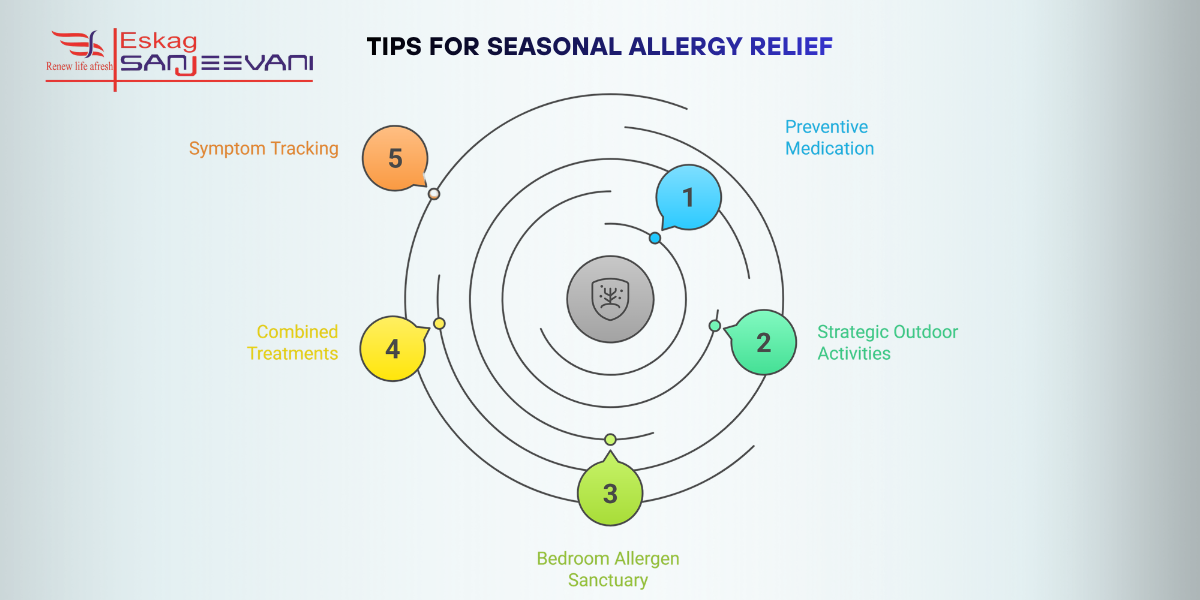
Here are five evidence-based expert recommendations that address the most critical aspects of allergy control.
Tip 1: Start Preventive Medication Before Peak Season
Begin antihistamines 2-3 weeks before your known allergy season starts rather than waiting for symptoms to appear. Pre-season treatment builds medication levels in your system, blocking histamine receptors before allergen exposure triggers inflammatory cascades, resulting in better symptom control throughout the season.
Tip 2: Time Your Outdoor Activities Strategically
Pollen counts peak between 5 AM and 10 AM and on dry, windy days when plants release maximum pollen. Plan outdoor exercise, gardening, or errands for late afternoon or after rainfall when pollen settles, reducing your allergen exposure by up to 60% without lifestyle restrictions.
Tip 3: Create a Bedroom Allergen Sanctuary
Your bedroom requires stricter controls, since you spend 6-8 hours there each night. Keep this room completely closed to outdoor air, run an air purifier continuously, shower before bed to remove pollen from hair and skin, and never bring worn outdoor clothes into this space.
Tip 4: Combine Treatments for Stubborn Symptoms
Single medications often prove insufficient for moderate-to-severe allergies. Layer an oral antihistamine with a nasal corticosteroid spray and saline irrigation; this triple approach targets different inflammatory pathways simultaneously.
Tip 5: Track Your Symptom Patterns Systematically
Maintain a simple daily log noting symptom severity, weather conditions, locations visited, and treatments used. This data reveals your specific trigger patterns and medication effectiveness, enabling you and your doctor to refine your treatments.
Patients with wheezing, chest tightness, or breathing difficulty, along with nasal symptoms, require evaluation by a chest medicine specialist for respiratory assessment.
Natural Remedies & Home Care for India’s Humid Climate
Managing allergies through lifestyle modifications and natural remedies provides relief without medication side effects, particularly important during India’s monsoon season when humidity intensifies allergen growth.
Keep Indoor Spaces Clean and Allergen-Free
Regular vacuuming with a HEPA filter and maintaining air quality removes pollen and dust mite allergens from carpets and upholstery. Wash bedding, curtains, and rugs weekly in hot water. Use allergen-proof covers on mattresses and pillows to block dust mites, which thrive in India’s year-round warm, humid conditions.
Close Windows During High Pollen Days
During peak pollen seasons, keep windows and doors shut to prevent outdoor allergens from entering your home. Use air conditioning with clean filters to circulate indoor air. Air purifiers in bedrooms further reduce airborne allergens during the spring and summer months.
Practice Nasal Irrigation with Saline Solution
Nasal irrigation flushes allergens from the nasal passages while moisturising inflamed tissues. Use a neti pot or saline nasal spray daily during allergy seasons. This seasonal allergies treatment complements medications by mechanically removing pollen and dust before they trigger reactions.
Boil Water and Choose Anti-Inflammatory Foods
Boil drinking water during monsoons to prevent contamination that worsens allergy symptoms. Include garlic in meals, drink herbal teas like ginger and chamomile, and consume local honey. Avoid heavy, oily foods that increase inflammation. These dietary adjustments support immune function during India’s challenging allergy seasons.
Shower After Outdoor Exposure
Allergens cling to hair, skin, and clothing after outdoor activities. Shower immediately upon returning home, especially in the morning when pollen counts are highest. Change clothes and leave shoes outside. This simple habit prevents allergens from spreading throughout your living space during high-exposure periods.
When to See a Specialist: Complications and Expert Care
Seek medical attention when allergy symptoms persist beyond three weeks despite home management efforts and over-the-counter medications. Eskag Sanjeevani Hospitals provides respiratory care through experienced pulmonologists who evaluate breathing difficulties and chest-related allergy complications.
Consult a doctor for an allergy assessment if you experience wheezing, chest tightness, or a persistent cough, as this may indicate the development of allergic asthma. An allergy specialist performs diagnostic testing, including skin prick tests and blood work, to identify specific allergen triggers. Untreated seasonal allergies frequently progress to sinusitis, chronic bronchitis, or asthma requiring pulmonologists for coordinated respiratory management.
Final Thoughts
Seasonal allergies don’t have to control your life or limit your daily activities, even amid India’s diverse weather patterns. By identifying your specific triggers through medical testing and implementing consistent prevention strategies, you achieve meaningful symptom relief. Start with simple environmental controls, air purifiers, regular cleaning, and window management on high-pollen days, before symptoms escalate into complications requiring intensive medical intervention. Eskag Sanjeevani Hospitals provide diagnostic and treatment services through experienced pulmonologists and multispecialty teams, ensuring you receive evidence-based care tailored to your individual needs.

Microbiologist with over 2 years of experience in medical writing, specialising in evidence-based healthcare content.

Clinical experience in diagnosis, treatment, and evidence-based patient care across a range of conditions.
References
- Jyothirmayi K., Kumar P. (2019). Analysis of Distribution of Allergens and its Seasonal Variation in Allergic Rhinitis. The Journal of Medical Sciences, 5(3), pp.59–62.
- Texas Health (2019). Spring Allergies vs. Cold: How to Tell the Difference (And What to Do About It). [online]
- Gupte V, Thakur G, Upadhyaya A, Jain S, Bhargava S. A Perception-Based Survey on Practice Patterns Pertaining to the Diagnosis and Management of Allergic Rhinitis in India. Cureus. 2024 Feb 27;16(2):e55032. doi: 10.7759/cureus.55032. PMID: 38550471; PMCID: PMC10976860.
Seasonal allergy duration depends on your specific allergen triggers and can range from several weeks to several months. Spring allergies last from March through May, monsoon mould allergies persist from June through September, and winter dust allergies affect October through January.
Yes, adults can develop seasonal allergies at any age, even without a history of childhood allergies, as immune responses change over time. Your allergy profile can shift approximately every 7 years, meaning you may become sensitised to pollen, dust, or mould that you previously tolerated.
Seasonal allergies produce clear, watery nasal discharge, intense itching in the eyes and throat, and symptoms that last for weeks without fever. Colds cause thick yellow-green mucus, body aches, and possible fever, and resolve within 7-14 days with gradual symptom development after viral exposure.
Climate change extends India’s allergy seasons by causing earlier spring blooms, prolonged monsoon humidity, and increased atmospheric carbon dioxide, making pollen more potent. Pollen counts have increased by more than 20%, while allergy seasons now start approximately 20 days earlier and last 10 days longer.
Untreated seasonal allergies frequently progress to chronic sinusitis, recurrent sinus infections, allergic asthma, and sleep disturbances, significantly impacting quality of life. Children with persistent, untreated allergies show a higher likelihood of developing chronic rhinosinusitis in adulthood, making early intervention and consistent management crucial.