

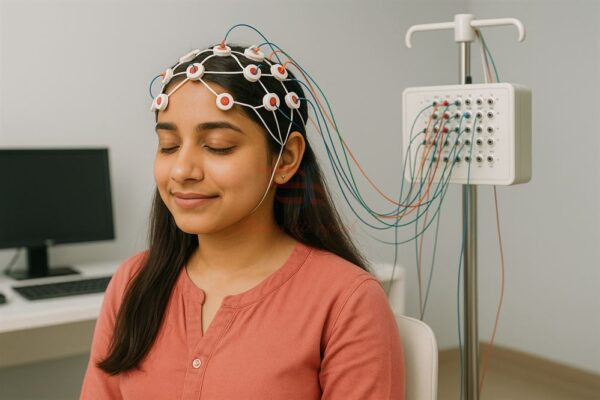
EEG Test at Eskag Sanjeevani Hospitals
An EEG test (electroencephalogram) records the brain’s electrical activity using small sensors placed on the scalp. Doctors use it to investigate seizures, suspected epilepsy and other conditions that may affect brain activity. If your doctor has recommended an EEG, our expert team at Eskag Sanjeevani Hospitals can help you enquire about test availability, preparation instructions and current charges.
What Is an EEG Test?
An EEG test records the electrical signals produced by brain cells. Small sensors called electrodes attach to the scalp and connect to a recording machine. The machine displays the signals as wave patterns that a trained specialist can interpret.
Doctors may recommend an EEG to assess the following conditions:
- Investigate suspected epilepsy or seizures.
- Assess unexplained episodes of fainting or altered awareness.
- Evaluate certain sleep-related conditions.
- Investigate selected changes in brain function.
- Monitor brain activity in specific clinical situations.
An EEG is interpreted alongside a person’s symptoms, medical history and other investigations; it does not identify every neurological condition.
When Is an EEG Test Recommended?
Your doctor may recommend an EEG if you experience symptoms that could be related to abnormal electrical activity in the brain. These may include the following:
- Seizures or suspected epileptic episodes
- Unexplained periods of altered awareness
- Repeated episodes of unusual movements or behaviour
- Certain sleep-related symptoms
- Selected neurological conditions requiring further assessment
Not everyone with these symptoms needs an EEG. Your doctor will decide whether the test is appropriate and whether additional investigations are required.
How Is an EEG Test Performed?
An EEG test is non-invasive and generally painless. During the procedure, a technician places small electrodes on your scalp to record your brain’s electrical activity.
The test usually involves the following steps:
- Scalp preparation: The technician measures your head and marks specific points on your scalp to position the electrodes accurately. The technician may clean or gently prepare the skin to improve signal quality.
- Electrode placement: The technician attaches small metal discs to your scalp using a conductive paste or adhesive. Some EEG systems use a cap fitted with electrodes. The electrodes connect to equipment that records your brain’s electrical signals.
- Brain activity recording: You rest in a comfortable position while the machine records your brain waves. The technician may ask you to open or close your eyes or perform simple tasks.
- Additional procedures, if required: Depending on your doctor’s instructions, you may be asked to breathe deeply for a short period or look at flashing lights. These procedures are used only when clinically appropriate.
- Completion: Once the recording is complete, the technician removes the electrodes. You can usually return to your normal activities afterwards.
A routine EEG recording often takes around 20-40 minutes, although the total appointment may take longer. Sleep EEGs and prolonged monitoring may take longer.
EEG Test Side Effects: Is the Procedure Safe?
An EEG test is generally safe and does not use X-rays or other ionising radiation. The recording itself is painless, and most people can return to their usual activities afterwards. However, some people may experience minor effects or reactions during the procedure.
Here are the possible EEG test side effects, listed below:
- Mild scalp irritation: The adhesive, paste, or electrodes may cause temporary redness or irritation.
- Temporary discomfort: Some people may find the electrodes or the testing position uncomfortable.
- Seizure triggering in susceptible patients: Deep breathing or flashing lights used during selected EEG tests can sometimes trigger a seizure, particularly in people who are susceptible to these stimuli.
These stimulation techniques are used only when clinically appropriate and are performed under professional supervision. Tell the healthcare team if you have a history of seizures triggered by flashing lights or deep breathing, or if you have concerns about the test.
EEG Cost: What Determines the Price?
The EEG cost depends on the type of test, the duration of recording and the diagnostic facility. The following factors may affect the EEG cost:
- Whether you need a routine EEG or a specialised recording.
- Whether sleep recording or prolonged monitoring is required.
- Whether video monitoring is included.
- The facility where the test is performed.
- Any additional services included in the quoted charge.
A routine EEG may cost less than a prolonged or video EEG study. Prices can also vary between diagnostic centres. For the current EEG test cost at Eskag Sanjeevani Hospitals, contact our team with your prescription. We can help you enquire about the applicable charge, availability and expected reporting time.
Book an EEG Test at Eskag Sanjeevani Hospitals
If your doctor has recommended an EEG, our team can guide you through the appointment enquiry process. Bring your prescription and relevant medical records to your appointment. Your doctor can explain the findings and discuss whether you need further evaluation or treatment.
Explore Our EEG (Electroencephalogram) at Eskag Sanjeevani Hospitals Kolkata
Trusted care and convenient access for all your healthcare needs.
Visit us at: www.eskagsanjeevani.com
Call to learn more about our EEG (Electroencephalogram)
Frequently Asked Questions on: EEG (Electroencephalogram)
Wash and dry your hair before the test, and avoid applying hair oil, gel, conditioner or other styling products. These can make it difficult to attach the electrodes properly. You can usually eat and drink normally before a routine EEG. Continue taking your prescribed medicines unless your doctor gives you different instructions. If you are scheduled for a sleep-deprived EEG, follow the specific sleep instructions your healthcare team provides.
No. An EEG is a painless, non-invasive test. The electrodes placed on your scalp only record your brain’s electrical activity; they do not send electricity into your body. You may feel some discomfort from the electrode paste or experience mild scalp irritation afterwards. If you are asked to breathe deeply or look at flashing lights, you may briefly feel light-headed or uncomfortable.
An EEG can record abnormal electrical patterns that may support a diagnosis of epilepsy, even if you do not have a seizure during the recording. However, a normal EEG does not rule out epilepsy. If your symptoms continue, your doctor may recommend another EEG, a sleep EEG or prolonged monitoring, depending on your condition.
A qualified specialist must review and interpret the EEG recording before preparing a report. The reporting time varies depending on the type of EEG and the diagnostic facility. Your doctor will explain the findings and discuss whether you need further tests or treatment.
After a routine EEG, most people can return to their usual activities, including driving, unless their doctor advises otherwise. However, if you have had a sleep-deprived EEG, you may feel unusually sleepy. Arrange for someone to accompany you or take you home, and avoid driving while drowsy. Follow any additional instructions given by your healthcare team.